
How to Create a Cozy Reading Nook in a Small Apartment Corner
A reading nook doesn't need a spare room or a bay window. It needs about two square feet, a comfortable seat, one good light, and a surface for a mug. In a small apartment the whole project can be built from a corner you already have and a few second-hand pieces. Here is how to pick the spot and layer it into a place you'll actually use.
Finding the Right Corner
The best nook goes in an underused, low-traffic space, not the middle of a walkway. Walk the apartment with a tape measure and look at the gaps most furniture ignores: the wall beside a bookshelf, the end of a hallway, the space next to a window that's too narrow for a full armchair.
Three factors decide whether a corner works. Natural light is the biggest win, even a sliver of window makes a small space feel open and gives you glare-free reading light by day. Traffic flow comes next: if you'd have to move the chair to reach the kitchen, the spot will annoy you more than it relaxes you. Power access is the practical one, an outlet within reach for a lamp and charger saves running an extension cord across the floor; if there's none, plan on battery lights. A corner that clears all three, often one currently holding a forgotten plant, is your nook.
Seating That Makes You Want to Stay
The seat is the one piece worth getting right, because a nook you don't sink into is a nook you won't use. For small footprints, an accent chair, a firm pouf, a bean bag, or a stack of floor cushions all work; a storage ottoman earns double duty as a seat and a place to hide blankets.
This is a good candidate for a thrift find. A sturdy secondhand armchair for around $20 with good bones can be re-covered over a weekend with a few yards of fabric, cheaper and sturdier than most new small-space chairs. Whatever you choose, it has to be comfortable enough to hold you for more than five minutes without feeling cramped.
Match the seat to how you actually read. If you curl up, a deep chair or a floor cushion against a wall suits you; if you sit upright, a firmer accent chair with back support is better for long sessions. Add a small footrest or ottoman and the seat becomes noticeably more comfortable, which is the difference between a corner you pass by and one you settle into.
Getting the Light Right
Overhead light kills the mood, it's flat and sterile. A nook wants warm, low, layered light instead. A floor lamp tucks neatly into a corner; a small table lamp on an adjacent shelf works if floor space is tight; battery-operated fairy lights strung around a window add a soft evening glow with no wiring.
Choose the bulb deliberately. A "soft white" or "warm white" LED around 2700K gives the cozy, slightly amber light you want; anything labeled "daylight" or "cool white" will feel clinical. If you're unsure what the number means, the Wikipedia article on color temperature explains the Kelvin scale. A thrifted metal lamp, a can of spray paint, and a $3 warm bulb make a perfectly good reading light for under $12. Aim the light so it falls over your shoulder onto the page rather than into your eyes, an adjustable arm or a shade that directs light downward keeps a small space from feeling glary while still giving you enough to read by.
Surfaces and Storage Within Reach
You need somewhere to set a book, a drink, and your glasses, without adding clutter. In a small nook, every surface should be compact and unobtrusive.
- A small side table is ideal. Two wooden crates stacked and screwed together, then painted, cost a few dollars and add hidden storage inside.
- A floating shelf at arm's height keeps the floor clear and uses vertical space, which is the space small apartments actually have.
- A basket or magazine holder beside the chair corrals your current reads without demanding a full bookshelf.
- A repurposed stool or plant stand works as a mini table in a pinch.
Texture and Personal Touches
Soft layers are what turn a chair-in-a-corner into a nook. A chunky knit blanket over the back, a mix of throw pillows in different sizes and textures, and a small rug to ground the space, even a sheepskin or a soft bath mat, all add warmth. Layering a blanket over a firmer cushion, or a small rug over existing floor, builds the sense of comfort.
Then add a few things that are yours, not everything, just a curated handful. A low-light houseplant like a pothos or snake plant suits most corners; match it to the light conditions of the spot. A framed print, a couple of personal photos, a favorite mug, or a battery candle or small essential oil diffuser rounds it out. In a small space, a few meaningful objects read better than a full shelf.
Keeping It a Nook, Not a Dumping Ground
The main way a nook fails is drift. Two habits keep it intact. First, don't overstuff it, cramming a small corner with decor defeats the calm you built; keep items minimal and intentional. Second, actually use it: a nook that becomes purely decorative quietly turns into a shelf for mail and laundry. Give it a job, ten minutes with coffee, a chapter before bed, so your brain ties the corner to quiet time.
A quick weekly tidy keeps it inviting: fluff the pillows, swap a cover, move the plant, clear any stray items that landed there. If the laundry basket keeps migrating into the corner, physically move it out and put a book back in its place, protecting the purpose is most of the upkeep.
To start this week, clear one forgotten corner, drop in a cushion or a $20 thrifted chair and a warm-bulb lamp, and add a small side table for a mug. That's a working nook for well under $50, and it's the kind of small, intentional space that a tiny apartment has more room for than it seems.
The under-$50 nook, itemized:
| Item | Cost | Note |
|---|---|---|
| Secondhand armchair | about $20 | re-cover over a weekend with a few yards of fabric |
| Warm bulb | about $3, 2700K LED | skip anything labeled daylight or cool white |
| Thrifted lamp + spray paint | under $12 total | a working reading light |
Related Posts
Area Rug Size Under Dining Table
A rug too small under dining table looks like a mistake. Chairs must stay on rug when pulled out.

Sofa Pillow Combinations That Don't Fight
Throw pillows pile up over years. Rules for color, texture, pattern, and size.
Light Fixture Height Over Dining Table: The Rule
The right pendant light height over a dining table is calculated, not guessed. The standard...
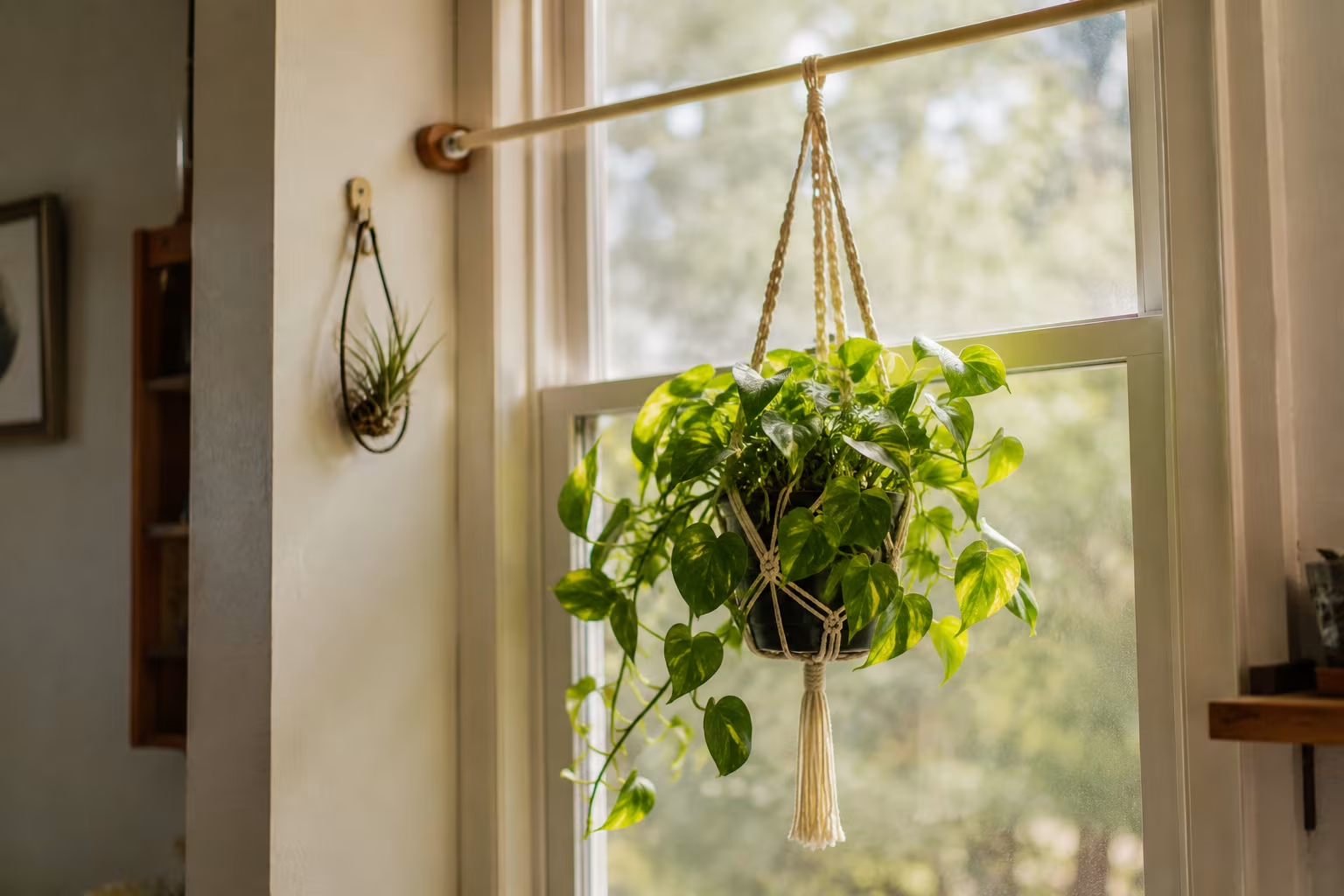
Hanging Plants Without Ceiling Hooks for Renters
Hanging plants brighten any room but drilling into the ceiling isn't always an option....
Comments
No comments yet. Be the first to share your thoughts!