How to Create a Tiled Backsplash Using Peel and Stick Subway Tiles
Okay, let's be real for a sec. You scroll through Pinterest, see all those stunning kitchens, and then you look at your own. Maybe it's a little… blah. Or perhaps you're renting and that dated backsplash is just driving you nuts, but you can't exactly tear it out.
Sound familiar? I've been there, staring at my sad, painted wall behind the stove, wishing for something with a bit more oomph. But a full-on tile job felt like a massive commitment, both in time and money.
That's where peel and stick subway tiles come in, my friend. We're going to dive into how to pick 'em, prep your space, and actually get them looking fantastic.
No fancy tools needed, just a bit of patience and maybe a good podcast while you work. Let's make that kitchen sparkle without the renovation headache. 👋
Why This Actually Matters
You know that feeling when you walk into a space that just feels right? Sometimes it's the big things, but often it's the small details that make all the difference. A backsplash is one of those surprisingly impactful elements.
A fresh backsplash can completely transform your kitchen's vibe without you needing to knock down walls or buy all new appliances. It's a surprisingly budget-friendly way to make a huge visual statement.
My own kitchen felt pretty generic when I first moved in. I spent months putting off a backsplash because the thought of mixing grout and dealing with heavy, messy tiles just stressed me out. Peel and stick tiles were literally a weekend project that changed everything.
It's not just about looks, either. A good backsplash protects your walls from splashes and grease, making cleanup way easier. Plus, it's a chance to add some personal style without breaking the bank.
Understanding Peel and Stick Tiles
First things first, what exactly are we talking about here? Peel and stick tiles are essentially adhesive-backed decorative panels designed to mimic the look of traditional tiles.
They come in all sorts of styles, but today we're focusing on the classic, clean look of subway tiles. Think of them as giant, fancy stickers for your walls.
The Lowdown on Different Types
When you start looking, you'll notice there are a few main types of peel and stick tiles. Each has its pros and cons, especially depending on where you're putting them.
- Vinyl/Gel Tiles - These are probably the most common and budget-friendly. They're typically made of a PVC or vinyl material with a glossy, gel-like finish that gives them a 3D effect. They're super easy to cut with scissors or a utility knife, and they're lightweight. My first backsplash in my old apartment was this type. They held up great for two years!
- Metallic/Stone Composite Tiles - These are a step up in realism. They often incorporate thin layers of actual metal or stone over an adhesive backing. They look incredibly authentic and feel sturdy. You'll likely need heavier-duty cutters for these, like tin snips or a Dremel tool, because they have a bit more substance.
- Smart Tiles (Epoxy) - This is a brand name you'll see a lot, and they're known for their high-quality epoxy finish. They're thicker than basic vinyl and incredibly durable, resisting heat and humidity well. They're a fantastic choice for areas like behind the stove or sink, but they do tend to be a little pricier.
No matter the type, the core idea is the same: peel off the backing, stick it to a clean, smooth surface, and press it down firmly. It's DIY magic, I swear.
I always recommend getting a sample if you can, especially if you're torn between a few options. Pictures online don't always do them justice, and you want to see how the texture and color truly look in your home's lighting.
How To Actually Do It: Your Peel and Stick Backsplash Guide
Alright, enough talk about what they are. Let's get to the fun part: actually putting them up! This isn't rocket science, but a little planning goes a long way. Trust me, I've learned that the hard way on more than one project.
Step 1: Prep Your Surface Like a Pro
This is probably the most crucial step, and honestly, it's where most people mess up. Your tiles are only as good as the surface they're sticking to. If it's dirty, greasy, or uneven, your tiles won't last.
Start by giving your walls a really good scrub. Use a degreaser like TSP (trisodium phosphate) or even just some dish soap and warm water. Kitchen walls, especially near the stove, collect a lot of unseen grease and grime.
Once it's clean, rinse it well with plain water and let it dry completely. I usually give it at least 24 hours to air out, just to be safe. Any moisture trapped underneath could cause issues later.
Next, check for any holes, cracks, or texture. Patch any holes with spackle and sand them smooth. If you have heavily textured walls, peel and stick tiles aren't usually the best fit. They need a smooth surface to adhere properly.
If your walls are painted with a low-VOC (volatile organic compound) or "washable" paint, sometimes the adhesive has trouble sticking long-term. In that case, a light sanding and a coat of a good primer (like Zinsser B-I-N Shellac-Base Primer) can really help create a strong bonding surface. I did this in my laundry room and it made a huge difference.
Step 2: Measure, Plan, and Mark
Don't just eyeball it, please. A little measuring now saves a lot of headaches later. Grab a tape measure, a pencil, and a level.
Decide where your backsplash will start and end. Usually, this means from the countertop up to the bottom of your upper cabinets. Consider if you want to extend it around a window or door frame, too.
The biggest trick here is finding your starting point. You want your tiles to be level and centered. I usually recommend starting in the most visible area of your kitchen, like directly behind your sink or stove.
Use your level to draw a perfectly horizontal line on the wall where the top edge of your first row of tiles will sit. This is your guide! You can also draw a vertical line in the center of your chosen starting point to help with symmetry.
For more complex areas, like around outlets, make a paper template. Just hold a piece of paper over the area, trace around the obstacles, and then cut it out. You can use this template to cut your tiles before sticking them to the wall.
Step 3: Test Fit Your Layout
Before you peel anything, take a few sheets of your tiles and temporarily tape them to the wall using painter's tape. This lets you see how the pattern flows and where you might need to make cuts.
Pay attention to the grout lines and how they line up. Most peel and stick tiles are designed to overlap slightly, creating a seamless look. Practice this overlap without the adhesive backing.
This test fit is especially important for areas with outlets or corners. It helps you visualize where your cuts will fall and adjust your starting point if necessary to avoid tiny slivers of tile in awkward spots.
Step 4: Cutting Your Tiles
Cutting is probably the most intimidating part for most people, but it's totally doable. The tools you need will depend on the type of tile you chose.
- For Vinyl/Gel Tiles: A good pair of sharp scissors or a utility knife with a fresh blade is usually all you need. Place the tile on a cutting mat or a piece of scrap cardboard and use a straight edge (like a metal ruler) as a guide for cleaner lines.
- For Metallic/Stone Composite Tiles: These often require something a bit stronger. Tin snips work well, or even heavy-duty craft scissors. For very precise cuts, especially around outlets, a Dremel tool with a cutting wheel can be a lifesaver. Just remember to wear safety glasses!
Always measure twice, cut once! And if you're making complex cuts, like for an outlet, cut a little smaller first and then trim as needed. It's easier to take more off than to add it back on.
I definitely messed up a few tiles trying to freehand a curve once. Lesson learned: always use a straight edge or a template!
Step 5: Peel and Stick – The Moment of Truth
This is where it all comes together! Start from your marked guide line and work your way across. Peel off a small section of the backing first, align the tile perfectly, and then slowly peel the rest while pressing firmly.
Press down from the center of the tile outwards, pushing any air bubbles towards the edges. A rubber roller or a clean, dry cloth can help ensure good adhesion and smooth out any bumps.
Most peel and stick tiles are designed with an overlapping edge to hide seams. Make sure you align these overlaps carefully to create that continuous, traditional tile look. Take your time with each sheet.
If you make a mistake and misalign a tile, don't panic! Most adhesives allow you a minute or two to reposition if you act quickly. Gently lift the tile, realign, and press down again.
Step 6: Working Around Outlets and Corners
Outlets are where your template from Step 2 really shines. Once you've cut your tile to fit around the outlet, you'll want to remove the outlet cover first. Stick the tile, then replace the cover. The cover will help hold the tile edges firmly in place.
For inside corners, you typically want to cut a tile to fit right up to the corner, leaving a tiny gap. Then, for the adjacent wall, start with a new tile, cutting it to meet the first tile in the corner. You can use a bit of caulk later to seal this seam if you want a super clean finish.
Outside corners (like if your backsplash wraps around an exposed cabinet edge) can be a bit trickier. You can either butt the tiles up to each other or, for a really polished look, miter the edges if your tiles are thick enough and your cutting tool allows for it. Most people just butt them together, and it looks perfectly fine.
Step 7: The Finishing Touches
Once all your tiles are up, give them one last good press with your hands or a roller to ensure everything is stuck down firmly. Reinstall any outlet covers you removed earlier.
Now, about grout. Most peel and stick tiles are designed to look like they have grout lines, so you don't typically need to add real grout. In fact, adding traditional grout can often detract from their intended look and may not adhere well to the tile surface.
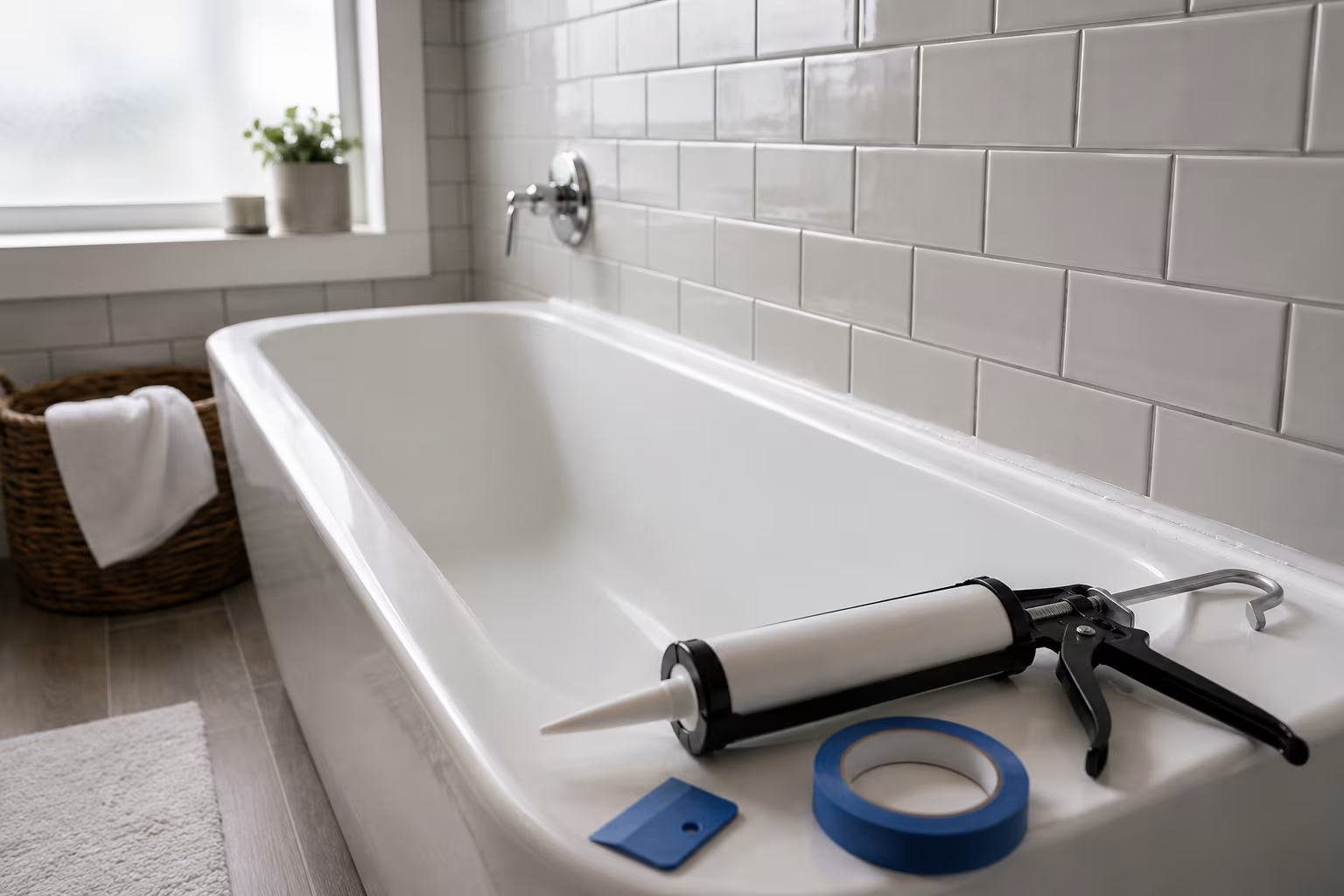
However, you can add a thin bead of caulk along the top edge where the tiles meet the cabinets and along the bottom where they meet the countertop. This creates a really clean, sealed edge and helps prevent water from getting behind the tiles. Choose a caulk color that matches your "grout" lines for the best effect.
I always use a paintable acrylic caulk, because it's easy to clean up with water and dries pretty quickly. Just apply a thin bead, then smooth it out with a wet finger or a caulk tool. Wipes off easily if you get it on the tiles!
Making It Stick / Common Mistakes
Okay, so we've talked about the "how." Now, let's talk about the "what not to do." Because trust me, I've made these mistakes, so you don't have to. The number one reason these tiles fail isn't the tiles themselves, it's usually installation error.
"The secret to a successful DIY project isn't avoiding mistakes, it's knowing how to fix or prevent the common ones."
The most frequent problem is tiles lifting or peeling. This almost always comes back to poor surface preparation. If your wall wasn't clean enough, dry enough, or smooth enough, the adhesive just won't bond properly. Don't skip that cleaning and drying step, please!
Another common issue is misaligned tiles. It's super easy to get off-kilter, especially when you're just starting. That's why those pencil lines and a level are your best friends. Take a step back often to make sure your lines are still straight.
Cutting errors are also common. Too many times I've rushed a cut, only to realize I'm a centimeter short. Always measure twice. And if you have a complex cut for an outlet, cut a cardboard template first. It's easier to waste cardboard than a whole tile sheet.
Finally, not pressing down firmly enough can lead to lifting edges. The adhesive needs good, even pressure to fully activate and bond. Use that roller or cloth and really put some muscle into it, especially around the edges of each tile sheet.
If you do notice a small edge lifting a few days later, don't ignore it. You can often carefully lift it a little, apply a tiny dab of strong adhesive (like E6000 glue), and press it back down firmly. Hold it with painter's tape while it dries.
Frequently Asked Questions
Can I really use peel and stick tiles behind my stove?
Yes, you absolutely can! Most quality peel and stick tiles, especially the Smart Tile epoxy kind, are designed to withstand normal kitchen temperatures. They're usually resistant to heat up to 120°F (49°C) and even higher for some brands. Just avoid direct, prolonged exposure to extreme heat, like an open flame directly on the tile.
How long do peel and stick backsplashes typically last?
With proper installation and care, a good quality peel and stick backsplash can last anywhere from 3 to 10 years, or even longer. The lifespan really depends on the quality of the tiles, how well the surface was prepped, and how much wear and tear they experience. I've had one up for over four years now, still looking great.
Are these renter-friendly? Can I remove them easily?
Many brands market their peel and stick tiles as renter-friendly, but "easily" is a bit subjective. They can be removed, often by gently warming them with a hairdryer to loosen the adhesive and then peeling them off. However, depending on the wall surface and how long they've been up, there might be some minor paint peeling or residue left behind. Always test a small, inconspicuous area first if you're concerned.
Can I use peel and stick tiles in a bathroom or shower?
For a bathroom backsplash, absolutely! As long as the area isn't directly exposed to a constant stream of water, like inside a shower, they work great. They're typically resistant to humidity. For inside a shower, however, the continuous water exposure is usually too much for the adhesive, and they won't last. Stick to traditional tiles for wet areas.
What if my wall isn't perfectly smooth, but I still want to use them?
If your wall has very light texture, you might get away with it, but it's risky. The adhesive needs full contact to bond correctly. For best results, I'd honestly recommend either skim-coating the wall with joint compound to smooth it out (which is a bit more work) or choosing another backsplash option. A heavily textured wall will almost certainly lead to the tiles not sticking properly or looking uneven.
How much do peel and stick tiles cost compared to traditional tiles?
Generally, peel and stick tiles are significantly more affordable than traditional tiles, especially when you factor in the labor cost of hiring someone for installation. You're looking at maybe $2-$10 per square foot for peel and stick, whereas traditional tile materials alone can be $3-$20+ per square foot, plus grout, thin-set, and tools. My whole kitchen backsplash cost me under $100.
The Bottom Line
So there you have it! A peel and stick backsplash is a genuinely fantastic DIY project that can bring a whole new look to your kitchen without breaking your back or your bank account. It's a project that builds confidence, even if you're a complete beginner.
The most important thing to remember is prep, prep, prep. Take your time with cleaning and measuring, and the sticking part will be a breeze. Don't be afraid to try something new, even if it feels a little intimidating at first.
You've got this. Seriously. Grab some tiles, put on your favorite tunes, and make your kitchen beautiful. I can't wait to see what you create! ❤️