How to Organize a Charity Craft Marathon for Your Community
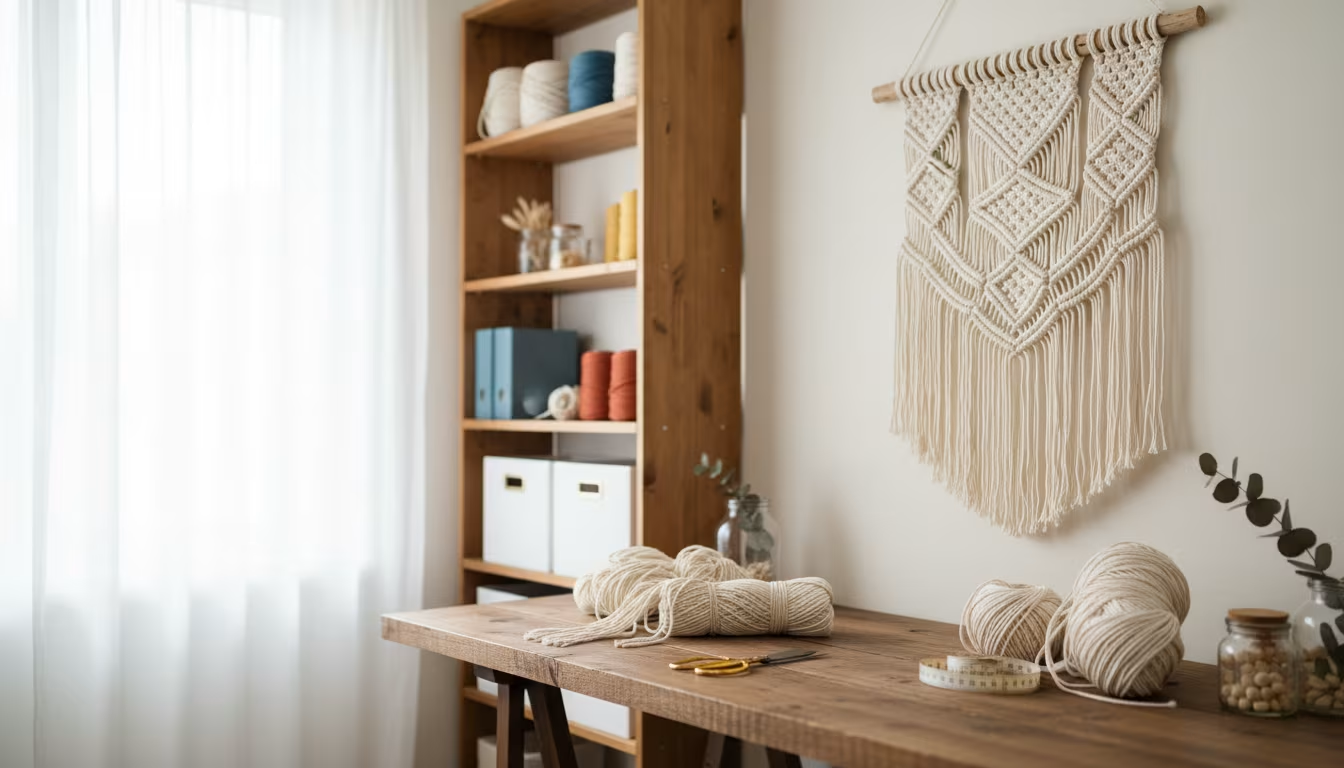
Ever stare at your mountain of craft supplies and wonder if it could be doing more good in the world? You know that feeling, right? All those beautiful fabrics, yarns, or stacks of paper just waiting for the perfect project.
Sometimes, for me, the sheer volume can feel a little... overwhelming. It's like, I love making things, but what if all this creative energy could actually help someone else?
That's exactly where the idea of a charity craft marathon comes in. It's not just about making pretty things; it's about bringing people together to use their hands and hearts for a cause that truly matters. 👋
Today, we're going to dive into how you can plan and execute your own craft marathon. We’ll talk about choosing a cause, rallying your community, and even sidestepping some common pitfalls I’ve learned from my own craft adventures.
Why This Actually Matters
It’s easy to get caught up in our own projects, designing for our homes or gifts for friends. And there’s nothing wrong with that! We all need creative outlets.
But there’s this incredible, warm feeling you get when your creativity extends beyond yourself. When you know a little handmade blanket is going to comfort a child, or a sturdy wooden toy will bring joy to a family.
I remember last year, I spent an afternoon making simple cloth dolls with some friends for a local women’s shelter. It wasn't about perfect stitches; it was about imagining those dolls bringing a little bit of softness into someone's tough day.
It’s more than just the finished product, too. These events build community. They connect people who might not otherwise meet, all centered around a shared purpose and the simple joy of making.
Plus, let's be real, it's a fantastic way to justify buying more supplies! Just kidding... mostly. It's about making a tangible difference with skills you already have or want to learn.
Getting Started: What's a Craft Marathon, Anyway?
Okay, so "marathon" might sound a little intense, like you need to run for miles with a glue gun. Don't worry, it's not like that at all!
A charity craft marathon is essentially a focused crafting event where you gather a group of people to create items for a specific charitable organization or cause. It’s usually over a few hours, or even a full day, dedicated to making as many items as possible together.
Think of it as a creative work party. Everyone brings their skills, their enthusiasm, and maybe a snack, and together you churn out handmade goodness for those who need it most.
It’s a powerful way to multiply your impact. Instead of just one person making a few items, you get ten or twenty people making dozens!
Defining Your Mission
Before you even think about glitter or fabric scraps, you need a clear mission. This is probably the most crucial first step, because it guides every decision you make from here on out.
A fuzzy mission leads to a fuzzy event. You want everyone to know exactly why they’re there and who they're helping.
- Choose a Cause: This is where your heart comes in. What local organization genuinely moves you? Animal shelters, hospitals (especially children's wards), senior centers, homeless shelters, veteran’s groups, or even schools often have needs for handmade items. Pick something you're passionate about, because that passion will carry you through the planning.
- Identify the Need: Don't just assume what they need. Call them! Seriously, pick up the phone or send an email. Ask directly: "What handmade items would be most helpful to your clients right now?" They might need blankets, hats, scarves, simple toys, cards, or even small decorative items to brighten a space. You might be surprised by their actual needs.
- Set Clear Goals: Once you know the cause and the need, set a tangible goal. For example, "We aim to make 50 knitted hats for the local homeless shelter by November 15th." Or, "Our goal is 100 handmade cards for patients at the children's hospital." Clear goals keep everyone focused and give you something exciting to aim for.
I learned this the hard way once when I organized a small drive for handmade pet toys. I assumed any pet toy would be great, but the shelter actually preferred durable, chew-resistant ones, and my softer creations weren't quite right. Always ask!
Making It Happen: Your Step-by-Step Guide
Organizing an event might sound like a massive undertaking, especially if you’re used to just puttering around your own workshop. I get it! My first woodworking project felt like climbing Mount Everest. But just like breaking down a complex project into smaller cuts, we’ll break down this marathon into manageable steps.
It’s totally doable, even if you’ve never organized anything bigger than a potluck before. Promise.
Step 1: Pick Your Project & Supplies
Now that you know your cause and their specific needs, it's time for the fun part: picking the craft! This is where you can let your creative juices flow, but with some practical considerations.
You want something that's relatively simple and repeatable. Think beginner-friendly, because you'll likely have crafters of all skill levels joining in.
If you're making blankets, maybe pre-cut some fabric strips for knot-tied no-sew blankets. For cards, have stamps, paper, and adhesive ready. If it’s small wooden toys, consider simple shapes that can be cut with a scroll saw or sanded by hand.
Next up: supplies. Can you get them donated? Reach out to local craft stores, fabric shops, or even online craft communities. A lot of places are happy to contribute materials for a good cause.
Don’t forget thrift stores! I've found amazing yarn bundles, fabric scraps, and even craft tools for a steal at my local Goodwill. Sometimes a $5 bag of fabric can become dozens of small projects.
Make a detailed list of everything you’ll need. Then, start collecting. Don't leave it until the last minute!
Step 2: Find a Space & Time
Where will all this crafting magic happen? You need a space that’s big enough for your anticipated number of participants, with good lighting and tables.
Think about community centers, church halls, school gyms (especially if you’re working with kids), or even a large, cleared-out garage (like mine!). Many places offer their space for free or at a reduced rate for charity events.
When picking the time, weekends are usually best, especially Saturdays, for a few hours in the afternoon. A 3-4 hour block often works well – long enough to get a lot done, but not so long that people get tired or burnt out.
Consider accessibility, too. Is there parking? Is it wheelchair friendly? These little details make a big difference for your potential participants.
I once hosted a mini-marathon in my garage during a rainy Portland weekend. It was a bit cramped, but we pushed the car out, set up folding tables, and made it cozy with some fairy lights. It totally worked!
Step 3: Spread the Word
You've got your mission, your craft, and your space. Now, you need people! Getting the word out effectively is key to a successful turnout.
Use every channel you can think of: social media (Facebook groups, Instagram, local community pages), flyers at craft stores, coffee shops, libraries, and community boards. Ask friends to share your posts.
Be super clear in your promotion: What's the cause you’re supporting? What are you making? When and where is it happening? What, if anything, should participants bring? (e.g., their own scissors, a snack to share, a specific type of fabric if they have extra). Most importantly: emphasize that no experience is necessary!
Don't just post once and forget it! Keep the reminders coming. A week before, then a few days before, and a "last call" post can make a huge difference in getting people to actually show up.
Step 4: Gather Your Dream Team (Volunteers)
You absolutely cannot do this alone. Trying to manage supplies, guide crafters, and keep the energy up all by yourself is a recipe for exhaustion and frustration. Ask for help early!
Recruit a few friends or community members to be your "dream team." You'll want people to help with setup, greeting participants, assisting crafters with the project, managing snacks/drinks, and cleanup.
Assign roles clearly so everyone knows what they’re responsible for. Maybe one person is the "supply manager," another is the "instruction guru," and someone else is "hospitality lead."
Even having one or two reliable helpers makes the world of difference. It takes the pressure off you and makes the whole event much smoother and more enjoyable for everyone.
My friend Sarah is a lifesaver with organizing. She helped me create little stations and keep everything running, which meant I could actually craft a bit too!
Step 5: Prep for the Big Day
This is where all your planning comes together. The more you prep beforehand, the less stress you'll have on the day of the marathon. Trust me on this one.
Organize your supplies by station. If you’re making cards, have a paper-cutting station, a stamping station, and an assembly station. If it’s blankets, maybe a cutting station and a tying station.
Create clear, step-by-step instructions. Pictures are always a good idea! Print them out and have them at each station. Also, have a finished example of the craft so people know what they're aiming for.
Think about the little things, too. Music can really set the mood. A good playlist can keep energy up. And definitely consider refreshments – coffee, water, and some easy-to-grab snacks (pretzels, fruit, cookies) are always appreciated. Nobody crafts well on an empty stomach!
I always make sure to have a dedicated "scrap bin" for each station. It keeps things tidy and makes cleanup much faster.
Step 6: The Marathon Day!
The day is here! Take a deep breath. You've done all the hard work, and now it's time to enjoy the fruits of your labor and the community spirit.
Start by warmly welcoming everyone. Thank them for coming and briefly reiterate the "why" – reminding everyone which charity they’re helping and what impact their efforts will have. This reinforces the mission and gets everyone excited.
Keep the atmosphere light, positive, and collaborative. Play your music, encourage people to chat and help each other. It’s not about silence and intense focus; it’s about connection.
Make sure your "dream team" volunteers are circulating, answering questions, offering assistance, and keeping supplies stocked. Their presence will be invaluable in keeping things running smoothly.
Don't forget to snap some photos! Capture the camaraderie, the piles of finished crafts, and the happy faces. These photos are great for thanking participants later and sharing the success with the charity.
Step 7: Collect, Count, & Deliver
As the marathon winds down, have a designated collection area for all the finished items. Make it clear where people should put their creations.
Once everything is collected, take the time to count the items. This is a super satisfying step, seeing all that collective effort come to life! Take a final group photo with all the finished crafts – it's a great visual of your collective impact.
Now, arrange the delivery. Contact the charity and schedule a drop-off. If possible, deliver the items in person with a few of your volunteers. It's really powerful to see where your efforts are going and to briefly connect with the people who will distribute your handmade gifts.
The charity often loves to take photos too, which they can use for their own outreach. It's a win-win for everyone.
Step 8: Say Thank You!
This might seem small, but it's incredibly important. Follow up with everyone who participated: your volunteers, the crafters, and the organization that lent you space.
Send a thank-you email or post on social media. Include some of those great photos you took. Share the final count of items made and reiterate the impact it will have on the chosen charity.
Acknowledge everyone's contribution. "We made 75 blankets for the animal shelter! This wouldn't have been possible without all of you!"
This gesture makes people feel appreciated and much more likely to participate in future events. It closes the loop on a truly rewarding experience for everyone involved.
Bumps in the Road: Common Mistakes to Sidestep
Okay, so I’ve painted a pretty rosy picture, right? But let’s be real. Even with the best intentions, things can go a little sideways. I've definitely had my share of craft disasters, and organizing can have similar moments.
Here are some common mistakes I’ve either made or seen others make, and how you can avoid them.
Overcomplicating the project: It's tempting to pick a really impressive, intricate craft. But remember, you’ll have varying skill levels. If the project is too hard, people get frustrated and lose enthusiasm. I once tried to teach advanced origami at a mixed-skill craft night, and it definitely wasn't a hit.
Not enough supplies: Always, always overestimate your supply needs. It's better to have a little leftover than to run out halfway through. Nothing kills the mood faster than everyone sitting around because there's no more yarn or glue sticks. Factor in a "buffer" for mistakes too; someone might mess up a cut or need to restart.
Poor communication: Ambiguity is the enemy of a smooth event. Be crystal clear about the date, time, location, what to bring, what to expect, and most importantly, the purpose. If people are confused, they might not show up or might arrive unprepared.
Trying to do it all yourself: This is a big one. You're passionate, I know! But burnout is real. Delegate tasks, trust your volunteers, and let go of the idea that everything has to be done exactly* your way. The goal is contribution, not solo perfection.
Forgetting the "why": In the hustle of planning, it’s easy to get bogged down in logistics. Regularly remind yourself and your team about the charity and the people you’re helping. Keep a picture of the cause or a short quote visible during planning and the event itself.
"Don't aim for perfection, aim for contribution. The love baked into each handmade item is what truly counts."
Frequently Asked Questions
How do I pick the right craft project?
Focus on projects that are repetitive, don't require high precision, and use accessible materials. Think about the skill level of typical beginners. Simple sewing, knotting, card making, or basic wood sanding projects are usually great choices.
What if nobody shows up?
If you're worried about attendance, start small! Invite a few friends for a "crafting for a cause" evening in your living room. The experience will give you confidence to plan a bigger event next time. Even a small group making a few items still makes a difference.
Do I need a big budget for this?
Not at all. You can run a charity craft marathon on a shoestring budget by focusing on donated supplies, reaching out to local businesses for sponsorships, and utilizing thrift store finds. My best projects often start with something I found for $10 at a second-hand shop.
How long should the marathon be?
For a community event, 3-4 hours usually hits the sweet spot. It's enough time for participants to complete several items without feeling rushed or getting tired. If you're planning a full-day event, consider building in a lunch break.
Is it okay if the items aren't "perfect"?
Absolutely! Handmade items, even with their quirks, carry immense value. The effort, care, and intention behind each piece are what truly matter to the recipients. Perfection isn't the goal; compassion and creativity are.
What kind of tools do I need to provide?
It depends on the craft! For paper crafts, good quality scissors, glue sticks, and maybe some stamps are key. For fabric, a few pairs of fabric scissors and measuring tapes. For woodworking, sandpaper, perhaps a few hand saws. Always have a few extra pairs of common tools like scissors and rulers on hand.
How do I handle food and drinks?
Keep it simple! Encourage participants to bring a snack to share, or offer basic refreshments like water, coffee, and some easy-to-grab cookies or fruit. You don't need a full meal, just enough to keep energy levels up for a few hours.
The Bottom Line
Organizing a charity craft marathon might seem like a big step, especially if you're mostly used to solo crafting like me. But it's an incredibly rewarding experience that brings together your passion for making with a desire to give back.
It's about the shared joy of creation, the power of community, and the knowledge that your hands are making a real, tangible difference for others. You don't need to be an expert organizer or the most skilled crafter in the world to make this happen.
Just start with a cause you care about, a simple project, and a willingness to bring people together. Even a small gathering can create a ripple effect of good in your community. Go make something beautiful, for someone else. ❤️