
The Best Strategies for Growing Tomatoes in Hot and Humid Climates

Tomatoes are a warm-season crop, but there is a point where warmth turns against them. In sustained heat and high humidity, plants drop their blossoms, foliage picks up fungal disease, and fruit cracks before it ripens. Growing a real harvest in that climate is less about effort and more about a handful of specific choices, variety, siting, water, and airflow, that keep the plant out of the stress zone.
What Heat and Humidity Actually Do
Two distinct problems are at work. When daytime temperatures hold above 85-90°F, or nights stay above 70-75°F, tomato pollen becomes unviable and flowers fail to set fruit, a condition called blossom drop. The plant simply aborts blossoms it can't fertilize, so you get lush foliage and almost no tomatoes.
Humidity is the second front. Constant moisture in the air is an ideal breeding ground for fungal diseases: early blight, late blight, and powdery mildew all spread faster in damp, stagnant conditions. Excess moisture also drives fruit splitting and rot. You cannot change the weather, but nearly every strategy below is aimed at one of these two levers, keeping the plant cooler at its stress points and keeping air moving to dry the foliage.
Choosing Heat-Tolerant Varieties
Variety selection is the single most impactful decision. Heirlooms prized for flavor often wilt and refuse to set fruit in extreme heat, so reserve them for milder pockets of the season and lean on varieties bred to set fruit at high temperatures. Look for the terms "heat-set," "heat-tolerant," or "disease-resistant" on the label. Determinate (bush) types set most of their fruit in one flush, which can dodge a short heatwave; indeterminate (vining) types produce all season but need more airflow management.
| Variety | Type | Why it holds up |
|---|---|---|
| Florida 91 | Determinate | Bred to set fruit in high heat |
| Heatwave II | Determinate | Sets fruit into the high 90s°F |
| Homestead | Semi-determinate | Classic humid-South performer |
| Celebrity | Determinate | Broad disease resistance |
| Roma / Amish Paste | Determinate | Paste types, resilient, good for sauce |
| Sun Gold / Sweet 100 | Indeterminate cherry | Small fruit sets reliably under stress |
Timing compounds the variety choice. The goal is to have plants mature enough to set fruit before the worst heat settles in, which usually means starting seeds indoors 8-10 weeks before your last frost and transplanting a week or two after it. That head start lets the plant fruit through the milder early-summer window rather than trying to set blossoms in the middle of a heatwave. Local conditions vary, so confirm variety and timing with a regional source such as the university extension yard and garden guides, which publish recommendations by zone.
Siting and Afternoon Shade
Tomatoes want full sun, but in a genuinely hot climate they benefit from relief during the worst of the afternoon. The ideal is strong morning light with shade from roughly 2 p.m. onward, which you can get by planting on the east side of a structure. Container plants can simply be rolled into shade during the peak hours. For in-ground plants, site them near a taller crop that throws afternoon shade, or rig a temporary 30-40% shade cloth when a heat spike is forecast. Every degree shaved off the midday canopy reduces blossom drop.
Soil and Drainage
Tomatoes are heavy feeders, but in a humid climate drainage matters as much as fertility. Waterlogged roots invite rot and fungal problems, so amend generously with compost to build both nutrients and structure. If you garden on heavy clay, switch to raised beds or large containers filled with quality potting mix; raised beds let excess water drain away instead of pooling around the crown. Containers for indeterminate types should hold at least 15-20 gallons with ample drainage holes, and fabric grow bags work well because they breathe and shed excess water.
On feeding, resist the urge to push nitrogen. A high-nitrogen fertilizer drives leafy growth and a denser, more disease-prone canopy at the expense of fruit. Once plants begin flowering, favor a formula higher in phosphorus and potassium, and feed on a steady schedule, roughly every two to three weeks for in-ground plants and slightly more often for containers, which leach nutrients faster with frequent watering. Working a couple of inches of compost into the top of the bed mid-season tops up fertility without a sudden spike. A soil pH near 6.2-6.8 keeps nutrients available; most garden soils sit in range, but a cheap test kit removes the guesswork.
Watering Strategy
Watering technique prevents more problems here than any spray. Water deeply and consistently at the soil, not the foliage, and do it in the early morning so any splashed leaves dry before nightfall, wet leaves overnight are a fungal invitation. Shallow daily watering encourages shallow roots and rapid evaporation; a deep soak every few days builds a root system that tolerates heat better. Drip irrigation or a soaker hose delivers water straight to the root zone and keeps foliage dry, which is exactly what you want under humidity. Consistency also prevents blossom end rot, the dark sunken patch on the fruit bottom that stems from erratic moisture disrupting calcium uptake, not usually a soil calcium shortage.
Pruning for Airflow
Pruning is a disease-control tool as much as a yield tool. Remove the lowest leaves so none touch the soil, where they would pick up soil-borne spores. On indeterminate plants, pinch out the "suckers," the shoots that emerge in the crotch between the main stem and a branch, before the canopy turns into a dense, humid thicket. Keep the plant open enough that air moves through it. Support the plant off the ground with sturdy stakes, cages, or a cattle-panel trellis; the extra height and spacing both improve circulation. Wipe pruning shears with rubbing alcohol between plants so you are not carrying disease from one to the next.
Mulching
A 2-4 inch layer of straw, shredded leaves, or wood chips around the base does three things at once. It moderates soil temperature so roots stay cooler under a blazing sun, it conserves soil moisture so watering stretches further, and, most important in a humid climate, it stops rain and irrigation from splashing soil, and the fungal spores in it, up onto the lower leaves. That splash barrier alone prevents a meaningful share of early blight infections. Keep the mulch pulled back an inch from the stem so the crown stays dry.
Scouting for Disease
In humid conditions disease moves fast, so inspect plants daily or every other day. Learn the two most common fungal signatures so you can catch them early. Early blight shows as dark brown spots with concentric rings, a target pattern, usually starting on the lowest, oldest leaves and moving upward. Late blight is more aggressive: greasy gray-green patches on leaves and stems that spread quickly in cool, wet spells and can collapse a plant in days. Powdery mildew reads as a white, dusty coating on the upper leaf surface. Blossom drop, by contrast, is not a disease at all but the heat response covered earlier.
Act on the first sign rather than waiting. Prune off a diseased leaf immediately and dispose of it in the trash, never the compost, where spores survive. Wipe pruning shears with rubbing alcohol between plants, and always work when the foliage is dry so you are not spreading spores on wet leaves. For pests, hand-pick the larger ones such as hornworms and use insecticidal soap or a neem oil spray for smaller infestations; neem deters many problems without wiping out beneficial insects. As a preventive in chronically humid gardens, some growers apply a copper-based fungicide on a protective schedule before symptoms appear, since these products work far better as prevention than as a cure. Early detection is the whole game, one removed leaf today prevents a defoliated plant next week.
Harvest Timing
How you harvest protects the fruit you fought for. Tomatoes left to fully ripen on the vine are prone to cracking, especially when a dry spell is broken by sudden rain and the fruit expands faster than its skin. Those cracks then admit pests and rot. Pick tomatoes as soon as they are showing color but before they are dead ripe, and let them finish on the counter indoors. The flavor develops just as well off the vine, and you lose far less of the harvest to splitting and critters.
Common Mistakes
The recurring failures are predictable. Ignoring the variety warnings and planting a heat-sensitive heirloom as the main crop guarantees disappointment; prioritize heat-set, disease-resistant types. Overwatering, or swinging between drought and drenching, produces blossom end rot and split fruit, so aim for that deep, consistent, morning soak. Neglecting airflow and support turns a sprawling plant into a mildew factory, prune the suckers and stake the plant up. And giving up after one bad season is its own mistake; conditions vary year to year, so adjust and try again. The related habits that keep any garden productive, matching plants to their light conditions and reading the seed packets before you buy, apply here too.
Put the pieces together, a heat-tolerant variety, morning sun with afternoon shade, well-drained soil, deep morning watering, an open pruned canopy, a mulch layer, and daily scouting, and a climate that felt like a sauna becomes a place where you can reliably fill a jar with your own salsa. Start with one or two proven varieties, give them the best-drained, best-ventilated spot you have, and build from what works.
Related Posts
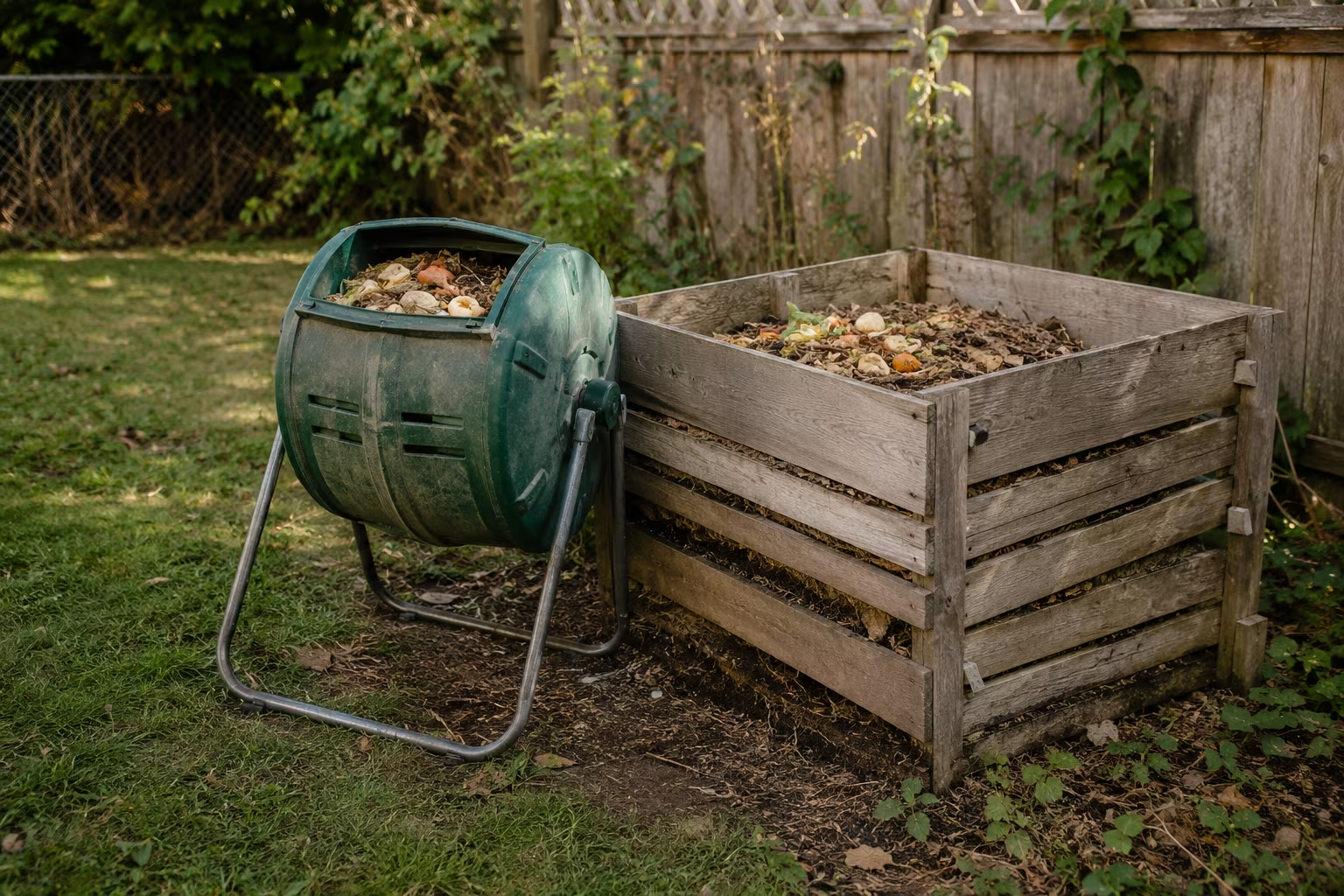
Compost Tumbler vs Static Bin: Which to Choose
Both composters work but they suit different households. Tumbler for speed and pest control...

Backyard Birdhouse Placement for Songbirds
A birdhouse in the wrong spot stays empty for years. Height, direction, distance from cover, and...

Wet-Climate Tent Camping: The Layering That Stays Dry
Three-season tents in wet climates fail predictably without the right layering. The footprint...
Small-Yard Composting Without Smell or Pests Attracting
Tight backyard, no room for a sprawling pile. The tumbler setup that turns kitchen scraps into...
Comments
No comments yet. Be the first to share your thoughts!