The Best Techniques for Patching and Repairing Drywall Holes
Hey there, friends! 👋 So, you know that feeling when you're moving furniture, maybe hanging a new picture, or even just having a slightly too enthusiastic dance party, and suddenly... CRUNCH. Yep. A hole in your drywall.
It's happened to me more times than I care to admit. From a door handle making a new ventilation system in the bathroom to a misjudged nail for a floating shelf, my walls have seen some things. You might stare at it, feeling that little knot in your stomach, wondering if you just ruined your wall forever.
Well, I'm here to tell you: you absolutely didn't! Patching drywall might seem intimidating, like some arcane builder's secret, but it's totally a DIY skill you can pick up. Seriously, if I can do it, you can too.
Today, we're going to demystify those pesky drywall holes. We'll chat about why knowing this stuff is so valuable, what tools you'll actually need (and what you can probably skip), and then we'll walk through patching different types of holes, step-by-step. Get ready to turn those wall boo-boos into distant memories!
Why This Actually Matters
Okay, so why bother learning how to patch a hole yourself? Couldn't you just cover it with a poster or, you know, just live with it? (I've been guilty of both, no judgment here!). But seriously, there are some pretty great reasons to tackle this.
First off, it's a huge money-saver. Hiring someone to come fix a small hole can easily run you a couple hundred bucks, sometimes more if they're doing a service call just for that. For a few dollars in materials and an hour or two of your time, you can do it yourself.
I remember when I first moved into my Portland apartment, I had this annoying little dent from the previous tenant’s TV mount. I almost ignored it for months, but then I decided to just try fixing it. I spent about $10 on spackle and a tiny putty knife, and after about 30 minutes of work spread over an afternoon, it was gone. That feeling of accomplishment? Totally priceless.
Beyond the money, it's about empowerment. Knowing you can fix things in your home, even small stuff like a drywall hole, makes you feel so much more capable. It's like learning to sew a button back on or fix a leaky faucet – suddenly, your space feels more like yours, and less like a mysterious machine you just inhabit.
Plus, a clean, smooth wall just looks better, right? Those little imperfections can really nag at you, even if you try to ignore them. Taking care of them makes your home feel more put-together and cared for, which is a big win in my book. It’s a foundational skill for anyone wanting to tackle bigger DIY projects, too. Once you can patch a wall, you might feel ready for painting a whole room, or even putting up new shelves.
The Drywall Basics: What You're Dealing With
Before we dive into patching, let's quickly talk about what drywall actually is. Most walls in modern homes are made of gypsum drywall, also known as plasterboard or Sheetrock (which is a brand name, like Kleenex for tissues).
It’s essentially a panel made of gypsum plaster pressed between two sheets of thick paper. It’s pretty sturdy for everyday life, but it definitely isn't indestructible. That's why those door handles and rogue toy cars can make such an impact.
Types of Drywall Damage You'll Encounter
The first step in fixing a hole is figuring out what kind of hole you actually have. This dictates your repair method.
- Small Holes: These are your everyday culprits – nail holes from pictures, small screw holes, or tiny dents from a bump. We're talking anything smaller than about half an inch. These are super easy to fix.
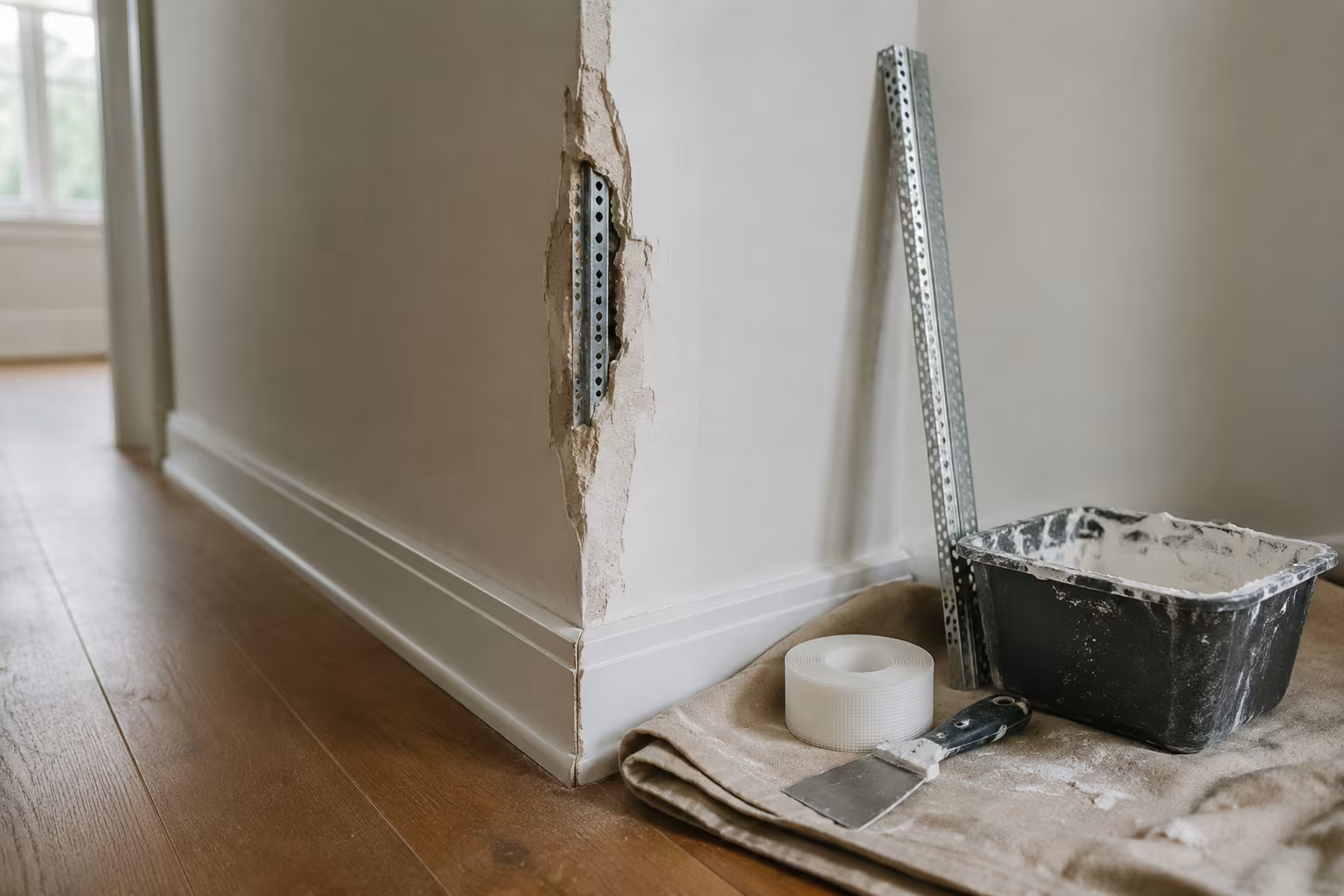
- Medium Holes: These are a bit bigger, say from a door handle punching through, or if you accidentally leaned too hard on the wall. Think anywhere from half an inch up to about 4-6 inches across. These need a bit more reinforcement than just spackle.
- Large Holes: If we're talking about a significant chunk of drywall missing – maybe you cut out a section for an electrical box, or something really took a dive into the wall – then you've got a large hole. These often require cutting out a new piece of drywall to fit.
Tools You'll Actually Need (Don't Go Overboard!)
You definitely don't need a professional contractor's toolkit for this. Most of these items you might already have kicking around, or you can grab them for under $20 at any hardware store.
- Putty Knife or Trowel: You'll want a couple of sizes. A small 1.5 or 2-inch knife is great for tiny holes and detailed work. A wider 4 or 6-inch knife is perfect for spreading joint compound smoothly over larger areas.
- Spackle or Joint Compound (Drywall Mud): Spackle is for small holes, quick and easy. Joint compound (often just called "mud") comes in a tub and is for larger repairs. You can get "lightweight all-purpose" for most jobs.
- Drywall Sanding Sponge or Sandpaper: Fine-grit (120-180) is usually perfect. A sanding sponge is comfy to hold.
- Utility Knife: Super sharp! This is for squaring off edges and cutting patches.
- Drywall Patch (for medium holes): These are usually adhesive mesh patches with an aluminum backing. They come in various sizes.
- Small Piece of Drywall (for large holes): Grab a scrap piece from a hardware store, or sometimes they sell small repair panels.
- Drill/Screws (for large holes): To attach backing boards or new drywall.
- Wood Furring Strips or Scraps (for backing): If you're doing a larger repair and need something to screw into.
- Drywall Tape (for large holes): Self-adhesive fiberglass mesh tape is easiest for beginners.
- Pencil and Ruler/Straightedge: For marking cuts.
- Drop Cloth or Old Towels: Drywall dust gets everywhere, trust me.
- Dust Mask and Safety Glasses: Please, please, please protect your lungs and eyes when sanding!
- Primer and Paint: To finish the job and make it disappear.
- Clean Rags or Sponge: For wiping dust.
See? Not so scary, right? Most of these are basic home improvement staples. I’ve definitely learned the hard way that a good putty knife makes all the difference. My first one was flimsy and made everything so much harder. Invest in a decent set, and they’ll last forever.
How To Actually Do It: Step-by-Step Repairs
Alright, let's get our hands dirty (or at least dusty!). We'll go through the process for each type of hole, from the super simple to the slightly more involved. Remember, patience is your best friend here. Don't rush the drying times!
Repairing Small Holes (Nail Holes, Dings)
These are the easiest wins! Perfect for building your confidence. I love tackling these little guys because the instant gratification is real.
Step 1: Prep the Area
First, grab your small putty knife and gently scrape around the hole. You want to remove any loose bits of paper or raised edges that might be sticking out. This ensures your patch will be smooth and flush with the wall.
Then, quickly wipe down the area with a damp cloth to get rid of any dust or grime. A clean surface helps the spackle stick properly. Don't skip this; a little bit of prep goes a long way to make the finished job look professional.
Step 2: Fill with Spackle
Now for the magic! Scoop a small amount of spackle onto your small putty knife. Hold the knife at about a 45-degree angle to the wall and press the spackle firmly into the hole.
You want to make sure it's completely filled, pushing it in to get good adhesion. Don’t worry about getting it perfectly smooth yet; just focus on filling the void.
Step 3: Smooth It Out
Once the hole is filled, use your putty knife to scrape off any excess spackle. Hold the knife almost flat against the wall and drag it across the patched area, feathering the edges so there's no noticeable hump.
You're aiming for a flat, even surface, level with the rest of the wall. This might take a couple of passes, gently removing more spackle each time. If you mess up, just wipe it off with a damp cloth and try again before it dries.
Step 4: Let it Dry and Sand
This is crucial! Let the spackle dry completely. Check the directions on your spackle container; it usually takes anywhere from 30 minutes to a few hours, depending on humidity and how thick you applied it. It often turns from white to a duller white when dry.
Once dry, grab your fine-grit sanding sponge. Gently sand the patched area in a circular motion until it's perfectly smooth and blends into the surrounding wall. You'll feel it with your fingertips if there are any bumps left.
Step 5: Prime and Paint
Wipe away any sanding dust with a clean, dry cloth. Now, apply a thin coat of primer over the patch. This helps seal the spackle and ensures your new paint will match the sheen of the rest of the wall.
Once the primer is dry, paint over the patch, feathering the edges slightly so it blends with the existing wall paint. You might need two coats of paint. Step back and admire your invisible repair! Pretty satisfying, right?
Repairing Medium Holes (Door Handle, Fist-Sized)
Okay, these are a step up, but still totally doable with a drywall patch kit. You know, those moments where you slam a door a little too hard, or maybe you tripped while carrying a laundry basket. Sound familiar?
Step 1: Prep the Hole and Edges
First, examine the hole. Remove any loose bits of drywall or paper that are hanging off. Use your utility knife to carefully trim any ragged edges, making the hole as clean and uniform as possible. This gives your patch a good, stable surface to adhere to.
Wipe away any dust with a damp cloth. The cleaner the surface, the better your patch will stick. This makes a big difference in how well the finished repair holds up over time.
Step 2: Apply the Drywall Patch
Grab your self-adhesive drywall patch. These usually have a mesh or aluminum backing. Peel off the backing paper, being careful not to touch the adhesive too much.
Center the patch over the hole, making sure it completely covers the damaged area and has plenty of overlap onto the solid wall. Press it firmly onto the wall, smoothing out any bubbles or wrinkles with your hands or a putty knife. You want it to be as flat as possible.
Step 3: Apply First Coat of Joint Compound
Now, scoop a good amount of joint compound onto your 4 or 6-inch putty knife. Apply a thin, even layer of mud over the entire patch, extending slightly beyond its edges.
You're trying to hide the outline of the patch here, so feather the edges out smoothly. Hold your knife at a slight angle and press firmly, spreading the mud evenly. The goal is to make a gentle slope from the patch to the existing wall.
Step 4: Let it Dry (Crucial!)
This is where patience really comes in. Let that first coat of joint compound dry completely. Depending on the humidity and thickness, this could take anywhere from 4 to 24 hours. Don't rush it!
Trying to sand or apply another coat too soon will just create a gooey mess and make your life harder. You'll know it's dry when it's uniformly white and firm to the touch. Sometimes it lightens in color too.
Step 5: Light Sanding and Second Coat
Once completely dry, grab your fine-grit sanding sponge and lightly sand the first coat. You're not trying to remove it, just smooth out any ridges, bumps, or knife marks. Don't sand through to the patch itself.
Wipe away the dust, then apply a second thin coat of joint compound. This time, extend it a bit further out from the edges of the first coat, making an even wider feathered edge. The idea is to gradually blend the patch into the wall so it becomes invisible.
Step 6: Repeat and Finish Sanding
Let the second coat dry completely (another 4-24 hours). Then, give it another light sanding. You might need a third thin coat if the patch is still visible or if you have any slight depressions. Just keep applying thin coats, letting each dry, and sanding gently until the repair feels perfectly smooth and blends seamlessly when you run your hand over it.
The final sand should be very light, making sure there are absolutely no ridges or bumps. Don't be afraid to take your time here; this is what makes the patch truly disappear.
Step 7: Prime and Paint
Clean off all the sanding dust with a dry cloth. Apply a good quality primer over the entire patched area, extending slightly beyond where you applied the mud. Primer is key for getting a uniform paint finish, especially over joint compound which can absorb paint differently than drywall.
Once the primer is dry, paint the area with your wall color, feathering out the edges. You’ll likely need two coats of paint to get a perfect match. Stand back and marvel at your amazing work! That door handle hole? Gone!
Repairing Large Holes (Over 6 inches)
These are the big ones! Maybe you cut out an access panel, or something really went through the wall. Don't panic! It's a bit more involved, but still a totally manageable DIY project. This is where you actually cut and install a new piece of drywall. I’ve done this a few times, and it always feels like a major accomplishment.
Step 1: Square Off the Hole
First, you need to make the hole a uniform, straight-edged shape. A square or rectangle is easiest. Use a straightedge and a pencil to draw lines slightly larger than the damaged area, extending to solid drywall. Make sure your lines are perfectly straight and perpendicular.
Use your utility knife to carefully cut along these lines. You might need to make several passes with the knife to get all the way through the drywall. Be very cautious not to cut into any electrical wires or plumbing pipes that might be behind the wall. If you're unsure, turn off power at the breaker first.
Step 2: Add Backing (If No Studs)
Most large holes won't perfectly line up with existing wall studs. You'll need to create something for your new drywall patch to screw into. Cut two pieces of wood furring strip (1x2s work great) that are about 6-8 inches longer than the height of your hole.
Insert one piece of wood into the hole, centering it behind the existing drywall on one side. Hold it in place and screw through the existing drywall into the wood strip on both the top and bottom. Repeat this for the other side of the hole. These strips create a secure frame for your new patch.
You want these strips to be flush with the back of the existing drywall. When you're screwing them in, make sure your screws go deep enough to hold the wood securely, but not so deep they strip out the drywall. I learned that the hard way; too much torque and you’re starting over!
Step 3: Cut the New Drywall Patch
Measure the dimensions of your newly squared-off hole very precisely. Cut a new piece of drywall to match these exact measurements. Use your utility knife and a straightedge, scoring the paper on one side, snapping the drywall, then cutting the paper on the other side.
Practice with a scrap piece if you're new to cutting drywall. A snug fit is really important here – too loose and it's hard to make it flush. This is where having a fresh blade in your utility knife really makes a difference. Dull blades just tear the paper.
Step 4: Install the Drywall Patch
Carefully insert your new drywall patch into the hole. It should fit snugly. Use drywall screws to attach the patch to the wooden backing strips you installed in Step 2. Space your screws every 6-8 inches, making sure they go through the drywall and firmly into the wood.
Ensure the screw heads are slightly countersunk (just below the surface of the drywall paper), but don't break through the paper itself. You want it to be perfectly flush with the surrounding wall. If your hole happened to line up with existing studs, you'd just screw the new drywall directly into the studs.
Step 5: Apply Drywall Tape
Now, it's time to tape the seams. Self-adhesive fiberglass mesh tape is generally the easiest for DIYers. Apply the tape directly over all the seams where your new patch meets the existing drywall. Press it down firmly so it sticks well.
This tape adds strength and helps prevent future cracks in the joint compound. Don't overlap the tape too much, and try to keep it as flat as possible. This is the foundation for a smooth finish.
Step 6: Apply First Coat of Joint Compound
Using your 4 or 6-inch putty knife, apply a generous first coat of joint compound over all the taped seams and screw heads. You want to completely embed the tape in the mud, pushing it through the mesh.
Feather the edges of the mud out about 6-8 inches from the seam. The goal is to create a slightly raised, wide, even surface. Don't try to get it perfectly flat on this first coat; focus on coverage and embedding the tape.
Step 7: Let it Dry and Light Sand
You guessed it: let that mud dry completely! Again, this can take a while, especially for thicker applications. Don't rush it. When it's dry and firm, use your fine-grit sanding sponge to lightly smooth any major ridges or bumps from that first coat.
You’re just knocking down the high spots and preparing for the next layer. Wipe off all the dust. This careful sanding makes each subsequent coat easier to apply smoothly.
Step 8: Apply Second Coat of Joint Compound
Apply a second, slightly wider coat of joint compound. This time, extend the mud further out, feathering the edges even more thinly. Use your wider putty knife or trowel for this to get a really smooth, flat surface. The goal is to start blending the patch into the surrounding wall.
Try to use as little mud as possible while still getting good coverage. Thinner coats dry faster and are easier to sand. I’ve learned that a heavy hand with mud just means more sanding later!
Step 9: Final Coats and Final Sanding
Let the second coat dry completely, then sand lightly again. You might need a third very thin "skim" coat to truly blend everything and fill any tiny imperfections. Apply it, let it dry, and then perform your final, meticulous sanding.
This is where you make it invisible. Run your hand over the repair. Does it feel perfectly smooth and flat? Can you feel any ridges or humps? Keep sanding gently until you can't feel anything. This step can take the longest, but it's totally worth it for a professional-looking finish.
Step 10: Prime and Paint
Thoroughly clean all dust from the patched area. Apply a good primer. This is extra important for large repairs, as the new drywall and joint compound will absorb paint differently. Let the primer dry completely.
Finally, paint the area with two coats of your wall color, feathering out the edges. You've just repaired a major hole, and it looks like it was never there! Give yourself a high-five, you earned it. My first large patch took me almost an entire weekend, but the result was so gratifying.
Making It Stick: Avoiding Common Mistakes
I’ve made just about every mistake in the book when it comes to drywall repair. It's how we learn, right? So, let's talk about some common pitfalls and how you can sidestep them.
Not Letting Mud Dry
This is probably the biggest mistake beginners make (and I've definitely done it!). You get excited, you want to see the finished product, so you rush to sand or apply the next coat. Wet mud clogs your sandpaper, makes a terrible mess, and won't give you a smooth finish. It'll just peel and flake later.
"Patience isn't just a virtue in life; it's the secret ingredient for seamless drywall repairs. Rushing the dry time always costs you more time in the end."
Applying Too Much Joint Compound
It’s tempting to glob it on, thinking more is better. But thicker coats take forever to dry, often crack, and are a nightmare to sand smooth. Thin, even coats are always the way to go, even if it means doing an extra coat or two. Think 'less is more' with mud.
Poor Sanding Technique
Sanding too aggressively can create depressions or damage the surrounding wall. Not sanding enough leaves bumps and ridges that will show through the paint. Use a light touch, fine-grit sandpaper, and a sanding sponge for even pressure. Feel with your hand; your fingers will tell you more than your eyes sometimes.
Skipping the Feathering
Feathering means gradually tapering the edges of your joint compound so it blends seamlessly into the existing wall. If you create a hard line, you'll have a visible hump or ridge that paint won't hide. Make sure each coat extends slightly further than the last, creating a wide, gentle slope.
Not Cleaning the Area
Dust, dirt, or loose paper bits around the hole will prevent your spackle or mud from adhering properly. Always wipe down the area before you start and between sanding coats. This sounds small, but it's a huge factor in how well your repair holds up.
Forgetting to Prime
Joint compound and new drywall absorb paint differently than painted walls. If you skip priming, you'll often see a dull, flat spot where your repair was, even after multiple coats of paint. Primer creates a uniform surface for the topcoat, ensuring a consistent sheen and color.
My first big drywall repair, I thought I could just paint right over the mud. Nope. The spot was noticeably duller than the rest of the wall, and I ended up having to re-sand, prime, and repaint anyway. Learn from my mistake!
Frequently Asked Questions
Can I just use spackle for everything?
Not really for anything larger than a dime-sized hole. Spackle is great for tiny nail holes and small dings because it's lightweight and dries fast. For anything bigger, like a door handle hole, it won't have enough structural integrity and will likely crack or fall out over time. You need the joint compound and a proper patch for those.
How long does joint compound take to dry?
It really depends on how thick you apply it, the humidity in your room, and the type of compound. Thin coats can dry in a few hours, while thicker layers might take 12-24 hours, sometimes longer in very humid conditions. Always check the manufacturer's instructions on the tub, and err on the side of waiting longer. It's usually dry when it turns a uniform, light white color and feels firm to the touch.
What kind of joint compound should I use?
For most DIY repairs, "all-purpose lightweight joint compound" is perfect. It's easy to work with and sands smoothly. There are also "setting-type" compounds that dry faster chemically, but they can be harder for beginners to work with as they harden quickly and don't allow much work time. Stick with the all-purpose tub for ease of use!
Do I really need to prime?
Yes, absolutely! Priming is often overlooked but it's super important for a professional-looking finish. Joint compound is porous and absorbs paint differently than your painted wall. Without primer, you'll likely see a dull or uneven spot where the patch was, even after several coats of paint. Primer seals the patch, creating a uniform surface for your topcoat to adhere to evenly.
Is this worth it for a small patch, or should I hire someone?
For anything you can tackle with a small tub of spackle or a medium patch kit, absolutely do it yourself! The cost savings are huge, and the satisfaction is immense. Hiring someone for a small repair is almost never cost-effective, as they'll typically charge a minimum service fee. For very large, complex repairs, especially those involving water damage or structural issues, hiring a pro might be a better call. But for most common holes, you've got this!
What if I mess up?
It's totally okay! I've messed up so many times. The beauty of drywall repair is that it's very forgiving. If you apply too much mud, or it's uneven, you can usually just sand it down and reapply. If you sand too much, just add another thin coat of mud. The worst-case scenario is that you might have to cut out a slightly larger section and restart, but that's rare. Don't be afraid to experiment and learn from your attempts. That's what being a maker is all about! ❤️
The Bottom Line
So, there you have it! From tiny nail holes to those surprisingly large craters, drywall repair is a skill that's totally within your grasp. It might seem like a lot of steps, but each one is pretty simple when you break it down.
The biggest takeaways? Patience with drying times, thin and even coats of joint compound, and thorough sanding. Those three things will get you 90% of the way to an invisible repair. Don't let a little hole intimidate you anymore!
Grab some spackle, a putty knife, and give it a shot. Start with a small hole, build your confidence, and soon you'll be fixing those wall boo-boos like a pro. Your walls (and your wallet!) will thank you. Happy patching!