DIY

The Complete Guide to Caulking Baseboards for a Professional Finish

The Complete Guide to Caulking Baseboards for a Professional Finish

The Complete Guide to Caulking Baseboards for a Professional Finish

You know that feeling when you've just painted a room? The fresh color, the clean walls… and then you look down. There they are: those tiny, undeniable gaps between your baseboards and the wall.

Maybe it's a hairline crack, maybe it's a spot where the drywall isn't perfectly flush. Whatever it is, it's just enough to make your fresh paint job look… not quite finished. It drives me absolutely bonkers sometimes!

I’ve definitely been there, staring at my otherwise perfect living room and all I could see were those little shadows along the trim. It felt like my house was whispering, "Hey, you missed a spot." But guess what? Caulking is the secret weapon to fix that.

Today, we're going to dive into how to caulk baseboards like a pro. We'll chat about why this small step makes such a big difference, what tools you actually need, and my best tips for getting that smooth, seamless line without making a huge mess. Seriously, I've made all the messes so you don't have to!

Why This Actually Matters

Okay, so it's just a little gap, right? Does it really matter that much? For a long time, I thought it was just a cosmetic thing, a "nice-to-have" finishing touch.

But after living in a few houses (and doing a lot of DIY projects!), I learned it's so much more than that. Caulking is a small step with some seriously big benefits.

First off, the visual impact is huge. A properly caulked baseboard instantly elevates the look of a room. It makes everything feel intentional and custom-built, like someone really paid attention to the details.

It brings a cohesive, finished feel to your paint job that you just can't get otherwise. You know how a perfectly ironed shirt looks better than one fresh out of the dryer? This is the home equivalent.

Beyond looks, caulk actually seals those little gaps. This means fewer drafts coming in, which can actually help with your heating and cooling bills.

Plus, it helps keep dust and dirt from settling into those crevices, making your home easier to clean. I once spent an hour trying to get dust out of an uncaulked corner, and I swore right then I'd never skip this step again.

It also offers a protective barrier against moisture. This is especially important in places like bathrooms or kitchens where humidity can be higher. It's a small detail that does a lot of heavy lifting.

What Even Is Caulk?

Before we jump into the "how-to," let's clear up what we're even working with here. When I first started, I thought caulk was just, like, gooey stuff that sealed things. And it is, but there's a bit more to it.

Caulk is a sealant, designed to fill small gaps and cracks. It's flexible, so it moves a little with your house as it expands and contracts with temperature changes. This flexibility is key.

For baseboards, we're almost always going to use acrylic latex caulk with silicone added. This is your best friend for interior trim.

Why this specific kind? It’s super easy to work with, cleans up with just water (no harsh chemicals!), and, most importantly for painters, it’s paintable. You can paint right over it once it's dry, and it blends seamlessly.

There are other types of caulk, like pure silicone, which is super waterproof and great for showers, but you can't paint it. Then there's butyl rubber, which is usually for outdoor use. For baseboards, stick with that acrylic latex with silicone blend.

You’ll usually find it in a tube that fits into a caulk gun. They come in various colors, but white or clear are the most common for baseboards, especially if you plan on painting over it.

Choosing clear caulk can be handy if your baseboards are already painted a color you love and you just want to seal the gaps without adding another layer of white. White caulk is great for white trim or if you're planning to paint the trim a new color.

Tools of the Trade (You Don't Need All of Them!)

Okay, you don't need to go out and buy a whole new toolkit for this. Most of these you might even have lying around. The goal is to make this project easy and accessible, not an excuse for a huge shopping spree.

Your Essential Caulk Crew

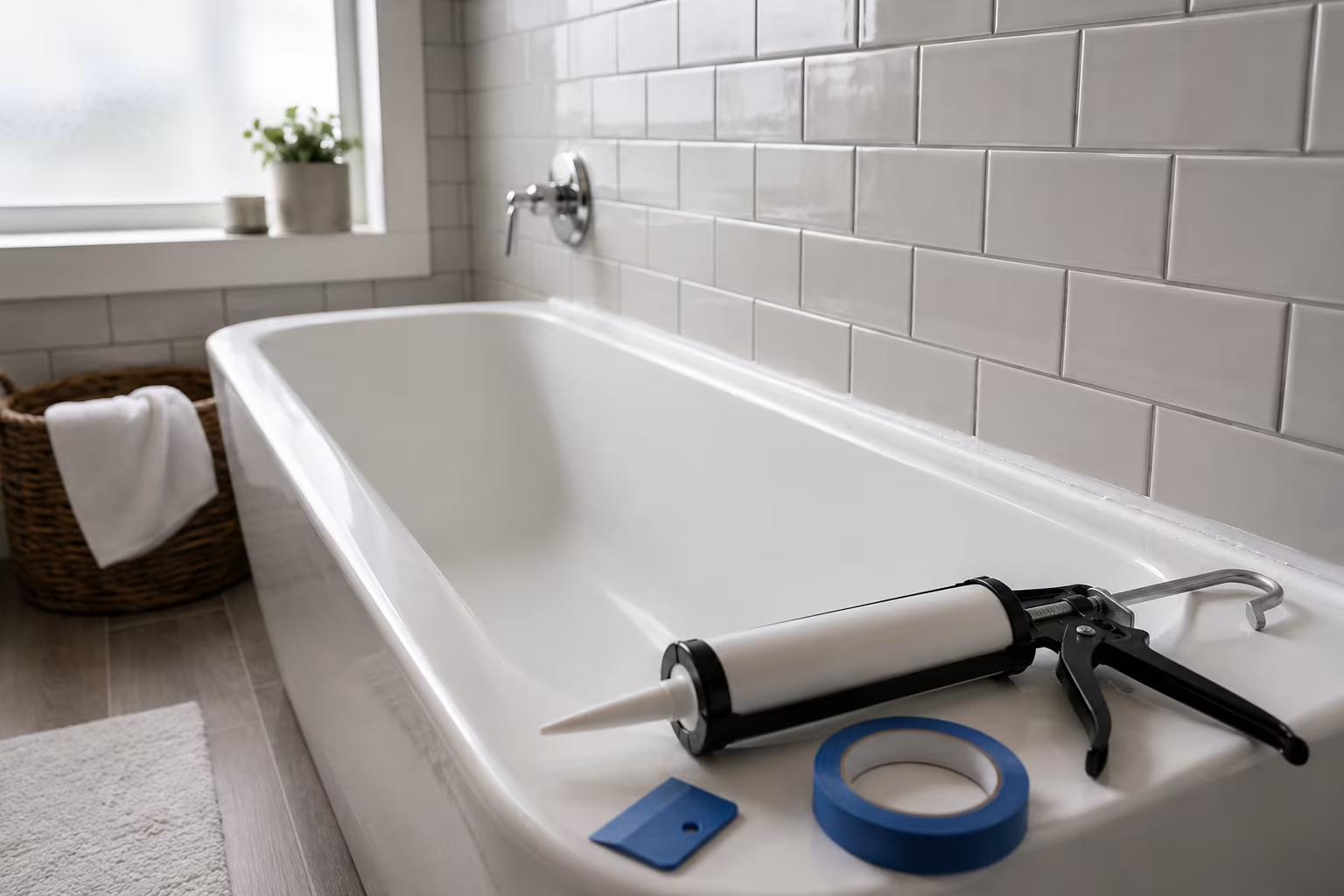
  • Caulk Gun: This is non-negotiable. You literally can't get the caulk out of the tube without it. You can find basic ones for about $10-$15. My first one was super cheap, and it got the job done for years.
  • Caulk Tube (Acrylic Latex with Silicone): Grab a standard 10.5-ounce tube. Make sure it specifies "paintable" and "water cleanup." I usually buy a couple, just in case.
  • Utility Knife or Caulk Cutter: You'll need this to cut the tip off the caulk tube and to puncture the inner seal. Some caulk guns have a cutter and a poker built-in, which is a nice bonus.
  • Damp Cloths or Paper Towels: You'll need a bunch. Caulk is messy, and quick cleanup is your friend. Keep a bucket of water nearby for rinsing cloths.

Helpful Add-Ons (Optional, But Nice)

  • Painter's Tape: If you're new to caulking or just want super crisp lines, tape is a lifesaver. It gives you a clean edge to work against. I used this for my first few caulking projects and it really helped my confidence.
  • Caulk Tool or Finishing Tools: These are little plastic gadgets with different angles and shapes that help you get a perfectly smooth bead. You can usually find a set for under $10. My finger works pretty well too, to be honest.
  • Putty Knife or Scraper: If you have old, crusty caulk to remove, these will be invaluable. Don't skip removing old caulk; it makes a huge difference.
  • Safety Glasses: Always a good idea when using tools, even something as simple as a utility knife.
  • Gloves: Protects your hands from the caulk. It's water-soluble, but it can still get sticky and dry out your skin.

Seriously, don't feel like you need to buy everything on this list. Start with the essentials, and if you find yourself doing more caulking projects, you can always upgrade or add specialized tools later. My workshop is full of tools I bought for one project and now use all the time, but it started with the basics!

How To Actually Do It: Step-by-Step for Perfect Seams

Alright, this is where the magic happens! Caulking might seem a little intimidating at first, but it's really about taking it slow and being methodical. I promise, you'll get the hang of it quickly. My first attempts were gloppy disasters, but practice makes it much smoother.

Step 1: Prep the Area – The Unfun But Crucial Part

This is probably the least exciting step, but it's absolutely essential for a good, lasting caulk job. If your surface isn't clean, the caulk won't stick properly, and all your hard work will be for nothing.

First, clear out any furniture or decor near your baseboards. You need easy access to the entire length you're working on. Give the baseboards a good wipe-down with a damp cloth to remove dust, dirt, and cobwebs.

If there's old, cracked, or peeling caulk, you need to get rid of it. Use your utility knife or a caulk removal tool to carefully slice along the edges and peel it away. This can be tedious, but new caulk won't adhere well to old, failing caulk.

Once you've removed the old stuff, give the area another quick wipe to pick up any debris. Let it dry completely. Moisture is the enemy of good caulk adhesion.

Now, for the optional but highly recommended step: painter's tape. If you want super straight lines and easier cleanup, apply painter's tape along the top edge of your baseboard, where it meets the wall, and along the bottom edge, where it meets the floor.

Press the tape down firmly to create a crisp barrier. Make sure the tape is exactly where you want your caulk line to end, creating a perfectly straight channel. This little trick makes a huge difference, especially if you're not super confident in your steady hand yet.

Step 2: Prepare Your Caulk Tube – Getting Started

This step is where many people, myself included, make their first big mistake: cutting the tip of the caulk tube. You want a small opening, usually at a 45-degree angle. A small opening gives you more control over the bead of caulk.

If you cut it too big, you'll get a firehose of caulk, and it'll be a gloppy mess that's hard to control and wastes product. Trust me, I've had more than one "oops" moment with a too-wide opening, and it always leads to frustration.

Use your utility knife to snip off just the very tip of the nozzle, keeping that 45-degree angle. You can always make the opening bigger if you need to, but you can't make it smaller. Start small, maybe a 1/8-inch opening.

Next, you need to puncture the inner seal of the tube. Most caulk guns have a long, skinny metal rod for this. If yours doesn't, use a long nail or a stiff piece of wire to push all the way into the tube's opening until you feel it pop through the seal.

Finally, load the caulk tube into your caulk gun. Pull the plunger all the way back, insert the tube, and then push the plunger forward until it engages with the back of the caulk tube. Give the trigger a few gentle squeezes until caulk starts to emerge from the tip. Make sure to release the pressure on the gun when you're not actively squeezing the trigger, usually by flipping a small lever or pulling the plunger back slightly. This prevents caulk from continuing to flow out.

Step 3: The Application – Slow and Steady Wins the Race

Now for the actual fun part! This is where you lay down that perfect bead of caulk. The key here is consistency in pressure and movement. Think of it like drawing a continuous line.

Position your caulk gun at a 45-degree angle to the gap you're filling. You want the tip of the nozzle to be angled into the corner formed by the baseboard and the wall or floor. This angle helps the caulk flow smoothly into the joint.

Start at one end of your baseboard. Apply steady, even pressure to the caulk gun trigger and move the gun smoothly along the gap. It's often easier to pull the gun towards you rather than pushing it away.

Imagine you're drawing a continuous line of frosting on a cake. You want one even, unbroken bead of caulk. If you stop or hesitate, you might end up with lumps or an uneven line. If you need to stop, try to do it at a natural break point like a corner.

Don't try to caulk an entire wall in one go if it's really long. Work in manageable sections, maybe 2-3 feet at a time, especially when you're first starting out. This gives you time to tool the caulk before it starts to skin over.

When you get to an inside corner, try to maintain that steady pressure and transition smoothly. For outside corners, you might need to apply a little less caulk as you approach the edge to avoid a big blob. It might take a few tries to get the feel for corners, and that's totally okay.

Remember, a thin, consistent bead is always better. You're filling a gap, not building a mountain. You can always add a little more if you need to, but it's much harder to remove excess once it's applied.

Step 4: Tooling (or Finger-Smoothing) – The Pro Touch

This is where your caulk job goes from "okay" to "wow!" Smoothing the caulk after application is what gives you that professional, seamless finish. And you need to do it quickly, before the caulk starts to dry.

Grab your caulk tool or, if you're like me for most projects, just put on a glove and use your finger. Many pros swear by their index finger for the perfect finish, and I tend to agree. Just make sure your finger is slightly damp with water.

Starting at one end of the section you just caulked, run your finger or tool along the bead in one continuous, smooth pass. Apply just enough pressure to push the caulk into the gap and create a slightly concave, smooth surface. You’re aiming for a consistent curve that perfectly fills the space.

As you smooth, excess caulk will accumulate on your finger or tool. Wipe this off frequently onto a damp cloth or paper towel. Keep your smoothing tool clean; otherwise, you'll just be spreading mess around. I keep a stack of damp paper towels right next to me for this.

Try not to overwork the caulk. One or two smooth passes are usually enough. The more you touch it, the messier it tends to get, and you can start pulling the caulk out of the gap or creating streaks. Less is definitely more when it comes to smoothing.

If you used painter's tape, make sure you don't smear caulk beyond the tape line. The tape is there to protect your surfaces and give you a sharp edge. The goal is a perfect, clean transition from caulk to painted surface.

Step 5: Peel the Tape (If Used) – The Reveal

If you took my advice and used painter's tape, this is a really satisfying moment. But the timing is critical: you need to peel the tape before the caulk fully skins over, but after you've smoothed it. This is usually within 5-15 minutes of applying the caulk, depending on humidity and the specific product.

If you wait too long, the caulk will adhere to the tape, and when you pull the tape off, it might pull bits of the caulk with it, ruining your clean line. It's so frustrating when that happens, I've learned that lesson the hard way many times.

Gently grab an end of the painter's tape. Pull it slowly and steadily at a 45-degree angle away from the caulk line. Don't yank it straight up, as this is more likely to cause issues. Pulling at an angle helps create that super crisp edge.

If you notice any small stray bits of caulk or minor imperfections after the tape is removed, you can usually clean them up with a damp finger or cloth right away. Just be gentle. This is also the time to admire your perfectly straight line!

Step 6: Drying and Curing – Patience is a Virtue

This is where many DIYers get impatient, and I’m definitely guilty of it sometimes. Caulking needs time to dry and, more importantly, to "cure." These are two different things.

Drying is when the surface of the caulk feels dry to the touch, or "skins over." This usually happens within 30 minutes to a few hours. The caulk tube will give you an approximate "tack-free" or "paint-ready" time, but this is just for the surface.

Curing is when the caulk completely dries and hardens all the way through, achieving its full strength and flexibility. This can take anywhere from 12 hours to several days, sometimes even a week or more, especially in humid conditions or with thicker beads of caulk. Always check the manufacturer's instructions on your caulk tube for specific drying and curing times.

Why does this matter? Because if you paint too soon, before the caulk is fully cured, you risk the caulk shrinking as it continues to dry. This can cause the paint to crack along the caulk line, leaving you with that unsightly fissure you were trying to get rid of in the first place. I've been there, painted too soon, and then had to re-caulk and repaint. It's a bummer.

So, resist the urge to paint immediately! Give it the full recommended cure time, even if it feels dry to the touch. It's worth the wait for a flawless, long-lasting finish.

Step 7: Painting (Optional) – The Final Layer

Once your caulk is fully cured (patience, my friend!), you're ready for the final step, if you choose to paint your baseboards or the wall above them. Because you used paintable acrylic latex caulk, your paint will adhere beautifully to it.

Apply your paint as you normally would, right over the caulk line. The caulk will blend seamlessly with your trim or wall color, creating that smooth, continuous surface you've been working for.

You'll be amazed at the difference this small step makes. The room will look incredibly polished and professional, like it was done by someone who really knows their stuff. It’s a subtle change, but one that truly elevates the entire space. You did it!

Making It Stick / Common Mistakes

Okay, we've walked through the steps, but let's be real: things don't always go perfectly the first time. I've definitely learned a lot about what not to do through trial and error. Here are some common pitfalls and how to avoid them, so your caulk job looks fantastic and actually lasts.

Mistake 1: Not Preparing the Surface

I know, I know, cleaning is boring. But if your baseboards are dusty, greasy, or still have bits of old caulk stuck to them, your new caulk won't adhere properly. It's like trying to put a sticker on a dirty window; it just won't stick. Take the extra five minutes to wipe everything down and remove old caulk.

Mistake 2: Cutting the Tip Too Large

This was my biggest rookie mistake. I’d cut the tip generously, thinking more caulk would be faster. Wrong. A large opening means less control, a thicker bead than you need, and a lot of wasted caulk and cleanup. Start small, you can always make it bigger.

Mistake 3: Inconsistent Pressure or Speed

If you squeeze the trigger too hard in some spots and too lightly in others, or move too fast then too slow, you'll end up with a bumpy, uneven bead. Try practicing on a piece of scrap cardboard first to get a feel for steady pressure and a consistent pace. It makes a huge difference.

Mistake 4: Not Smoothing Immediately

Caulk starts to "skin over" surprisingly fast, especially in dry environments. If you wait too long to smooth it, it'll be sticky and hard to work with, leading to a lumpy finish. Work in small sections (2-3 feet) and smooth each section right after you apply the caulk.

Mistake 5: Overworking the Caulk

While you need to smooth it, don't keep going over and over the same spot. This can pull the caulk out of the joint, create grooves, or just make a big smeared mess. Aim for one or two smooth, confident passes with your finger or tool, then wipe away the excess and move on.

Mistake 6: Painting Too Soon

We covered this, but it's worth repeating because it's such a common frustration! Acrylic latex caulk needs to fully cure before painting. If you paint too early, the caulk will continue to shrink as it dries, and the paint will crack. Follow the cure times on the tube, even if it feels dry to the touch.

Mistake 7: Pulling Tape Too Late

If you used painter's tape, timing is key for removal. If you wait until the caulk is fully dry, pulling the tape can actually pull the dried caulk right off with it, ruining that crisp line. Remove the tape within 5-15 minutes of smoothing the caulk, while it's still wet but stable.

The secret to a perfect caulk line isn't magic, it's just a little practice and a lot of immediate cleanup.

Frequently Asked Questions

What's the difference between caulk and sealant?

Honestly, for most home DIY projects, people use the terms interchangeably! Generally, caulk refers to products like acrylic latex that are good for filling gaps and are often paintable. Sealants, like pure silicone, are usually more flexible and waterproof, often used in bathrooms or for outdoor joints, and typically aren't paintable. For baseboards, we're almost always looking for a paintable acrylic latex caulk with some silicone for flexibility.

How do I store leftover caulk?

It's tricky because once opened, air gets in. The best method I've found is to stick a long screw into the tip of the nozzle, making sure it goes deep enough to block the opening. You can also wrap the tip tightly with plastic wrap and then secure it with painter's tape or a rubber band. Store it upright in a cool, dry place. It won't last forever, maybe a few months at best, so plan your projects accordingly.

My caulk cracked! What went wrong?

That's such a frustrating sight after all your hard work! Cracks usually happen for a few reasons. Painting too soon before the caulk fully cured is a big one, as the caulk shrinks while drying, pulling the paint with it. It could also be that the surface wasn't clean enough for proper adhesion, or there's significant movement in your house that the caulk couldn't handle. For baseboards, usually painting too soon or an unclean surface are the culprits. You'll need to carefully remove the cracked caulk and reapply.

Can I caulk over existing caulk?

While you technically can, I almost always recommend removing the old caulk first. New caulk won't adhere well to old, especially if it's dirty, crumbling, or made of a different material. Layering can also lead to a thicker, less attractive bead that might crack faster. Taking the time to properly remove the old stuff will give you a much cleaner, more durable finish that lasts longer.

Is it okay to use my finger to smooth caulk?

Absolutely! Using a damp, gloved finger is actually a preferred method for many experienced DIYers and pros. It gives you excellent control and feel for the caulk bead. Just make sure your finger is slightly damp, and you wipe off the excess caulk frequently onto a wet cloth. Don't press too hard, you're just gently shaping the bead into the joint.

How much caulk will I need for a room?

A standard 10.5-ounce tube of caulk typically covers about 50 linear feet with a small, 1/4-inch bead. To figure out how much you need, measure the perimeter of your room. Remember, you're likely caulking both the top edge (where the baseboard meets the wall) and potentially the bottom edge (where it meets the floor). So, if your room perimeter is 40 feet, you might have 80 linear feet to caulk. Always buy an extra tube just in case – it's better to have a little left over than run out halfway through a wall!

How long does this take?

For an average-sized room, caulking the baseboards can take anywhere from 2 to 4 hours, not including drying and curing time. The prep work (cleaning, removing old caulk, taping) is often what takes the most time, especially if you have a lot of old, stubborn caulk. The actual application of the caulk bead goes pretty quickly once you get into a rhythm. Factor in a few hours for prep, a couple for application and smoothing, and then the patience game for curing!

Is this worth it for an old, wonky house?

Oh, 100% yes! I live in an older home, and let me tell you, "level" and "plumb" are just suggestions here. Caulking makes a massive difference in an older house. Those charming imperfections often come with gaps and uneven lines. Caulk fills those gaps, making everything look much more intentional and finished. It hides a multitude of sins and really helps pull the room together, even if the walls aren't perfectly straight. It's one of the highest impact, lowest cost improvements you can make in an older home.

The Bottom Line

Caulking baseboards isn't the most glamorous DIY task, I'll admit. But it's one of those small details that makes a huge, noticeable difference in the overall finish of a room. It takes your space from "pretty good" to "polished and professional."

Don't be intimidated by the caulk gun or the fear of making a mess. We all start somewhere, and I promise you'll get better with every bead you lay down. My first attempts were far from perfect, and that's okay! It's all part of the learning process.

Just remember to prep your surfaces, cut your tip small, keep a damp cloth handy, and take your time. You don't have to do an entire room at once. Start with one wall, see how it goes, and build your confidence from there. You've got this, and the finished result is so worth the effort! 👋

Laura Hayes
Written by

Laura Hayes

Maker and craft enthusiast from Portland, Oregon. I've been documenting my DIY journey since 2019 - everything from woodworking to paper crafts. When I'm not in my garage workshop, you'll find me hunting for supplies at thrift stores.