
The Easiest Way to Bind a Handmade Photo Album at Home
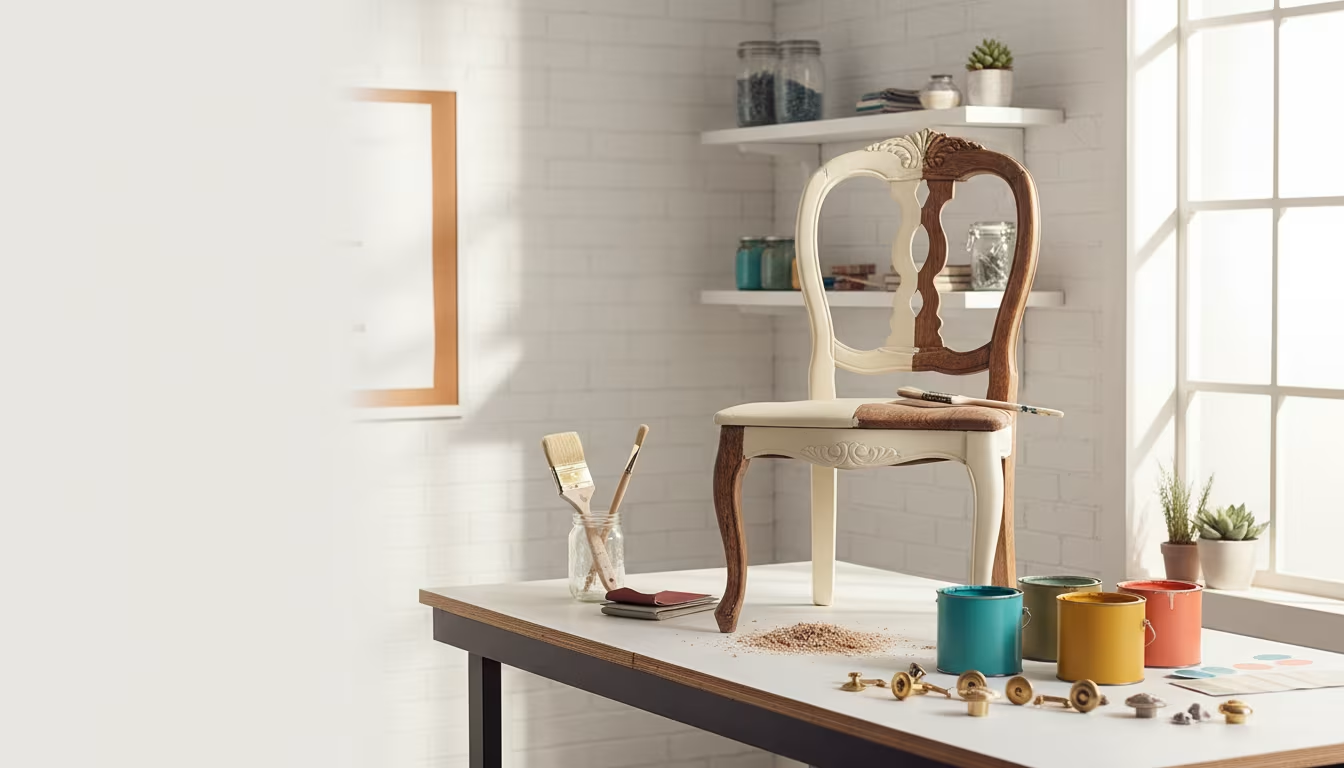
Japanese stab binding is a non-adhesive bookbinding method that holds a stack of pages and covers together with a line of stitches along one edge. It requires no press, no glue, and no folding, which makes it one of the most approachable ways to bind a handmade photo album at home. This guide walks through the four-hole pattern, from choosing paper to tying off the final knot.
How Japanese stab binding works
In this technique, sometimes called four-hole or stab binding, you punch a row of holes near one edge of the assembled pages and covers, then sew through them so the thread wraps the spine on the outside of the book. Unlike Western binding, which glues folded signatures to a spine, stab binding clamps loose single sheets together with tension alone. That is why it works for photo pages: you can bind flat, unfolded sheets without any adhesive. The finished spine is decorative and genuinely strong, and the method looks far more complex than it is. You can read more about its place among traditional bookbinding methods for context.
Supplies you will need
Most of these items you likely already own, and the rest cost only a few dollars. Thrift stores are a good source for cover material and even paper.
- Paper for pages — cardstock in the 65 to 80 lb range holds up to photos and glue without buckling. Scrapbooking paper, watercolor paper, or sturdy recycled stock all work, as long as every sheet is cut to the same size.
- Cover material — anything a bit stiffer than the pages: chipboard, cardboard cut from a box, a repurposed hardcover, or a thin plywood offcut from a woodworking project.
- Waxed linen thread — this is the standard binding thread. The wax helps it slide through the holes and makes the finished binding more durable. Regular sewing thread is too thin and will fray or snap, so do not substitute it.
- An awl or thick needle — to punch the holes. A dedicated bookbinding awl is best, but a sturdy tapestry needle works for thinner stacks.
- Ruler and pencil — for measuring and marking hole positions accurately.
- Cutting mat or a thick pad of cardboard — to protect your work surface while punching.
- Craft knife or sharp scissors — for cutting paper and covers; a craft knife with a metal ruler gives the cleanest edge.
- Binder clips or clamps — to hold the stack tight and aligned while you mark and punch.
A basic awl often costs only a few dollars at a hardware store, and a paper trimmer from your card-making supplies makes cutting uniform pages much faster.
Prep your paper and covers
Decide on a size first. A 5x7 or 6x8 inch album is a comfortable starting point, large enough for photos but easy to handle. Cut all your interior pages and both covers to exactly the same dimensions, because uneven edges show badly in the finished book. Use a craft knife against a metal ruler for the straightest cuts, especially on the stiffer cover stock.
A typical album runs 20 to 30 sheets plus the two covers. With heavier cardstock, use fewer sheets so the awl can still reach through the whole stack. Keep the grain of all your paper running in the same direction if you can, which helps the finished book lie flat.
Mark and punch the holes
Stack every page and both covers with all edges perfectly aligned, then clamp the stack tightly along the binding edge. Accuracy here determines how clean the final spine looks.
Mark four holes along the binding edge, set consistently 1/4 to 1/2 inch in from the edge:
- The first hole 1 inch from the top edge.
- The second hole 1 inch from the bottom edge.
- The third hole centered between the first two.
- The fourth hole centered between the top hole and the middle hole, which produces the slightly offset, traditional four-hole layout.
Mark with pencil so you can erase strays, and double-check the spacing before you commit. With the stack still clamped and resting on your cutting mat, drive the awl straight down through every layer at each mark, pushing firmly and steadily for clean holes rather than torn ones. If the awl struggles to clear the stack, you have too many sheets or paper that is too dense; reduce the count. Unclamp and confirm each hole runs all the way through.
Stitch the four-hole pattern
Cut a length of thread about four to five times the height of the binding edge. For an 8-inch-tall book, that is roughly 32 to 40 inches. Err long, since running out mid-stitch forces an ugly join. Thread your needle; if the waxed linen feels stiff, run it over a block of beeswax to smooth it further and reduce tangling.
Re-stack and clamp the book with the holes aligned. Label the holes A (top), B, C, and D (bottom) to follow along.
- Pass the needle through Hole B, leaving a 2 to 3 inch tail on the back to tie off later.
- Wrap the thread around the spine, go up, and bring the needle through the top Hole A from front to back, pulling taut.
- Wrap the thread around the top edge of the book, then pass back through Hole A again to lock the top corner.
- Bring the needle from Hole A down through Hole B (front to back) and pull snug.
- Carry the thread down to Hole C, pass through front to back, and pull taut.
- Continue to Hole D (the bottom), pass through front to back, then wrap the bottom edge and pass through Hole D once more to secure the bottom corner, exactly as you did at the top.
- Work back up: from Hole D up through Hole C, then up through Hole B, both front to back, keeping tension even.
The thread should now emerge at the back of Hole B, next to your starting tail. Tie the working end to that tail with a square knot (right over left, then left over right), add a second knot for security, and trim the ends close. The rhythm is quick once learned; a first book might take an hour to stitch, later ones about 15 minutes.
Embellish the finished album
With the binding done, the cover is yours to decorate. Add a paper or fabric title label, collage a print onto the front, or stamp a pattern. Thrifted fabric scraps and interesting papers make good cover material, and a thin piece of stained wood veneer glued to the front adds texture. A clear spray sealant over a paper cover extends its life. Inside, leave room beside each photo to write dates, names, and short notes, which is what turns an album into a keepsake rather than a plain picture holder.
Common mistakes and fixes
Two problems account for most disappointing results: misaligned holes and loose tension. If the holes do not line up, the book looks crooked and the stitches will not sit flat, so take your time clamping and marking. If the thread is slack, the pages shift and the binding looks sloppy, so pull each pass taut with a firm but gentle tug, tight enough to hold without tearing the paper. Miscalculating thread length is the third common error, and since you cannot add thread cleanly, always cut more than you think you need. Before binding your real materials, do a practice run with a few sheets of scrap paper to learn the stitch path; that dry run builds the confidence to bind the actual album without hesitation.
Frequently asked questions
What paper works best for photo pages?
Cardstock between 65 and 80 lb is ideal, sturdy enough for photos, glue, and journaling without wrinkling. A matte finish beats glossy because it reduces glare and is easier to write on.
Can I use regular sewing thread instead of waxed linen?
It is not recommended. Sewing thread is thin and prone to breaking and tangling. Waxed linen is made for binding: stronger, easier to handle, and protected by its wax coating.
Is this binding durable enough for an album handled often?
Yes. Stab binding is strong, and because the pages are stitched rather than glued they resist coming apart with repeated use. A stiff cover and secure knots add further durability.
How long does a first album take?
Expect 2 to 4 hours for your first, including cutting, measuring, punching, and stitching. With practice you can finish one in about an hour, and the cutting usually takes longer than the binding itself.
The album spec sheet:
| Element | Spec | Note |
|---|---|---|
| Size | 5×7 or 6×8 in | comfortable first album |
| Pages | 65–80 lb cardstock, 20–30 sheets | holds photos and glue without buckling |
| Holes | four, 1/4–1/2 in from the spine edge | first and last 1 inch from top/bottom |
| Thread | ~4× book height (8-in book → 32–40 in) | leave a 2–3 in tail to tie off |
Related Posts

Beginner Pottery Wheel Speed for Centering
Centering clay needs high wheel speed and firm pressure. Most beginners use too low speed.

Calligraphy Ink Comparison for Cotton Paper
Modern dip pen calligraphy needs ink that doesn't bleed on absorbent cotton paper. India ink...
Knitting Needle Materials Compared: Wood vs Metal vs Plastic
Knitting needle material changes how stitches slide, how cold or warm the needle feels, and how...
Beginner Watercolor Paper Choice for Textured Washes
Watercolor paper is the single biggest gear decision a beginner makes. Weight, surface texture...
Comments
No comments yet. Be the first to share your thoughts!