
Why Open Studio Days Attract More Customers Than Social Media Posts
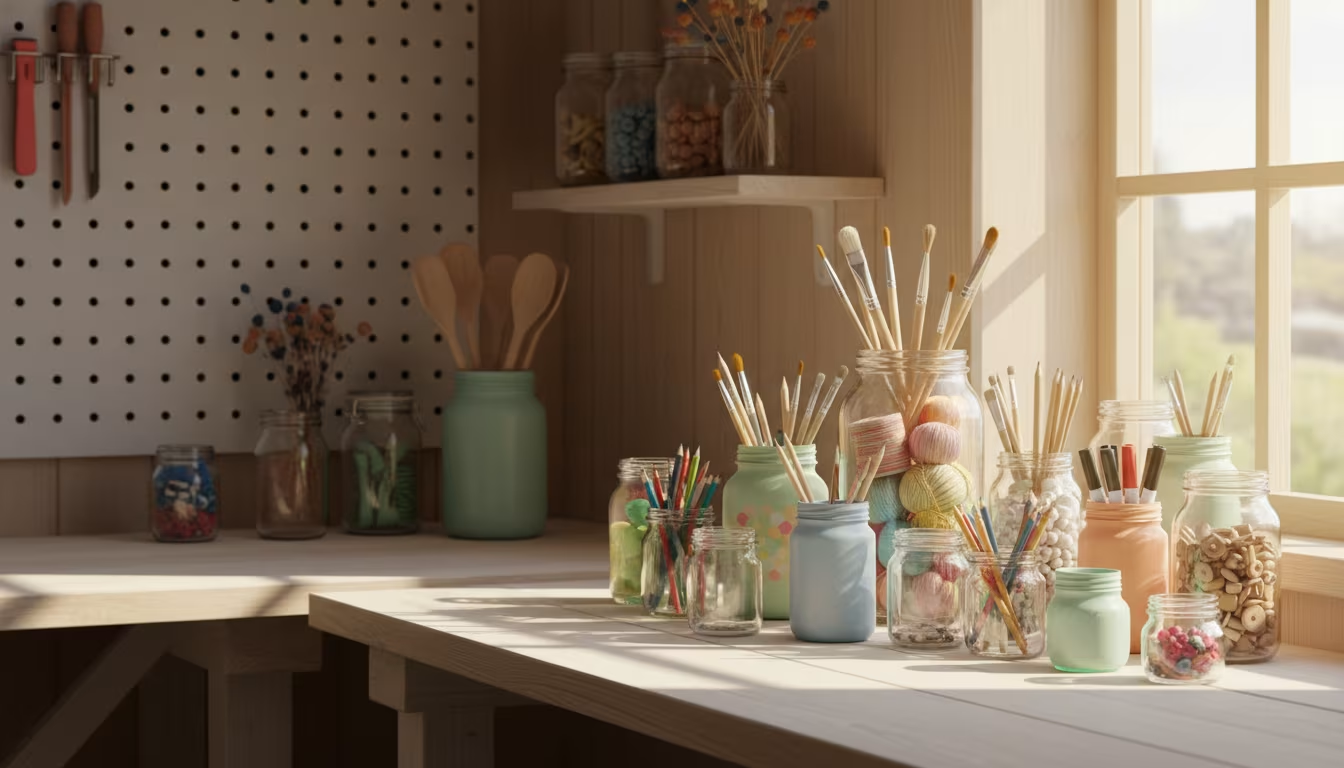
A polished product photo and a well-written caption can still land in silence. For handmade work, the piece that sells is usually the one a buyer has held. An open studio day trades the algorithm for that direct contact: you invite people into your workspace, they handle the work, hear how it was made, and buy from the person who made it. For many makers it converts better than months of posting.
Why In-Person Beats the Feed for Handmade Goods
Online, a cutting board is a rectangle on a screen. In person, a visitor feels the finished surface, sees the grain up close, and notices the curve you spent an hour shaping. That sensory layer is exactly what a photo strips away, and it's what turns "nice" into "I want that one."
The pattern shows up at any small in-person event. A tray of handmade cards that sat untouched in an online shop for weeks can move quickly at a local fair once people can read the hand-stamped detail and turn each one over. Beyond sales, the day builds a local audience, produces real feedback, and puts faces to the people who follow your work. It also lets a buyer ask questions on the spot, about custom orders, materials, or commissions, that rarely surface through a comment thread. An open studio is essentially a private version of that fair, run on your own terms and in your own space.
What an Open Studio Day Actually Is
An open studio day means opening your working space to the public for a set window, whether that space is a dedicated studio, a garage, a spare room, or a corner of the living room. Visitors see the tools, the works in progress, and the ordinary mess of making. It is closer to a small, personal craft fair than a pop-up shop, because the workspace itself is part of what people come to see. The format is a long-standing tradition among artists; the broader open studios movement has organized neighborhood art weekends for decades.
The pull comes from three things a feed can't easily reproduce: transparency (a slightly messy bench proves the work is real), sensory contact (touching pottery, smelling sawdust, watching a cut happen), and direct storytelling (you explain the reclaimed maple or the stained glass technique while the buyer holds the result).
Planning the Day
The setup is more about intention than a spotless space. A workshop that looks lived-in is an asset, not a liability.
Set a Goal and Pick What to Show
Decide first what the day is for: sales, a growing local following, feedback on new work, or simply exposure. The goal shapes everything else. Then choose what visitors will see, some mix of finished pieces for sale, works in progress, and a demonstration or two. A first event framed around connection rather than revenue takes the pressure off and usually runs smoother.
Choose a Date and Window
A weekend day with reliable weather works best, especially if any part of the setup spills outdoors. A window of roughly 10 a.m. to 3 p.m. gives people time to drop in without feeling rushed. Check the local calendar: a large city festival will pull traffic away, while a nearby farmers market or community event can feed foot traffic toward you.
Tidy, Don't Deep-Clean
The job here is safety and flow, not sterility. Clear walkable pathways, stack raw materials neatly, and keep tripping hazards out of the route. A visible lumber pile or a half-finished project tells the story of what happens in the space. Leaving that in place is the point; scrubbing every surface is not.
Setting Up for Visitors
Curate the Display and Price Clearly
Arrange finished work on tables, shelves, or repurposed crates, and put a visible price on everything so no one has to ask. Include a few process pieces, a half-done project, a sketchbook, some offcuts, to show the work behind the work. A couple of complex "display only" items that aren't for sale can draw people in for a conversation even if they never leave the shelf.
Plan an Interaction or Demo
A short, repeatable demonstration gives visitors something to watch and a natural reason to talk: sanding a small piece, folding a tricky paper corner, a few brushstrokes, a pass on a scroll saw. It also makes the skill and time behind the work obvious, which quietly justifies the price. Keep the demo short enough to repeat every few minutes as new people arrive, rather than a single long session that only a few catch. Keep a guest book or a simple sign-up sheet nearby so interested visitors can join an email list and stay connected after the day ends; that list is often the most valuable thing you take away, since it turns a one-day visit into an audience you can invite back for the next event or a new product release.
Handle the Logistics
Sort out parking, restroom access, and payment before the doors open. Keep cash on hand for change or a reliable card reader for tap payments. Light refreshments help on a warm day, and a friend or family member to greet people frees you to talk with buyers. Range your price points deliberately: some visitors want a large piece, others want a $10 card or a $20 magnet as a token, so build in options at both ends.
Promoting Locally
For a fixed physical event, local outreach beats a broad online push. Print flyers and place them at local coffee shops, community centers, and libraries. Post in neighborhood Facebook groups, on apps like Nextdoor, and on community calendars, and ask friends to share the date. A clear sign pointing to the studio on the day itself catches passing traffic. Lead with the experience rather than the product, something like watching raw wood become a finished piece, since that specificity is what gets people to travel. The same grassroots approach that fills a neighborhood swap works here.
Common Mistakes
A few missteps recur with first-time hosts:
- Over-polishing the space. People come to see a real working studio. A little sawdust or a few paint splatters is evidence, not embarrassment.
- Relying only on social media. A post can help, but physical flyers and local outreach fill a room more reliably for a location-specific event.
- Too few price points. Without low-cost tokens alongside larger pieces, casual visitors leave empty-handed. Give everyone a way to buy in.
- Running too long. A first event of three to four hours creates urgency and keeps you from burning out. Extend next time if it goes well.
Even a session that sells nothing tends to pay off: new contacts, direct feedback, and email sign-ups all carry into future work. Pick a date, clear a safe path through the space, invite the neighborhood, and treat the day as the start of a local audience rather than a one-off sale.
The day, planned:
| Element | Plan | Note |
|---|---|---|
| Window | about 10 a.m.–3 p.m., weekend | people drop in without feeling rushed |
| Calendar check | avoid big festivals; ride local markets | nearby events can feed foot traffic |
| Price ladder | large pieces + $10 cards / $20 magnets | everyone leaves with something |
| Space prep | tidy, don't deep-clean | a lived-in bench proves the work is real |
| First-event goal | connection over revenue | takes the pressure off, runs smoother |
Related Posts
Workshop Air Compressor Sizing: CFM and SCFM
Air compressor matched to your tools means smooth work; too small means constant waiting. CFM...

Workshop Dehumidifier Sizing for Tool Rust Prevention
Tools rust silently when shop humidity sits over 60%. The pint capacity that matches your shop...
Bench Vise Sizing and Mounting for First-Time Buyers
Bench vises bolted to scrap plywood pull right out. The right size for the work, the right...
Soundproofing a Basement Workshop on a Renter's Budget
Basement shop noise traveling up to the family room is how you lose workshop privileges. The...
Comments
No comments yet. Be the first to share your thoughts!