How to Choose a Dremel Rotary Tool for Crafting and Small Projects
You know that feeling when you're almost done with a project, but there's just one tiny detail you can't quite get right? Or maybe you've seen those intricate carvings, polished stones, or perfectly sanded edges on a craft and wondered, "How in the world did they do that?" It's a common stumbling block for so many of us makers.
Today, we're diving into the world of Dremel rotary tools. These little powerhouses can feel a bit intimidating at first, seeing all the models and attachments, but trust me, they're total game-changers for makers like us. We'll figure out which one is right for your projects, what all those bits do, and how to get started without feeling completely overwhelmed. Let's get crafting! 👋
Why This Actually Matters
Honestly, for years I avoided rotary tools. They looked scary, complicated, and like something only a professional woodworker would ever use. I just tried to make do with sandpaper, tiny files, and really sharp craft knives for all my detail work, and let me tell you, my fingers have the scars to prove it.
My projects often ended up looking a little rough around the edges, or I just couldn't achieve the level of detail I envisioned. I'd spend hours painstakingly trying to sand a tiny corner or smooth out a tight curve, only to get frustrated and give up. It really limited what I felt I could create.
Last year, I finally caved and bought a basic Dremel. It was on sale for about $40, a corded model with a small accessory kit. And suddenly, those delicate cuts on a cardboard miniature, the smooth edges on a small wooden coaster, or polishing up a piece of thrift store jewelry became not just possible, but actually easy.
It completely changed how I approach my projects. What used to take ages by hand, often with subpar results, now takes minutes with precision. Having the right tool means less frustration, better finished pieces, and the ability to try out new, more intricate designs that I never thought were possible for me.
It's not about becoming a master craftsman overnight, but about having a tool that helps your vision come to life more accurately and efficiently. For anyone who loves making things, investing in the right Dremel can open up a whole new world of creative possibilities without needing a huge budget or a massive workshop.
What Even IS a Dremel Rotary Tool?
So, what exactly is a Dremel rotary tool? Think of it like a really small, super versatile hand-held motor that you can attach all sorts of different bits to. It spins those bits at incredibly high speeds, letting you do a bunch of different tasks really precisely and quickly.
It’s not just for 'drilling,' even though 'Dremel' sounds a bit like 'drill.' It's more like a Swiss Army knife for your hands, but with electric power. You can swap out tiny attachments to sand, grind, carve, engrave, polish, clean, or even cut various materials.
The magic is in the speed and the interchangeable accessories. A typical Dremel can spin anywhere from a few thousand to over 30,000 revolutions per minute (RPMs). This high speed is what allows it to work so effectively on different materials, from delicate paper to tougher metals.
Because it's handheld and relatively lightweight, it gives you a lot of control for detailed work. This is why it's such a beloved tool for crafters, model makers, jewelry artists, and anyone working on smaller, intricate DIY projects where bigger power tools just wouldn't make sense.
Essentially, it compresses a whole workshop of specialized tools into one compact, versatile device. Learning how to use it, and more importantly, how to choose the right one, can seriously elevate your craft game and save you a ton of manual labor.
Key Features to Look For (and Why They Matter to YOU)
When you're looking at different Dremel models, a few features will pop up. Knowing what they mean for your specific crafting needs can make a huge difference in your satisfaction with the tool.
- Variable Speed Control - This is probably the most important thing to look for. Different materials need different speeds. Using a high speed on soft plastic might melt it, while a low speed on metal won't do much at all.
- Having precise control over the RPMs lets you adapt the tool to your material, preventing damage and giving you better results. My first Dremel didn't have this, and I melted more than one plastic piece before upgrading.
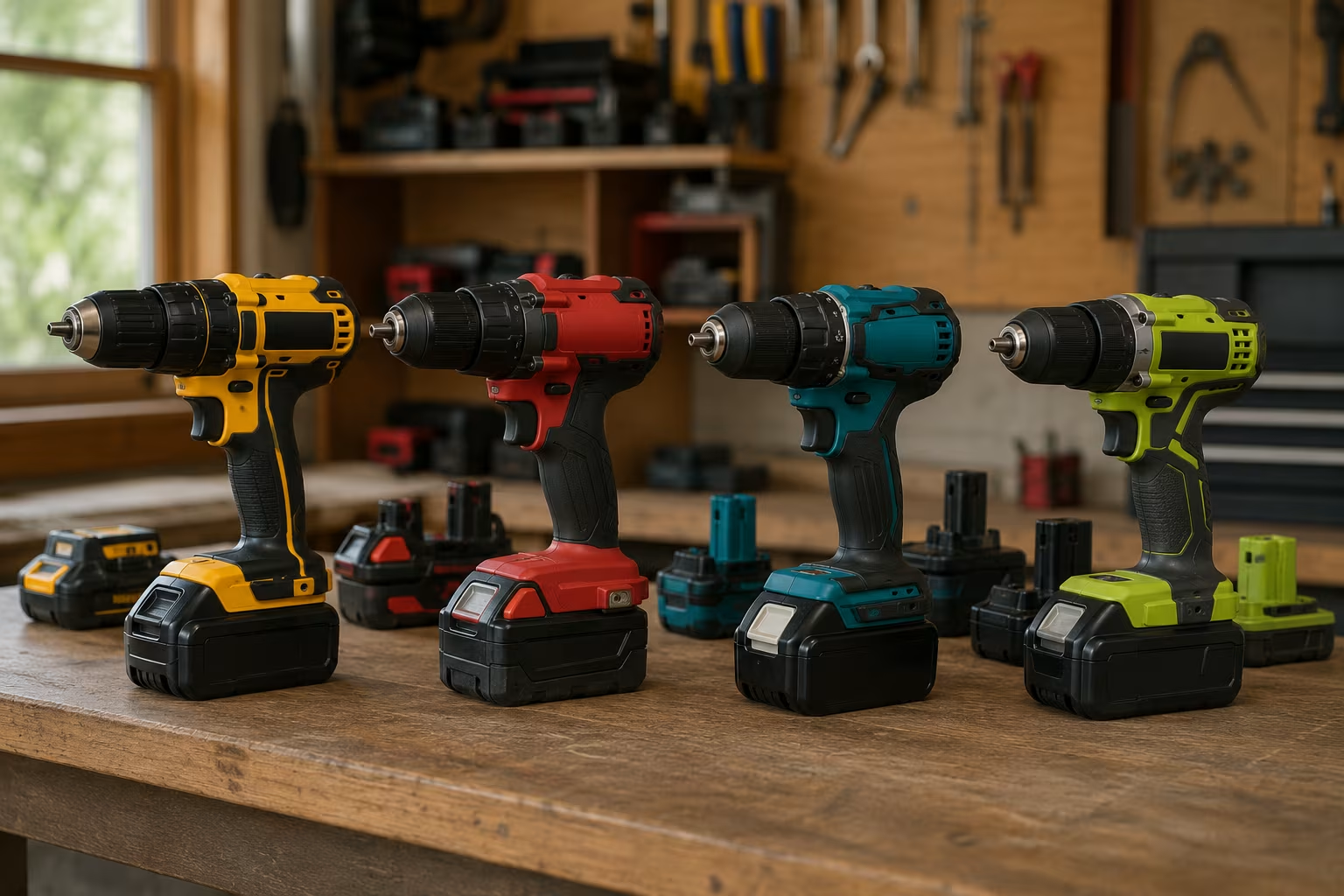
- Corded vs. Cordless - This choice often comes down to where and how you plan to use your Dremel. Corded models generally offer unlimited, consistent power, which is great for longer tasks without interruption.
- Cordless ones, on the other hand, give you fantastic freedom. They’re perfect for quick fixes, working in places without a nearby outlet, or if you like to move around your workspace. Just remember to keep those batteries charged!
- Comfort and Ergonomics - You'll be holding this tool for a while, especially on detailed projects. A Dremel that feels good in your hand, isn't too heavy, and has a comfortable grip is essential for preventing hand fatigue and maintaining control.
- If you can, try holding a few different models in the store. Lighter models with good rubberized grips make a huge difference, especially for those of us with smaller hands or who do intricate work.
- Accessory Compatibility and Included Kits - Most Dremels use standard accessory shank sizes, meaning bits are often interchangeable between models and even some other rotary tool brands. However, checking what accessories are included in a kit can save you money.
- Starter kits often have a good variety of basic bits – sanding, grinding, cutting, polishing. This gives you a great base to experiment and figure out what you'll use most before buying specialty items.
- Power and RPM Range - Higher RPMs generally mean more power and efficiency, especially for tougher materials. For most crafting, you don't need the absolute top-tier professional models with maximum RPMs.
- Something in the mid-range (often 5,000 to 35,000 RPM) with good variable speed control is usually perfect. Don't get caught up chasing the highest number; focus on a range that suits your materials.
- Attachments and Accessories (Beyond the Bits) - Beyond the actual bits, Dremel offers various attachments like a flex shaft, which is a flexible extension that allows you to hold a pen-like handle for super detailed work. There are also routing tables, cutting guides, and sanding platforms.
- These attachments can significantly expand the capabilities of your Dremel. While you don't need them all at once, it's good to know they're available as you grow your skills and projects. I love my flex shaft for tiny engraving.
How To Actually Do It: Choosing Your First Dremel
Okay, you're convinced. You want one! But walking into the hardware store or browsing online and seeing a wall of Dremels, all with different numbers and features, can be, well, a lot. It's easy to feel overwhelmed and not know where to start.
That's totally normal, by the way. I remember standing there staring at the options for a solid fifteen minutes, feeling completely lost. But let's break down how to pick one that won't break the bank, overwhelm you with unnecessary features, or leave you wishing you'd chosen differently. It's all about making smart, informed choices based on your crafting.
Step 1: Define Your Main Projects
Before you even look at models, take a moment to think about what you’ll actually use your Dremel for most of the time. Are you mostly sanding small pieces of wood for jewelry, engraving glass, polishing old coins, or maybe cutting intricate shapes from plastic? This makes a huge difference in what features you'll prioritize.
I knew I wanted to clean up edges on cardboard miniature projects and sand tiny wooden pieces, so I focused on models that offered precise detail control and variable speed. Don't buy a heavy-duty professional model if your main goal is just polishing intricate beadwork!
Consider the materials you work with regularly. Do you primarily use soft materials like paper, felt, or balsa wood? Or do you lean towards harder things like metal, ceramic, or thick plastics? Your materials will dictate the power and speed range you need, as well as the types of bits you'll use most frequently.
Making a short list of your top 3-5 intended uses will incredibly narrow down your options. It brings clarity to an otherwise confusing selection process and helps prevent impulse buys of features you might never actually use.
Step 2: Corded or Cordless? Consider Your Workspace
This is a big one for convenience and power. A corded Dremel offers unlimited power and usually costs a bit less upfront. It’s perfect if you always work at a dedicated bench with an outlet nearby, like I do in my garage workshop.
With a corded model, you never have to worry about a battery dying mid-project, which can be super frustrating. The consistent power means it often handles tougher tasks more smoothly without bogging down. However, the cord can sometimes get in the way or limit your reach.
A cordless Dremel gives you amazing freedom. If you like to craft on the couch, need to reach awkward spots, or work outdoors sometimes, this is your friend. Just remember to keep those batteries charged – nothing worse than running out of juice when you're almost done!
Cordless models are fantastic for portability and quick, small tasks where setting up a cord isn't practical. They can be a bit heavier due to the battery, and the battery life varies, so consider if you need extended run times. My smaller Dremel Micro is cordless and it's perfect for quick touch-ups on the fly.
Step 3: Variable Speed Control is Your BFF
I cannot stress this enough: get a Dremel with variable speed control. Seriously, this feature is non-negotiable for versatile crafting. Some materials, like soft plastics, delicate wood, or certain fabrics, need very low speeds to avoid melting, burning, or tearing.
On the flip side, harder materials like metal, stone, or dense hardwoods might require higher speeds for efficient grinding, cutting, or engraving. A single-speed Dremel is extremely limiting and will quickly leave you frustrated with melted projects or ineffective work.
My first one didn't have variable speed, and I quickly realized my mistake when I melted a perfectly good piece of acrylic I was trying to engrave. It was a messy, sticky disaster and ruined the piece. Learning curve, right? Don't be like me; just get the variable speed control from the start. It saves so much heartache and material.
Look for models that have a clear dial or switch to adjust the speed. This allows you to fine-tune the tool's performance to exactly what your material and task require, giving you precision and preventing common crafting mishaps.
Step 4: Check Out the Starter Kits and Accessories
Many Dremel tools come in kits that include a selection of useful accessories. These kits are usually a fantastic value for beginners because you get a taste of different bits and attachments without having to buy them all separately. It’s a great way to explore the Dremel’s capabilities.
Look for kits that include a good variety: some sanding bands, a few grinding stones, perhaps a cut-off wheel, a polishing bit, and maybe a small engraving cutter. This gives you a versatile set for a wide range of common crafting tasks.
I grabbed a kit that had a little bit of everything for about $60. It gave me a chance to experiment with different functions and see what I'd actually use most frequently. You can always buy specialty bits later once you know your specific needs, but a good starter kit provides an excellent foundation.
Pay attention to the total number of accessories. Sometimes a kit boasts "100+ accessories," but many of them might be duplicates or very niche items you won't use. Focus on the variety of useful bit types, not just the sheer number.
Step 5: Don't Break the Bank – Set a Budget
Dremels range quite a bit in price, from really affordable entry-level models (around $40-$60) to professional-grade tools that can be several hundred dollars. For most crafters and small DIY projects, you absolutely do not need the most expensive one on the market.
A good quality mid-range model (often in the $50-$100 range) will do everything you need and more. These typically offer variable speed, decent power, and often come with a useful starter kit of accessories. This price point hits the sweet spot for value and functionality.
I found a solid corded model for $60 during a sale, and it’s been fantastic for over a year now. Remember, it's about getting the right tool for your projects and budget, not necessarily the fanciest tool on the shelf. More expensive models might have brushless motors or more robust construction, but those benefits are often overkill for a hobbyist.
Factor in the cost of consumables like replacement sanding bands and polishing compounds when thinking about your overall budget. While the initial tool purchase is important, the ongoing cost of bits can add up if you don't plan for it.
Step 6: Consider Comfort and Grip
You'll be holding this tool for extended periods sometimes, especially if you're doing intricate work like engraving or fine sanding. A Dremel that fits comfortably in your hand and isn't too heavy makes a huge difference in control and reducing hand fatigue. This really impacts the precision of your work.
If you can, go to a physical store and actually hold a few different models. Feel the grip, check the balance, and see how easy it is to operate the speed control with one hand. Some models have thicker bodies, while others are more slender.
I have smaller hands, so a bulky Dremel just feels awkward and hard to control for detailed tasks. I ended up with one that has a slimmer body and a textured, rubberized grip, which is way easier to handle for detail work like sanding down the edges of a tiny wooden house I made for a diorama. It felt like an afterthought initially, but it's a huge factor in my enjoyment of the tool.
A good grip also means better safety, as the tool is less likely to slip from your hand during operation. Look for ergonomic designs that minimize vibration and provide a secure, comfortable hold for extended use.
Step 7: Read Reviews from Fellow Crafters
Once you've narrowed down your choices to a few models, spend some time looking at online reviews. Pay particular attention to what other crafters, hobbyists, and DIY enthusiasts say about specific models – their real-world experiences can be incredibly helpful.
Look for insights into battery life (for cordless models), ease of changing bits, how well it performs on materials similar to yours, and any common complaints or praises. Sometimes a product description sounds amazing, but user reviews reveal practical flaws.
I always check out reviews on craft forums, dedicated DIY blogs, or YouTube before I commit to a new tool purchase. It's like getting advice from a whole community of makers, which I find so much more helpful and honest than just the manufacturer's promises. It gives you a realistic expectation of what to expect.
Focus on reviews that mention specific projects and materials that align with your own interests. A review from a professional auto mechanic might not be as relevant to your paper crafting needs as one from a jewelry maker or model builder.
Step 8: Don't Forget Safety Gear!
This isn't about choosing the Dremel itself, but it’s an absolutely critical step you must take before you ever turn it on. Always, always wear safety glasses. Tiny bits of material – wood dust, plastic shavings, metal fragments – can fly around at high speeds, and you only have one set of eyes. Eye protection is non-negotiable.
Ear protection might also be a good idea for longer sessions or if you're working with particularly noisy materials, though many Dremel tasks aren't excessively loud. Gloves can offer some protection, but be careful they don't get caught in the rotating bits – fitted gloves are better than loose ones.
I learned this the hard way when a tiny wood splinter flew right past my eye while I was sanding a small wood piece – thank goodness for my safety glasses! It was a real wake-up call. It’s a simple step that keeps your hobby fun and safe, preventing potentially serious injuries. Your health is far more important than rushing a project.
Also, make sure your workspace is clear and well-ventilated. Dust and fumes can be an issue, especially with certain materials or glues. A simple dust mask can also be a good idea, particularly if you're sensitive to dust or working for extended periods.
Making It Stick / Common Mistakes
Okay, you've got your Dremel! You've picked one that suits your needs, and you're ready to make some magic. But getting started can still feel a bit daunting, and there are a few common pitfalls I've stumbled into that you can easily avoid with a little awareness.
Learning any new tool takes time and patience, and the Dremel is no exception. It has a specific feel and technique that you'll develop over time. By knowing what to look out for, you can bypass a lot of the initial frustration and jump straight into enjoying your new creative possibilities.
Mistake 1: Not Using the Right Bit for the Job
There are literally hundreds of Dremel bits and accessories available, and each one is designed for a specific task and material. Trying to sand with a cutting wheel, or polish with a grinding stone, just won't work well. In fact, it can even damage your project, wear out the bit prematurely, or create unsafe conditions. It's frustrating, I've been there!
Take a few minutes to understand what each bit in your kit is for. Most Dremel kits come with a small guide, or a quick search on the Dremel website or YouTube will give you tons of information. Knowing your bits is fundamental to successful Dremel use and saves so much frustration and wasted material.
For example, a silicon carbide grinding stone is great for harder materials like ceramic, while an aluminum oxide grinding stone is better for metal. Using the wrong one might just dull your bit or make very slow progress. Always match the bit to the task and material.
Mistake 2: Applying Too Much Pressure
You might instinctively think that pushing harder makes the tool work faster or more effectively. Nope! With a Dremel, gentle, consistent pressure is key. The tool's high speed and the bit's abrasive action are what do the work, not your muscle. This is a common habit to break, especially if you're used to hand tools.
Pushing too hard can bog down the motor, wear out your bit quickly, cause excessive heat buildup (which can burn your material or the tool), and even make the tool jump or slip, potentially ruining your project. I've had many a project ruined by trying to rush it with brute force. Just let the Dremel do its thing – guide it, don't force it.
The goal is to let the tool do the work at its optimal speed, gently moving it across your material. You'll achieve cleaner cuts, smoother finishes, and your bits and Dremel will last much longer. Practice this light touch on scrap material until it feels natural.
Mistake 3: Forgetting to Practice on Scrap Material
Before you dive into your masterpiece, grab some scrap material that is similar in type and thickness to your actual project piece. This is crucial for getting a feel for the tool, the ideal speed setting for your material, and how different bits interact with that material. It's like a warm-up for your hands, your eyes, and your project.
I always keep small scraps of wood, plastic, and cardboard specifically for this purpose. It lets me make all the ugly mistakes, practice my technique, and dial in the perfect speed on something that doesn't matter, so my actual project can shine. This simple step can prevent so much heartache and wasted expensive materials.
Experiment with different bits and speeds. See how much pressure you need. Practice making straight lines, curves, or specific shapes you'll need for your project. This dedicated practice time builds confidence and muscle memory, making your real project go much smoother and with better results.
Mistake 4: Not Cleaning Your Bits
Bits, especially sanding bands, wire brushes, and polishing wheels, can get clogged with material, dust, or residue over time. When bits get clogged, they become much less effective. They won't grind or sand as well, can generate more heat, and might even leave marks on your project.
A quick clean with a stiff wire brush (Dremel even makes special ones for this), a brass brush, or even just wiping them down after use helps a lot. For sanding bands, you can sometimes use a sanding belt cleaner stick. Keeping your bits clean makes them last longer and perform better, saving you money in the long run on replacements.
Polishing wheels, for example, can accumulate polishing compound and material residue, which can then scratch your next piece if not cleaned or replaced. A few moments of maintenance after each use goes a long way in preserving the life and effectiveness of your accessories.
Mistake 5: Ignoring Safety Glasses
I know I mentioned it before, but it bears repeating because it's that important. It’s so easy to skip safety glasses for "just a quick cut" or "just a little sanding." But even a tiny splinter, a piece of flying dust, or a ricocheting metal fragment can cause serious and permanent eye injury. It's absolutely not worth the risk, ever.
My safety glasses live right next to my Dremel, so grabbing them is part of my routine now, just like plugging in the tool. Honestly, once you get used to them, you barely notice them. Make them a habit from day one, every single time you use your Dremel, no matter how small or quick the task.
If you wear prescription glasses, consider wearing safety glasses that fit over them, or invest in prescription safety glasses. There are no excuses when it comes to protecting your vision. Your eyes are irreplaceable, and this simple piece of gear provides essential protection.
“The right tool doesn’t instantly make you an expert, but it lets your ideas take shape in ways you couldn’t before. Don't fear the power, learn to control it.”
Frequently Asked Questions
What's the difference between a Dremel and a rotary tool?
Dremel is actually a brand name, much like Kleenex is for facial tissues. "Rotary tool" is the generic term for these handheld, high-speed power tools that use interchangeable bits. Dremel is simply the most well-known and often the go-to brand for many crafters and DIYers.
You'll find other brands that make rotary tools, but many people just call them all Dremels! Functionally, they operate on the same principle, but Dremel is recognized for its quality, reliability, and incredibly wide range of accessories and attachments.
Can I really use a Dremel for detailed work?
Absolutely! That's actually where Dremels truly shine and outperform many larger tools. With the right attachment, a steady hand, and variable speed control, you can do incredibly precise sanding, engraving, carving, cutting, and polishing on tiny components or intricate designs.
It takes a little practice to get a steady hand, especially with finer bits, but it's totally achievable. I use mine constantly for adding tiny textures to paper craft models, carefully sanding the edges of delicate wooden earrings, or detailing miniature furniture. It's much more precise than trying to do such work by hand.
Is a Dremel safe for beginners?
Yes, a Dremel is generally safe for beginners, but like any power tool, it requires respect and proper safety measures. Start with low speeds, use light pressure, and always, always wear your safety glasses. I also strongly recommend practicing on scrap materials before tackling your main project.
It's not a toy, but it's also not a giant, intimidating saw. With a little caution, common sense, and adherence to safety guidelines, beginners can use it very safely and effectively. My first Dremel project was actually a bit of wood carving on a small block, and I managed perfectly fine by taking it slow.
How often do I need to replace Dremel bits?
It totally depends on what you're doing, the material you're working with, and the type of bit. A sanding band on wood might wear out after a few projects, especially if you're doing a lot of heavy material removal. However, a grinding stone could last ages if used properly.
If a bit isn't performing well, looks dull, feels like it's dragging instead of cutting/sanding, or is visibly damaged, it's probably time for a new one. I usually keep a good stock of my most-used consumables, especially sanding drums and polishing felts. They're designed to wear out, so factor that into your craft budget. You'll get a feel for their lifespan pretty quickly with use.
Can a Dremel cut through anything?
Not anything, but it's surprisingly versatile with the right cutting wheel! A Dremel can handle cutting wood, plastic, thin metal, ceramic tile, fiberglass, and even some softer stones. However, it's generally for smaller, more delicate cuts and trimming, not heavy-duty demolition or cutting through thick materials.
Don't expect it to slice through a 2x4 piece of lumber or thick steel beams, for example. I mostly use mine for cutting small pieces of plexiglass for custom frames, trimming thin metal sheets for jewelry making, or carefully scoring and breaking ceramic tiles. Always check the bit's rating and the Dremel's power for the material and thickness you're working with.
What's the easiest Dremel accessory to start with?
For most crafters, I'd say a sanding drum or a grinding stone is the easiest and most immediately useful accessory to start with. They're pretty forgiving and immediately useful for smoothing rough edges, shaping small pieces, or removing burrs from various materials.
Polishing wheels are also great for beginners, as they're hard to mess up and give satisfying results on metals or plastics. I started with the sanding drums to clean up edges on my cardboard models, and they were perfect for getting a feel for the tool's vibration and control. Just make sure to use a light touch!
How long does it take to learn how to use a Dremel effectively?
You can get the hang of basic Dremel functions pretty quickly – within an hour or two of practice on scrap material, you'll feel much more comfortable. To use it effectively for detailed or specific tasks, it might take a few projects and more dedicated practice to develop precision and control.
It's a gradual process, not an instant mastery. Each time you use it, you'll learn something new about speeds, pressure, and which bits work best. Think of it as building a skill, not just operating a machine. Most people feel quite proficient after 5-10 hours of varied use.
The Bottom Line
Choosing your first Dremel doesn't have to be a big mystery or an overwhelming ordeal. It's really all about matching the tool's key features – variable speed, corded vs. cordless, comfort, and included accessories – to the types of projects you're excited to make and the materials you love to work with. Don't overthink it, but don't just grab the cheapest one either.
Don't let the sheer number of options or fancy attachments scare you away. Start with a basic, variable-speed model, grab some essential safety glasses, and just begin experimenting. You’ll be amazed at the precision, efficiency, and creative possibilities it opens up for your crafting. Happy making! ❤️