
How to Host a Terrarium-Building Workshop with Minimal Supplies
A terrarium-building workshop is one of the cheapest hands-on gatherings you can host, because the best containers are things people already own and the plants come from grocery-store shelves. A terrarium is a small, semi-enclosed plant ecosystem under glass — forgiving enough for beginners and self-contained enough that guests can carry theirs home the same evening. For six people, expect to spend under $50 on shared supplies if you keep the list tight.
What you actually need to buy
The supply list is short and most of it is inexpensive. Per station you need a clear glass container, a drainage layer, activated charcoal, potting mix, one to three small plants, and a few decorative bits. Buy the consumables in bulk and split them:
- Small pea gravel or aquarium pebbles for drainage — a single bag covers several terrariums.
- Activated horticultural or aquarium charcoal — a small bag from a pet or garden store is plenty.
- Standard potting mix (use cactus/succulent mix if you are building open, dry terrariums).
- A spray bottle for misting, and old spoons or small scoops for layering.
Skip anything sold as a "terrarium kit" at boutique prices; the components are identical to what you assemble yourself for a fraction of the cost.
Choosing containers and plants
Almost any clear glass vessel works: cleaned pickle jars, mason jars, old fishbowls, thrifted candy dishes, or wide vases. The only rule is a mouth wide enough to fit your hand or a spoon — anything with a very narrow neck makes planting frustrating. Jars with lids suit closed, humidity-loving setups; open bowls suit succulents and air plants. Thrift stores are the best source, and upcycled everyday jars keep the cost near zero.
Decide up front whether guests build open or closed terrariums, because the two behave very differently. A closed terrarium — a jar with a lid — traps humidity and recycles its own moisture, creating a warm, damp microclimate that suits tropical foliage but rots dry-loving plants. An open terrarium has no lid, so air circulates and moisture escapes, which is exactly what succulents and air plants want. For a mixed group it is simplest to pick one style for everyone so the plant table and the care instructions stay consistent.
Match the plants to the container type. Closed terrariums want humidity-tolerant species — small ferns, sheet or cushion moss, fittonia (nerve plant), baby tears, and small selaginella. Open terrariums want the opposite — succulents like echeveria and haworthia, and air plants (tillandsia) that need no soil at all. The critical mistake is mixing plants with opposite water needs in one jar, like a cactus next to a fern; one will always suffer. Buy small, because roots need room and a crowded jar overheats: the mini-succulent racks at grocery stores, the 2-inch starter pots at nurseries, clearance shelves, and cuttings from friends' established plants all give you starter-sized plants for a dollar or two each. Budget two to three small plants per average jar. Confirm each species' light and water preferences before the workshop by checking a plant reference for indoor light conditions.
The layering sequence that keeps plants alive
Terrariums fail mostly from bad layering and overwatering, so the build order matters. Set up a covered table or work outside, then have everyone follow the same four layers from the bottom up:
- Drainage: about 1 inch of pebbles or gravel so roots never sit in standing water.
- Charcoal: a thin layer, roughly half an inch, to absorb odors and toxins — essential in closed jars.
- Soil: 2 to 3 inches of potting mix, enough for roots to spread; scoop a small divot for each plant.
- Planting: ease each plant out of its nursery pot, gently loosen bound roots, nestle it in, and firm the soil around the base.
Deeper containers can take taller layers; keep the proportions similar. Group plants with a little breathing room rather than packing them, since they will fill in as they grow.
Running the workshop session
Set the room up buffet-style — pebbles, charcoal, soil, plants, and decor each in their own bowl so guests move down the line and choose as they go. It feels more like a shared project than a class, which is the point. Protect the surface with a plastic tablecloth or work outdoors, and set out one spoon or scoop and a small brush per person for tidying stray soil off the glass. Budget 1.5 to 2.5 hours end to end; that covers layering, planting, and the inevitable chatting and snack breaks, and it scales up gently — a group of eight runs closer to the top of that range than a group of three.
Walk everyone through the layers together before they start, then let them work at their own pace. The finishing touches are where personality shows: larger accent stones, a scrap of moss, small figurines, or a piece of driftwood. Encourage restraint here so the plants stay the focus rather than the props. Have a damp cloth on hand to wipe the inside glass clean before the lid goes on, since soil smeared on the walls looks messy and traps mold.
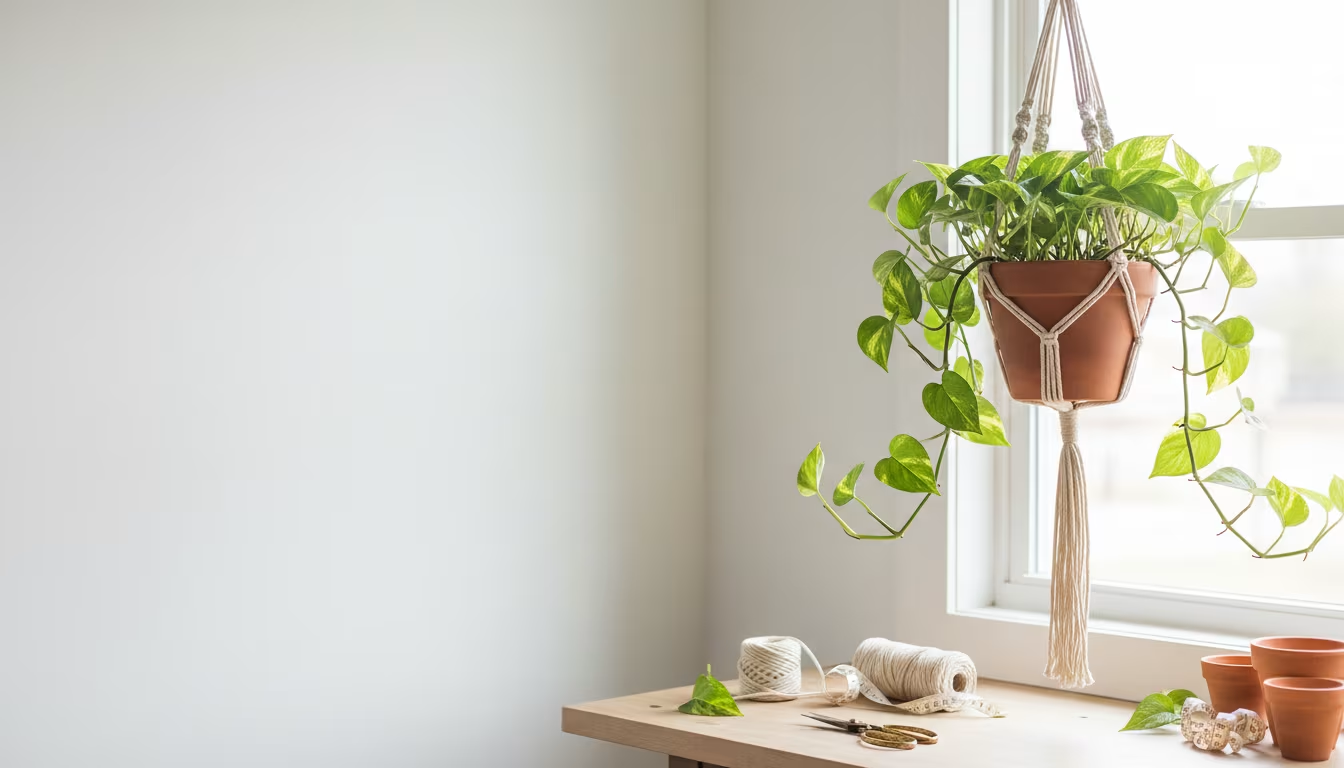
End with a very light watering. For most builds, and especially closed ones, a few spritzes from a spray bottle is enough — you want the soil damp, not soaked. This is also a natural moment to fold in other handmade elements; some hosts pair the session with simple decorative rope baskets to carry the jars home in.
Aftercare guests can actually follow
Send everyone off with three plain instructions. First, light: bright but indirect only — direct sun through glass cooks the plants inside. Second, water: closed terrariums may need misting only once a month or less because they recycle their own humidity, while open ones need watering more like a normal houseplant, every week or two. Third, observe: if the glass fogs heavily and never clears, the lid can come off for a day to release excess moisture. A short printed care card per guest saves a dozen follow-up texts.
Common problems and fixes
Overwatering is the number-one killer, especially in closed jars — soggy roots rot fast, and it is far easier to add water later than remove it, so always err dry. Constant heavy condensation signals too much water or too much sun; vent the lid and move it out of direct light. Mold on the soil surface usually means too little airflow or overwatering; scrape it off, let the jar breathe uncovered for a day or two, and ease back on water. A plant that outgrows its jar can simply be trimmed or swapped, not mourned. And if someone's arrangement looks messy, remind them that organic and slightly wild is the natural look for a terrarium — perfection was never the goal. The workshop scales down cleanly: ask guests to bring their own containers, group-buy the soil and charcoal, and source plants from cuttings and clearance racks, and a gathering for six stays well under $50.
Six-person workshop plan:
| Element | Number | Note |
|---|---|---|
| Shared supplies | under $50 | guests can bring their own containers |
| Plants | 2-in starters | small — crowded jars overheat |
| Layers | drainage ~1 in → charcoal → soil 2–3 in | same order for everyone |
| Time | 1.5–2.5 hours end to end | includes chatting and snack breaks |
Related Posts
Workshop Air Compressor Sizing: CFM and SCFM
Air compressor matched to your tools means smooth work; too small means constant waiting. CFM...

Workshop Dehumidifier Sizing for Tool Rust Prevention
Tools rust silently when shop humidity sits over 60%. The pint capacity that matches your shop...
Bench Vise Sizing and Mounting for First-Time Buyers
Bench vises bolted to scrap plywood pull right out. The right size for the work, the right...
Soundproofing a Basement Workshop on a Renter's Budget
Basement shop noise traveling up to the family room is how you lose workshop privileges. The...
Comments
No comments yet. Be the first to share your thoughts!