Outdoors

How to Start a Cut Flower Garden in Your Backyard This Spring
How to Start a Cut Flower Garden in Your Backyard This Spring

How to Start a Cut Flower Garden in Your Backyard This Spring

You know that feeling when you walk into the grocery store, spy those perfect, vibrant bouquets, and then sigh a little when you see the price tag? Yeah, I've been there more times than I can count. Especially when you just want a little splash of color on your kitchen counter, but not for the price of a small meal. ๐Ÿ˜ฉ

A few springs ago, I decided I was tired of the floral sticker shock. That's when I dove headfirst into trying to grow my own cut flowers. Spoiler alert: it wasn't a perfect, Pinterest-ready success from day one. I made a bunch of mistakes, but I also learned a ton. Now, my backyard gives me beautiful, free bouquets all season long. And yours can too!

Today, we're gonna chat all about getting your own cut flower garden going this spring. We'll cover everything from picking your spot to actually getting those blooms in a vase. It's totally doable, even if you've never grown anything more than a houseplant.

Why This Actually Matters

Beyond saving money, there's just something incredibly satisfying about walking out into your yard and snipping a fresh stem. It connects you to nature in a really tangible way, even if you're just stepping onto a small patio.

Think about it: you get to choose exactly what colors and textures you want. No more settling for whatever sad options are left at the store. You're the designer, the grower, and the recipient of your own beautiful creations.

Last year, I grew these gorgeous cafe au lait dahlias that would have cost me a fortune to buy individually. Instead, I had a constant supply for weeks, sharing them with friends and making my entire home feel a little brighter. It's a real confidence booster, too, seeing something you nurtured turn into something so lovely.

Choosing Your Plot: Sun, Soil, and Space

Alright, first things first: where's this garden actually going to live? This is probably the most critical decision you'll make, and it can feel a little daunting if you're new to gardening.

You don't need a huge backyard estate. My first cut flower patch was literally a 4x8 foot raised bed tucked alongside my garage. It was small, but it gave me more flowers than I knew what to do with.

Finding the Sunniest Spot

Flowers love sun. Most cut flowers need at least six hours of direct sunlight every single day. Eight hours is even better.

Walk around your yard at different times throughout the day. Watch how the sun moves. Are there big trees or fences casting shadows? Those spots probably aren't ideal for most cut flower varieties.

Think of it like a sunbathing flower. They need that consistent direct light to really thrive and produce tons of blooms. Don't skip this step; it really makes a difference.

Understanding Your Soil

Good soil is like a five-star hotel for your plants. If your soil is too compacted, too sandy, or just generally sad-looking, your flowers won't be happy guests. Don't worry, you don't need a PhD in soil science.

The goal is rich, well-draining soil. This means it holds onto moisture but doesn't get waterlogged, and it's full of nutrients. If you're starting a new bed, you'll definitely want to amend your existing soil.

  • The Squeeze Test - Grab a handful of damp soil and squeeze. If it forms a ball but easily crumbles when poked, you're in good shape. If it stays a hard clod, it's too much clay. If it falls apart instantly, it's too sandy.
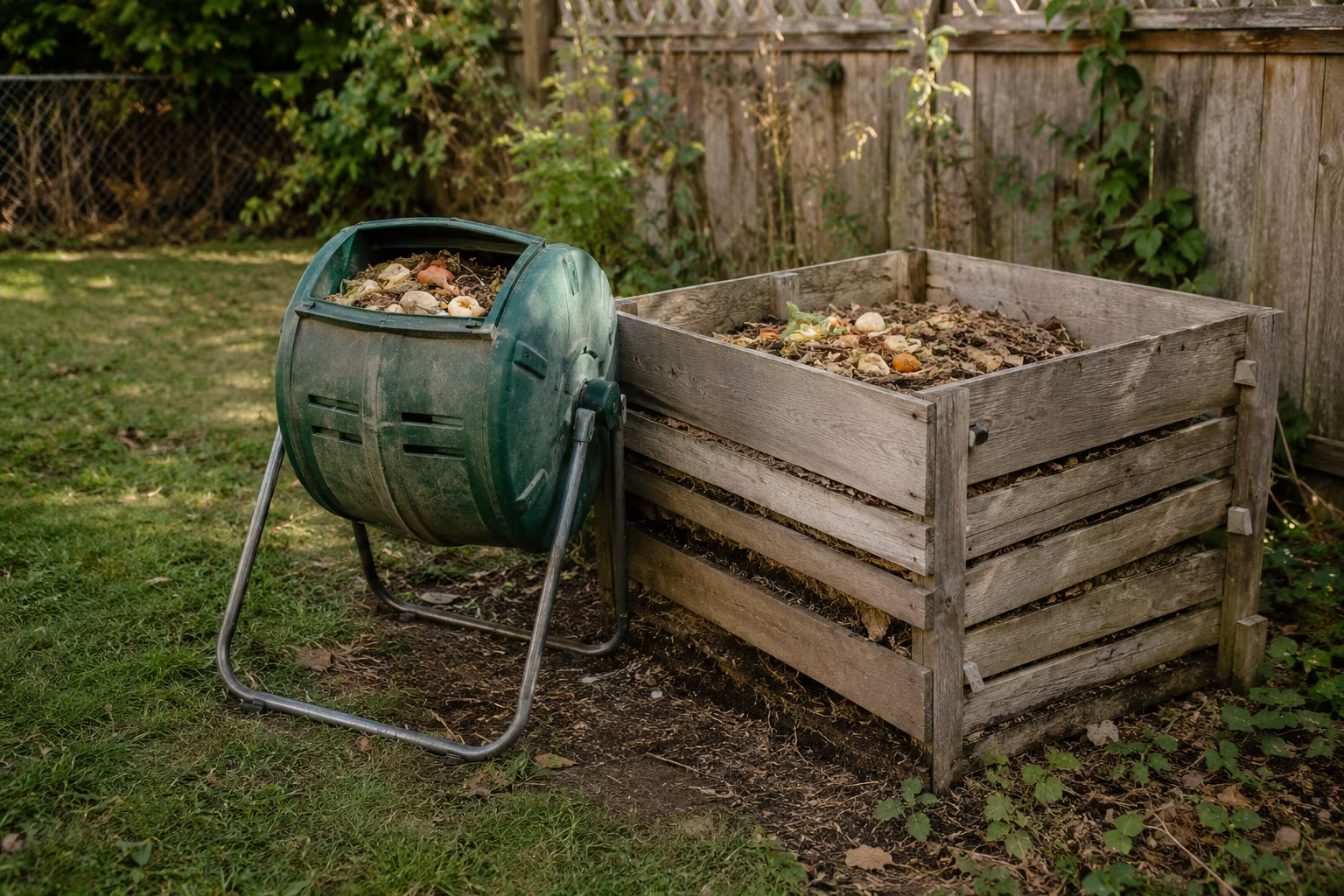
  • Add Organic Matter - This is your secret weapon. Compost, well-rotted manure, or even leaf mold will improve almost any soil type. I usually mix in a good few inches of compost every spring. It lightens heavy clay and gives sandy soil something to hold onto.
  • Consider a Soil Test - If you're feeling really dedicated, you can get a soil test kit from your local garden center or extension office. It'll tell you exactly what your soil needs, like specific nutrients or pH adjustments. I honestly didn't do this for my first bed, but it can be super helpful if your plants just aren't thriving.

Deciding on Garden Size and Type

Once you've found your sunny spot and thought about your soil, you need to decide on the physical dimensions of your garden. Are you going for an in-ground bed or a raised bed?

I started with a raised bed because my native soil here in Portland is pretty clay-heavy, and raised beds are fantastic for drainage and building up good soil quickly. They also mean less bending over, which my back appreciates!

If you're doing an in-ground bed, consider how wide you want it. You'll need to reach the middle of the bed for weeding, watering, and harvesting. Most people find a width of 3-4 feet is perfect if you can access it from both sides. If it's against a fence or wall, then 2 feet wide is probably your max.

How To Actually Do It

Okay, the planning is done. Now for the exciting part: getting your hands dirty! This is where you really start to see your dream garden take shape. Don't be afraid to get messy; that's half the fun.

Step 1: Clear and Prepare Your Bed

First, you've gotta clear out whatever's currently occupying your prime real estate. This means weeds, grass, rocks, anything that isn't future flower food.

If it's a grassy area, you can dig out the sod (it's hard work, but effective) or try the "sheet mulching" method. That's where you layer cardboard, then compost, then soil on top of the grass. It smothers the grass over time and feeds the soil. I actually did this for a new perennial bed last year, and it worked like a charm, though it takes a bit longer to be ready for planting.

Once cleared, loosen up the existing soil with a spade or broadfork. Then, spread a generous layer (2-4 inches) of good quality compost over the entire area. Mix it in well with your existing soil. This is where you're really setting your plants up for success.

Step 2: Choose Your Flowers (Beginner-Friendly!)

This is where it gets fun, but also a little overwhelming with all the options! For your first cut flower garden, I highly recommend sticking with annuals. They grow quickly, bloom abundantly, and don't require you to overwinter anything.

Think about flowers that are known for being good cut flowers. You want long stems and good vase life. Here are a few of my absolute favorites for beginners:

  • Zinnias - These are probably my #1 recommendation. They come in every color imaginable, bloom all summer, and the more you cut them, the more they produce. They're like little floral machines.
  • Cosmos - Lacy foliage and delicate, daisy-like flowers. Super easy to grow from seed, and they sway beautifully in a vase. Purity (white) and Sensation Mix are great.
  • Sunflowers (branching varieties) - Look for varieties that produce multiple blooms on one plant, not just one giant head. ProCut varieties are popular for florists.
  • Snapdragons - These add great height and texture to bouquets. They love cooler weather, so they're often one of the first flowers to bloom for me in late spring.
  • Sweet Peas - Oh, the fragrance! These need something to climb on, but they're absolutely worth the effort for their incredible scent and delicate beauty. Plant them early.
  • Marigolds (Tall varieties) - Not just for pest control! Some varieties, like African Marigolds, get really tall and have big, beautiful blooms perfect for cutting.

Don't try to grow too many different things at once. Pick 3-5 varieties you really love and focus on them. You can always expand next year.

Step 3: Decide on Starting Seeds or Buying Plants

Okay, you've got your flower choices. Now, how are you going to get them into the ground? You've got two main routes:

Starting from Seed:

This is often the most budget-friendly option, and it gives you access to a wider variety of specific cultivars you might not find as nursery starts. For cut flowers, many varieties actually do best when direct-sown into the garden after the last frost.

Some, like snapdragons or sweet peas, benefit from being started indoors a few weeks before the last frost to get a head start. I've got a whole post on starting seeds indoors if you want to dive deeper into that. Just make sure you harden them off gradually before planting outside.

Buying Seedlings (Starts):

If you're short on time, space for seed starting, or just want an easier route, buying young plants from a local nursery is a great option. Look for healthy, compact plants without yellowing leaves or signs of pests. Avoid leggy plants that look like they're stretching for light.

Just remember that nursery selection might be limited to more common varieties. Both methods work great, so choose what feels right for you this year.

Step 4: Planting Your Flowers

This is the big day! Before you start digging, make sure your garden bed is well-watered. It's much easier to plant into moist soil.

Dig a hole large enough to accommodate the plant's root ball. Gently remove the plant from its container, trying not to disturb the roots too much. Place it in the hole so that the top of the root ball is level with the surrounding soil.

Backfill with soil, gently firming it around the base of the plant. Don't press too hard, you don't want to compact the soil. Give your newly planted flowers a good, deep watering immediately after planting to help them settle in.

When you're spacing your plants, remember that cut flowers often need a bit more room than you might think. We want them to grow big and strong, producing lots of stems. Check the seed packet or plant tag for specific spacing recommendations, but generally, give them enough room so that air can circulate and they aren't fighting for light and nutrients.

Step 5: Watering, Feeding, and Weeding

Your job isn't done after planting! Now comes the maintenance, which is pretty straightforward once you get into a rhythm.

Watering: Newly planted flowers need consistent moisture to establish their root systems. Water deeply and regularly, especially during dry spells. Stick your finger into the soil; if it feels dry an inch or two down, it's time to water. Once established, many flowers can tolerate a bit less frequent watering, but consistent moisture will help with continuous blooming.

Feeding: Good soil should provide a lot of what your plants need. However, annual cut flowers are heavy feeders because they're constantly putting out new growth and blooms. I usually give my flower beds a boost every 3-4 weeks with a balanced liquid fertilizer, especially once they start actively blooming. Just follow the package directions.

Weeding: Weeds compete with your flowers for water, nutrients, and sunlight. Stay on top of them! It's much easier to pull small weeds than to tackle a jungle. I try to spend 15-20 minutes a few times a week just pulling weeds by hand. A layer of mulch (like straw or wood chips) can also help suppress weeds and retain soil moisture.

Step 6: Support Your Plants

Many cut flowers, especially the taller varieties like sunflowers, snapdragons, or even some zinnias, will benefit from some support. This keeps them from flopping over in the wind or rain, and ensures you get nice, straight stems for cutting.

You can use simple stakes and twine, or even create a "corralling" system with netting or horizontal strings stretched between posts. I usually put up my supports when the plants are still young, so they grow into it rather than trying to wrangle already-floppy plants later on.

Step 7: Harvesting Your Blooms!

This is the moment you've been waiting for! Harvesting correctly is crucial for getting the longest vase life and for encouraging your plants to produce even more flowers (this is called "deadheading" or "cut-and-come-again" harvesting).

When to Cut: The best time to cut flowers is in the early morning after the dew has dried, or in the evening once the heat of the day has passed. The plants are fully hydrated then.

How to Cut: Use sharp pruners or scissors. Look for stems where the flowers are just opening or are fully open but not past their prime. Cut deep into the plant, aiming for a point just above a leaf node or a side shoot. This tells the plant to send out new growth and more blooms.

For zinnias and cosmos, the more you cut, the more they produce. Don't be shy! For sunflowers, you'll generally get one main bloom per stem, so enjoy them when they're ready.

Immediately after cutting, plunge your stems into a bucket of clean water. Get them inside and into a cool place as soon as possible. This "conditions" them and helps them last longer in a vase.

Making It Stick / Common Mistakes

Starting any new hobby comes with its bumps and learning curves. Growing cut flowers is no different. I've definitely killed my fair share of plants and had my share of wilting bouquets. It's all part of the process!

One year, I planted all my zinnias too close together, thinking I could cram more in. They ended up tall and leggy, fighting for light, and didn't produce nearly as many blooms as they should have. Lesson learned!

"The best garden isn't perfect; it's grown. And every 'mistake' is just another lesson in bloom."

Here are a few common pitfalls I've either experienced myself or seen friends struggle with, and how to avoid them:

  • Not Enough Sun: This is probably the #1 reason for a disappointing flower garden. If your plants aren't getting those 6-8 hours of direct sun, they'll be leggy, produce fewer flowers, and generally just look sad. If your spot just doesn't get enough sun, consider growing shade-loving plants instead of pushing cut flowers there.
  • Poor Soil Preparation: Just digging a hole in compacted, nutrient-poor soil and plopping a plant in won't cut it. Take the time to amend your soil with compost. Your plants will thank you with strong growth and abundant blooms.
  • Inconsistent Watering: Especially when plants are young, they need consistent moisture. Letting them dry out completely then drenching them can stress them out. Try to establish a regular watering schedule and check the soil before you water.
  • Planting Too Early: We all get excited for spring, but planting tender annuals before your last frost date is a recipe for disaster. One cold night can wipe out your whole bed. Know your local frost dates and err on the side of caution.
  • Not Harvesting Regularly: This sounds counter-intuitive, right? But for "cut-and-come-again" flowers like zinnias, cosmos, and sweet peas, if you don't cut them, they think their job is done. They'll stop producing new flowers and start putting energy into making seeds. Keep cutting, even if you just give the extra blooms away!
  • Ignoring Pests and Diseases: A few aphids are usually fine, but a major infestation can quickly decimate your plants. Inspect your plants regularly. If you see signs of trouble, research organic solutions like insecticidal soap or neem oil before things get out of hand. Strong, healthy plants are also more resilient to pests.

Frequently Asked Questions

What if I have a really small yard or just a balcony?

You absolutely can still grow cut flowers! Look for compact varieties or ones that do well in containers. Zinnias, cosmos, and even dwarf sunflowers can thrive in large pots (at least 5-gallon size). Just make sure your containers have drainage holes and you use good potting mix.

What are the absolute easiest flowers for a total beginner?

Hands down, zinnias are the easiest to grow from seed directly in the garden, and they're incredibly prolific. Cosmos are a close second. Marigolds and nasturtiums (which you can also eat!) are also super forgiving and easy to get started.

How much sun do my flowers really need?

For most of the cut flowers we're talking about, at least 6 hours of direct, unfiltered sunlight is essential. If you can give them 8 hours, even better. Less than that, and you'll likely see fewer blooms, weaker stems, and leggy plants. This isn't one of those rules you can easily bend.

Can I just scatter seeds everywhere and hope for the best?

While some wildflowers might thrive with a "scatter and forget" approach, most cultivated cut flowers will do much better with proper spacing and planting. Scattering seeds can lead to overcrowding, which means weak plants and fewer, smaller blooms. Take the extra few minutes to space them out correctly.

When can I actually start planting my cut flower garden?

This depends entirely on your local climate and your "last frost date." Generally, you'll want to wait until all danger of frost has passed, and the soil has warmed up. For many regions, this is late April or May. Check with your local extension office or search online for "last frost date [your zip code]" to get a good idea.

The Bottom Line

Starting a cut flower garden doesn't have to be complicated or expensive. It's about getting started, learning as you go, and enjoying the process. You're going to make mistakes, I promise you, but those are just part of your gardening education.

Imagine stepping out your back door this summer and snipping a fresh, vibrant bouquet that you grew with your own hands. That's a feeling worth every little bit of effort. So, pick a sunny spot, grab a packet of zinnia seeds, and just start. You'll be amazed at what you can grow! Happy planting! ๐Ÿ‘‹

Laura Hayes
Written by

Laura Hayes

Maker and craft enthusiast from Portland, Oregon. I've been documenting my DIY journey since 2019 - everything from woodworking to paper crafts. When I'm not in my garage workshop, you'll find me hunting for supplies at thrift stores.