Why Rotary Cutters Changed Quilting More Than Any Other Tool

You know that feeling when you're staring at a big piece of fabric, scissors in hand, and you just know your "straight" line is about to look more like a river than a road? Yeah, I've been there. My first attempts at cutting fabric for anything other than a totally freeform project usually ended with wonky edges and a lot of frustrated sighs.
For quilters especially, precision is everything. That's why today we're diving deep into one tool that absolutely transformed the craft: the rotary cutter. Seriously, it's not just a nice-to-have; for many, it's the reason quilting became accessible and enjoyable. We're going to talk about why it's so important, how to use it, and what mistakes to avoid. So grab a coffee, and let's chat. 👋
Why This Actually Matters
For a long time, quilting was a really time-consuming process, and a huge chunk of that time was just for cutting. Imagine meticulously marking every single line, pinning fabric to keep it from shifting, and then slowly, carefully, snipping away with shears. It added hours to a project and made accuracy a constant battle.
This isn't just about saving a few minutes. It's about opening up a whole world of creativity that was once bogged down in tedious prep work. For hobbyists like me, it means we can spend more time actually sewing and designing, and less time dreading the first step. I remember trying to cut strips for a baby quilt by hand, and it took me two hours just to get enough wonky pieces. With a rotary cutter, that same job now takes me maybe 20 minutes, and the pieces are perfect. That's a huge difference!
The Old Way: Before Rotary Cutters
Before rotary cutters came onto the scene, around the late 1970s, fabric cutting for quilting was a completely different beast. It involved a lot more marking, a lot more pinning, and a lot more physical effort. People were serious about their shears, but even the sharpest fabric scissors had their limitations.
It sounds a bit dramatic to say a tool revolutionized something, but for quilting, it's really true. Think about the grandmothers and great-grandmothers who spent countless hours making quilts. Their dedication was amazing, but they definitely worked harder when it came to preparing their fabric.
The Fabric Shears Saga
Cutting fabric with shears isn't inherently bad, of course. For garments, curves, or smaller, intricate pieces, they're still totally necessary. But for cutting long, straight strips or dozens of identical squares, they present some pretty big challenges. The whole process was slow, prone to errors, and just plain tiring.
I still reach for my fabric shears for certain tasks, like clipping threads or trimming seam allowances. But if I had to go back to cutting all my quilt pieces by hand? I'm not sure I'd ever finish a project, honestly. The sheer volume of cutting involved in quilting made the traditional method a real bottleneck.
- Slower Process - You'd first lay out your fabric, smoothing it out completely. Then, you'd use a ruler and a marking tool – like chalk or a fabric pen – to draw every single cut line. After that, you'd carefully pin along those lines, making sure the fabric layers didn't shift. Finally, you'd take your fabric shears and slowly snip along the marked lines. This whole sequence just added so much time to the initial stages of a quilt.
- Inconsistent Cuts - Even with the steadiest hand and the sharpest shears, it's incredibly difficult to get a perfectly straight edge over a long distance with scissors. Fabric can stretch and distort as you cut, especially on the bias. The blades of scissors also tend to "chew" the fabric a little, rather than making a clean, precise slice. This meant edges could be wavy, and pieces might not be truly square, leading to headaches later when trying to piece them together.
- Physical Strain - Cutting through multiple layers of fabric with traditional shears requires a lot of hand strength and repetitive motion. Doing this for hours, especially for a large quilt, could lead to serious hand fatigue, cramps, and even strain injuries. It wasn't uncommon for quilters to take breaks just because their hands ached from all the cutting. This definitely limited how long you could work on a project at one time.
Enter the Rotary Cutter: A True Game Changer
And then came the rotary cutter. It's such a simple concept, really, but its impact was monumental. Imagine a pizza cutter, but with a super sharp, retractable blade, designed specifically for fabric. That's essentially what we're talking about here.
It rolls over the fabric, slicing it cleanly, much like a rolling pin over dough. This simple change in action made all the difference in the world. Suddenly, getting those perfectly straight lines and uniform pieces didn't feel like such an uphill battle. It felt… easy. Almost effortless, even!
What Exactly Is a Rotary Cutter?
At its core, a rotary cutter consists of a handle and a circular blade that rotates as you push it. The blades are incredibly sharp and typically made of steel or tungsten steel. Most cutters have a safety mechanism, usually a retractable blade guard, which is absolutely essential for keeping your fingers safe.
They come in different sizes, but the principle is always the same. Instead of scissoring through fabric, you're rolling a super-sharp wheel, which creates a continuous, clean cut. This is what gives it such an edge over traditional shears for many quilting tasks. It's all about that rolling action.
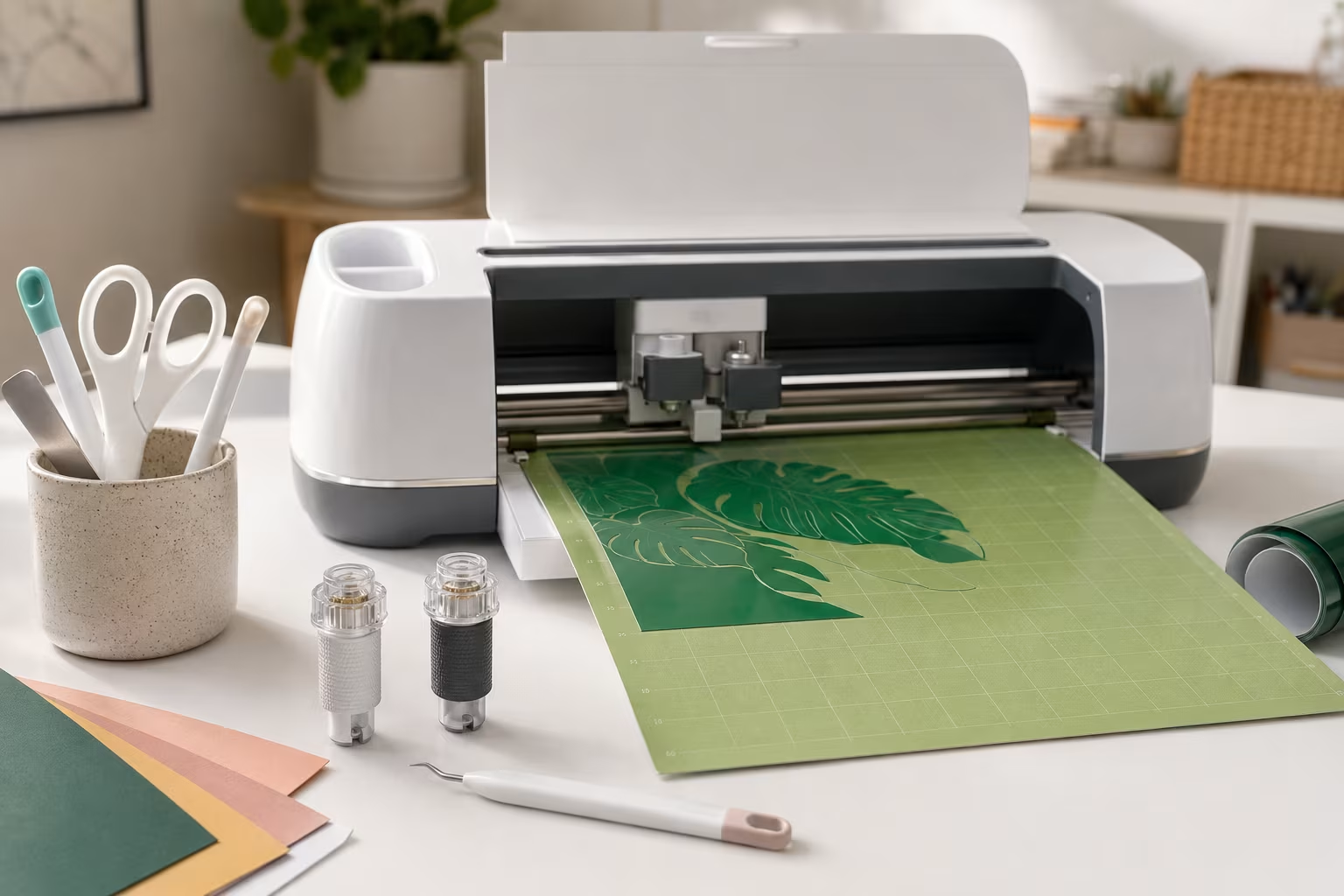
The beauty of the rotary cutter lies in its ability to slice through multiple layers of fabric in one go, usually without any distortion. You use it in conjunction with a specialized self-healing mat and an acrylic ruler, which guides the blade. This setup allows for incredibly precise, perfectly straight cuts, every single time. It completely bypasses the need for marking individual lines, speeding up the process dramatically.
How Rotary Cutters Transformed Quilting
So, we know what it is, but how did this simple tool completely shake up the quilting world? It wasn't just one thing; it was a combination of benefits that collectively changed the game for quilters everywhere. It brought speed, accuracy, and a new level of ease to a cherished craft.
These changes weren't just about efficiency; they actually fostered new creative possibilities. When the tedious parts of a craft become easier, artists and hobbyists are freed up to experiment, to design more intricate patterns, and to simply enjoy the process more. That's pretty powerful, if you ask me.
Speed and Efficiency
Before the rotary cutter, preparing fabric for a quilt was easily the most time-consuming part of the entire process. You could spend half a day, or even a full weekend, just measuring, marking, and cutting all the individual pieces for a moderately sized quilt. It was a huge commitment before you even started sewing.
With a rotary cutter, that all changed. Now, quilters can fold their fabric into multiple layers, line it up with a clear ruler on a cutting mat, and slice through several layers at once. A task that once took hours can now be completed in minutes. I can easily cut all the strips for a throw quilt in less than an hour, which means more time at the sewing machine, or more time just relaxing on my couch.
This increased speed isn't just about cutting faster, either. It opened the door for techniques like "strip piecing," where you sew together long strips of fabric and then sub-cut them into units. This method saves even more time and relies entirely on the precision and speed of the rotary cutter. It’s like a domino effect of efficiency that helps you get to the fun part of sewing much quicker.
Unprecedented Precision
Quilting is, at its heart, a geometric art form. For quilt blocks to fit together perfectly, for seams to match up neatly, and for the final quilt to lie flat without puckering, every single piece needs to be cut accurately. A tiny discrepancy in one block can snowball into major alignment issues across the entire quilt top. This is where the rotary cutter truly shines.
Unlike scissors, which can cause fabric to shift or distort as you cut, a rotary cutter glides through layers with minimal movement. When guided by a sturdy acrylic ruler, it creates perfectly straight, crisp edges every single time. This consistency means your seam allowances will be accurate, your points will match, and your blocks will be the correct size, leading to a much more professional-looking finished product.
I can't tell you how many times I've struggled with blocks that just wouldn't square up before I fully embraced my rotary cutter. It's incredibly frustrating when your pieces are off by just a tiny bit, and that little bit keeps accumulating. The precision offered by a rotary cutter drastically reduces that frustration, making the entire piecing process smoother and more enjoyable. It truly makes a huge difference in the final outcome of your quilt.
- Less Fabric Waste - When your cuts are accurate from the start, you're not recutting pieces due to wonky edges or incorrect sizes. This reduces material waste, which is great for the budget and for not having a pile of small, unusable scraps. It means you get more usable fabric from your yardage.
- Better Seam Matching - Precise cuts mean that when you sew your pieces together, your 1/4 inch seam allowances are consistent. This translates directly to points that align perfectly and block units that fit together without forcing or stretching. It takes a lot of the guesswork out of assembling quilt tops.
- Flatter Quilt Tops - When all your pieces are accurately cut and your seams are consistent, your quilt top will lie much flatter. This prevents distortion and allows for smoother quilting, whether by machine or by hand. It really makes a difference when it comes time for basting and quilting the layers.
Reduced Physical Strain
Remember how I mentioned the hand fatigue from using shears for hours? That's a real issue for many crafters. The repetitive squeezing motion of scissors can lead to strain in the hands, wrists, and even arms. For those with arthritis or other joint issues, it could make quilting incredibly painful, or even impossible.
The rotary cutter significantly reduces this strain. Instead of squeezing, you're applying downward pressure and rolling. This uses different muscle groups and is a much more ergonomic motion. Many modern rotary cutters even come with ergonomically designed handles, making them even more comfortable to hold and use for extended periods. It's a small but mighty change for your body.
- Gentler on Hands and Wrists - The rolling motion is far less stressful on the joints compared to the repeated opening and closing of scissors. This means you can cut for longer periods without discomfort. It's a huge benefit for anyone, but especially those with chronic hand pain.
- Longer Creative Sessions - Because cutting becomes less physically demanding, you can spend more time engaged in the creative process. You don't have to stop every half hour to rest your hands, allowing for better flow and productivity. This helps you get into that creative zone for longer.
- Increased Accessibility - For individuals with limited hand strength or dexterity, the rotary cutter can be a game-changer, making quilting accessible to a wider range of people. It removes a significant barrier to entry, allowing more folks to enjoy the craft. It's truly an inclusive tool.
Enabling New Techniques and Designs
Beyond speed and precision, the rotary cutter actually changed what quilters could make. The ability to quickly and accurately cut long, narrow strips and multiple identical shapes opened up a whole new world of design possibilities. Think about the modern quilting movement – a lot of those geometric, minimalist designs rely heavily on precise, efficient cutting.
Techniques like "strip piecing," where you sew long strips together and then sub-cut them into units, would be incredibly tedious and difficult to achieve accurately without a rotary cutter. Curved piecing, though still challenging, became more manageable with the ability to cut smooth curves. The tool didn't just make old ways easier; it allowed for completely new ways of creating.
Many modern quilt patterns, which often feature complex geometric arrangements or large numbers of small, precise pieces, simply wouldn't be practical to create without the efficiency and accuracy of a rotary cutter. It really pushed the boundaries of what was possible in quilt design and construction. It transformed quilting from a slow, painstaking process into a dynamic, flexible art form.
Getting Started: Your First Rotary Cutter Setup
Feeling convinced yet? If you're ready to jump in, you don't need a huge investment, but there are a few key pieces of equipment you'll need alongside your rotary cutter. Think of them as a team; they all work together to give you the best results. Don't worry, it's not a complicated setup at all.
This is where I started my own journey, and these are the same tools I still use every single time I cut fabric for a project. You'll quickly see how these three items become indispensable partners in your crafting adventures. It's a small investment for a big payoff in your creative enjoyment.
Step 1: Choose Your Cutter Size
Rotary cutters come in a few different sizes, and each has its sweet spot. For starting out, I always recommend the mid-range size. It's the most versatile and will handle the majority of your quilting tasks without a problem. Getting the right size for your main use makes a big difference in comfort and efficiency.
Remember, safety first! Always look for a cutter with a good, easy-to-use safety mechanism that retracts the blade when you're not cutting. This is non-negotiable for preventing accidental nicks and cuts, which I've unfortunately learned the hard way. A good safety lock gives you peace of mind.
- 28mm: This is the smallest common size. It's great for cutting curves, intricate shapes, or working on very small pieces where a larger blade might be clumsy. Think appliqué or small patchwork. It feels more like a precision tool.
- 45mm: This is your workhorse, the most common and versatile size. If you're only buying one rotary cutter, make it a 45mm. It handles general quilting tasks like cutting strips, squares, and larger pieces with ease. This is my go-to for almost everything.
- 60mm: The largest size is perfect for cutting multiple layers of fabric (like up to 8-10 layers of quilting cotton!), heavier fabrics, or very long cuts. It requires a bit more pressure but makes quick work of big jobs. Great for cutting yardage off the bolt.
Step 2: Invest in a Self-Healing Mat
You absolutely cannot use a rotary cutter without a proper cutting mat. Seriously, don't try to use your kitchen counter or a piece of cardboard – you'll dull your blade instantly and damage your surface. A self-healing mat is designed to protect your work surface and, more importantly, your blade, making it last longer.
These mats are made from a special material that allows the blade to slice into it without leaving a permanent groove. The material actually 'heals' itself, closing up the cut marks. They usually come with grid lines printed on them, which are incredibly helpful for measuring and squaring up your fabric. Don't skimp on this; it's a vital piece of your setup.
Mats come in various sizes, from small travel mats (think 9"x12") to giant tabletop mats (like 36"x59"). For a beginner, a 24"x36" mat is an excellent starting point. It's large enough for most quilting projects, including cutting yardage folded in half, but not so huge it takes over your entire workspace. Plus, those grid lines will become your best friend for getting accurate measurements without a separate tape measure.
Step 3: Get a Good Quilting Ruler
Alongside your rotary cutter and mat, you'll need a clear acrylic quilting ruler. This isn't just any old ruler from your school supply box. These rulers are specifically designed for fabric cutting, with precise markings that include 1/4-inch seam allowances, various angles (like 30, 45, and 60 degrees), and clear grid lines.
The transparency of these rulers lets you see your fabric underneath, making it easy to align them perfectly. Many also have non-slip grips or dots on the back to help prevent the ruler from shifting as you cut, which is crucial for accuracy. A good ruler is your guide for every single cut, so it needs to be reliable and easy to read.
For a beginner, a 6" x 24" ruler is a fantastic all-around choice. It's long enough to cut full width of fabric strips (usually 42-44 inches, once you fold it), and wide enough to hold securely. You might also want a smaller square ruler, like a 6.5" x 6.5" or 12.5" x 12.5", for squaring up blocks later on. But start with the long one, and you'll be set for most projects.
Step 4: Prepare Your Fabric
Before you even think about bringing that rotary cutter near your fabric, you need to prepare it properly. This step might seem like an extra chore, but it makes a massive difference in the accuracy of your cuts and the overall success of your project. Don't skip it, even if you're eager to get cutting!
Proper preparation means your fabric will behave predictably under the blade, preventing distortion and ensuring your pieces are as accurate as possible. It sets the foundation for precise piecing and a beautiful finished quilt. I've learned the hard way that a little prep saves a lot of frustration later on.
- Pressing: Always pre-wash and press your fabric before cutting. Pre-washing helps preshrink the fabric and removes any excess dyes. Pressing (ironing) removes all wrinkles and creases, giving you a smooth, flat surface to work with. Any wrinkles can throw off your measurements and lead to inaccurate cuts. Make sure your fabric is bone-dry and cool before cutting.
- Squaring Up: Fabric straight off the bolt isn't always perfectly straight or square. You need a clean, straight edge to start all your measurements from. To "square up" your fabric, fold it in half, aligning the selvages (the finished edges). Place the folded edge along one of the grid lines on your cutting mat, and align the bottom raw edge with another horizontal grid line. Use your ruler to create a perfectly straight cut along one side of the fabric, perpendicular to the fold. This creates your reference edge.
Step 5: The Cutting Technique
Now for the main event! With your fabric prepped and your tools ready, it's time to make your first cut. This isn't about brute force; it's about firm, even pressure and a smooth, consistent motion. The right technique will give you clean cuts and keep you safe. Take your time, especially at first.
Once you get the hang of it, this step will become second nature. You'll develop a rhythm, and the cutting process will feel much more efficient and less intimidating. Remember, practice makes perfect, and every cut gets you closer to mastering this invaluable skill.
- Placement: Lay your self-healing mat on a stable, flat surface – ideally a cutting table or a sturdy workbench. Make sure it's at a comfortable height so you're not straining your back. Place your prepared, squared-up fabric smoothly on the mat.
- Ruler Position: Place your acrylic ruler on top of the fabric, aligning its markings with your reference edge and the desired measurement. For example, if you want to cut a 2.5-inch strip, align the 2.5-inch line on your ruler with your fabric's clean edge. Press down firmly on the ruler with your non-dominant hand (the one not holding the cutter). Apply enough pressure so the ruler doesn't budge, but be careful not to shift the fabric underneath.
- Cutter Grip and Angle: Hold your rotary cutter firmly in your dominant hand. Ensure the blade guard is retracted. Position the cutter so the blade is just touching the edge of the ruler, at a slight angle (think about 45-60 degrees) leaning against the ruler's edge. This angle helps the blade stay in contact with the ruler throughout the cut.
- Cutting Motion: Start cutting at the end of the ruler farthest from your body. Apply firm, consistent pressure as you roll the cutter smoothly and steadily along the edge of the ruler, always cutting away from your body. Don't saw back and forth; aim for a single, continuous stroke. Make sure the blade cuts through all layers of fabric.
- Safety First: As soon as you finish your cut and lift the rotary cutter from the mat, immediately retract the blade guard. Make this a habit every single time. It's the most important safety rule.
Common Mistakes and How to Avoid Them
Learning any new tool comes with a bit of a learning curve. I've definitely made my share of mistakes with rotary cutters – from dulling blades too quickly to, embarrassingly, almost cutting into my ruler. So, if you run into any snags, know you're not alone. Let's talk about some common pitfalls and how to steer clear of them.
Understanding these common mistakes will save you frustration, fabric, and even a few band-aids. It's all part of the learning process, but knowing what to watch out for can definitely speed up your mastery of this amazing tool. Don't be afraid to experiment a little, but always keep safety in mind.
- Dull Blades: "Cutting becomes a struggle, and you get frayed edges instead of clean ones. You might even damage your fabric trying to force a cut with a dull blade."
- Solution: Rotary cutter blades are consumables. They don't last forever. If your blade isn't cutting cleanly through all layers or you find yourself pressing really hard, it's time for a change. Keep spare blades on hand. It's better to change a blade a little too early than to fight with a dull one, which is more likely to cause an accident.
- Not Enough Pressure: "The blade skips or doesn't cut all the way through your layers, leaving you with partially cut fabric that you have to re-cut or snip with scissors, defeating the purpose of the rotary cutter."
- Solution: Don't be shy! You need to apply firm, even pressure to the cutter. Use your body weight and lean into the cut, especially when going through multiple layers. Make sure your grip is firm but relaxed enough to roll smoothly. Practice on scrap fabric to find the right amount of pressure for you.
- Cutting Towards Yourself: "This is a big safety no-no. If your hand slips, or the ruler shifts, the blade could slip and... well, you know. It's a quick way to get a nasty cut."
- Solution: Always, always cut away from your body. Position your mat and fabric so your cutting arm is moving away from your torso. This keeps your hands and fingers out of the blade's path, dramatically reducing the risk of injury. It takes a conscious effort at first, but it quickly becomes second nature.
- Skipping the Mat/Ruler: "Trying to freehand it or cut on your kitchen table. Your blades won't last, and your cuts will be wonky, not to mention you'll ruin your furniture."
- Solution: The self-healing mat and acrylic ruler are not optional accessories; they are integral parts of the rotary cutting system. Always use them together. The mat protects your blade and surface, and the ruler guides your blade for straight, accurate cuts.
- Overlooking Blade Safety: "Leaving the blade open when you step away for a second, even just to grab something. That's how accidents happen, especially if you have pets or small children around."
- Solution: Develop the habit of retracting the blade every single time you lift the cutter from the mat. Make it an automatic reflex. If your cutter doesn't have an auto-retract feature, manually close it. This simple habit will prevent so many potential accidents.
"A sharp rotary cutter blade isn't just about clean cuts; it's about making your creative process a joy, not a battle."
Frequently Asked Questions
What's the best brand of rotary cutter?
Olfa and Fiskars are really popular and reliable choices that many quilters swear by. I've used both brands extensively, and they're both fantastic workhorses. My current go-to is an Olfa 45mm, and it's been incredibly durable and consistent for years. You really can't go wrong with either of those for quality.
How often should I change my rotary cutter blade?
It completely depends on how much you're cutting and the type of fabric you're using. If you start to notice any skipping, frayed edges, or you find yourself having to press down significantly harder to get a clean cut, it's definitely time to change it. For a big quilt project, I might go through 2-3 blades, but for occasional use, a blade might last me a few months or even longer.
Can I cut paper or other materials with my rotary cutter?
You technically can cut other materials, but I really don't recommend using your good fabric blades for anything other than fabric. Paper, cardboard, or even felt can dull a blade incredibly fast. I keep a separate, older rotary cutter with a duller blade specifically for paper crafts or cardboard projects, so I don't ruin my precious fabric-cutting blades. It's worth having a dedicated "paper cutter" if you do both crafts!
Are rotary mats really self-healing?
They do a pretty good job of it! The material is designed to slightly close up after a blade passes through, which helps extend the life of the mat. However, they aren't magic. Deep gouges, or repeatedly cutting in the exact same spot, will still wear down the mat over time. Rotate your mat regularly, and try to vary your cutting paths to distribute the wear, and it will last you much longer.
Is a rotary cutter dangerous for beginners?
Like any sharp tool, a rotary cutter demands respect and proper handling. It's no more dangerous than a sharp pair of kitchen knives if you follow the safety rules. The key is to learn how to use it safely: always cut away from your body, keep your fingers clear of the blade's path, and always retract the blade when you're not actively cutting. With those basic rules in place, it's actually much safer for achieving precise fabric cuts than trying to wrestle fabric with scissors, which can lead to accidental slips.
What size mat should I get?
If you're just starting out and only want one mat, I highly recommend a 24" x 36" mat. It offers a great balance of size for most quilting projects, including cutting full yardage folded in half, without being overly cumbersome. If you're super tight on space, an 18" x 24" can work for smaller projects, but you'll likely appreciate the extra room a larger mat provides as you get more into quilting.
The Bottom Line
For me, and for so many others in the crafting world, the rotary cutter isn't just another tool; it truly was a revolution for quilting. It transformed a slow, often frustrating process into something faster, more accurate, and genuinely enjoyable. It took away a huge barrier to entry and allowed a generation of quilters to explore new designs and techniques that just weren't practical before.
If you've been hesitant about trying quilting because of the precise cutting involved, please don't let that stop you. Get yourself a basic rotary cutter setup – a good cutter, a self-healing mat, and an acrylic ruler – and give it a try. You'll likely wonder how you ever managed without one. Happy making, friends!