
How to Choose the Right Size Area Rug for Every Room in Your Home
A rug that is too small is the most common decorating mistake in a room, and it makes everything around it look unmoored — furniture floats, the space reads smaller, and the whole arrangement feels unfinished. The right-sized area rug does the opposite: it anchors the furniture, defines a zone, and pulls a room together. Sizing is not guesswork. A few measurements and a couple of reliable rules will tell you exactly what to buy for each room.
Why Rug Size Sets the Tone
A rug functions as a foundation, not an accessory laid on top. It sets the visual boundary of a seating group, a dining set, or a bed, and everything else keys off that boundary. Too small, and the furniture looks disconnected from it. Too large — less common — and it can swallow the floor and crowd the walls. The target is a rug in proportion to both the room and the furniture it serves, with a consistent border of bare floor showing around the edges.
The "Legs on the Rug" Rule
The most useful guideline in rug sizing is how your furniture legs relate to the rug. There are three approaches:
- All legs on: every piece in the seating group — sofa, chairs, coffee table — sits fully on the rug. This is the most formal, cohesive look and works best in larger rooms because it demands a big rug.
- Front legs on: only the front two legs of the sofa and chairs rest on the rug, with the back legs on bare floor. This is the most popular and budget-friendly option, grounding the group without a huge rug.
- All legs off: generally avoid this in a seating area, where it leaves a small rug stranded like a postage stamp. It is fine only for accent rugs — a bath mat, an entry runner — where no furniture is involved.
Measure Before You Shop
Start with the room. Measure its length and width and write the numbers down — this is the ceiling on how large a rug can go. Then measure your furniture: the length of the sofa, the footprint of the coffee table, the size of the dining table or bed. Knowing those dimensions lets you picture how much floor the pieces occupy and how a rug will interact with them.
Before committing, outline the rug's exact dimensions on the floor with painter's tape and live with it for a day. Walk around it, position the furniture against the tape, and check the border. This costs the price of a roll of tape and reliably catches a rug that would have been too small.
Living Room Layouts
The living room is the trickiest room to size because it holds the most furniture. Match the rug to the effect you want:
For a large, anchored room, choose a rug big enough for all legs of all pieces — often a 9x12 or 10x14 — leaving roughly 12-18 inches of bare floor around the perimeter. For a typical living room, the front-legs-on approach and an 8x10 or 9x12 rug does the job; set the front legs of the sofa and chairs on the rug and make sure the rug extends at least 6 inches past each end of the sofa. In a small apartment living room or on a tight budget, a 5x7 or 6x9 rug placed under the coffee table and the front edge of the sofa still defines the conversation area — just size it so the coffee table is not floating alone.
| Room / use | Common rug size | Placement rule |
|---|---|---|
| Large living room | 9x12 or 10x14 | All furniture legs on the rug |
| Standard living room | 8x10 or 9x12 | Front legs on; 6 in. past sofa ends |
| Small living room | 5x7 or 6x9 | Under coffee table and sofa front edge |
| Dining (rectangular table) | 8x10 or 9x12 | 24-36 in. beyond table on all sides |
| Queen bed | 8x10 (or 9x12 to fill) | Two-thirds under bed, or fully under |
| King bed | 9x12 or 10x14 | Fully under bed and nightstands |
| Bedside runners | 2x8 or 2x10 | One on each side of the bed |
| Entryway / hallway | Runner, room-width less 4-6 in. | 6-12 in. of bare floor at each end |
Dining Room Sizing
The dining rug has one governing rule: chairs must stay fully on the rug even when pulled out to sit down. If a chair's back legs catch the rug edge, the setup snags and looks off. To size it, measure the table and add at least 24 to 36 inches on every side — a 60-inch table therefore needs a rug 108 to 132 inches long. An 8x10 or 9x12 covers most standard tables. Match the rug shape to the table: rectangular under rectangular, round or square under round or square.
Bedroom Options
A bedroom rug adds warmth underfoot for that first step out of bed. Three layouts work. Place a large rug (9x12 for a queen, 10x14 for a king) fully under the bed and nightstands for a plush, luxurious feel, leaving about a foot of rug showing on each side. More commonly, slide the rug about two-thirds of the way under the bed so it extends past the sides and foot — an 8x10 suits a queen, a 9x12 a king — giving a soft landing strip without covering the whole floor. In a small bedroom, two runners (2x8 or 2x10) flanking the bed deliver comfort exactly where feet land, at the lowest cost.
Entryways, Hallways, Kitchens, and Bathrooms
Transitional and utility spaces call for smaller, functional rugs. In an entryway, pick a rug a few inches narrower than the space — 4 to 6 inches of bare floor on each side — and confirm it clears the door swing. For a hallway, run the runner along most of the length, leaving 6 to 12 inches at each end and a few inches on either side. In the kitchen, a runner or anti-fatigue mat in front of the sink or stove cushions long sessions on your feet. In a bathroom, a small 2x3 or 3x5 accent rug adds color at a vanity, but choose washable material with a non-slip backing for wet areas.
Common Mistakes to Avoid
Even with the rules in hand, a few errors trip people up:
- Going too small: the single most frequent mistake, usually to save money or because furniture footprints get underestimated. When torn between two sizes, choose the larger one.
- Ignoring traffic flow: a rug should not block walkways or create a half-on, half-off tripping edge. Visualize how people move through before you place it.
- Mismatched scale: a large sectional over a tiny 5x7 looks like an afterthought. Scale the rug to the furniture it anchors.
- Skipping the tape test: a floor sample tells you little about how a full rug reads in the room; outline it first.
- Overthinking it: the guidelines are a starting point, not law. Measure, tape, then trust your judgment.
Material and Pile Affect the Right Size Too
Fiber and pile height change how a rug reads at a given size. A low-pile flatweave — jute, sisal, or a thin wool kilim — sits nearly flush with the floor, so chairs slide over its edge easily and it works well in dining rooms and high-traffic paths. A high-pile or shag rug adds bulk and warmth but catches chair legs and vacuum wheels, which makes it a better fit for bedrooms and low-traffic seating areas than under a dining table. Wool is durable and naturally stain-resistant; synthetics like polypropylene cost less and handle moisture, which suits entryways and kitchens. Cotton is soft and washable but flattens faster underfoot, so it is better for a low-traffic bedroom or bath than a busy living room. As a rule, the harder a room works, the flatter and tougher the fiber should be.
Whatever the size, use a rug pad. A pad rated for your floor type stops the rug from creeping, adds cushioning underfoot, protects hardwood from abrasion, and keeps a large rug lying flat instead of curling at the corners. Cut the pad about an inch smaller than the rug on all sides so it stays hidden. On carpet, a specific carpet-on-carpet pad prevents the top rug from bunching. These small choices decide whether a correctly sized rug also feels good to walk on and stays put for years.
Odd Shapes, Layering, and Budget
An awkward room does not need one giant rug. Define zones instead — a rectangular rug for the seating area, a smaller round rug in a corner reading nook. Layering also works well and adds texture: start with a large neutral base such as jute or sisal sized to the room's rules, then center a smaller decorative rug on top within the furniture grouping. On carpet, an area rug is fine for defining a zone as long as you use a non-slip pad rated for carpet-on-carpet to stop bunching.
Budget rarely has to block a good result. Runners, smaller rugs, and layered inexpensive pieces all make an impact, and thrift stores, marketplace listings, and clearance sales turn up well-priced rugs regularly — a correctly sized simple rug always beats an expensive one that is too small. Aim for 12-18 inches of visible floor in large rooms and 6-12 inches in small ones, and the rug will look intentional rather than like it is trying to cover every inch.
Related Posts
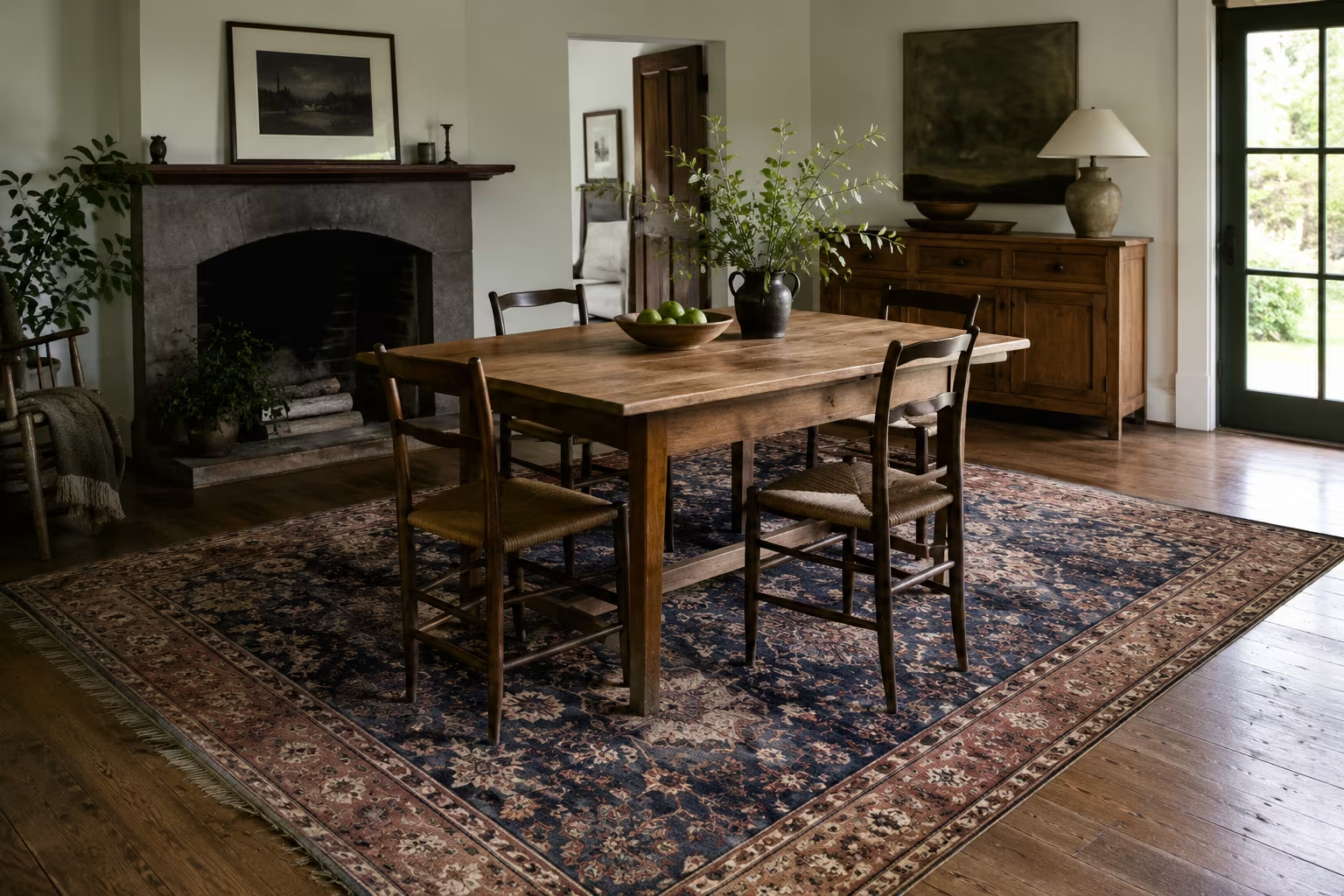
Area Rug Size Under Dining Table
A rug too small under dining table looks like a mistake. Chairs must stay on rug when pulled out.

Sofa Pillow Combinations That Don't Fight
Throw pillows pile up over years. Rules for color, texture, pattern, and size.
Light Fixture Height Over Dining Table: The Rule
The right pendant light height over a dining table is calculated, not guessed. The standard...
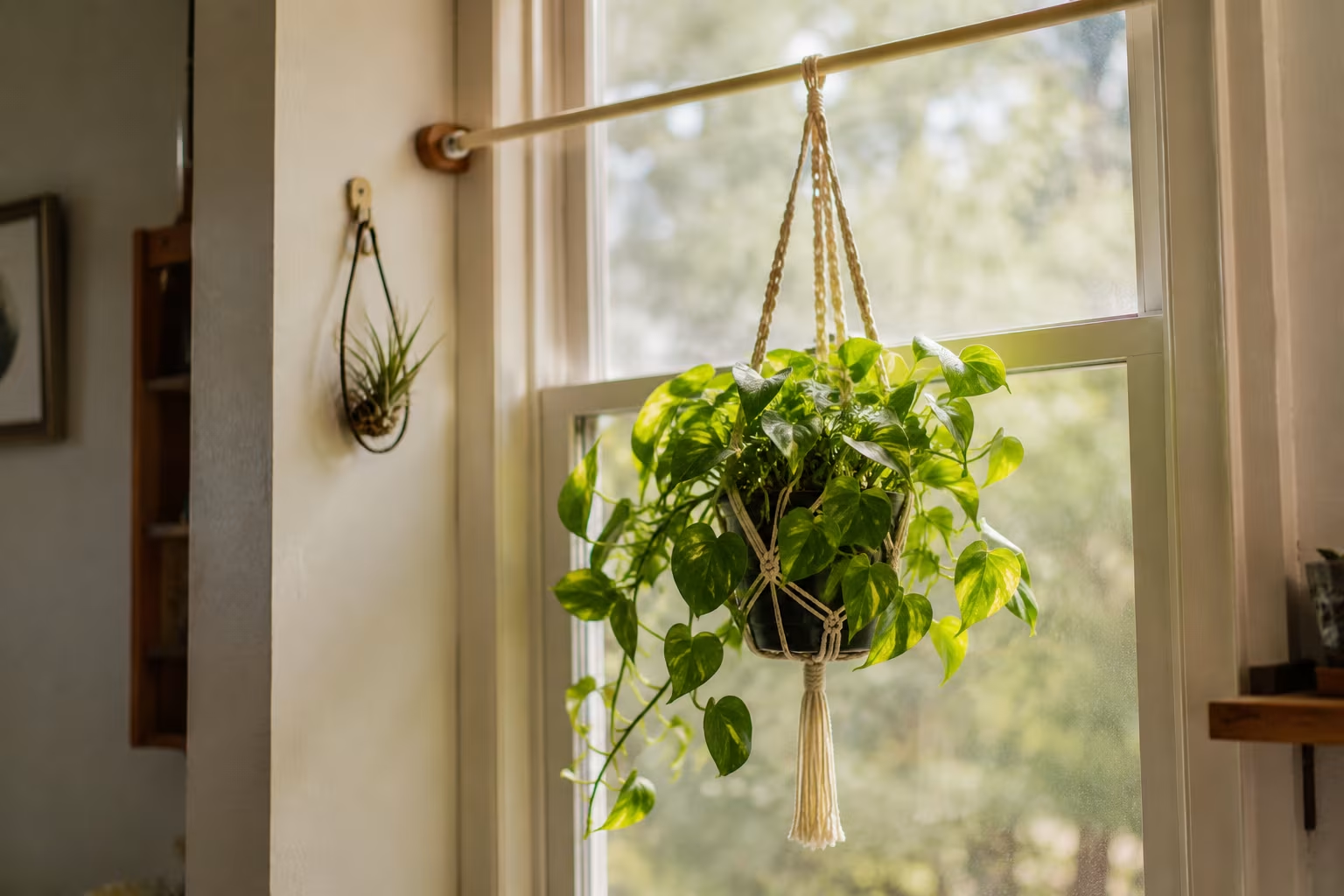
Hanging Plants Without Ceiling Hooks for Renters
Hanging plants brighten any room but drilling into the ceiling isn't always an option....
Comments
No comments yet. Be the first to share your thoughts!