
How to Create Geometric String Art Without Any Artistic Talent
Geometric string art looks intricate but relies on precision rather than drawing skill. You hammer nails into a board as anchor points and wrap string between them; the nails create the crisp lines, so a steady drawing hand is never required. If you can measure evenly and count, you can make it. A small piece takes an afternoon and costs under ten dollars in materials, which makes it a low-risk first project for anyone convinced they lack artistic talent.
What Geometric String Art Is
String art uses nails as fixed points and thread stretched between them to build patterns. The visual depth comes from layering — wrapping the same span repeatedly and overlapping lines to create density and texture. You are effectively drawing with string, except the nails hold the geometry for you.
There are two broad styles. Freeform designs outline objects like animals or lettering and demand some judgment to keep the shapes right. Geometric designs — triangles, squares, hexagons, stars, or patterns built from connecting evenly spaced points — depend on math, not artistic flair, which is exactly why they suit beginners. Start with one basic shape like an equilateral triangle before attempting anything with overlapping layers.
Materials You Need
The supply list is short and cheap, and most of it may already be in a drawer:
- A wooden board — reclaimed plywood or a cheap pine board a few dollars from the hardware store. Soft enough to take nails without splitting, thick enough that nails do not poke through the back.
- Small nails — roughly 1 inch long with a small head so the string catches. A box costs a few dollars.
- A hammer.
- Embroidery floss or thin yarn — floss is usually under a dollar a skein and shows up crisply; avoid thick yarn, which hides the nail points.
- A printed design, ruler, pencil, tape, and scissors.
Preparing and Marking the Board
Give the board a quick sand, especially a thrift-store find, so you are not fighting splinters. Decide whether to paint or stain it — a dark background makes bright string pop, though natural wood works well too — and let it dry completely before doing anything else. Smudged paint under the string is not fixable later.
Print the geometric design at the size you want and use a ruler to confirm the points are evenly spaced; accuracy here drives the whole look. Tape the printout securely to the board. Mark each nail point by poking straight through the paper with a pencil or awl. Even spacing is what makes a geometric piece read as clean, so aim for a consistent gap — usually 1/2 to 1 inch between points depending on the size of the project.
Hammering the Nails
This is the step most beginners dread, but it is mechanical. Hold the nail on a marked point, tap gently to set it, then drive it in until it is about halfway into the wood, leaving 1/2 to 3/4 inch standing proud for the string to wrap.
Keep every nail at roughly the same height. Uneven heights are the number one cause of a sloppy finished piece, because the string sags on the low nails and pulls tight on the high ones. A simple trick is to wrap a small piece of painter's tape around the nail at the depth you want as a stop mark, so each one goes in to the same height. Wear safety glasses.
Once all the nails are set, tear away the paper template. It gets fiddly around the nail heads; use tweezers or a craft-knife tip to pick out any bits of paper stuck underneath. Then check the nails — straighten any that bent and correct any that sit too high or too low before you string, because it is far harder to fix once thread is on.
Stringing the Design
Tie a double knot around one of the outer nails to anchor your thread, leaving a small tail to tie off at the end. Then connect the points. For geometric work you are mostly running straight lines: wrap the string taut around each nail, looping two or three times around a given nail when you want a thicker line or a stronger anchor.
There is no single correct order. Outline the shape first and then fill the center, or build overlapping patterns from the start. Keep the tension even — taut enough for crisp lines but not so tight it pulls the nails loose. Layering is where the depth comes from, so go over existing lines and connect nails in new ways to build the pattern up, using a second color to mark distinct sections if you like. When the design is done, finish with a secure double knot around a nail and trim the excess close.
To hang the finished board, screw a sawtooth hanger or a D-ring into the back before you start stringing, while the board is still easy to flip and lay flat — retrofitting hardware around a completed string design is awkward. If the piece will live somewhere dusty or humid, a light pass of clear matte spray sealer over the finished strings helps them shed dust and hold color, though it is optional for an indoor wall. Let any sealer dry fully before hanging.
Common Mistakes
Inconsistent nail height. The biggest problem and the most visible. Uneven nails make the string sag and pull unevenly. Take your time hammering and use the tape stop-mark to keep heights matched.
Loose tension. Slack string looks sloppy and sags over time. Keep it consistently taut, but not so tight it lifts the nails — finding that balance takes a little practice.
Wrong string thickness. Thick yarn looks clunky and buries the nail points; thread that is too thin barely shows. Embroidery floss or thin crochet yarn is the reliable middle ground.
Do not hesitate to untie and re-string a section. Reworking a run two or three times to get the density and tension right is normal and always better than living with a result you dislike.
Consistency is your best friend in string art. Consistent nail height, consistent spacing, and consistent string tension. Nail those, and the project holds together.
Frequently Asked Questions
What wood works best?
Pine or plywood — soft enough to hammer into without splitting. A thrift-store cutting board or an old cupboard door also works, as long as it is thick enough that the nails do not pop through the back.
Do I really need a ruler?
For freeform pieces, no. For geometric designs, yes — evenly spaced nails are what make the pattern look clean and polished, and it is a small step for a large visual payoff.
My string keeps slipping off the nails. What am I doing wrong?
Wrap the string fully around the nail head rather than catching only the side, and loop twice around any problem nail. Make sure your nails have a small head; headless nails will not hold thread.
Can kids do string art?
Yes, with supervision. Pre-hammer the nails for younger children and let them handle the stringing with forgiving colorful yarn.
How long does a project take?
A small, simple design such as an 8x10 inch triangle runs about 2 to 3 hours including board prep. A larger, more intricate piece can take 6 to 8 hours — a good weekend or few-evening project.
Pick one simple shape, mark it out with a ruler, keep your nail heights and string tension consistent, and accept that your first piece is practice. Once the mechanics click, the same point-to-point method scales up to stars, mandalas, and dense overlapping patterns, and the finished board on the wall reliably draws more compliments than the effort would suggest. A pressed-flower approach to wall decor pairs well with it if you want a matching set; see the guide to pressed flower frames for another beginner-friendly piece.
String-art planning numbers:
| Parameter | Value | Note |
|---|---|---|
| Nails | ~1 in, small heads, halfway in | string needs the exposed shank |
| Spacing | consistent 1/2–1 in gaps | even spacing is what reads as clean |
| Small piece (8×10 triangle) | 2–3 hours with prep | — |
| Intricate piece | 6–8 hours | a weekend or a few evenings |
Related Posts
Beginner Pottery Wheel Speed for Centering
Centering clay needs high wheel speed and firm pressure. Most beginners use too low speed.

Calligraphy Ink Comparison for Cotton Paper
Modern dip pen calligraphy needs ink that doesn't bleed on absorbent cotton paper. India ink...
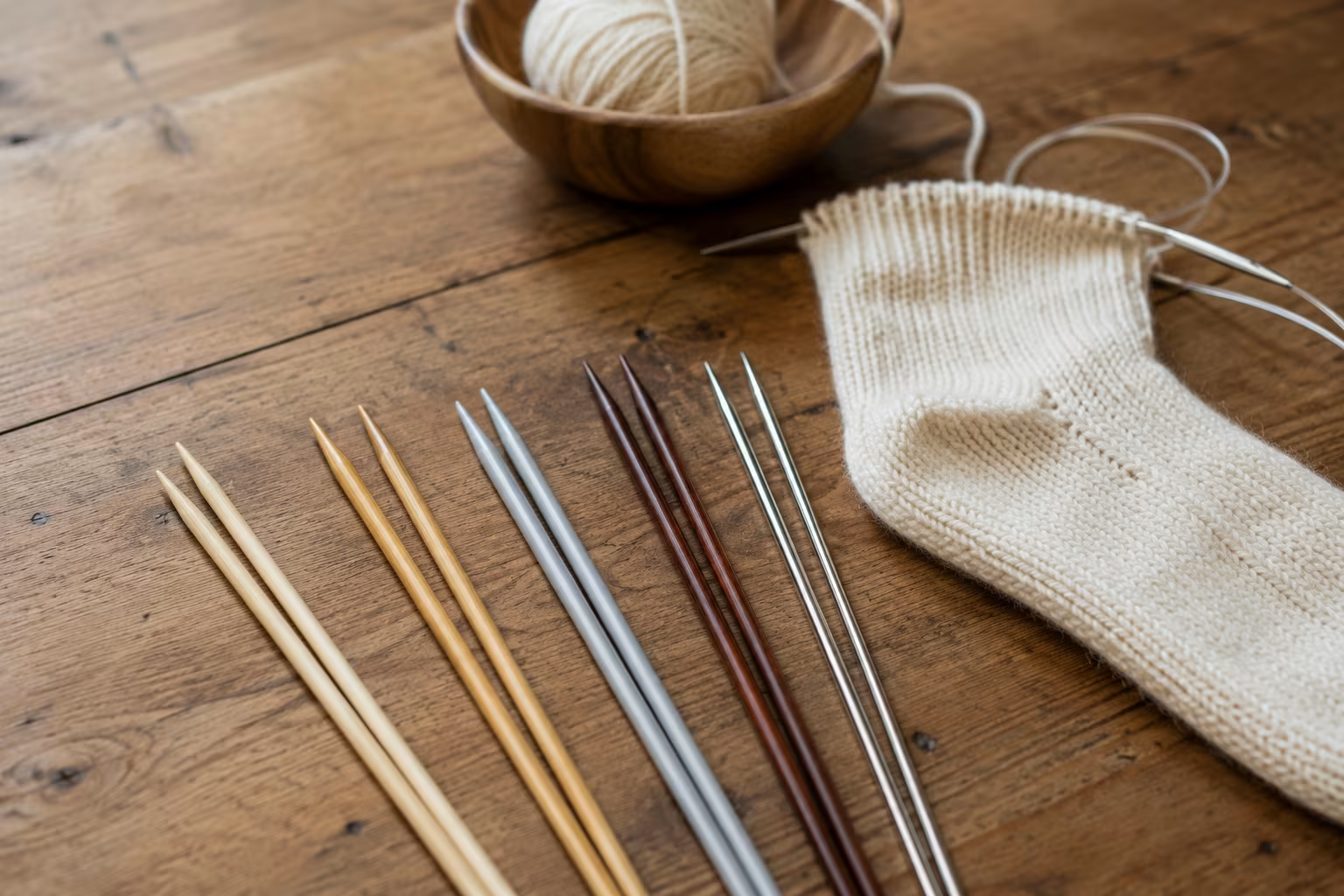
Knitting Needle Materials Compared: Wood vs Metal vs Plastic
Knitting needle material changes how stitches slide, how cold or warm the needle feels, and how...
Beginner Watercolor Paper Choice for Textured Washes
Watercolor paper is the single biggest gear decision a beginner makes. Weight, surface texture...
Comments
No comments yet. Be the first to share your thoughts!