
How to Create Visual Flow Between Connected Rooms in Open Floor Plans
Knocking down walls creates an open space, but it does not automatically create a coherent one. Without deliberate connections, a combined kitchen, dining, and living area can read as three mismatched rooms sharing a floor — one industrial, one rustic, one thrown together. Visual flow is the set of repeated elements that lets the eye travel smoothly from zone to zone so the whole footprint feels like one intentional room. This guide covers the tools that create that continuity and how to apply them in order.
Why Visual Flow Matters
Flow is how your gaze moves through a space, guided by color, texture, line, and light. When it works, the eye glides between areas instead of stopping at every change of style. When it fails, an open-plan layout can feel more chaotic than a set of separate rooms, because there are no doorways to justify the jarring shifts. A disjointed open plan also reads as smaller and more cluttered than it is. Cohesion does the opposite: it makes the footprint feel larger, calmer, and more welcoming, and it makes future decorating decisions easier because every choice is measured against one guiding framework.
The Core Tools of Cohesion
A handful of elements do most of the work. You do not need to apply all of them at maximum strength — usually a consistent floor plus a shared palette carries the room, and the rest reinforce it. The table below sums up the main levers, how to use each, and the mistake that most often undermines it.
| Element | How to unify it | Common pitfall |
|---|---|---|
| Color palette | Three to five colors repeated across all zones | Treating each zone as a separate scheme |
| Flooring | One continuous material, or rugs that share a palette | Different floors that visually chop up the space |
| Materials & textures | Echo wood tones and metal finishes room to room | Matching nothing between adjacent areas |
| Lighting | Similar fixture styles, one color temperature | Warm bulbs in one zone, cool in the next |
| Furniture | Shared lines and finishes, consistent scale | Clashing eras and mismatched proportions |
| Decor & art | Repeat accent colors as pops across zones | One-off statement pieces that fight each other |
Building a Core Color Palette
Color is the most powerful tool, so start here. Choose three to five shades that work together: one dominant neutral, one or two secondary colors, and a single accent. The easiest way to land on a palette is to build it around something you cannot easily change — a countertop, a large rug, a stone fireplace, or a favorite piece of art. Pull the tones from that fixed element and the room already has a reason to hang together. A palette anchored in, say, a warm gray sofa might extend to soft off-whites and a muted terracotta accent. A useful way to distribute those colors is the 60-30-10 guideline: roughly 60 percent of the space in the dominant neutral (walls and large furniture), 30 percent in a secondary color (upholstery, rugs, curtains), and 10 percent in the accent (pillows, art, small decor). Applying the same proportions across every zone keeps the areas visibly related even when the specific pieces differ. For a fuller method on picking shades that read warm rather than clinical, see this guide to choosing a minimalist color palette that does not feel cold.
Connecting Zones with Paint
You do not have to paint every wall one color, but a shared wall color across connected areas is one of the fastest ways to unify them. Carrying a single neutral through the whole open plan creates a calm, consistent backdrop that lets furniture and art stand out. If you want more distinction between zones, pull a deeper shade from the same palette for a single accent wall — a dining-area feature wall in a tone two steps darker than the living-room neutral still reads as connected because it comes from one family. A reliable trick is to keep the trim color identical throughout the main floor even when wall colors shift slightly; that constant thread ties everything together at the edges.
Repeating Materials, Textures, and Flooring
Flooring is the biggest single connector. If it is feasible, running the same floor material through the entire open plan creates an uninterrupted path for the eye and instantly links the zones. Replacing all your flooring is rarely realistic, so the practical alternative is large area rugs that let the underlying floor show and connect while defining seating and dining areas above it. Keep the rugs within your palette so they complement rather than compete — a neutral jute base with a smaller patterned rug layered on top for personality is a dependable formula.
Beyond the floor, echo materials and textures across zones. If the kitchen has warm natural wood, repeat that tone in living-room shelving or picture frames. If the appliances are stainless steel, bring a touch of the same metal into an adjacent lamp base or bowl. Textures work the same way: a chunky knit throw in the living area can be answered by a woven placemat set in the dining zone. The aim is complement, not exact match. Secondhand shops are ideal for finding pieces that share wood tones or finishes; this guide to sourcing unique home decor from local thrift stores is a good starting point.
Work in a "rule of three" as you place these echoes: any material worth repeating should appear at least three times across the open plan, spread out rather than clustered. A single wood shelf in one corner reads as an accident; the same wood tone in a shelf, a frame, and a side table reads as intent. The same holds for metal finish and for a signature texture. Distributing each repeated element into different zones is what stitches the areas together, because the eye keeps meeting the same note as it travels the room.
Unifying Furniture and Lighting
Consistent furniture does not mean a matching set — matched suites usually flatten a room. Instead, keep a common thread of line, shape, and finish. If the living room leans mid-century with clean legs and low profiles, choose a dining table and stools with a similarly contemporary feel rather than an ornate carved set. A useful approach is to pick one anchor piece you love, then look for furniture that feels like it belongs to the same family even if it is not identical.
Lighting sets mood and defines zones without walls. Use fixtures that echo one another in style — a modern pendant over the island paired with a contemporary floor lamp in the living area — and keep the bulb color temperature consistent. Color temperature is measured in kelvin: 2700K to 3000K is a warm white that reads cozy and inviting, 3500K to 4100K is a cooler neutral, and 5000K and up is a stark daylight tone. Mixing warm bulbs in one zone with cool ones in the next makes an open plan feel like two different homes. Deciding on one temperature — 2700K to 3000K is the safe choice for living spaces — and buying every bulb to match is a small, cheap change with an outsized effect on how connected the space feels.
Defining Zones Without Walls
Flow does not mean erasing boundaries. You still want to signal where the living area ends and the dining area begins, just with soft cues rather than hard ones. Area rugs are the primary tool — a rug large enough to sit under the front legs of the seating anchors a living zone, while a separate rug under the table delineates dining. Rugs that are too small have the opposite effect, making a grouping feel cramped and adrift.
Furniture placement does the rest. The back of a sofa can act as a soft wall between living and dining, and a console table styled behind it reinforces that divide while adding storage and display space. These visual dividers separate functions without blocking sightlines or light. Strategically placed decor carries your accent color through the zones at the same time — a deep-teal throw pillow in the living room, a small teal vase on the dining table, and a hint of teal in kitchen artwork create a repeating trail the eye follows across the whole space. For the pillow side specifically, this guide to arranging throw pillows like a professional stylist helps.
Common Mistakes
A few habits sabotage flow. Doing everything at once — buying a cart of new pieces before thinking through the connecting elements — usually produces a space that still feels disjointed, so change one element at a time and live with it. Chasing individual statement pieces for each zone creates a visual cacophony when a vibrant living-room rug meets an equally loud but unrelated dining rug; make sure standouts still share the palette. Neglecting scale is another trap: a huge plush sectional paired with spindly little dining chairs throws the proportions off, so keep a similar visual weight across the open plan. Finally, do not underestimate negative space — clearing clutter often does more for flow than adding anything, because the eye cannot follow a path through visual noise. Choose your palette, connect the floor and walls, echo materials and light, then define zones softly, and the open plan starts to feel like one deliberate room.
Related Posts
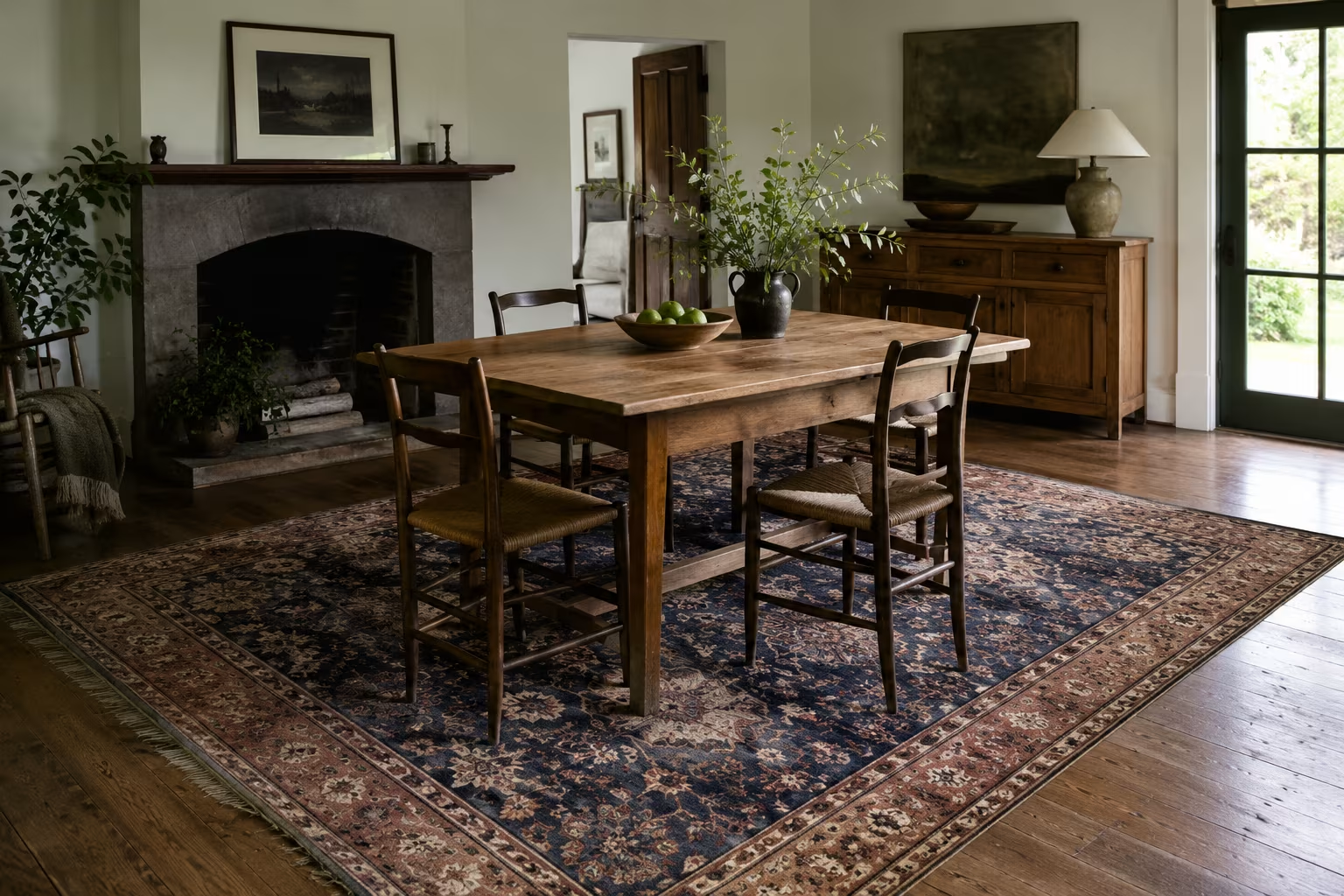
Area Rug Size Under Dining Table
A rug too small under dining table looks like a mistake. Chairs must stay on rug when pulled out.

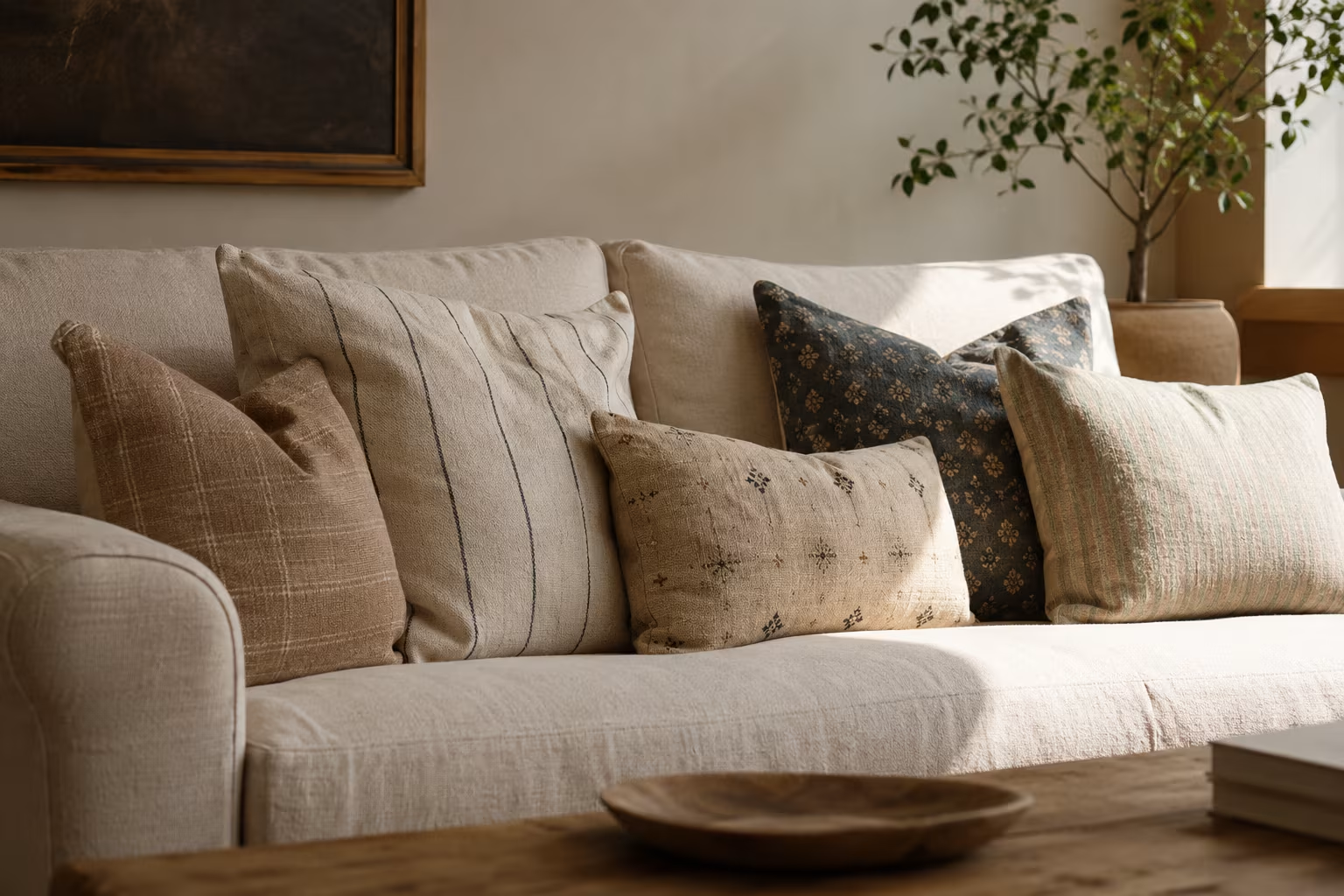
Sofa Pillow Combinations That Don't Fight
Throw pillows pile up over years. Rules for color, texture, pattern, and size.
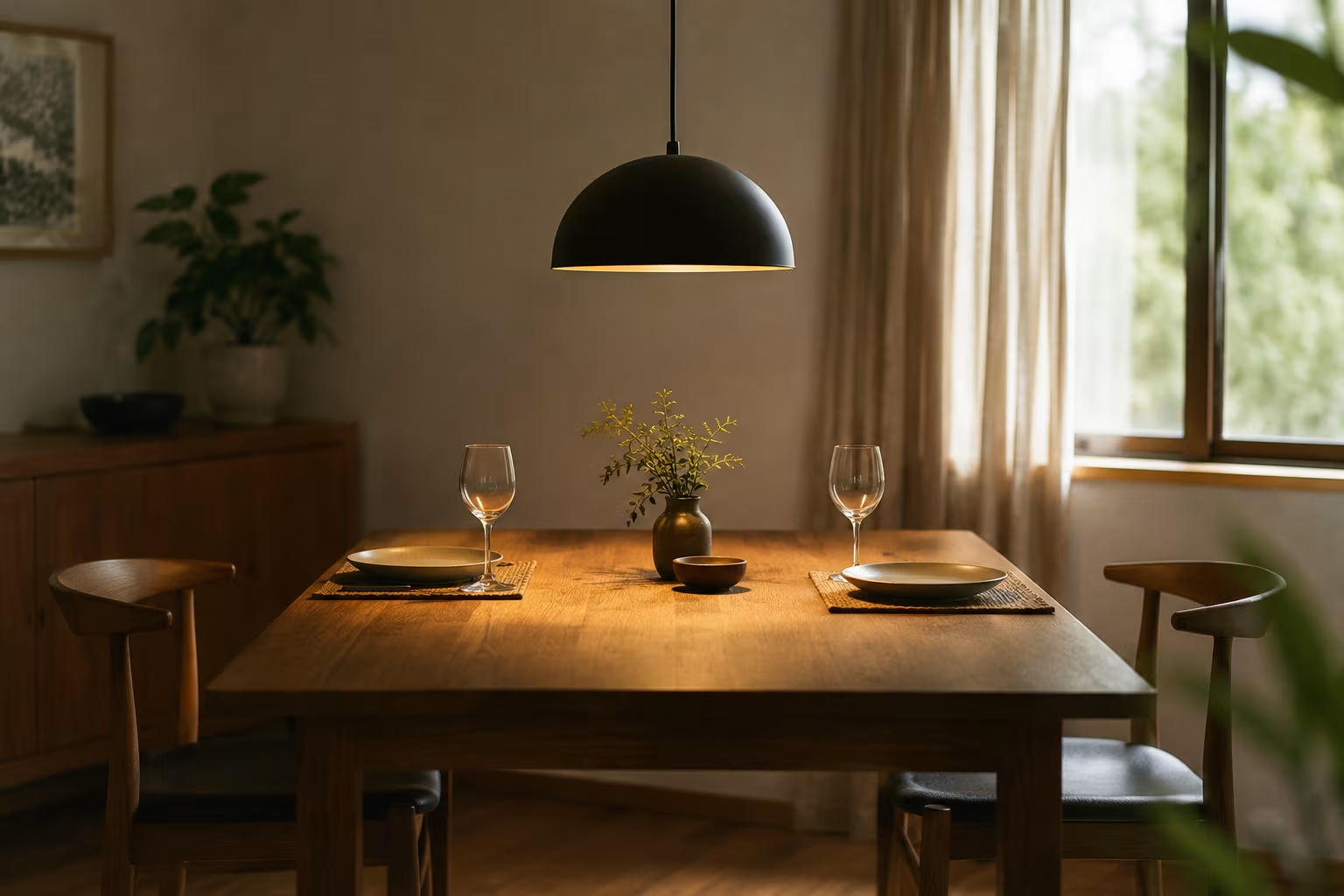
Light Fixture Height Over Dining Table: The Rule
The right pendant light height over a dining table is calculated, not guessed. The standard...
Hanging Plants Without Ceiling Hooks for Renters
Hanging plants brighten any room but drilling into the ceiling isn't always an option....
Comments
No comments yet. Be the first to share your thoughts!