DIY

How to Install Removable Wallpaper Perfectly on Your First Try
How to Install Removable Wallpaper Perfectly on Your First Try

How to Install Removable Wallpaper Perfectly on Your First Try

You know that feeling when you're scrolling through Pinterest, see a gorgeous room with wallpaper, and think, "I could totally do that!" Then you buy the wallpaper, unroll it, and suddenly it's a sticky, bubbly mess? Yeah, I've been there. My first attempt at removable wallpaper was a disaster that ended with me peeling it off in frustration and throwing the whole roll away. πŸ€¦β€β™€οΈ

But I'm stubborn, and I knew there had to be a trick to it. After a few more tries (and a lot of deep breaths), I figured it out. And you can too!

Today, I'm going to share everything I learned about getting removable wallpaper right on your very first try. We'll cover what supplies you actually need, how to prep your walls so the paper sticks, and my best tips for avoiding those dreaded bubbles and crooked lines. Stick with me, and we'll get your space looking amazing without any wallpaper-induced meltdowns.

Why This Actually Matters

Home decor can feel like a huge commitment, especially if you're renting or just love to change things up often. Traditional wallpaper is a big deal – it's messy, expensive to install, and even more expensive (and annoying) to remove.

That's where removable wallpaper comes in. It's truly a renter's best friend and a commitment-phobe's dream. You can totally transform a room, an accent wall, or even just a piece of furniture in a single afternoon.

I once used a vibrant floral removable wallpaper to spruce up a boring white bookcase I found for $10 at a thrift store. It took me about an hour and completely changed the vibe of my living room. The best part? If I get tired of it, I can just peel it off without damaging the bookcase or my paint. It's instant gratification without the long-term stress.

The Basics: What You Need to Know Before You Start

Removable wallpaper, often called peel-and-stick wallpaper, is essentially a giant sticker for your wall. It has an adhesive backing that’s protected by a liner you peel off as you apply it. Unlike traditional wallpaper that uses separate paste, this stuff is self-adhesive.

This means it's usually less messy to install and much easier to remove without damaging your walls. It's designed for temporary decoration, which makes it perfect for apartments, dorms, or just experimenting with bold patterns you might not want forever.

Choosing Your Wallpaper & Gathering Supplies

Before you even think about sticking anything to a wall, you need to pick your wallpaper and get your tools ready. Don't skimp on this part; good supplies make a huge difference.

  • The Wallpaper Itself: Don't just pick the prettiest pattern. Look for quality paper. Thicker vinyl options are generally more forgiving for beginners because they're less likely to rip and easier to reposition. Always order a little extra – usually about 10-15% more than your measurements suggest – to account for pattern matching and mistakes.
  • Measuring Tape: Obvious, I know, but you'll use it constantly.
  • Pencil: For marking your lines.
  • Level or Laser Level: This is non-negotiable for straight lines. Seriously, don't skip this.
  • Utility Knife with Fresh Blades: Dull blades will tear your paper and make your edges look sloppy. Change your blade often, especially if you're doing a large area.
  • Smoothing Tool (Squeegee): Most wallpaper comes with one, but if not, grab a plastic squeegee with a felt edge to avoid scratching your paper.
  • Step Stool or Ladder: Safety first, and you'll need to reach the top of your wall comfortably.
  • Clean Cloth and Mild Cleaner: For wall prep.
  • Primer (Optional but Recommended for Tricky Walls): If your walls are textured, freshly painted, or a very dark color, a specific peel-and-stick primer can help adhesion and prevent colors from showing through. I've found it makes a huge difference on rental walls that aren't perfectly smooth.

How To Actually Do It: Step-by-Step for Success

Okay, you've got your gorgeous wallpaper and your tools laid out. This is where the magic (and a little bit of patience) happens. Remember, slow and steady wins the race here.

Step 1: Prep Your Walls Like a Pro

This might seem boring, but it's probably the most critical step. Your wallpaper won't stick well to dirty, dusty, or uneven surfaces. Take the time to get this right.

First, clean your walls thoroughly. I use a damp cloth with a little mild dish soap, then wipe it down again with just water. Let the wall dry completely – give it at least 24 hours if you used a lot of water, or even longer if it's humid.

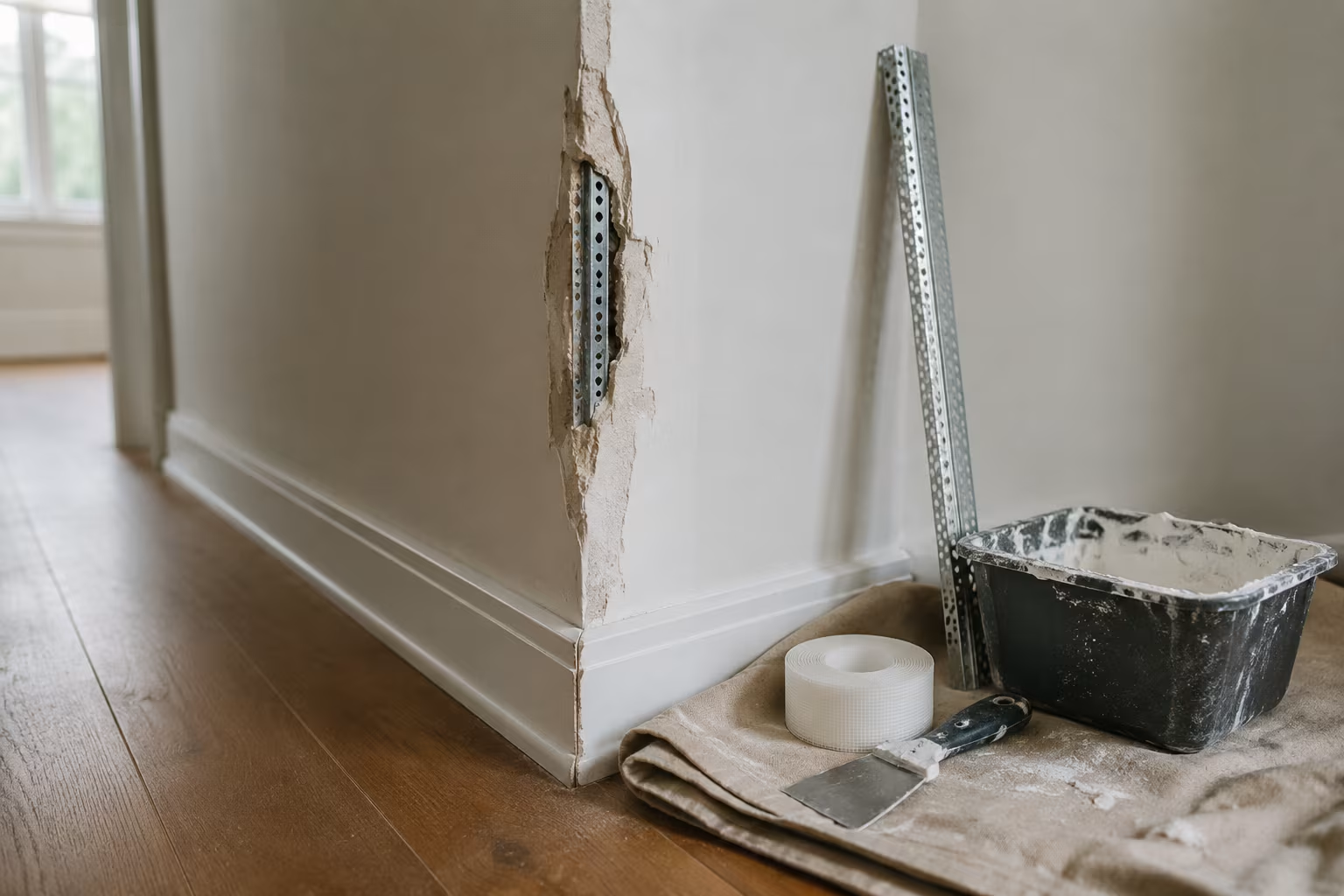
Next, inspect your wall for any holes, cracks, or peeling paint. Fill small holes with spackle and sand them smooth once dry. If your wall has any significant texture, you might want to consider applying a smooth layer of primer first. I once skipped this on a slightly textured wall and spent hours fighting bubbles.

Step 2: Measure, Measure, Measure!

Grab your tape measure and pencil. Measure the height of your wall from ceiling to baseboard. Then, add about 2-4 inches to this measurement. You'll trim the excess later, but it's much better to have too much than too little.

Now, unroll your first strip of wallpaper and mark your cutting line on the back. Use your utility knife and a straight edge to cut the first strip to size. If your wallpaper has a repeating pattern, pay attention to where you want the pattern to start at the top of your wall.

Step 3: Establish Your Plumb Line (Don't Skip This!)

This is where most beginners go wrong, including me on my first try. Your walls are probably not perfectly straight. If you start sticking wallpaper directly from a corner, it's almost guaranteed to be crooked by the time you reach the floor.

Measure out from your corner (or the edge of your project area) the width of your wallpaper panel minus about a quarter inch. Use your level to draw a perfectly vertical line down the wall at this point. This is your plumb line, and it's the guide for the edge of your first strip.

Step 4: The First Panel – Slow and Steady

Peel about 6-12 inches of the backing paper from the top of your first wallpaper strip. Align the top edge of the wallpaper with your ceiling (remembering that extra inch or two for trimming). Crucially, align the side edge of your wallpaper with your plumb line.

Gently press the exposed wallpaper to the wall, starting from the center and smoothing outwards with your squeegee. Don't press too hard yet; you might need to reposition it. The goal is to get it straight and bubble-free at the top.

Step 5: Peel, Stick, and Smooth Your Way Down

Now, slowly and steadily, peel more of the backing paper away as you work your way down the wall. As you peel, use your squeegee to smooth the wallpaper onto the wall. Always work from the center of the strip outwards to push out any air bubbles.

If you see a bubble, don't panic! Gently peel the paper back to that point and re-smooth it. This is the beauty of removable wallpaper – you can lift and reposition it several times. Just be gentle so you don't stretch the paper.

Step 6: Trim the Excess

Once your first panel is fully adhered, grab your utility knife and a long, straight edge (like a metal ruler or a wide spackle knife). Carefully trim the excess wallpaper at the ceiling and baseboard. Press firmly but carefully with your straight edge to get a clean cut, and remember to use a fresh, sharp blade.

If you have any outlets or light switches, carefully cut around them with your utility knife after the wallpaper is smoothed onto the wall. You can loosen the faceplate first, cut the opening, then put the faceplate back on for a super clean edge.

Step 7: The Next Panel – Pattern Matching

This is where things can get a little tricky, especially with patterned wallpaper. Take your next cut strip and align it next to the first panel. If your wallpaper is designed to overlap, you'll line it up that way. Many modern peel-and-stick papers are meant to be butt-jointed, meaning the edges touch without overlapping.

Match the pattern carefully from top to bottom. This might mean sliding the panel up or down slightly until the design flows seamlessly. Once the pattern is aligned at the top, repeat the peel-and-stick, smooth, and trim process from Step 5 and 6.

Don't be afraid to pull back and reposition if the pattern isn't quite right or if you get a bubble. It's better to spend an extra minute getting it perfect than to live with a crooked pattern or an annoying bubble staring at you every day.

Step 8: Dealing with Corners and Obstacles

When you reach an inside or outside corner, don't try to wrap a whole piece of wallpaper around it. Instead, measure the distance from the edge of your last panel to the corner. Cut your wallpaper strip to that width, plus about half an inch extra.

Apply this narrow strip, letting that extra half-inch wrap slightly around the corner. Then, start your next full strip on the new wall, aligning it with your plumb line again, but overlapping that half-inch from the previous strip. This ensures a clean, continuous look around the bend. For outlets, loosen the cover plate, apply wallpaper, cut out the opening, then replace the cover.

Making It Stick & Avoiding Common Mistakes

Even with all the right steps, tiny things can throw off your project. Here are a few common pitfalls and how to avoid them.

The number one mistake people make? Rushing the process. I totally did this the first time, convinced I could wallpaper a whole wall in an hour. It ended up taking me three attempts over two days, and a lot of unsticking and re-sticking. Take your time, really.

"Patience isn't just a virtue in DIY; it's the secret ingredient for projects that actually look good."

Bubbles that Appear Later: Sometimes, a bubble will pop up a day or two after you've finished. Don't worry! You can usually smooth it out with your squeegee. If it's a stubborn air bubble, take a tiny pin and prick a small hole in the center of the bubble. Then, smooth the air out towards the hole. The hole will be practically invisible.

Wallpaper Not Sticking: This usually comes down to wall prep. Is your wall really clean and dry? Is it too textured? As I mentioned before, if your walls are particularly problematic, a specific peel-and-stick primer can work wonders. Some cheap papers also just have terrible adhesive, which is why quality matters.

Stretching the Paper: When you're repositioning, be super gentle. If you pull too hard or too fast, you can stretch the wallpaper, causing distorted patterns or making it hard to align. Slow and steady, remember?

Crooked Edges: This goes back to the plumb line. If your first panel isn't straight, every subsequent panel will be off too. Invest the extra five minutes in setting up that plumb line, and you'll save yourself hours of frustration.

Frayed Cuts: A dull utility knife blade is the culprit here. Change your blade after every few cuts, or whenever you notice the paper isn't cutting cleanly. Fresh blades are cheap and make a world of difference for a professional finish.

Frequently Asked Questions

Can I put removable wallpaper on textured walls?

You can, but it's generally not recommended for heavily textured walls. The texture will likely show through the wallpaper, and the adhesive might not stick as well, leading to bubbles or peeling. For light textures, a peel-and-stick specific primer can help, but a truly smooth surface is always best.

Does it really come off without damaging the paint?

Most reputable brands are designed to remove cleanly without damaging paint. However, there are exceptions. If your paint is very old, not properly cured, or low-quality, there's always a slight risk. I always recommend testing a small, inconspicuous area first by sticking on a scrap piece and peeling it off after a day or two.

How long does removable wallpaper typically last?

With proper installation and good quality paper, it can last for several years! I've had some on an accent wall for three years now, and it still looks great. Factors like direct sunlight, humidity, and how well the wall was prepped can affect its longevity. Humidity in a bathroom or kitchen might shorten its lifespan a bit.

Can I reuse removable wallpaper once I take it down?

Some brands claim their wallpaper is reusable, but in my experience, it's very tricky to pull off cleanly, store, and then reapply perfectly. The adhesive might pick up dust or stretch during removal, making it hard to get a smooth finish the second time around. I usually treat it as a one-time use item.

Is this worth it for a small, awkward space like inside a cabinet?

Absolutely! Small spaces are perfect for removable wallpaper. It's less material, so less commitment, and it can add a huge pop of personality to unexpected places. I've used it on drawer fronts, the back of a bookshelf, and even inside my pantry for a little cheerful surprise. It takes much less time and effort than a whole wall.

The Bottom Line

Installing removable wallpaper can truly transform a room without the fear of permanent commitment. My biggest takeaways are always to prep your walls meticulously and use a plumb line for your first strip. These two things will solve so many potential headaches.

Don't be scared to try this! Start with a small project, maybe an accent wall or the back of a bookcase. You'll gain confidence with each panel. You've totally got this! Happy decorating! πŸ‘‹

Laura Hayes
Written by

Laura Hayes

Maker and craft enthusiast from Portland, Oregon. I've been documenting my DIY journey since 2019 - everything from woodworking to paper crafts. When I'm not in my garage workshop, you'll find me hunting for supplies at thrift stores.