
The Complete Guide to Styling a Mantelpiece for Every Season
A mantelpiece is usually the first thing a visitor's eye lands on in a living room, which is why an empty or cluttered one drags the whole space down. Styling it well is less about buying new things than about arranging what you own around a few reliable principles: a clear anchor, layered depth, varied height and texture, and enough open space to let it breathe. Thrift-store finds do most of the work, and the fireplace mantel functions the same whether it sits above a working firebox or a plain shelf.
What Makes a Mantel Work
Five elements carry nearly every well-styled mantel. Learn them and the arrangement stops feeling like guesswork.
- An anchor piece. One large item, a mirror, a framed artwork, or a statement clock, placed centered or slightly off-center. It sets the scale for everything else.
- Layering. Overlap objects instead of lining them up. Set smaller framed prints in front of the anchor to build depth so the display reads as rich rather than flat.
- Varied heights and textures. Pair tall candlesticks with a low bowl, or smooth glass beside chunky ceramic. Contrast keeps the eye moving and stops the surface feeling sterile.
- Personal touches. One or two meaningful objects, a travel souvenir, a handmade piece, a favorite photo, are what separate your mantel from a catalog page.
- Negative space. Empty room between pieces is a design element, not a gap to fill. It gives your chosen objects space to register and prevents clutter, the same principle behind using negative space to make a room feel larger.
Styling It Step by Step
Clear everything off first. Take down every object and wipe the surface down. A blank ledge lets you see the space with fresh eyes instead of working around whatever accumulated there.
Place the anchor. Set your largest item in the center, or slightly off-center for an asymmetrical look. A secondhand ornate mirror often costs $15 to $20 and does the job well.
Build outward in layers. Work from the anchor toward the ends, aiming for a loose triangle or "M" shape. Lean smaller art or framed photos in front of the anchor, and stack a couple of books horizontally to lift a smaller object.
Vary heights and materials. Bring in tall candlesticks, a short wide bowl, a small plant, a vintage book stack. Mix wood, metal, ceramic, and glass, and add a little greenery, real or faux, for life. Balance a tall item on one side with two medium pieces on the other rather than mirroring exactly. Grouping objects in odd numbers, threes rather than pairs, looks more natural, and a common guideline is to let the tallest element reach roughly two-thirds the height of the anchor mirror or art above it so nothing competes.
Add personal detail, then edit. Sprinkle in one or two meaningful objects, and resist the urge to crowd in every trinket you own. Step back, walk across the room, and check the balance from a distance. Photographing the mantel on your phone reveals crowding and gaps you miss up close.
Seasonal Swaps Without Redoing Everything
The trick to keeping a mantel fresh is a fixed base layer, your anchor and one or two core pieces, that stays put while a few small accents rotate. Changing three or four items shifts the whole mood in about ten minutes, so you never need a storage bin full of decor. Even swapping the stacked books, lighter titles for summer, heavier ones for autumn, reads as a seasonal change.
| Season | Palette | Swap-in accents |
|---|---|---|
| Spring | Soft pastels, fresh green | Faux tulips, a light throw, a small potted herb |
| Summer | Blues, whites, sandy neutrals | Collected seashells, a glass vase, driftwood |
| Autumn | Earthy oranges and browns | Mini pumpkins, dried stems, an amber candle |
| Winter | Warm whites, deep green | Pinecones, string lights, evergreen sprigs |
Keeping a consistent color palette across the swaps is what makes seasonal changes feel intentional rather than random, and there are plenty more seasonal decor ideas once you have the base layer set.
Common Mistakes
Forcing perfect symmetry is the most common misstep; a mirror-image arrangement looks stiff. Aim for visual balance through weight and height instead of matching pairs.
Over-accessorizing is the next. Every object should earn its place; a crowded mantel loses its focal points and reads as messy. When in doubt, remove one thing.
Ignoring scale throws the whole display off. A tiny mantel cannot carry an oversized painting, and a lone small candle looks lost on a wide one. Size the pieces to the space.
These are guidelines rather than rules. If an arrangement you love breaks one of them, keep it; the point is a mantel that feels like yours.
Frequently Asked Questions
What if my mantel is very small? Use fewer, taller, higher-impact pieces: one strong anchor plus two carefully chosen items like a slim single-stem vase and a small box. Skip anything wide or chunky.
How do I make it look cohesive? Commit to two or three complementary colors, or a single theme such as natural elements in wood, stone, and greenery. A common thread ties diverse objects together.
I own very little decor. What should I buy first? Start with an anchor, a mirror or framed art, then collect varied heights: a tall vase, a couple of candlesticks, a small plant. Thrift stores are the cheapest source of unique vases, candle holders, and stackable old books.
How often should I change it? A full refresh four times a year, seasonally, is plenty, with the occasional one-item swap in between. The fixed base layer makes those quick updates take ten to fifteen minutes.
What if I only have a shelf, not a fireplace? Treat any prominent shelf exactly like a mantel; the same anchor-layer-vary-personalize sequence applies. Pairing a console table with a large piece of art above it can even mimic the look of a mantel where none exists.
Start with the anchor and a single stack of books this weekend, then add one piece at a time. A mantel styled in layers is meant to be rearranged, so nothing you place has to be final.
Related Posts
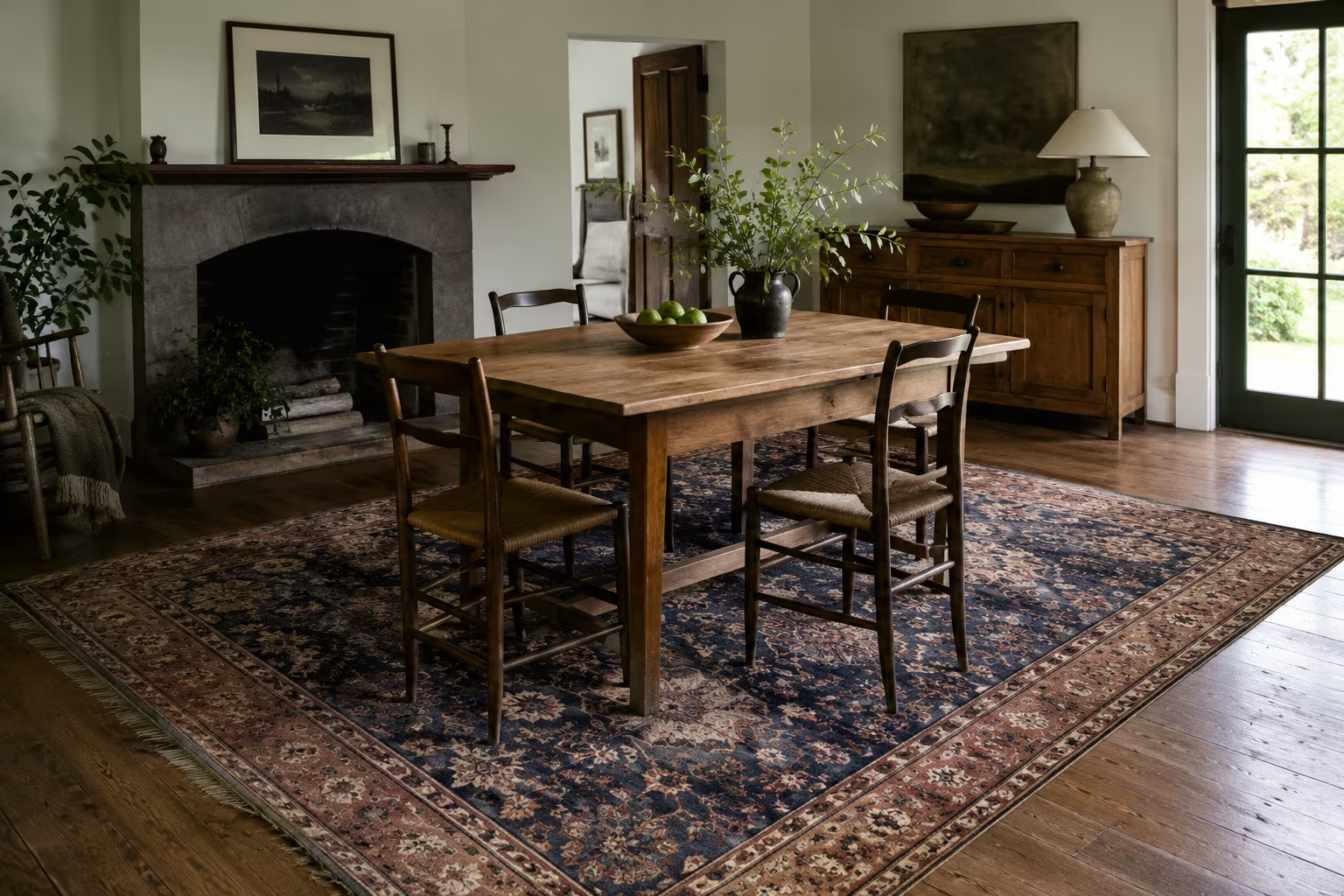
Area Rug Size Under Dining Table
A rug too small under dining table looks like a mistake. Chairs must stay on rug when pulled out.


Sofa Pillow Combinations That Don't Fight
Throw pillows pile up over years. Rules for color, texture, pattern, and size.
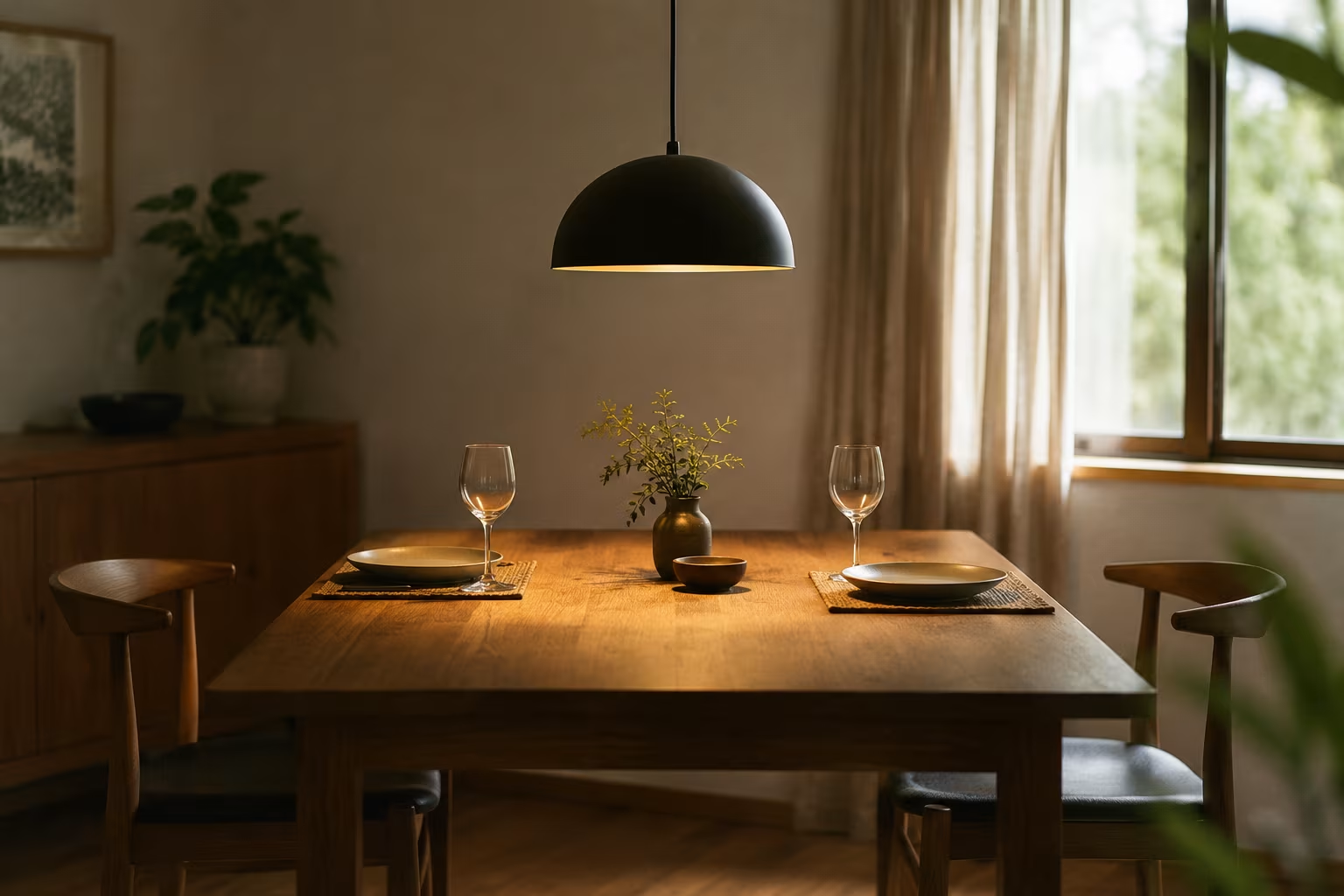
Light Fixture Height Over Dining Table: The Rule
The right pendant light height over a dining table is calculated, not guessed. The standard...
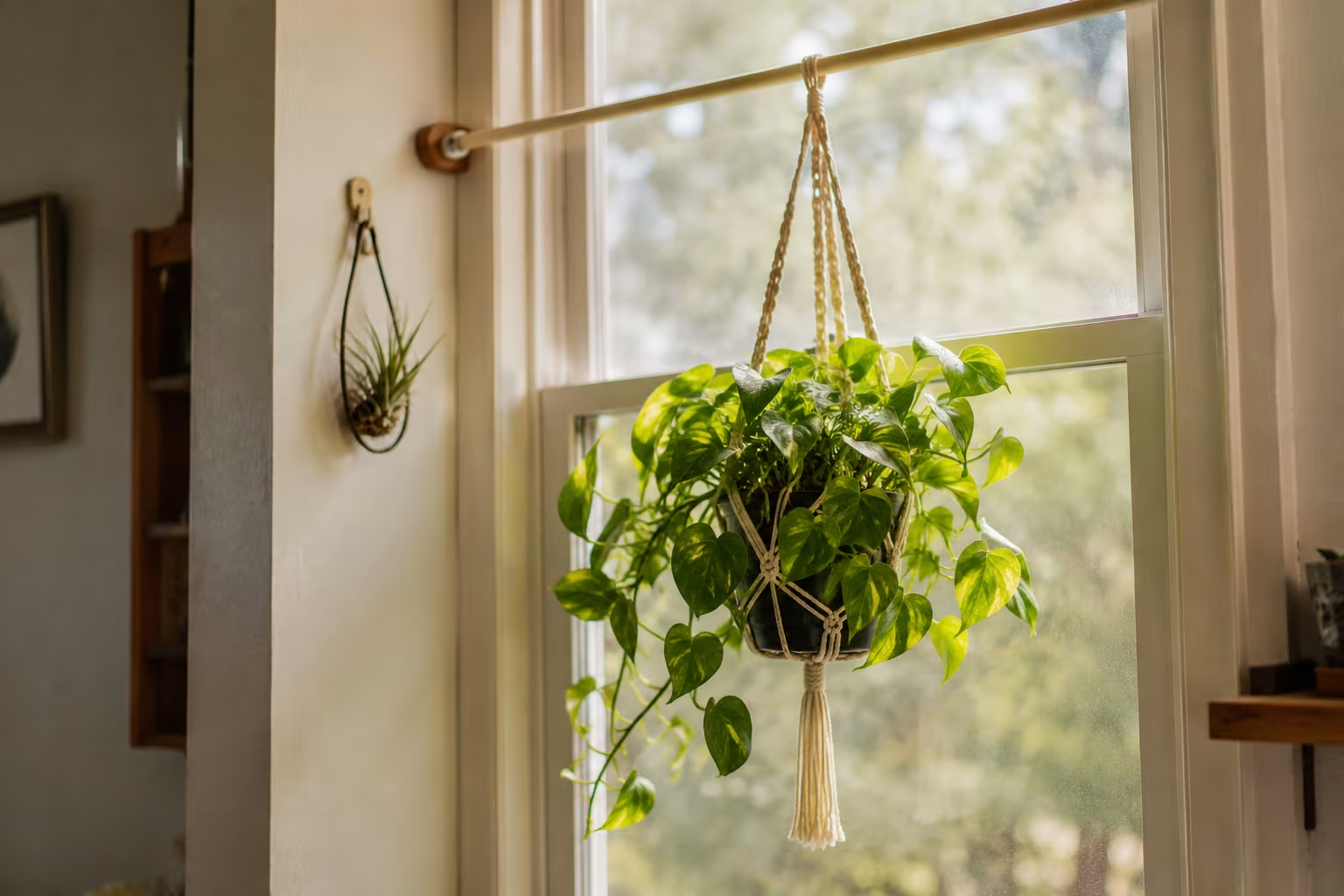
Hanging Plants Without Ceiling Hooks for Renters
Hanging plants brighten any room but drilling into the ceiling isn't always an option....
Comments
No comments yet. Be the first to share your thoughts!