Crafts

Why Macrame Plant Hangers Are the Easiest First Fiber Art Project
Why Macrame Plant Hangers Are the Easiest First Fiber Art Project

Why Macrame Plant Hangers Are the Easiest First Fiber Art Project

Hey there! 👋 Have you ever scrolled through Pinterest, seen some beautiful textile art, and immediately thought, "No way I could ever make that"? Or maybe you bought a "beginner" knitting kit once, tried it for 10 minutes, and ended up with a tangled mess and a serious case of creative paralysis. Sound familiar?

I totally get it. For years, I admired fiber arts from afar, feeling like they were some secret club I wasn't allowed into. Weaving looked too intricate, knitting felt like a code I couldn't crack, and don't even get me started on embroidery. But then I found macrame, and my whole perspective shifted. This isn't some super complex, intimidating craft. It's actually incredibly forgiving and seriously fun.

Today, I want to share why macrame plant hangers are truly the perfect first step into the amazing world of fiber art. We'll chat about why it’s so approachable, what you’ll need to get started, and how to tie a few basic knots. You might even find yourself with a handmade hanger by the end of the weekend!

Why This Actually Matters

Okay, so why bother learning macrame, especially if you're feeling overwhelmed by crafting already? Well, for starters, it's a fantastic way to tackle that "I want to make something but don't know where to begin" feeling. There’s something incredibly satisfying about transforming a simple piece of cord into something beautiful and functional with just your hands.

Think about it: you can spend $50 on a fancy planter or you can spend about $10 on cord and make something totally unique that holds your favorite plant. Not only does it save you money, but that feeling of "I made this!" is priceless. I’ve probably saved hundreds of dollars over the years making my own home decor, and honestly, the handmade pieces just feel more special.

My own journey started because I had a ton of plants and zero cute, affordable ways to hang them. Every time I went to a home goods store, the hangers were either too expensive, not my style, or just… boring. I eventually stumbled across a macrame tutorial, figured I had nothing to lose, and bought a cheap roll of cotton cord. My first hanger wasn’t perfect, but it worked, and I actually felt proud of something I'd made for my home. That simple project opened up a whole world of crafting for me, and I bet it can do the same for you.

What Even Is Fiber Art? (And Why Macrame Wins for Beginners)

Before we jump into macrame itself, let's chat for a second about "fiber art." It sounds a bit fancy, right? Basically, fiber art is just any art form where the main material is some kind of fiber – think yarn, thread, rope, fabric. It's a huge category that includes things like weaving, knitting, crochet, embroidery, felting, and yes, macrame.

Many fiber arts require special tools, like knitting needles, crochet hooks, or a loom. They can also involve complex patterns, counting stitches, or following intricate diagrams. I remember trying to learn to knit once, and I just couldn't get my hands to coordinate with the needles and the yarn. It felt like I needed an extra set of fingers, or maybe just a better brain for spatial reasoning!

Why Macrame Stands Out From the Crowd

Macrame is different, and that's why I think it's such a welcoming entry point. It's truly one of the most accessible fiber arts out there. You really don't need much to get started, and the learning curve is surprisingly gentle.

Here’s why it’s my top pick for anyone new to fiber art:

  • No Special Tools Required: Seriously, all you really need are your hands, some cord, and a pair of scissors. You don't have to invest in expensive gadgets or learn how to use a complicated machine. This keeps your startup costs super low, which is always a win in my book.
  • It's Just Knots: At its heart, macrame is simply the art of tying knots. We're not talking about sailing knots or super complex Boy Scout maneuvers here. There are a handful of basic knots that form the foundation of almost every macrame project. Once you get those down, you can create an incredible variety of designs.
  • Fast and Visually Rewarding: Unlike some crafts that can take weeks or months to see a finished product, macrame projects, especially plant hangers, come together pretty quickly. You can often make a simple hanger in an hour or two. That instant gratification is a huge motivator when you're just starting out and need to feel like you're actually accomplishing something.

So, if you've been wanting to try your hand at fiber art but felt intimidated, macrame is your answer. It's tactile, relaxing, and creates something genuinely beautiful. Plus, who doesn't love a good plant?

How To Actually Do It: Your First Macrame Plant Hanger

Okay, let's get down to the fun part! Making a macrame plant hanger looks fancy, but it's really just a repetition of a few simple knots. Don't worry if your first few knots look a bit wonky. Mine certainly did! The key is to keep practicing, and you'll find your rhythm.

Step 1: Gathering Your Supplies (and Not Breaking the Bank)

The best part about starting macrame is how little you need. You probably have some of these things around your house already. This is where my thrift store hunting skills really pay off, but you can find these new too!

Here’s your basic shopping list:

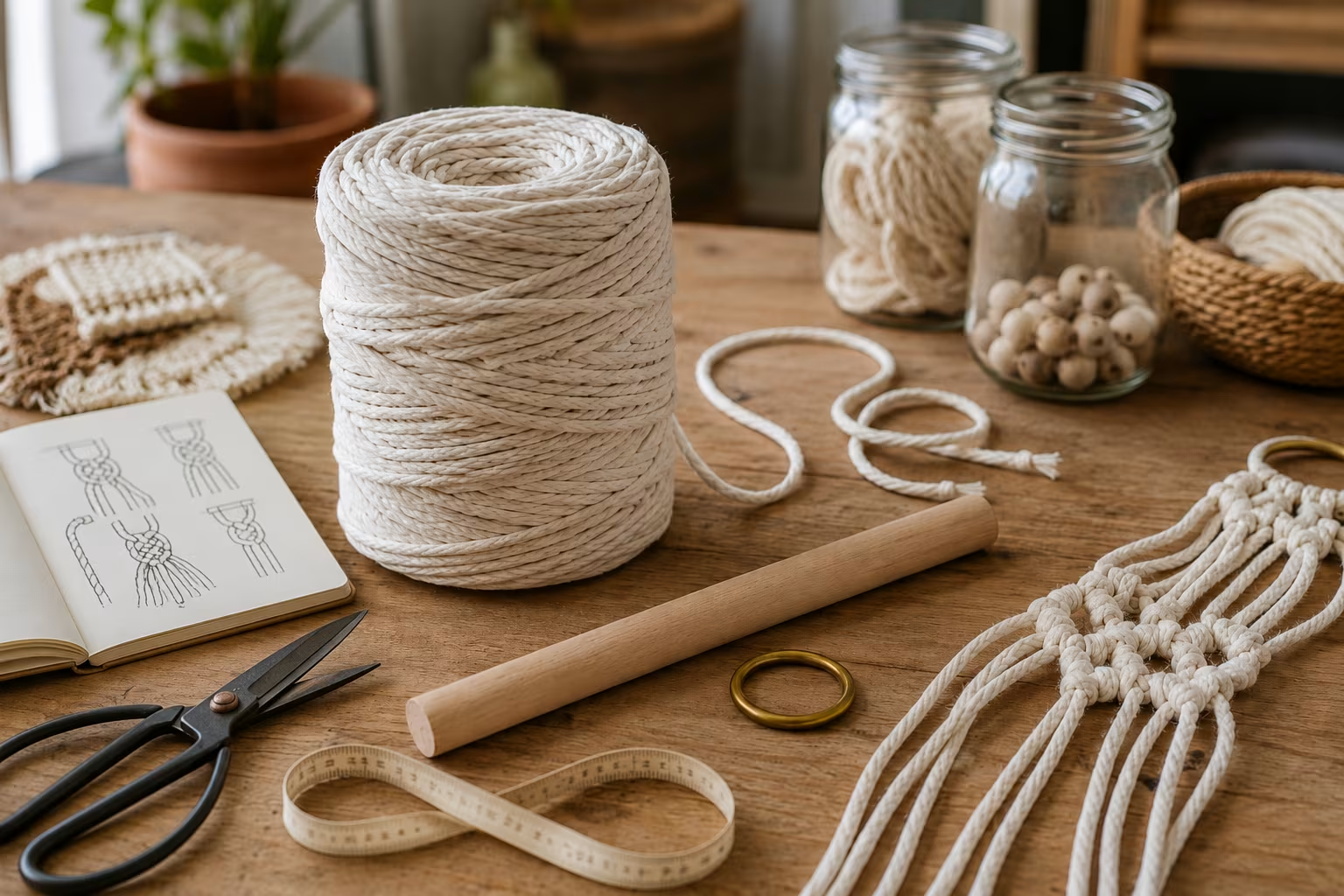
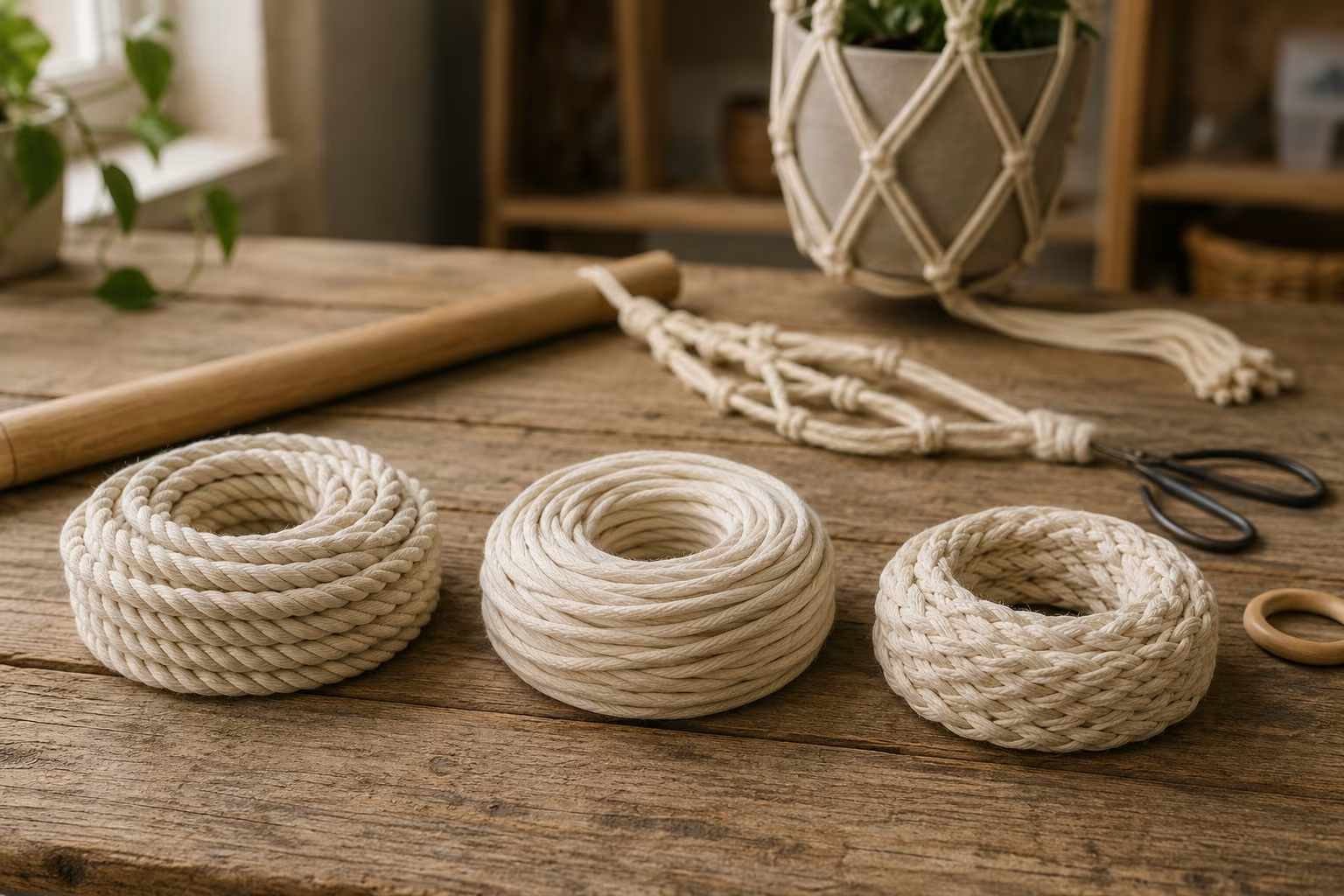
  • Macrame Cord: This is your main material! I recommend a 3mm or 4mm single-strand cotton cord for beginners. It’s soft on your hands, easy to untie if you make a mistake, and gives a nice, clean look. You can find this at craft stores, on Amazon, or even sometimes at discount retailers. A 100-yard roll will be plenty for a few hangers and usually costs under $15.
  • Metal or Wooden Ring: This will be the top of your hanger. A 2-3 inch diameter ring works perfectly. You can often find these in the craft jewelry section, or even repurpose a curtain ring from the thrift store. I once used a wooden embroidery hoop for a super large hanger!
  • Sharp Scissors: You’ll need these to cut your cord cleanly. Any good pair of household scissors will do.
  • Measuring Tape or Ruler: Essential for cutting your cords to the right length.
  • S-Hook or Clothes Hanger: This is super helpful for holding your ring while you knot. You’ll hang your ring from this so you can work with both hands. I usually just use a sturdy S-hook hung from a shelf.

That's it! See? Not a huge investment at all.

Step 2: Cutting Your Cords (Measure Twice, Knot Once!)

This step is crucial, and it’s where I’ve made mistakes before! It's always better to cut your cords a bit too long than too short. You can always trim excess, but you can’t add length back on. Trust me, I've tried to MacGyver extensions before, and it never looks quite right.

For a standard plant hanger (about 30-36 inches long, suitable for a small to medium pot), you’ll need to cut four long pieces of cord. Here's a good starting point:

Measure out four pieces of cord, each 10-12 feet long. Yes, that sounds like a lot, but you'll be folding these in half and using them for many knots, so the length reduces quickly. If you want a longer hanger or plan on using a lot of intricate knots, go even longer, maybe 14 feet. When in doubt, add a foot!

Step 3: Attaching Cords to the Ring (The Lark's Head Knot)

Now that you have your cords, let's get them onto your ring. This is done with a super simple knot called the Lark's Head Knot. It's probably the easiest knot in macrame.

1. Take one of your long cords and fold it perfectly in half.

2. Place the folded loop over your metal or wooden ring.

3. Bring the two loose ends of the cord through the loop.

4. Pull tightly until the knot is snug against the ring.

Repeat this for all four of your cords. You should now have eight working strands hanging from your ring. Make sure they’re all pulled taut and evenly spaced around the ring. This is your foundation!

Step 4: Mastering the Square Knot (Your Macrame Superpower)

The Square Knot is the absolute backbone of almost every macrame project, especially plant hangers. Once you learn this, you're practically a macrame expert! It's made up of two half-knots, and it creates a beautiful, flat, textured pattern.

Here's how to tie one:

1. Identify Your Cords: Group your eight strands into four sets of two. You'll work with one set of four strands at a time. Within each set of four, the two outer cords are your "working cords," and the two inner cords are your "filler cords." The filler cords stay straight and don't really move; you knot around them.

2. First Half-Knot (the "4"): Take the left working cord and cross it over the two filler cords, forming a "4" shape. Then, take the right working cord, cross it over the tail of the left working cord, under the two filler cords, and up through the loop of the "4" on the left side. Pull both working cords evenly to tighten. You'll see half a knot form.

3. Second Half-Knot (the "P" or reverse 4): Now, mirror what you just did. Take the right working cord (it's now on the left side, don't get confused!) and cross it over the two filler cords, forming a reversed "4" or a "P" shape. Take the left working cord, cross it over the tail of the right working cord, under the two filler cords, and up through the loop on the right side. Pull both working cords evenly to tighten.

You've just completed a Square Knot! You'll see a distinct, slightly bumpy square shape. Practice this a few times until it feels natural. The key is consistent tension – try to pull both working cords with the same amount of force. This helps keep your knots looking even and tidy.

Step 5: The Half Knot Spiral (Adding Some Twist)

The Half Knot is simply one half of the Square Knot. When you repeat it over and over, you get a beautiful spiral pattern, which looks awesome on plant hangers.

To tie a Half Knot:

1. Follow step 2 from the Square Knot instructions (the "4" shape).

2. Just repeat only that half of the knot.

3. As you keep tying the same half-knot, you'll notice your work starting to twist. This is supposed to happen! Let it spiral naturally.

You can alternate between Square Knots and Half Knots, or do long sections of one or the other, to create different textures and patterns on your hanger.

Step 6: Building the Hanger's Arms (Using Your Knots!)

Now that you know the basic knots, it's time to create the "arms" of your plant hanger. These are the sections that will eventually cradle your plant pot.

1. Create Sections: From your ring, you have four groups of cords (two cords per group). You'll work with these groups, but you'll also switch cords between groups. This sounds complicated, but it's really not!

2. First Set of Arms: Pick two adjacent groups of eight cords (meaning you have eight cords total to work with, four from one "arm" and four from the next). Take the outermost four cords from this new group of eight. Tie a series of Square Knots (or Half Knots for a spiral) for about 6-8 inches. This forms one "arm" of your hanger.

3. Repeat: Do this for the remaining three sections, creating four distinct knotted "arms" hanging down from your ring. Try to make them all the same length. This is where your measuring tape comes in handy again!

4. Joining the Arms (The Collection Knot): Now, this is where the magic happens and your hanger takes shape! Once your four arms are knotted to your desired length (I usually go for about 10-12 inches of knotted work on each arm), you need to join them together to form the "basket" for your pot.

- Pick two adjacent arms. From each arm, take the two innermost cords.

- Using these four cords, tie a Square Knot about 2-3 inches below the end of your initial arm knots. This connects two arms together.

- Repeat this process for the remaining three pairs of adjacent arms. You’ll now have four new joining knots forming a square shape below your original arm knots.

5. Lower Knots: You can add another row of joining knots if you want a deeper basket for your pot, or just one strong "collection knot" at the bottom. To do this, drop down another 4-6 inches and tie another set of Square Knots, connecting the newly formed sections. This creates a stronger basket base.

Step 7: Creating the Plant Basket (Measuring for Your Pot)

This step is all about making sure your actual plant pot will sit securely in the hanger. This is usually where I grab the pot I intend to use and hold it up to the evolving hanger.

1. Measuring the Drop: With your joining knots in place, you want to measure how much space you need for your pot. Hold your plant pot up to the hanger. The base of the pot should sit comfortably within the knots you've created.

2. Adding More Knots: If you need a deeper basket, simply tie more Square Knots or Half Knots below your first set of joining knots, linking the newly formed sections of cords. You're essentially creating a net for your pot.

3. The "Catch" Knots: I often tie one more set of small Square Knots a few inches below the bottom of where the pot will sit. This creates a little "catch" that the pot rests on, preventing it from slipping out the bottom.

Step 8: Finishing Off with a Wrapped Knot (The Strong Base)

Almost there! Now you need a strong, tidy way to bring all your cords together at the very bottom of the hanger, below where the pot will sit. This is called a Wrapped Knot or Gathering Knot.

1. Gather All Cords: Gather all eight (or whatever number you have left) loose cords together into one bundle.

2. Take an Extra Piece of Cord: Cut a separate small piece of cord, about 24 inches long.

3. Form a Loop: Lay the short piece of cord over your gathered bundle of cords, forming a downward-pointing loop. The top of the loop should be where you want the bottom of your hanger to be (the top of the wrapped knot).

4. Wrap It Up: Take the long tail of the small cord and start wrapping it tightly downwards around the gathered bundle of cords, covering the loop you just made. Wrap about 1-2 inches.

5. Secure the Wrap: Once you're happy with the length of your wrapped section, thread the tail of the wrapping cord up through the bottom of the loop you made earlier.

6. Pull It Tight: Grab the other end of the wrapping cord (the one sticking out from the top of your wrapped section) and pull it firmly. This will draw the loop up and under the wrapped cords, securing both ends of your wrapping cord inside the knot. Snip off any excess of the pulled cord ends close to the knot.

Trim the remaining loose ends of your plant hanger to your desired length. Some people like them short, others like a long tassel. I usually aim for them to be about 4-6 inches below the wrapped knot. You can even unravel the ends for a cool, fringed look!

Hang it up, pop a plant in, and admire your brand new, handmade macrame plant hanger! See? You're a fiber artist now!

Making It Stick: Common Mistakes & How to Avoid Them

Learning a new craft is rarely a straight line. I’ve had my fair share of messed-up projects, cords that were too short, and knots that just wouldn't cooperate. It’s all part of the process! But knowing some common pitfalls can definitely help.

Here are a few things that often trip up beginners, and how you can sidestep them:

Uneven Tension: This is probably the most common issue. When your knots look messy or uneven, it's often because you're pulling your working cords with different amounts of force. One side might be super tight, the other loose. The Fix: Slow down! Consciously try to pull both working cords at the exact same rate and with the same pressure. With practice, you'll develop a consistent "feel" for the right tension. Forgetting Which Side to Start On: Especially with Square Knots, it's easy to get confused about which working cord starts the next half-knot. If you keep starting on the same side, you'll end up with a spiral instead of a flat knot (unless that's what you want!). The Fix: Verbalize it! "Left over, right under, pull. Right over, left under, pull." Or, simply look at your last half-knot. The cord that just finished going under should be the one to start the next half-knot (by going over). Cutting Cords Too Short: Oh, I've done this so many times! It's soul-crushing to be almost done with a project and realize you don't have enough cord to finish. The Fix: Always, always, always cut more cord than you think you need. Seriously, add an extra foot or two to your initial measurements. You can always trim excess, but you can't add it back! Getting Frustrated with Mistakes: We all want our first project to look perfect, but that's a lot of pressure! If a knot looks bad, or you realize you missed a step, it can feel disheartening. The Fix: Remember that macrame cord is pretty forgiving. Most knots can be untied gently, even several rows back. Think of mistakes as learning opportunities. My first hanger had a few wonky knots, but you know what? It still held a plant beautifully, and I loved it because I made it.
"The beauty of handmade isn't in its perfection, but in the story of its creation and the unique marks of the maker's hands."

Frequently Asked Questions

Starting a new craft usually comes with a bunch of questions. Here are some of the things people often ask me about macrame:

What kind of cord should I use for macrame?

For beginners, I always suggest a 3mm or 4mm single-strand cotton cord. It's soft, easy to knot, and unravels nicely if you want to make fringes. Once you get comfortable, you can experiment with braided cotton, jute, hemp, or even recycled t-shirt yarn for different textures and looks.

How much cord do I need for one plant hanger?

It really depends on the size of your pot and how long you want the hanger to be. As a general rule, your working cords will shrink to about 1/4 to 1/5 of their original length once knotted. For a standard 30-36 inch hanger using 4mm cord, I usually cut four cords each about 10-12 feet long. Better to have extra than not enough!

Can I use regular yarn for macrame?

You can, but it might not give you the crisp knot definition you see with dedicated macrame cord. Yarn is often stretchier and fuzzier, which can make knots look less defined. If you're just playing around, go for it! But for a sturdy plant hanger, proper macrame cord is your best bet.

What if my knots look messy or uneven?

Totally normal! My early knots were definitely not perfectly uniform. It's usually a sign of inconsistent tension. Keep practicing the same knot over and over. You'll build muscle memory, and your hands will start to get a feel for how much to pull each cord. Don't aim for perfection, aim for progress.

Where can I find patterns or ideas for my next project?

Oh, the internet is overflowing with ideas! Pinterest is a goldmine for visual inspiration. YouTube has tons of free step-by-step tutorials, which are great for seeing the knots in action. There are also lots of macrame books available that break down different knot combinations and projects. Once you know the basic knots, you can often "reverse engineer" patterns you see and adapt them.

Is macrame expensive to start?

Not at all! You can get started with a roll of cotton cord for under $15, a cheap metal ring, and scissors you probably already own. Compared to some other hobbies that require expensive equipment upfront, macrame is wonderfully budget-friendly. Plus, if you get good at it, you can make gifts for friends or even sell your creations!

How long does it take to make a macrame plant hanger?

For your very first simple plant hanger, plan on dedicating anywhere from 1.5 to 3 hours. A lot of that time will be spent learning and untying! Once you get the hang of the basic knots, you can whip out a simple hanger in about an hour. More intricate designs with lots of different knots might take a few hours longer.

Is this worth it for someone who just wants to make one or two hangers?

Absolutely! Even if you only ever make one plant hanger, the satisfaction of creating something with your own hands is completely worth it. Plus, you’ll have a unique piece of decor for your home that cost a fraction of what a store-bought one would. It's a great skill to have in your back pocket.

The Bottom Line

Starting a new craft can feel overwhelming, like there's a huge mountain to climb before you can make anything good. But macrame is different. It breaks down that mountain into tiny, manageable steps, letting you build confidence with each knot. It's simple, satisfying, and you end up with something beautiful and useful.

So, if you've been eyeing fiber art but felt too intimidated to start, give macrame plant hangers a try. Grab some cord, a ring, and let your hands do the work. Don't worry about perfection. Just enjoy the process of making, experimenting, and seeing what you can create. You might just surprise yourself with how much fun you have and how quickly you pick it up. Happy knotting! ❤️

Laura Hayes
Written by

Laura Hayes

Maker and craft enthusiast from Portland, Oregon. I've been documenting my DIY journey since 2019 - everything from woodworking to paper crafts. When I'm not in my garage workshop, you'll find me hunting for supplies at thrift stores.