
Acrylic Pouring Cells: Why They Form and How to Control
The short answer
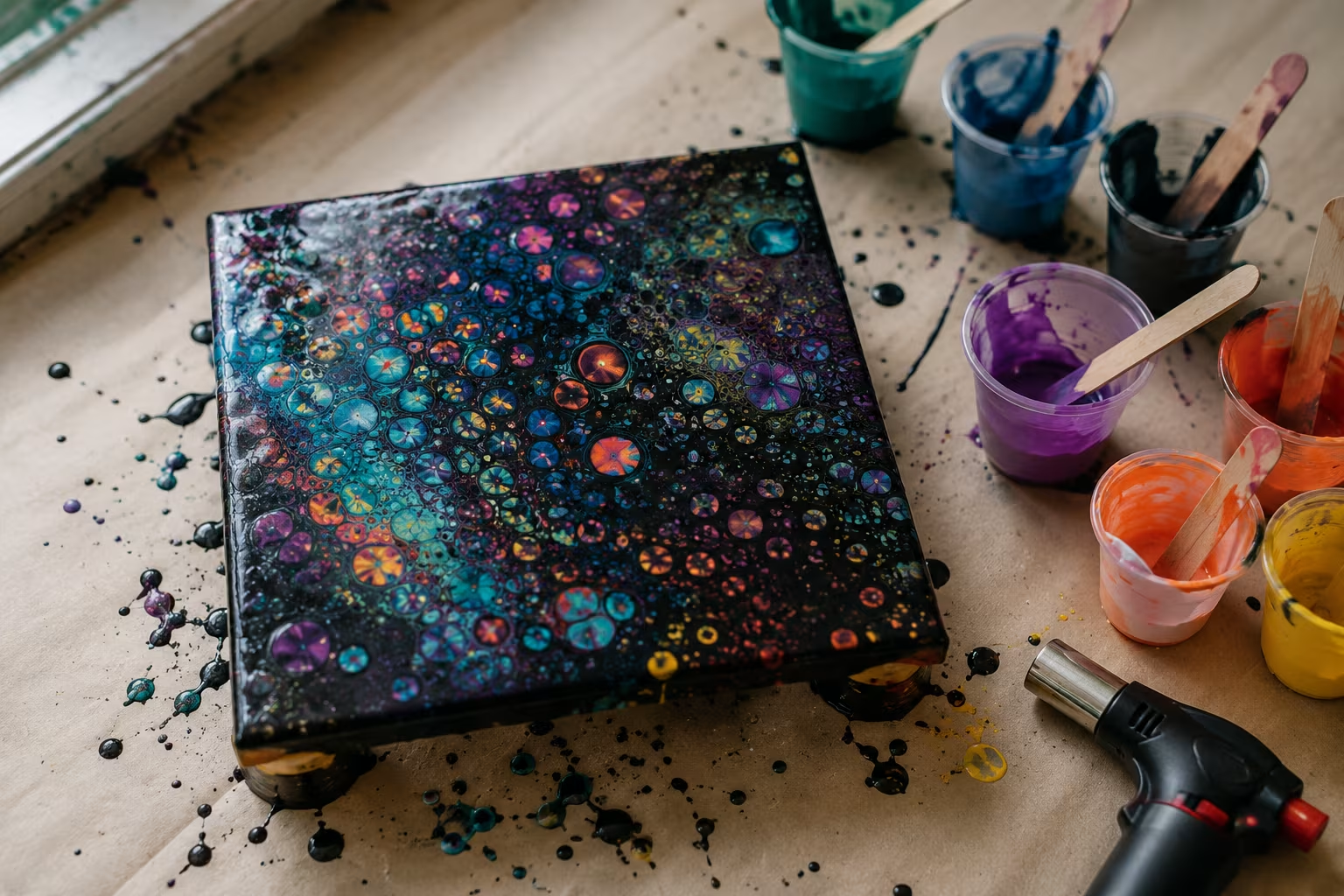
Cells in acrylic pouring are not a technique in themselves: they are the visible result of two paint layers having different densities and different surface tensions. The lighter layer rises through the heavier one, pulling small circles of the under-layer's colour to the surface. To get cells reliably, create the density difference deliberately (different pigment loads and additives) and add something to the lighter layer that breaks surface tension faster than the heavier one — silicone oil, dimethicone hair serum, or dish soap. The two variables that matter most are paint consistency in the runny-honey range and one to two drops of 100 percent silicone oil per colour cup, except the lightest. Get those right and cells appear on the first pour; get them wrong and you chase cells through eight pours that produce mud.
What is happening physically
The pour cup holds layered colours, each thinned with pouring medium to a similar consistency. Tip the cup onto the canvas and the layers slide and spread. If every colour had identical density and tension they would marble together as one flowing sheet, with no cells. But pigments differ in weight — titanium white is heavy, phthalo blue is light, iron oxide is heavy — and additives change tension (silicone drops it dramatically, Floetrol slightly). Where a lighter, lower-tension colour breaks through a heavier, higher-tension one above it, it forms a round opening: a cell. It helps to picture bubbles rising in honey. The lighter colour is the bubble, the heavier colour is the honey, and silicone is what destabilises the boundary enough to let the bubble through.
Silicone, Floetrol, and consistency
Silicone oil (100 percent pure, sold as treadmill belt lubricant or dedicated pouring additive) is the most reliable cell-forming agent. Stir one or two drops into one or two of the cup's colours to sharply lower their surface tension, and those treated colours form cells more aggressively than the untreated ones when poured. The standard ratio is one or two drops per two to three ounces of mixed paint: more silicone gives more, smaller cells; less gives fewer, larger ones; five or ten drops produce a chaotic, oily mess with no cell definition. Add silicone to selected colours only, because the contrast between treated and untreated layers is what creates the pattern — if every colour has silicone, the chaos has no quiet background to play against.
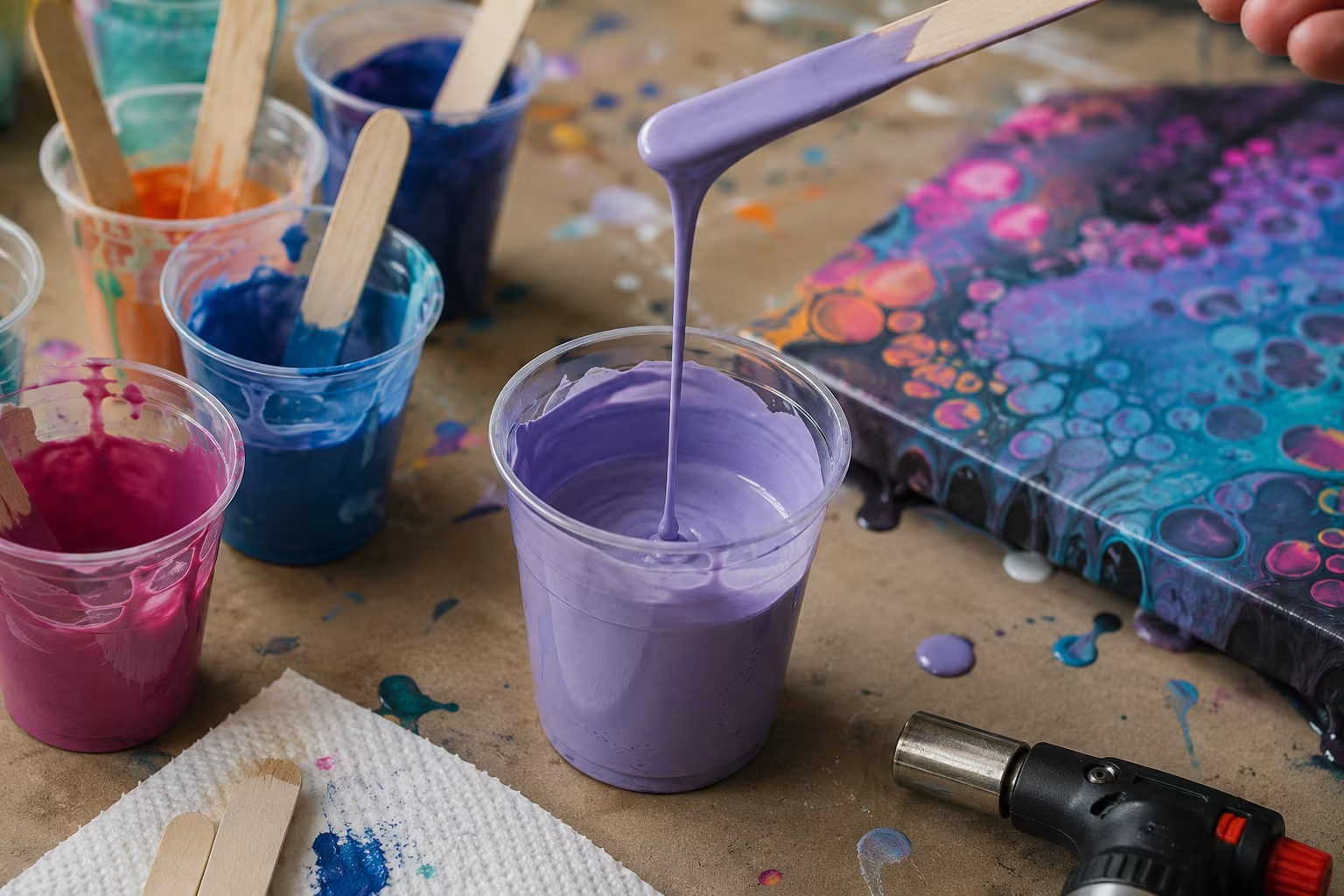
Floetrol is a paint conditioner that extends open time, reduces brush marks, and adds a small, consistent surface-tension difference against plain water-thinned paint. It is not a cell-maker on its own; it is the base medium. Mix Floetrol with acrylic paint at roughly one-to-one by volume and adjust by feel. Never thin with water alone, since water-thinned acrylic loses too much volume and cracks as it dries. Consistency is the variable most people underestimate. The target is liquid honey: lift the stir stick and the paint should drip back in a slow continuous ribbon that lays on the surface and disappears in two to three seconds. Drip-drip-drip is too thick; a splash is too thin. Heavy-body artist acrylics need more medium, soft-body and craft acrylics need less, so run the ribbon test on each new tube before committing it to a real pour, ideally in a room under 22 C / 72 F so the surface does not skin over while the paint underneath is still moving.
The pour technique that builds reliable cells
Mix each colour in its own cup and add silicone to selected colours (not the lightest, usually two of four). Layer the colours into one large pour cup — order matters less than people think, since the layers rearrange once poured, though a common start is darkest at the bottom, lightest at the top, silicone-treated colours in the middle. Tip the cup onto a level, prepared canvas and move slowly, pouring in whatever pattern suits the composition. Cells appear within seconds of the paint settling. Sweep a small butane torch quickly over the wet surface to help cells expand and pop bubbles, but do not linger; one or two passes is enough, and heat held too long scorches the paint or forms a skin. Then leave the painting completely undisturbed for the full cure, because acrylic pours dry unevenly underneath for up to 72 hours, and touching or tilting the piece in that window distorts the cells permanently.
Common cell problems and fixes
| Problem | Likely cause | Fix |
|---|---|---|
| No cells at all | Wrong consistency, or no density difference | Correct to liquid honey; add silicone to one or two colours |
| Tiny cells, no definition | Paint too thin or too much silicone | Thicken slightly; reduce to one drop per cup |
| Cells all look the same | Only one colour treated, or all equal | Vary silicone across two of the four cups |
| Cells collapse after pour | Top dried while paint moved below | Work in a cooler room; move faster |
| Oily look when cured | Excess or unabsorbed silicone | Wipe cured surface with isopropyl alcohol |
| Distorted, irregular cells | Consistency off, or paint still moving | Correct consistency; settle before torching |
Cell shape follows the paint's stability after the pour. Cells that form in still paint stay round because the surface-tension forces are symmetric; cells that form in moving paint elongate into teardrops as the flow stretches their boundaries. For round cells, pour, settle, and torch with no further movement. For deliberately stretched cells, tilt the canvas slightly after the pour to pull them in the direction you want.
Pour techniques and how cells behave
The way you apply paint to the canvas changes where and how cells form. The dirty pour layers all colours in one cup and dumps them in a single pour; cells form in the cup as layers stack and silicone migrates, then spread across the canvas — the most beginner-friendly and the most chaotic. The flip cup places the layered cup upside-down on the canvas and lifts it, so paint flows outward in concentric rings with cells forming along them; more controlled and more deliberate-looking. The tree-ring pour is a slow pour from low height in concentric circles, each ring pushing the last outward, with cells at the ring boundaries. The Dutch pour blows paint across the canvas with a hair-dryer or straw after the initial pour, stretching it and exposing layers underneath so cells form in the disturbed paint. The swipe drags one colour across another with plastic or a palette knife, pulling the underlying colour into cell formations along the drag path. For predictable results, the flip cup and tree-ring pour are the most reliable for beginners; Dutch and swipe are more dramatic but take practice to control.
Removing silicone, varnishing, and a starter kit
Silicone left on a cured pour blocks varnish from bonding, so before varnishing wash the painting gently with warm water and a mild dish soap, rinse, and let it dry fully for 24 hours; some painters do this twice. Skip it and the varnish beads on the residue and dries patchy or fish-eyed, making the surface look blotchy from arm's length even though the underlying art is fine. Once varnished, the silicone is sealed in and the surface is durable, and the ten-minute wash saves the piece.
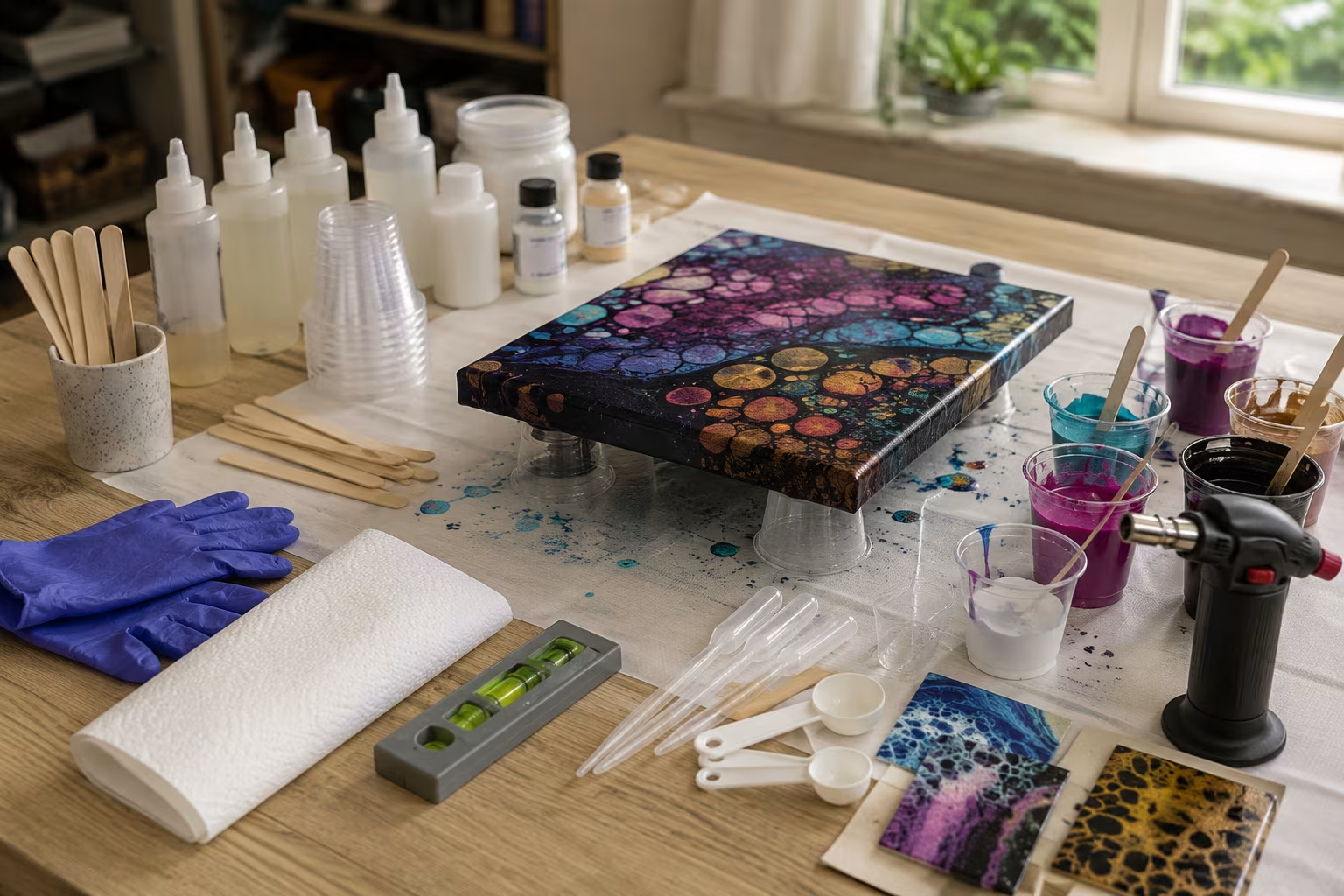
A starter kit that pays back fast: clean plastic cups (1-2 oz for individual colours, 8-16 oz for the pour cup), wooden stir sticks, a small bottle of 100 percent silicone treadmill lubricant, a quart of Floetrol, a small butane torch, a torpedo level to check the canvas, a few pre-stretched canvases (8x10 to start), disposable gloves, and three or four heavy-body artist acrylics in colours you actually want. Buying paint in larger tubes rather than small craft bottles is the biggest cost-saver, since pouring uses paint quickly. Leftover mixed paint keeps a few weeks airtight but needs re-stirring because the silicone settles out; most pourers find mixing fresh each session gives cleaner results than reusing, and fully dried acrylic cannot be re-liquefied.
Related Posts
Beginner Pottery Wheel Speed for Centering
Centering clay needs high wheel speed and firm pressure. Most beginners use too low speed.

Calligraphy Ink Comparison for Cotton Paper
Modern dip pen calligraphy needs ink that doesn't bleed on absorbent cotton paper. India ink...
Knitting Needle Materials Compared: Wood vs Metal vs Plastic
Knitting needle material changes how stitches slide, how cold or warm the needle feels, and how...
Beginner Watercolor Paper Choice for Textured Washes
Watercolor paper is the single biggest gear decision a beginner makes. Weight, surface texture...
Comments
No comments yet. Be the first to share your thoughts!