
Sandpaper Grits Demystified: When to Stop Going Finer
The short answer
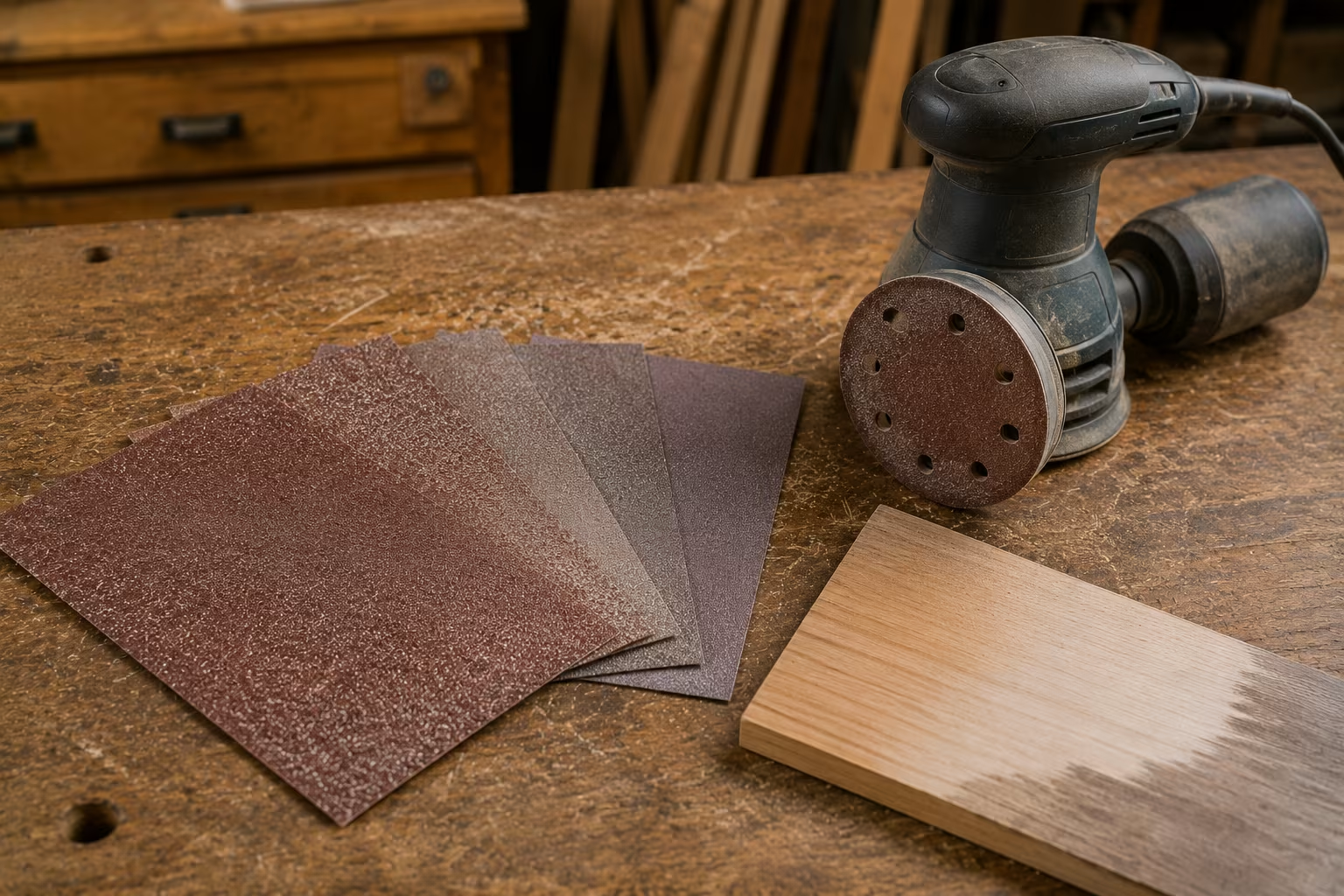
For most furniture-grade work the right progression is 80 to 120 to 180, stopping there for a film finish (lacquer, polyurethane, shellac, water-based) and going to 220 only for an oil finish or a smoother feel under the hand. Going finer than 220 on raw wood rarely helps and often hurts: past 220 the surface burnishes, the fibres flatten, and the wood turns glassy. A glassy surface accepts less stain (colour goes on lighter and more patchy) and less film finish (the topcoat cannot bite in, so adhesion drops).
The other half of the answer is the jump between grits. Each grit must fully erase the scratches the previous one left. Jump from 80 straight to 180 and the 180 cannot reach the 80-grit scratches; you get a surface that looks smooth but reveals every scratch the moment finish hits it. The working rule: do not skip more than one grit step in the standard progression.
What the grit number actually means
Grit number measures particle size, specifically the number of screen openings per linear inch that the abrasive passed through. A higher number means smaller particles and finer abrasive. The scale is not linear: going from 80 to 120 cuts particle size by roughly a third, but 220 to 320 changes it far less. That is why early jumps remove a lot of material and late jumps remove almost none.
Three grit standards matter. CAMI (the US standard, no P prefix) numbers like 80, 120, 180, 220. FEPA (European, with a P prefix) like P80, P120, P180, P220 — close but not identical, since P220 runs slightly finer than CAMI 220. JIS (Japanese, used on water stones) uses very fine numbers like 1000 or 8000, mostly for blade sharpening. For consumer woodworking the CAMI-versus-FEPA gap rarely matters; for automotive bodywork it does, and pros stick with one standard. A quick primer on abrasive grades sits in the Wikipedia entry on sandpaper if you want the full grade tables.
The standard progression and where to start
The common woodworking sequence is 80 (or 100), 120, 150 or 180, then either stop or step to 220. 80 grit is for rough lumber, tool marks, and levelling glue-ups; it moves material fast, so use it sparingly and drop down once the surface is level. 120 is the workhorse that removes 80-grit scratches and flattens the surface. 180 is the smoothing pass after which most film finishes go down well. 220 is optional, right for oil finishes and hard waxes but a step too far for lacquer or polyurethane, which need a slight tooth to grip.
The starting grit depends on the surface, not the species. Rough-sawn lumber starts at 60 or 80; milled S4S lumber starts at 100 or 120; a refinished piece starts wherever the stripper leaves it. Softwoods (pine, fir, cedar) scratch more easily, so starting at 100 rather than 80 avoids deep gouges that cost more time than a coarse start saves. Hardwoods (oak, maple, walnut, cherry, ash) tolerate 80 and benefit from its fast removal. Veneer is a special case: most commercial veneer is about 1/32 inch thick or less, so start at 150 or 180 and never go coarser, or you cut through to the substrate.
When to stop: species and finish
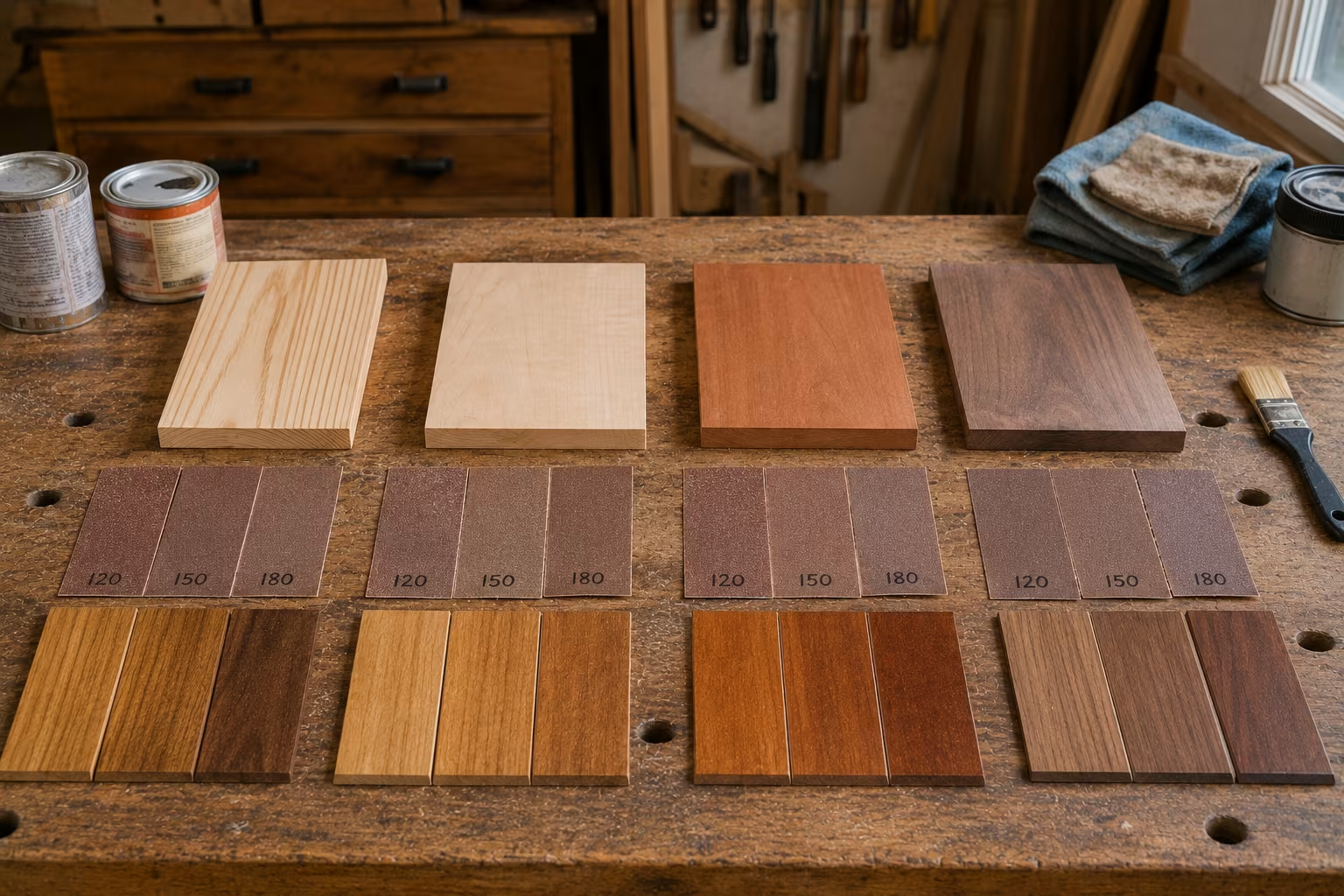
The final grit before finishing depends on both wood and finish. Open-grain hardwoods (oak, ash, mahogany, walnut) headed for water-based stain: 120, 150, 180, since water-based stain raises the grain anyway. Closed-grain hardwoods (maple, birch, cherry, alder) for staining: stop at 180, because 220 on these tight woods cuts stain uptake enough to look washed out. For oil-based stains, drop the final grit one step, since oil pigments are larger and 220-sanded surfaces absorb less; maple with an oil stain stops at 150. Softwoods for stain or oil: 120 to 150 to 180, with pre-stain conditioner mattering more than the exact final grit. Clear finish only: 120 to 150 to 180, then 220 if you want the polished feel. Oil and wax finishes: 180 to 220, sometimes 320 on hardwoods you want to feel buttery, since these finishes need no tooth to grip.
Skipping grits and choosing the abrasive
Jumping from 80 to 180 is tempting because the 120 pass feels redundant, but 120 removes the deep 80-grit scratches that 180 cannot. Without it, the smooth-looking surface still carries scratches that reappear the moment lacquer or polyurethane lands, and you are sanding back at that point. The honest exceptions are machined surfaces: a planer leaves roughly a 100-120 finish (start at 150 after), a jointer around 100 (start at 120 after), and a professional thickness sander around 120-180 (start at 150 or 180). For any rougher start, the full progression earns its time.
Abrasive material matters as much as the number. Garnet is a natural abrasive, sharp when new and quick to dull, and the dulling actually produces a slightly finer scratch than its nominal grit, which is why traditional finishers like it for final hardwood passes. Aluminium oxide is the modern default: it self-fractures to expose fresh edges, cuts faster than garnet, lasts longer, and gives a consistent scratch pattern. Silicon carbide (usually black or dark grey) is harder and sharper, the right choice for sanding cured finishes between coats, sanding metal, and wet sanding. Ceramic and zirconia are extremely aggressive, meant for heavy stock removal on belt sanders and overkill for finish work. For most home shops, premium aluminium oxide covers rough sanding through final smoothing. Tool choice matters too: a random-orbital sander is the all-round workhorse from 80 to 220, a belt sander levels glue-ups and rough lumber fast but gouges in a moment of inattention (stop using it well before 120 grit), and a hand block is still the right answer for edges, mouldings, and the final along-the-grain pass before finishing.
Common mistakes and raising the grain
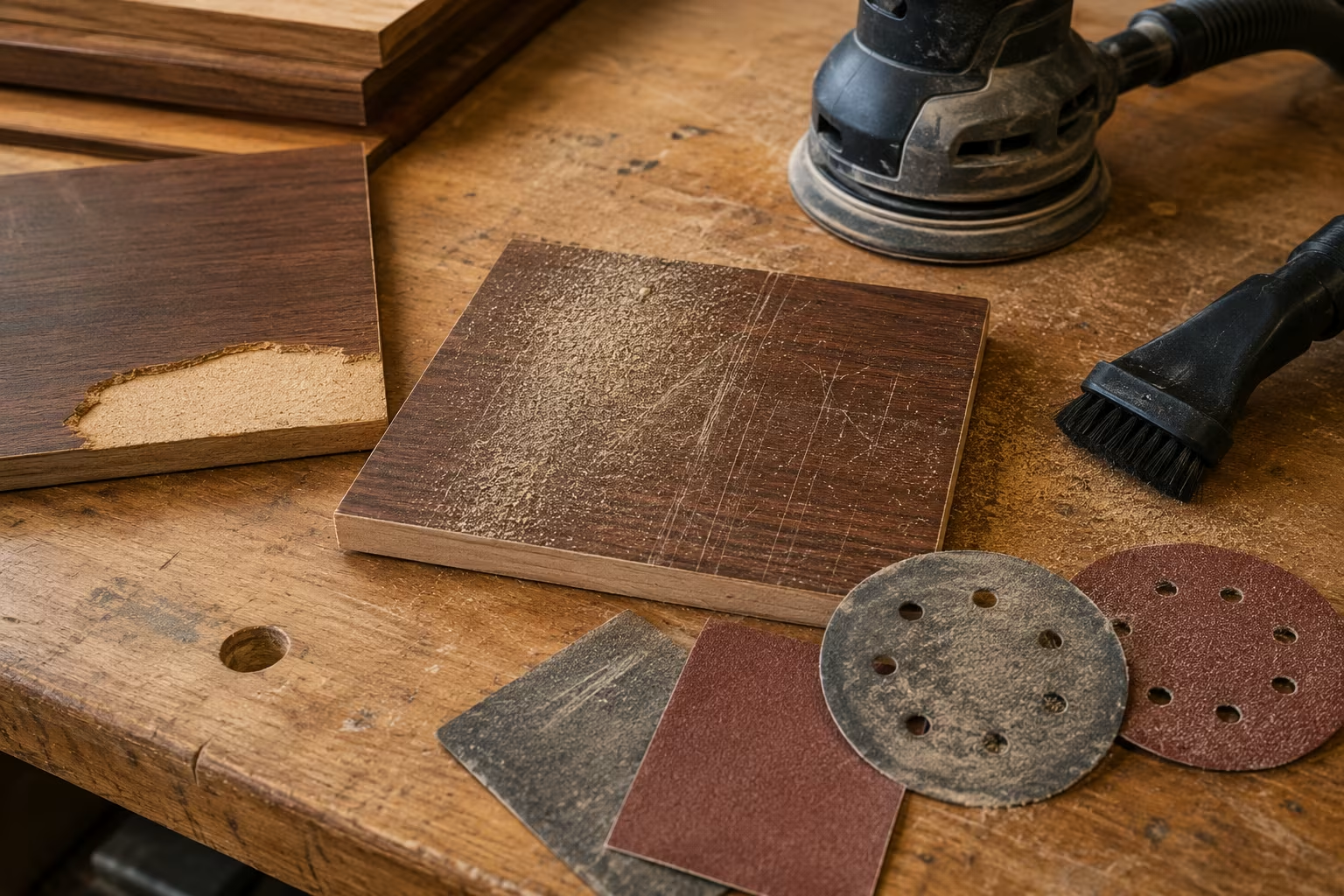
Four mistakes no grit fixes: sanding through veneer (start at 150-180, sand briefly, stop); not vacuuming between grits, so coarse dust drags across the next paper and cuts random deep scratches; sanding too long with worn paper, which burnishes and leaves pressure marks instead of clean scratches; and sanding cross-grain on the final pass, which shows through any finish. The last pass on every surface should run with the grain, and even a perfect random-orbital surface improves with a one-minute hand pass along the grain using the final grit.
Water-based stains and finishes raise the grain: small fibres swell, stand up, and fuzz an otherwise smooth surface. Pre-empt it. After the final sanding, wipe the wood with a damp (not soaking) cloth, let it dry fully, then sand again with the same final grit under very light pressure. The raised fibres come off cleanly and the next water-based coat sees a flat surface that does not re-raise. Solvent-based finishes (oil-based polyurethane, lacquer, shellac) skip this step, since their solvents do not raise the grain meaningfully. One safety note: wood dust is a respiratory hazard at any grit, finer grits hang in the air longer, and species like walnut and cocobolo produce particularly irritating dust, so a fine-particulate respirator plus a dust extractor on the sander is worth the setup.
Grit progression cheat sheet:
| Job | Progression | Stop point |
|---|---|---|
| Furniture, film finish | 80 → 120 → 180 | stop at 180 |
| Raw wood ceiling | 220 | finer burnishes fibres and starves the finish |
| Never skip | more than one step | 80→180 leaves hidden 80-grit scratches |
| Standards | CAMI 220 ≈ FEPA P220 (P slightly finer) | JIS 1000–8000 = blade sharpening |
Related Posts
Caulk Types Compared: Silicone vs Latex vs Hybrid
Caulk choice depends on the joint's water exposure, movement, paintability, and life expectancy....

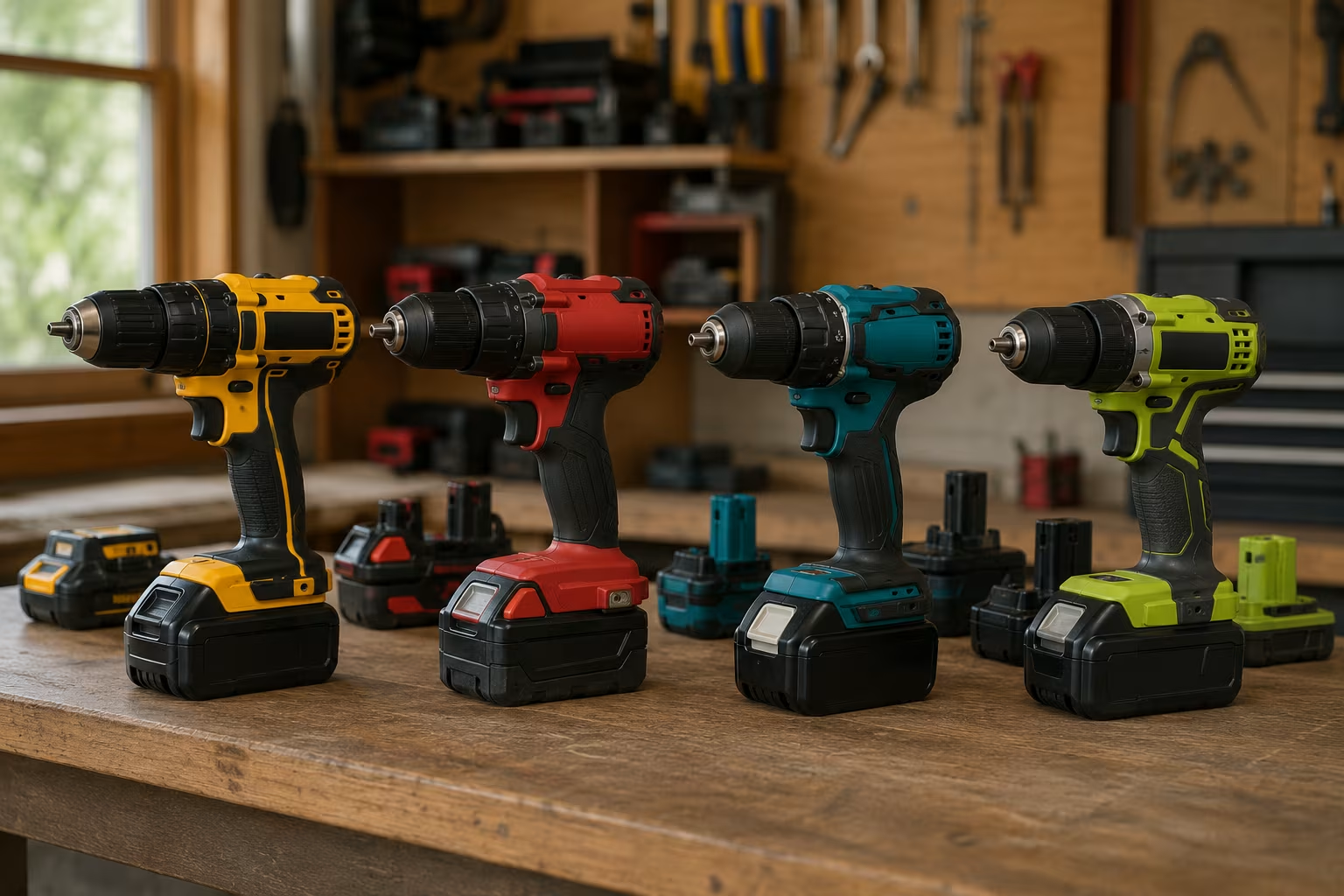
Cordless Battery Platform Lock-In: How to Pick a Brand
Every cordless brand wants you locked in. The lock-in is real and one-direction. The brand...
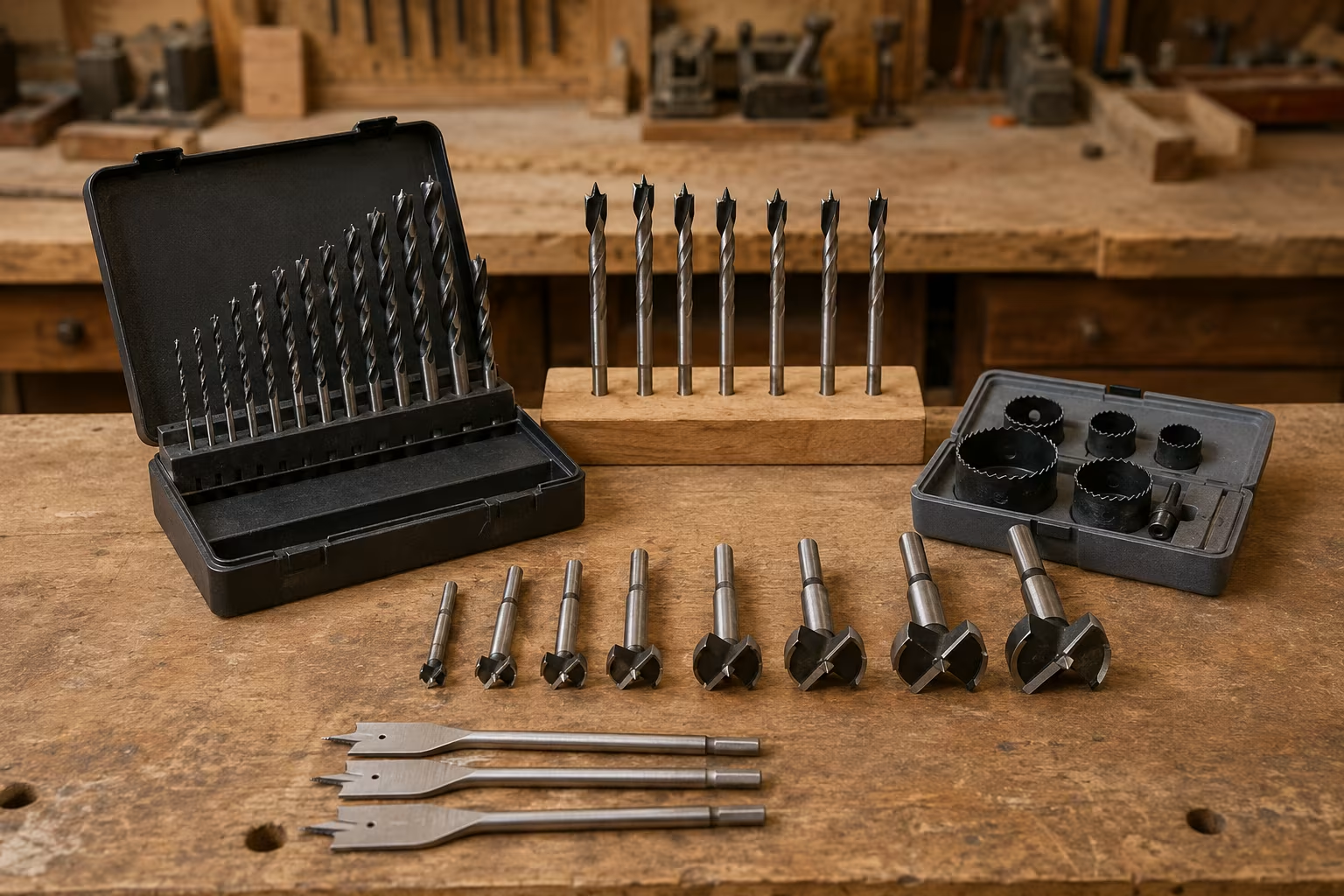
Drill Bit Sets: Twist, Brad-Point, and Forstner Real-Use Map
Most home shops own three drill bits they actually use and twenty they bought once and forgot....
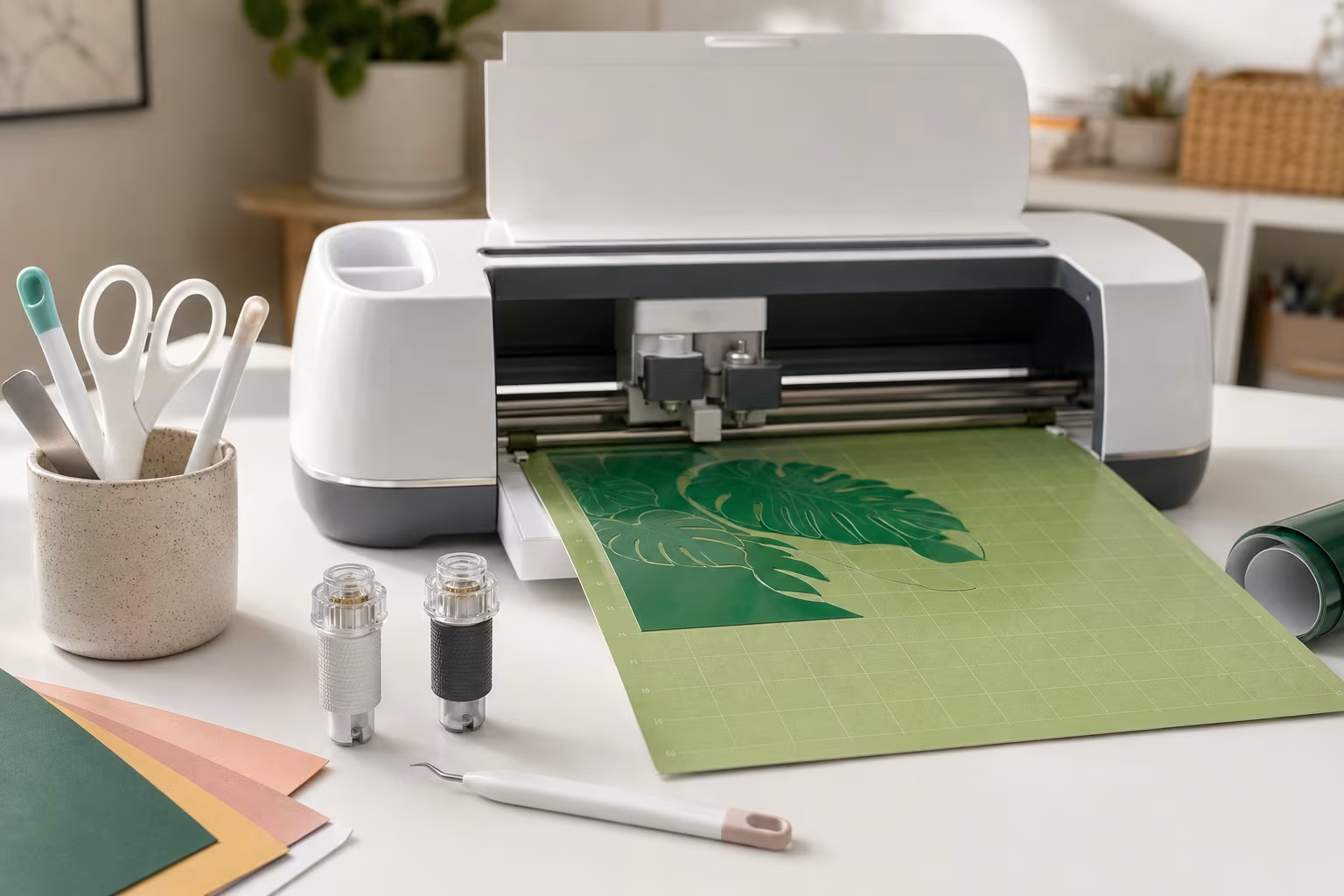
Beginner Cricut Blade Set: What You Actually Use Daily
The Cricut starter blade list is longer than most beginners need. The two or three blades that...
Comments
No comments yet. Be the first to share your thoughts!