
Resin Doming Without Bubbles: A Calm, Reliable Method
The short answer
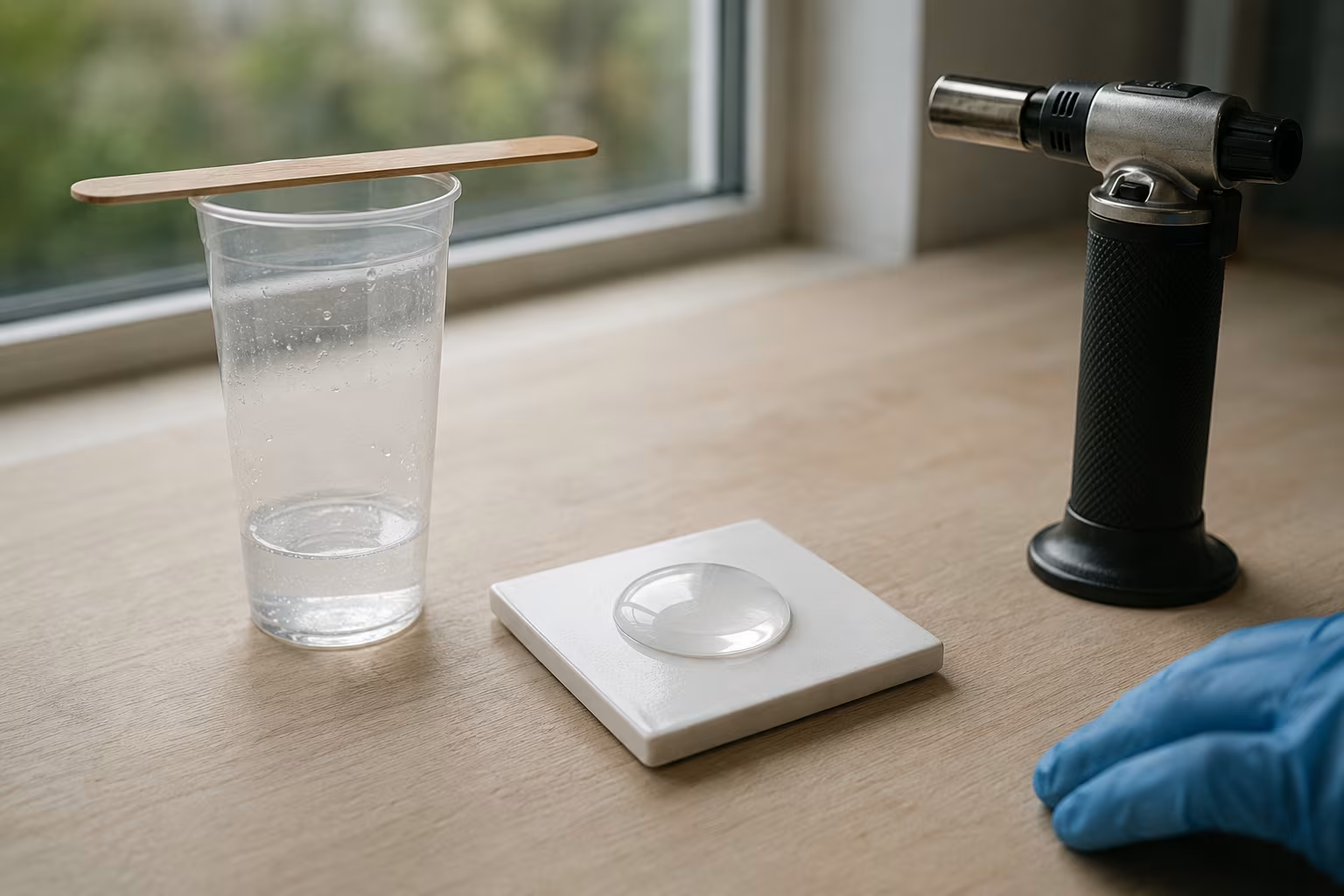
Most bubbles never have to be removed because they were never introduced. The simplest doming routine that gives consistent results is this: warm the unmixed bottles in a bowl of hot tap water for ten minutes, measure carefully by volume (or by weight if the brand specifies it), stir slowly with a flat stir stick for three full minutes while scraping the sides and bottom, let the mixed cup sit five to ten minutes so the air rises out, then pour in one slow continuous stream from a low height onto a perfectly level surface. Pass a small butane torch quickly across the dome from about six inches away, no more than two passes. That is the entire method.
The single biggest controllable variable is air-in. Whisk-stirring, fast pouring, and scraping with a high-friction stick all introduce more air than the torch can pull back out. Slow the input down and you will almost never need to chase bubbles aggressively. The chemistry involved is a two-part epoxy system, and understanding that the resin stays workable for a fixed pot life explains most of the timing rules below.
What actually causes the bubbles
Three distinct mechanisms put bubbles in cured resin, and each has a different fix.
Mixing-introduced air. Stirring two viscous liquids together drags air down with the stick, and this is the bulk of bubbles in most pieces. Slow circular stirring with a flat stick (not a round chopstick, not a kitchen whisk) over a longer stir time gives a homogeneous mix with far less entrained air than fast stirring for a shorter time.
Surface outgassing from the substrate. Wood, plaster, painted MDF, polymer clay, dried air-dry clay, and ceramic all hold air in their pores. When warm resin meets a cold porous surface, that air rises through the resin as it sits. Seal porous surfaces first with a thin wash of Mod Podge, a light spritz of acrylic spray sealer, or a thin flood coat of the same resin left to cure, and the outgassing disappears.
Cold resin off-gassing. If the resin is cold when poured, it warms up afterward and that warming expands trapped microbubbles into visible ones. Pre-warming the bottles solves this. Do not warm the mix after it is combined, which can accelerate the cure too early.
If bubbles keep appearing after a torch sweep, work the diagnosis in that order: stirring, surface, temperature.
Pour technique: less air in, easier release out
Mix in a tall, narrow cup rather than a wide shallow one. The taller column lets bubbles rise out before pouring, and the narrower opening gives a smaller, more controlled stream.
Let the mixed cup rest after stirring. Five to ten minutes is enough for most one-to-one and two-to-one consumer epoxies, and the cup will visibly clarify as microbubbles march to the top. If the pot life is short (some are only fifteen minutes total), shorten the rest and accept slightly more torch work.
Pour in one continuous, slow stream from roughly an inch above the surface. A high pour traps air on impact; a stop-start pour creates folded layers. Move the stream methodically from one corner to the other so the resin self-levels rather than chasing it with a stick. Leave a tiny rim of unwet surface around the edge for the first thirty seconds, then guide the resin to the edge with a toothpick or wooden skewer. Surface tension does the doming work; your job is to let it.
Heat: torch vs heat gun vs hair dryer
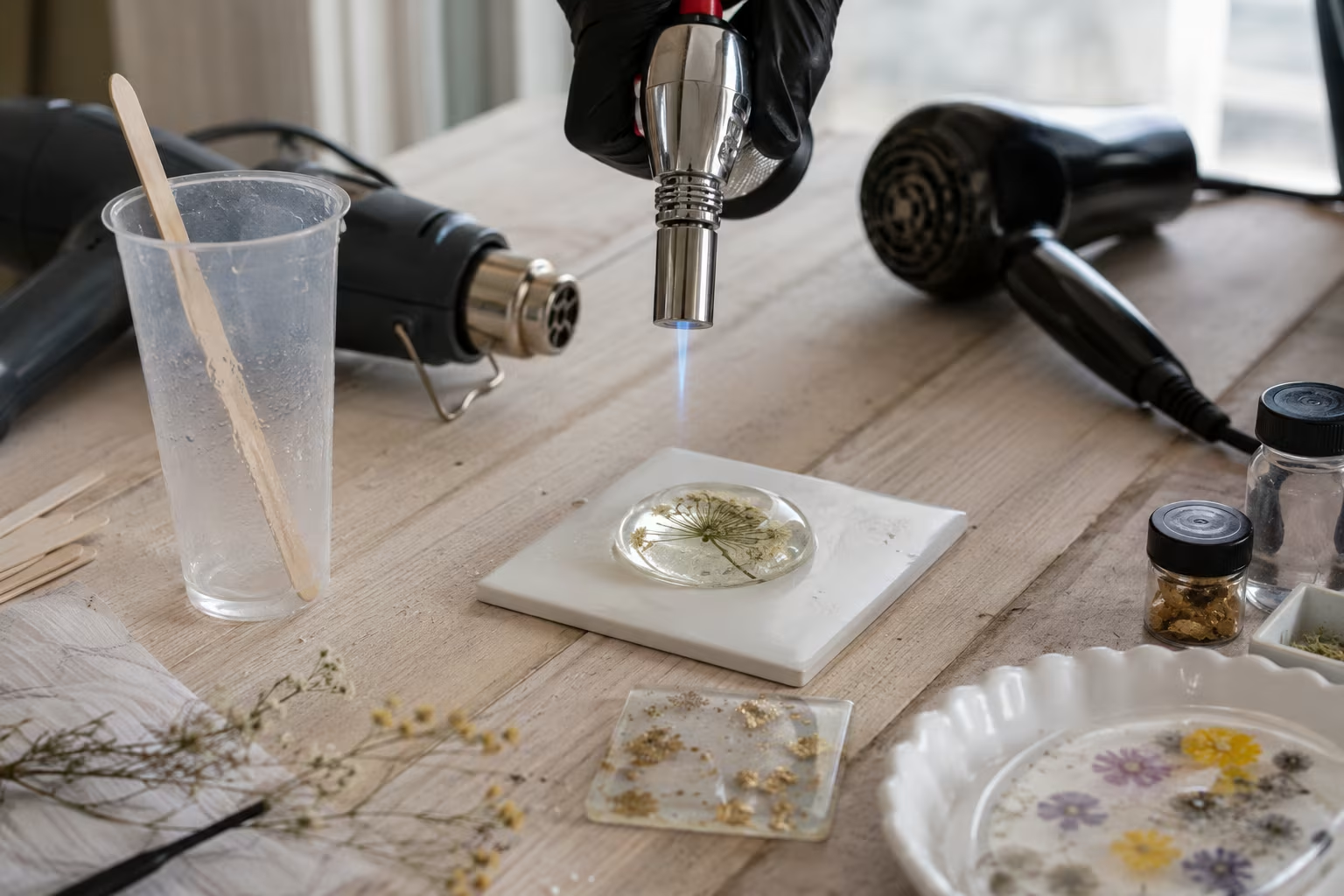
A small butane torch is the most controllable bubble remover. The flame should kiss the surface, not point at it: hold it four to six inches above the dome and keep it moving constantly in a back-and-forth sweep, like ironing. Two full passes is usually enough. During the rest period the bubbles rise to within a quarter-inch of the surface, and the torch just opens that last skin of resin so they can pop.
| Heat source | Behavior | Best use | Main risk |
|---|---|---|---|
| Butane torch | Hot, narrow, precise flame | Standard doming; two quick passes | Scorch or divot if held in one spot |
| Heat gun | Cooler, wider airflow | Large flat coats when no torch is available | Blows dust onto the wet dome |
| Hair dryer | Too cool, high air volume | Not recommended for epoxy | Dust, wind ripples, poor bubble release |
Whatever heat source you use, three errors cause visible damage: lingering in one spot (a divot or yellow scorch), waving heat after the resin has skinned over (it rips the surface), and starting before the resin has rested (you pop the wrong layer of bubbles).
Doming height and cure environment
Doming relies on surface tension to hold the resin above the edge, and how high you can go depends on viscosity, edge quality, and level. High-viscosity doming resins (typically 1,500 to 5,000 cps) hold a clear convex dome that rises three to six millimetres above a one-inch substrate; thinner casting or coating resins (often 500 to 1,200 cps) dome less and slump faster. Pick the product for the job, because a casting resin will not dome no matter how careful the pour.
The edge is the failure point. A rough, splintered, or dusty edge breaks surface tension and the resin runs off. Sand the edge clean, wipe it with isopropyl alcohol, and let it dry fully before pouring; a strip of clear packing tape just below the edge gives the dome a clean stop line. Level is non-negotiable, so use a small spirit level on the work surface itself, not just the bench. A one-degree slope across a 5cm pendant shoves the whole dome to one side. For a dome taller than surface tension can hold, do two pours: a flood coat first, fully cured, then a smaller central pour.
Most consumer epoxies cure best at 22 to 24°C (72 to 75°F) and below 60% relative humidity. Cold rooms slow the cure and cause hazing; humid air can leave a waxy or cloudy finish; very hot rooms cure-shock the resin into heat-rippled surfaces. Cover the piece with an inverted plastic tote in a heated, dry room for the full cure window, and keep it away from a radiator, which creates a temperature gradient through the dome. If the surface is slightly tacky but your ratio and stirring were correct, move it somewhere warmer and drier and give it another 24 to 48 hours before assuming the resin failed.
UV resin as an alternative for small pieces

For pieces under about four centimetres across, UV resin avoids the doming bubble problem entirely. It is pre-mixed, so there is no stirring to introduce air; it cures in seconds under a UV lamp, so bubbles have no time to migrate and become problems; and a single small bottle goes far for pendants and earrings.
The trade-offs are real. UV resin costs significantly more per millilitre than two-part epoxy, cures harder and slightly more brittle, and its light cannot penetrate opaque inclusions or pours thicker than about 5mm, which rules out deep castings and metal foil. Many makers build the body in epoxy and add a final UV-resin dome for the gloss layer. If you are making one-offs with a small dome, UV is the simpler tool; if you are batching a dozen pendants, epoxy is cheaper and leaves a window to fix problems.
When bubbles still appear and keeping dust out
If the dome is still wet and you spot a bubble, work it to the surface with the tip of a toothpick rather than a sweep of heat, which would chase other bubbles around. Lift, do not stir. If the bubble appears after the resin has begun to skin (roughly 30 to 45 minutes in), leave it, because popping it through the skin tears the surface. Once fully cured, sand around the bubble with 400-grit wet-and-dry, drill it out gently, and patch with a tiny pour of the same resin; the fix is invisible on transparent doming. If the whole surface cured cloudy, sand it flat with 400 then 800 grit, clean with isopropyl alcohol, and pour a thin re-coat.
Dust is the second enemy after bubbles. Set up in a room you can leave undisturbed for the full cure window, not a kitchen counter or a busy garage, because particles that settle on a wet dome are visible forever. A cardboard box turned upside down over the piece, or a clear plastic tote, costs almost nothing and prevents the most common defect. Keep nitrile gloves on the whole session so skin oils do not cause fish-eyeing.
Common mistakes worth naming
Mixing too small a batch in a wide flat cup traps bubbles and pours an aerated stream; use a tall narrow cup. Torching too soon pops bubbles that have not yet risen, so wait the five to ten minutes, and torching too late, after the resin has skinned over, tears the surface. Pouring on an unsealed substrate lets wood, MDF, plaster, and clay outgas for hours, so seal first. Using casting or table-top resin for doming gives a viscosity too low to hold a crown, so buy resin labelled for doming and check the cps rating. And forgetting to level the surface, even by a single degree, pours the dome unevenly, which makes a small bubble level on the work surface the cheapest upgrade you can make.
Related Posts

Beginner Pottery Wheel Speed for Centering
Centering clay needs high wheel speed and firm pressure. Most beginners use too low speed.


Calligraphy Ink Comparison for Cotton Paper
Modern dip pen calligraphy needs ink that doesn't bleed on absorbent cotton paper. India ink...
Knitting Needle Materials Compared: Wood vs Metal vs Plastic
Knitting needle material changes how stitches slide, how cold or warm the needle feels, and how...
Beginner Watercolor Paper Choice for Textured Washes
Watercolor paper is the single biggest gear decision a beginner makes. Weight, surface texture...
Comments
No comments yet. Be the first to share your thoughts!