
Pegboard vs French Cleat: The Honest Tool Wall Choice
The short answer
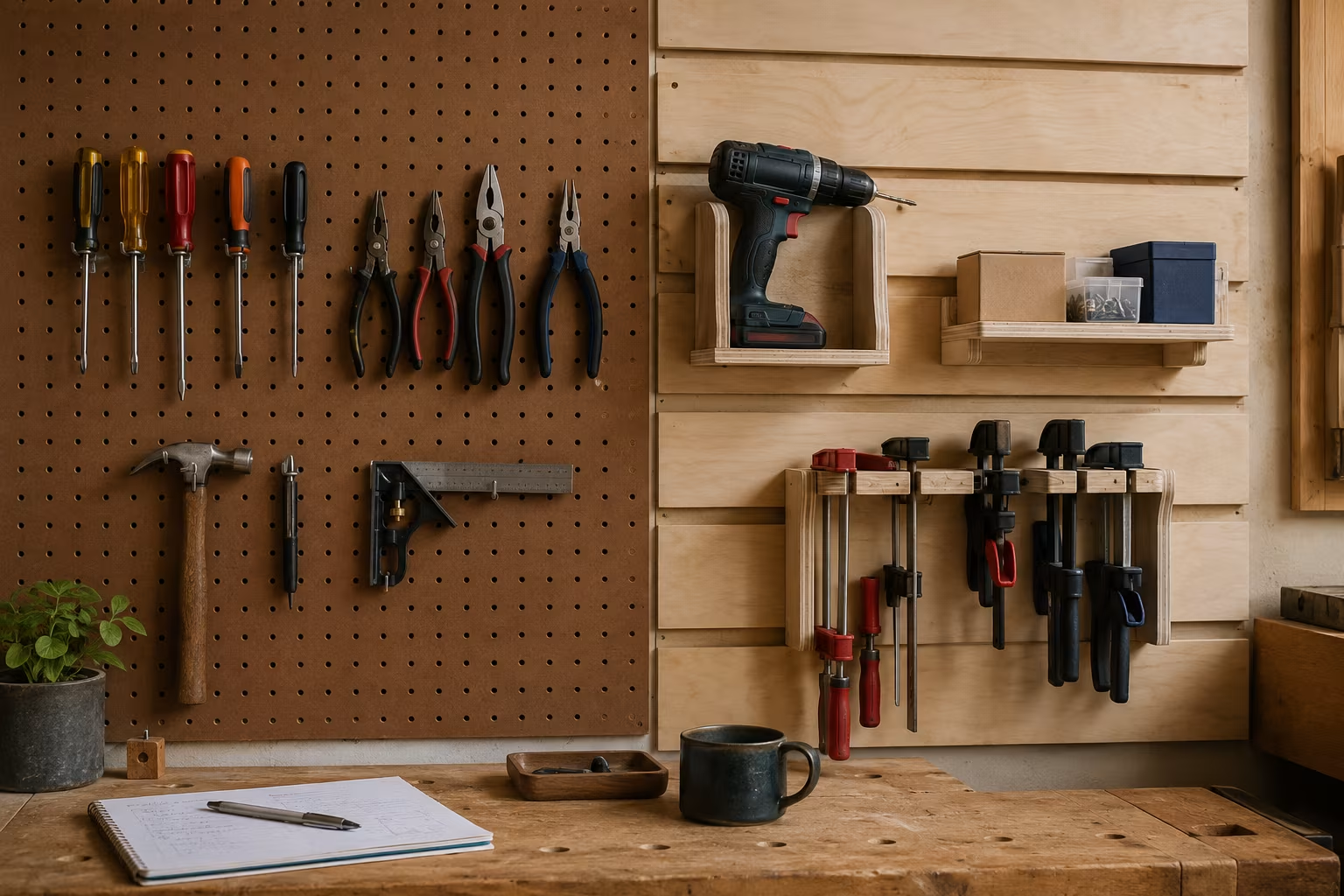
Pegboard is fast, cheap, and limited to light tools: typical hardboard pegboard holds about 50 pounds spread across a whole 4x8 sheet, and individual pegs hold only a few pounds each. It is the right answer for hand tools, organisers, small accessories, and anything you want to rearrange every few months without effort. French cleat is slower to build and costs more in lumber, but a 3/4-inch plywood cleat anchored to studs holds 100 pounds or more per rail, enough for cordless tools, jigs, large clamps, and whole storage cabinets.
For most home shops the honest answer is both: pegboard above the bench for grab-and-go hand tools, French cleat on the heavier wall around it. The two systems do different jobs, and forcing either one to do both leads to disappointment.
Weight capacity: where pegboard hits its ceiling
A standard 1/4-inch hardboard pegboard panel holds a few pounds per peg, and a fully loaded sheet maxes out around 50 pounds spread evenly. Heavier individual loads bend the board between supports, eventually deforming it permanently and pulling pegs out of round. The upgrade is metal pegboard (typically 22-gauge steel with formed holes), which holds 100-200 pounds per panel and does not deform, with pegs that can be heavier gauge.
Screwdrivers, pliers, wrenches, and small clamps sit well within hardboard pegboard. Cordless drills and impact drivers (4-7 pounds) are borderline on hardboard and supportable on metal pegboard or a French cleat holder. Hand planes, large clamps, and heavy circular saws are too heavy for hardboard and belong on cleat or metal. Levels and long squares technically hang, but the long lever arm stresses individual pegs, so a custom cleat holder lasts longer. French cleat, by contrast, holds whatever the wall behind it can hold: a 3/4-inch plywood or pine cleat driven into studs every 16 inches with #10 wood screws at least 2.5 inches long supports 100-200 pounds per cleat, and multiple cleats spread the load further.
Customisation and changeability
Pegboard's greatest virtue is fast reconfiguration. Pull a peg, push it into another hole, done. The standard one-inch-on-centre spacing gives an enormous number of placement options on a single panel. The downside is that pegs come in fixed shapes — single hook, double hook, J-hook, shelf, ring — so tools that do not match a standard shape end up with awkward compromises. A Western handsaw hangs from its blade hole; a Japanese saw with no blade hole has nowhere to hang.
French cleat reverses those properties. Each holder is custom: a sized pocket for a specific tool, a clamp-shaped cradle, a shelf at exactly the depth needed. Tools that fit no pegboard hook get exactly the right holder on a cleat wall. The cost is build time, and changing the layout means unscrewing and remounting holders one at a time. In practice, cleat walls grow incrementally: build the wall first, then build holders as you find tools that need them, and the wall fills up over months.
Cost in materials and time
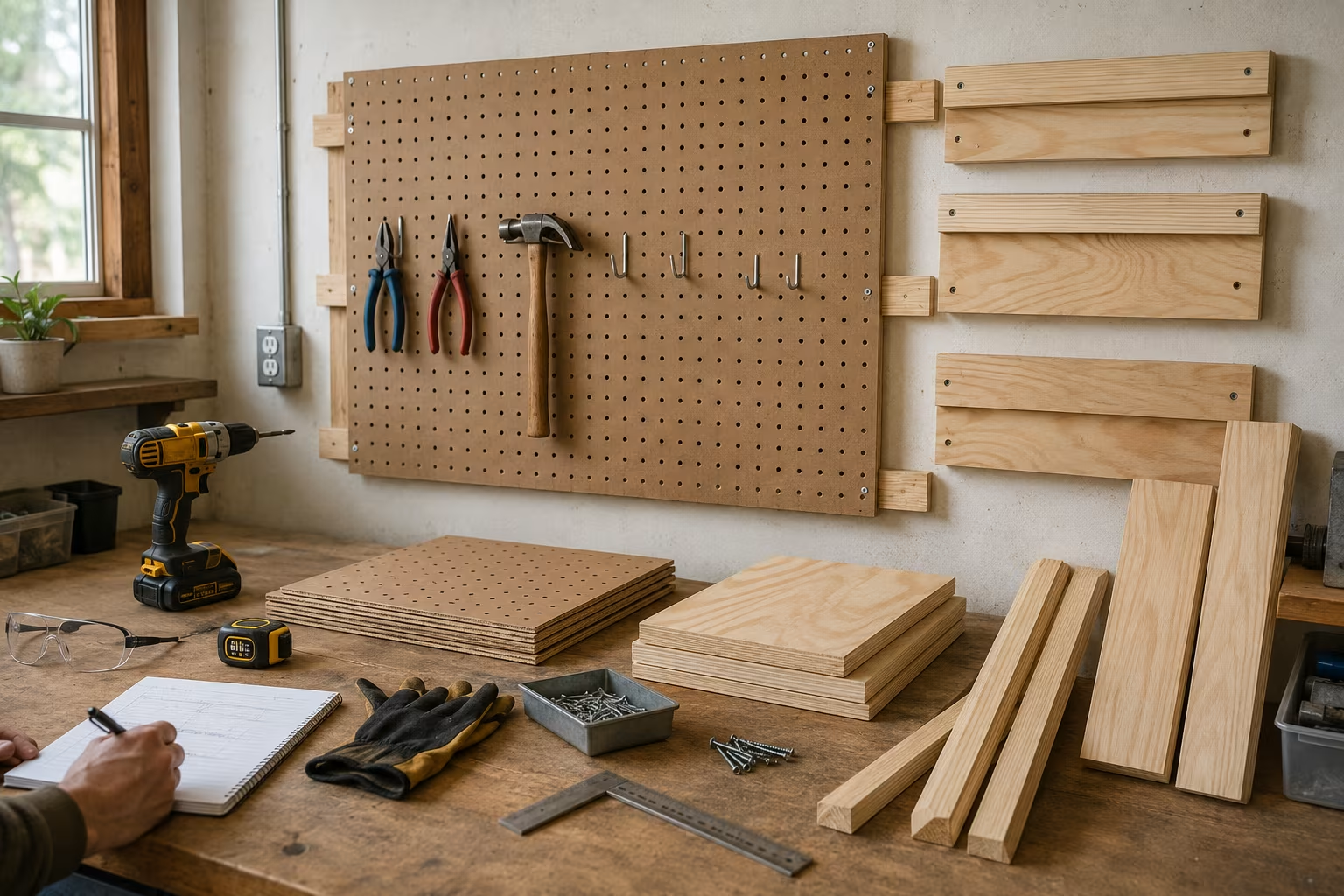
Hardboard pegboard is among the cheapest wall storage available. A 4x8 sheet of 1/4-inch pegboard costs much less than the same area in plywood (confirm current pricing at your local hardware store), plus furring strips to space it off the wall and a pack of pegs. Installation is usually under an hour: screw furring strips to studs, screw the pegboard to the strips, hang pegs. Metal pegboard costs several times more per square foot and needs more careful mounting, though install time is similar.
French cleat uses 3/4-inch plywood cut into 2-3 inch strips with a 30 or 45 degree bevel along one edge. A single 4x8 sheet yields enough cleats for a fairly large wall plus scrap for many holders. The cleats install in an hour or two; the custom holders accumulate over weeks of weekend work. The time difference is the real trade: pegboard stores tools the day you start, while a cleat wall stores all tools well only after months of holder-building.
| Factor | Hardboard pegboard | French cleat |
|---|---|---|
| Load capacity | ~50 lb/sheet, few lb/peg | 100-200 lb per cleat |
| Material | 1/4-in hardboard + furring + pegs | 3/4-in plywood strips, beveled |
| Install time | Under an hour | Cleats: 1-2 hrs; holders: weeks |
| Reconfigure | Instant (move a peg) | Unscrew and remount holders |
| Best for | Hand tools, small accessories | Cordless tools, clamps, jigs, cabinets |
| Anchoring | Furred off wall, into studs | Into studs, never drywall only |
Combining both on the same wall
The hybrid layout: a section of pegboard directly above the workbench for the hand tools used constantly (screwdrivers, chisels, marking gauges, hammers), and French cleat on the larger surrounding walls for everything heavier or oddly shaped. The pegboard section gives instant rearrangement; the cleat section gives load capacity and a cleaner look. Aesthetically the two read differently: a fully loaded pegboard looks busy and a half-empty one looks unfinished, while cleat holders are wood-toned and integrate with the wall, so a half-empty cleat wall still looks normal. For a shop that doubles as a display or photography space, that cleaner read is a real advantage; for a pure working shop, pegboard's busy look is irrelevant.
Mount the pegboard inside a frame that contains it — say a 3-foot-wide by 2-foot-tall panel framed with cleat material on the sides — so the framing hides the busy edges and ties the systems together. Do not try to mount pegboard on cleats: the panel is too flexible to span between cleats and the result is a bouncy surface. Pegboard wants its own frame and furring; cleats want their own wall.
When each one is the wrong choice
Do not use pegboard for cordless drills and impact drivers, large clamps, hand planes, levels longer than about 24 inches, or anything you would not want dropping on your foot if a peg pops. Do not mount pegboard flat against an un-furred wall: it must sit about 1/2 to 3/4 inch off the wall so pegs can clip through, and mounting it flat removes the clip space entirely.
Do not use French cleat for very lightweight, frequently rearranged items where build time outweighs the benefit, or on walls under 24 inches wide where there is not enough cleat length to be useful. Most importantly, never use French cleat without anchoring to studs. A cleat fastened only to drywall anchors holds light loads briefly and then fails under real load, and the failure mode is the whole wall section coming down at once. In a rental where stud screws are not allowed, cleats lose most of their advantage.
A practical hybrid setup
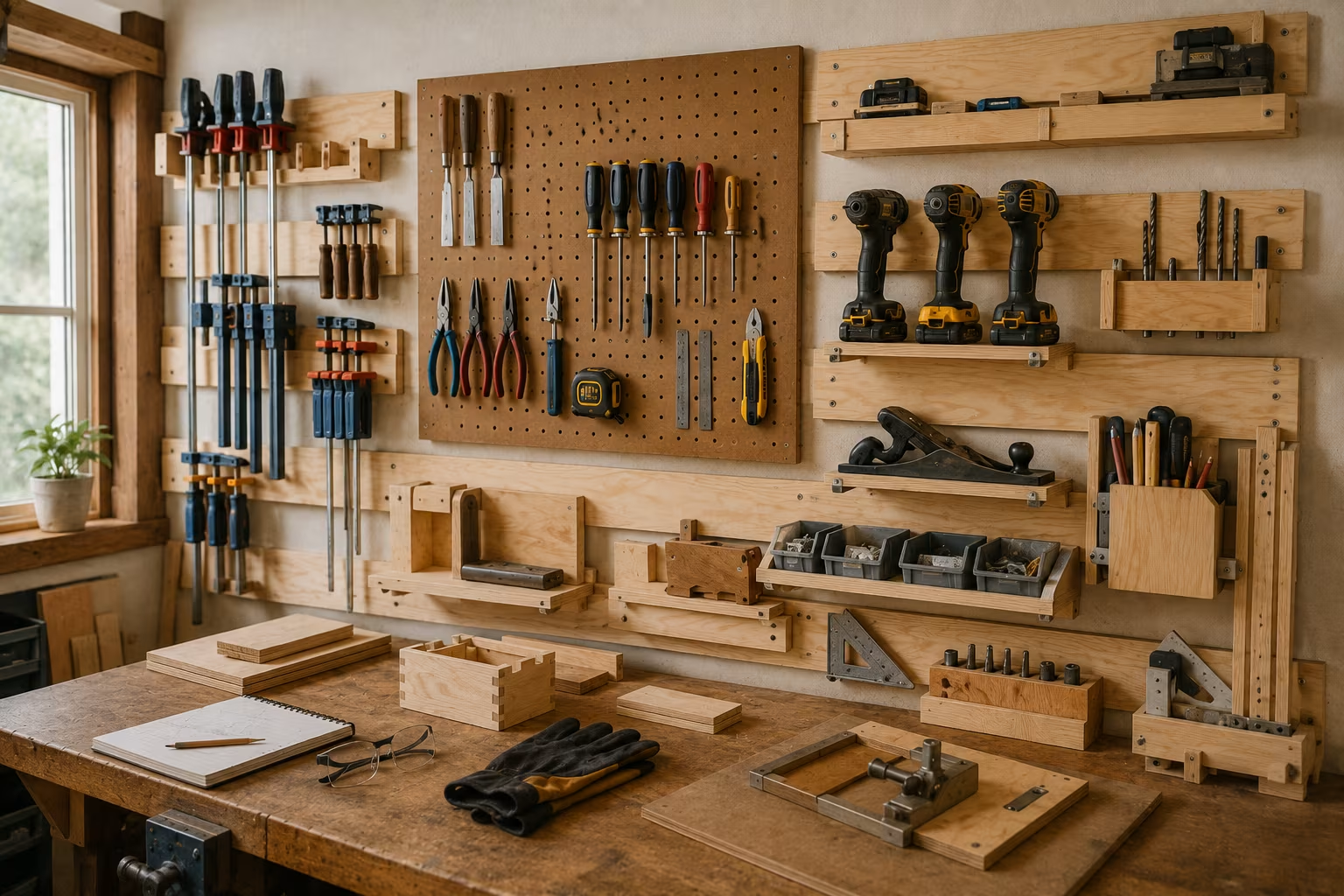
For a typical single-bay garage shop, a workable layout is a 3-4 foot pegboard section directly above the bench holding tools used several times per project (chisels, screwdrivers, files, the most-used pliers, tape measure, marking knife), with French cleat covering the rest of the bench wall and at least one adjacent wall for cordless tools in custom holders, grouped clamps, jigs on shelf holders, and boxes of fasteners. Budget a weekend for the initial cleat wall plus the pegboard, then add holders as you find tools that need them. Many shops are still adding to the cleat wall two years on, and that is the system working as designed.
For a basement shop with shorter walls, pegboard above the bench plus one large cleat panel covers most needs. For a large multi-station workshop, cleat dominates and pegboard stays in small task-specific zones. Lighting is easy to forget: mount a strip LED at the top of the wall or a pair of small adjustable lights above and slightly forward, so you are not squinting into a shadowed corner to find the right driver. Avoid lights placed between you and the wall, which cast your own shadow onto the tools.
Build order and holder details that pay back
Mill all the cleats from a single sheet in one session with the same blade setting, so every holder you build later fits every cleat on the wall. Mixed-batch cleats with slightly different angles create holders that fit some rails and not others — the most annoying mistake to discover six months in. Run the wall cleats horizontally, not vertically, because a vertical cleat lets the holder's weight slide down, while horizontal cleats keep gravity in your favour. Space horizontal cleats four to six inches apart vertically; about four and a half inches suits most tool sizes. Mark and level cleat positions before mounting, since a one-degree slope across a long wall is visually obvious once tools hang on it.
A basic holder is a backing piece with the matching cleat angle cut on top plus a pocket, hook, or shelf. The backing must extend at least three to four inches below the lower edge of the cleat so it cannot pivot forward and drop the tool; heavier tools want longer backing. A small rubber or wood bumper at the bottom, contacting the wall behind the cleat, stops the holder rocking under load. For tall, heavy tools (jigsaws, planers, large drills), grip the tool body in a sized pocket secured with a clip or pin rather than hanging it from a handle, and label each holder discreetly on the back so you remember which fits which when reorganising. Cheap LED strip lighting runs cool enough to sit safely near wooden cleats and lasts for years, which is why it has replaced the halogen and incandescent fixtures that used to heat a tool wall.
Related Posts
Workshop Air Compressor Sizing: CFM and SCFM
Air compressor matched to your tools means smooth work; too small means constant waiting. CFM...

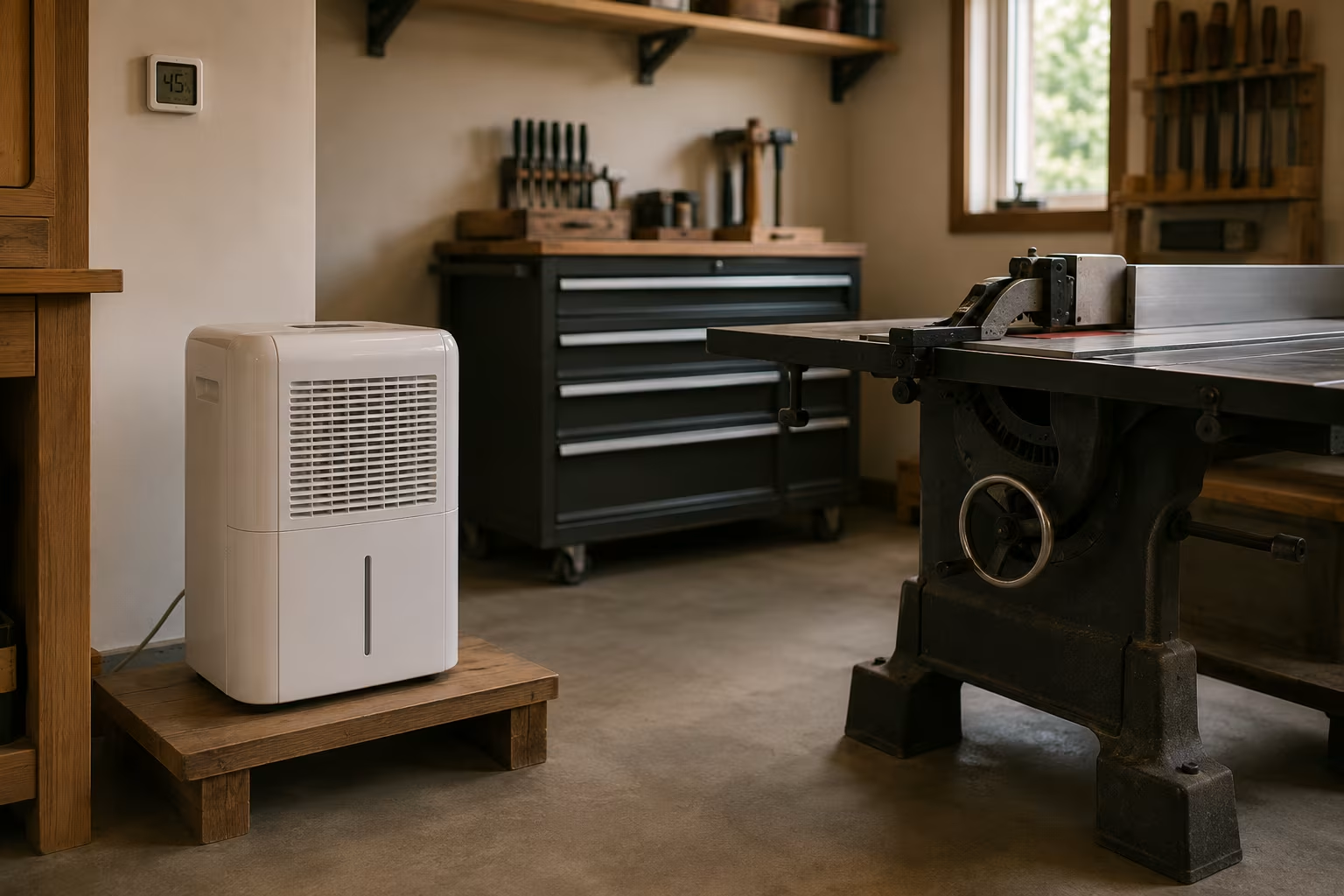
Workshop Dehumidifier Sizing for Tool Rust Prevention
Tools rust silently when shop humidity sits over 60%. The pint capacity that matches your shop...
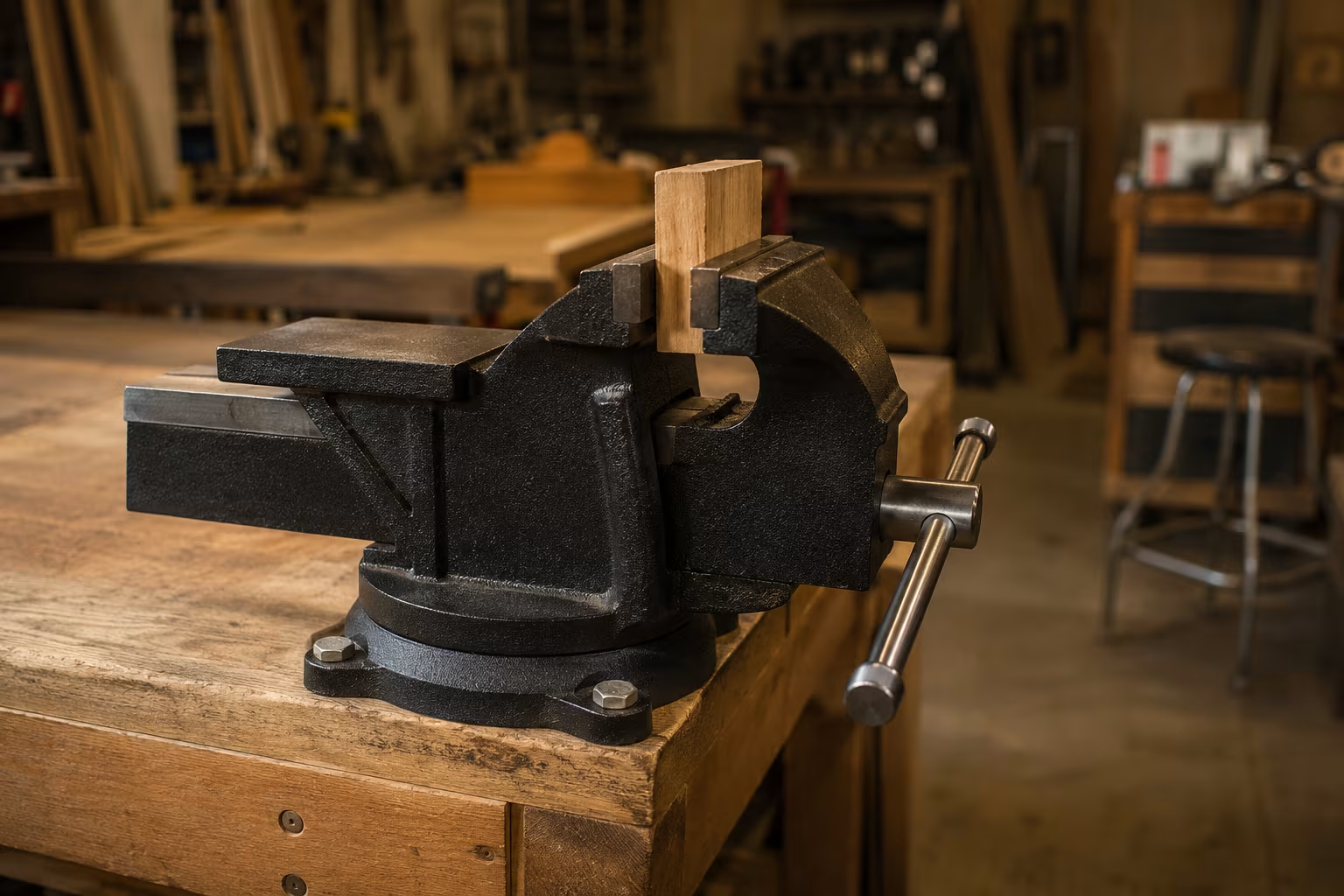
Bench Vise Sizing and Mounting for First-Time Buyers
Bench vises bolted to scrap plywood pull right out. The right size for the work, the right...
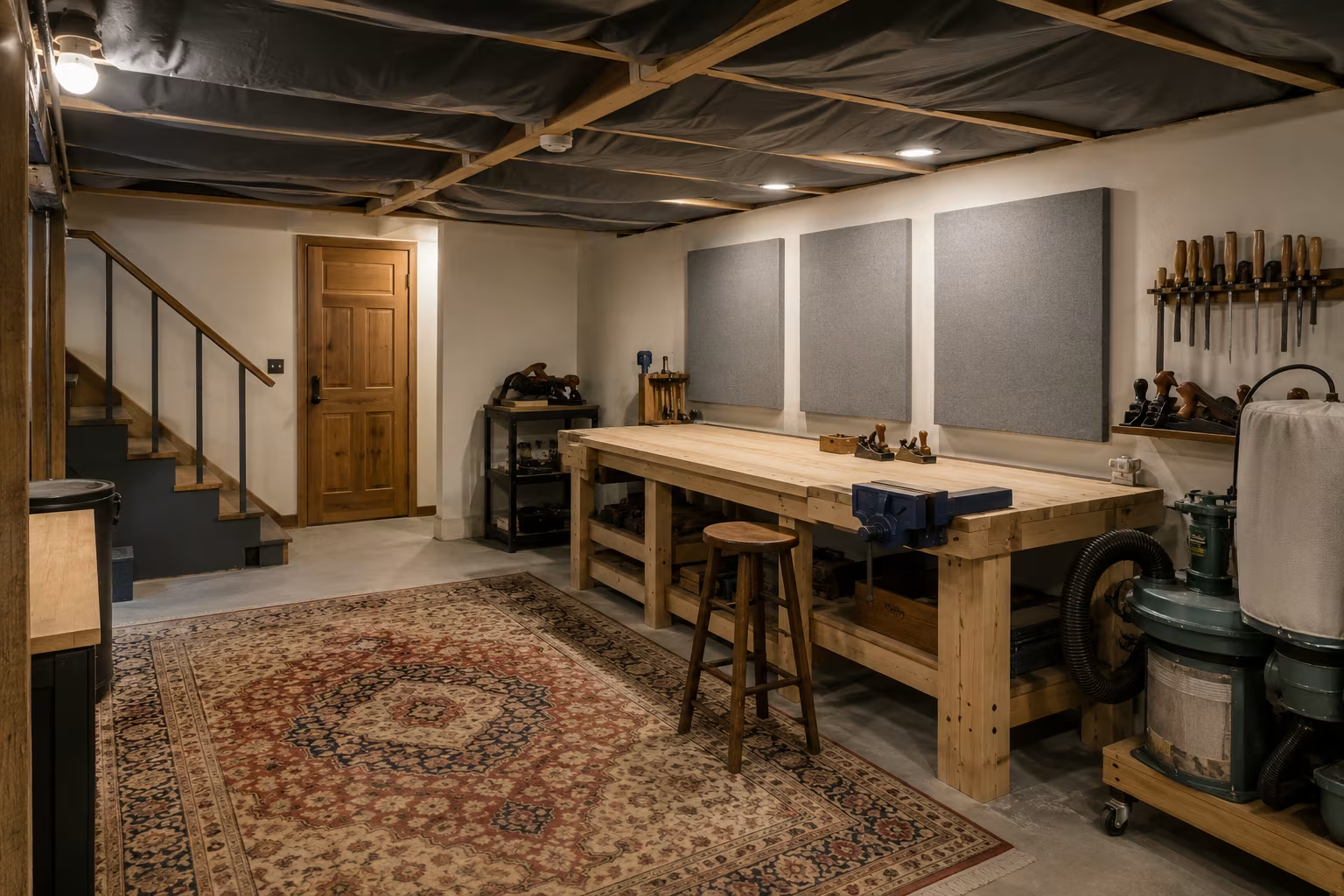
Soundproofing a Basement Workshop on a Renter's Budget
Basement shop noise traveling up to the family room is how you lose workshop privileges. The...
Comments
No comments yet. Be the first to share your thoughts!