
Why Quilling Earrings Are the Most Profitable Craft to Sell Online
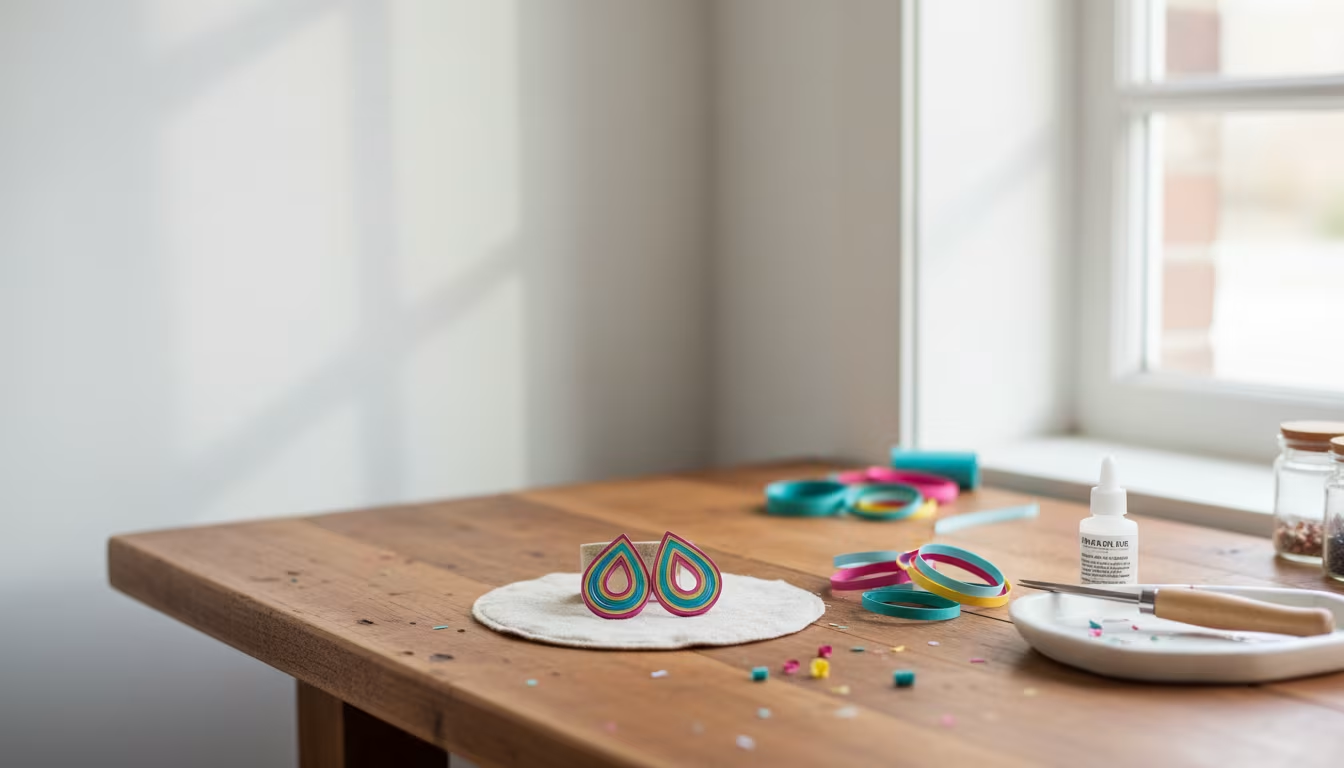
Quilling earrings have an unusually strong margin for a handmade craft: the raw materials cost cents per pair, the tools are minimal, and the finished product is light enough to ship in a standard padded envelope. A starter kit of paper strips, glue, a slotted tool, and earring findings runs about $30, and a single pack of quilling paper makes dozens of pairs. That combination — low material cost, low shipping cost, and the high perceived value of handmade jewelry — is what makes them a practical first product for an online craft shop.
What Paper Quilling Is
Paper quilling is the art of rolling, shaping, and gluing narrow strips of paper into decorative designs — essentially paper filigree. The whole craft is built from a small set of base shapes: the tight coil, the loose coil, the teardrop, and the marquise (eye) shape. Combine and layer those and you can build snowflakes, flowers, geometric drops, and hoops. The basic shapes take an afternoon to learn; the refinement to make a matched, sellable pair takes a few sessions of practice.
Why Earrings, and the Economics
Earrings are the right first product for three reasons. They are small, so one pack of paper yields many pairs. They sell in pairs, so each design is a complete product. And they are light — a finished pair weighs a few grams and ships in a small padded mailer with no fragile-item risk, unlike ceramics or bulky decor. Standard quilling strips are 3mm wide; that width is the default for jewelry and keeps material use tiny per piece.
The margin comes from how little goes into each pair. Here is a realistic starter cost breakdown:
| Item | Approx. cost | Notes |
|---|---|---|
| Quilling paper strips (3mm, multi-color pack) | $4–6 | Enough for dozens of pairs |
| Slotted quilling tool | $3–5 | A toothpick works in a pinch |
| Clear-drying craft or tacky glue | $3–5 | One bottle lasts a long time |
| Clear sealant (dimensional glaze or spray) | $6–10 | Essential for durability |
| Earring hooks + jump rings (bulk) | $8–12 | Hypoallergenic or sterling for selling |
| Two jewelry pliers (flat + round nose) | $6–10 | For opening/closing jump rings |
With a starter outlay near $30, the marginal cost of an additional pair drops to well under a dollar in paper, glue, sealant, and findings. Handmade quilled earrings commonly list in the $10–20 range depending on complexity and platform fees, so the per-pair margin is wide once your fixed kit is bought.
The Supplies You Actually Need
Start minimal rather than buying every color and tool at once:
- 3mm quilling paper in a variety pack.
- Slotted quilling tool for rolling even coils.
- Clear-drying white or tacky glue, applied with a toothpick or fine-tip applicator.
- Small sharp scissors for trimming strips.
- Earring hooks and jump rings — hypoallergenic or sterling silver if you plan to sell, to avoid reactions.
- Flat-nose and round-nose pliers for the hardware.
- Clear sealant — a dimensional glue-glaze or spray sealer to stiffen and waterproof the paper.
Making a Pair Step by Step
- Roll the base coils. Feed the end of a strip into the tool's slot, roll tight and even to the end, then slide the coil off. A dot of glue on the loose end holds it. For a loose coil, let it relax slightly before gluing.
- Shape the elements. Pinch a loose coil at one point for a teardrop, or at two opposite points for a marquise. These, plus tight coils, are the building blocks for nearly every design.
- Assemble the design. Glue shapes together into your pattern. Sketching the layout first helps with symmetry; work on both earrings side by side so the pair stays matched.
- Attach hardware. Open a jump ring with the pliers, thread it through a loop in the quilled piece, add the earring hook, and close the ring fully.
- Seal. Apply two to three thin coats of clear sealant, letting each dry completely. Sealing is what turns fragile paper into a durable, moisture-resistant product — do not skip it or rush the drying.
A beginner pair takes roughly 30–60 minutes including drying between coats; with practice that drops to 15–20 minutes, and batching several pairs at once is faster still. A few technique notes speed the learning curve: keep even tension while rolling so coils do not telescope, glue the loose end down before the coil relaxes, and let each coil size against a circle-template board (the small stencil sold with most kits) so both earrings in a pair match. Work on a non-stick surface — a silicone mat or a sheet of wax paper — so pieces lift cleanly once the glue sets rather than bonding to the table.
Common Pitfalls and Fixes
- Visible or shiny glue. Too much glue dries with a sheen. Apply tiny amounts with a toothpick in good light — a little goes a long way, especially when sealing.
- Pieces detaching. Almost always happens before sealing or with too-thin sealant. Confirm every joint is firmly glued before sealing, then apply multiple thin coats, paying attention to edges and connection points.
- Mismatched pairs. Make both earrings simultaneously and use a template so coil sizes match. A slightly-off pair can still sell as an "imperfect pair" at a lower price.
- Bending or moisture damage. Under-sealed paper deforms easily. Two to three thin sealant coats are the baseline; advise buyers to avoid heavy rain and swimming.
Photographing and Listing to Sell
Photos carry an online jewelry listing. Shoot in natural light near a window against a plain white or neutral background so the colors stand out, and include several angles plus a shot that conveys scale — earrings held to an ear or set beside a coin read as far larger in a lone close-up than they are. Write the description with the details buyers search on: dimensions in millimeters, materials (paper, sealant, hook metal), and care instructions noting they should stay dry. Search terms like "handmade paper earrings," "quilling jewelry," and "statement earrings" belong in the title and tags, since most platforms rank listings partly on keyword match.
To get started, buy the $30 starter kit, learn the tight coil, teardrop, and marquise, and make three simple matched pairs — a teardrop drop, a marquise cluster, and a tight-coil stud. Seal them properly, photograph them in daylight, and list them with accurate dimensions and care notes. That single small batch is enough to test which designs draw clicks before you invest in more colors or complex patterns.
Related Posts
Beginner Pottery Wheel Speed for Centering
Centering clay needs high wheel speed and firm pressure. Most beginners use too low speed.

Calligraphy Ink Comparison for Cotton Paper
Modern dip pen calligraphy needs ink that doesn't bleed on absorbent cotton paper. India ink...
Knitting Needle Materials Compared: Wood vs Metal vs Plastic
Knitting needle material changes how stitches slide, how cold or warm the needle feels, and how...
Beginner Watercolor Paper Choice for Textured Washes
Watercolor paper is the single biggest gear decision a beginner makes. Weight, surface texture...
Comments
No comments yet. Be the first to share your thoughts!