
How to Make Your Own Beeswax Wraps for a Plastic-Free Kitchen
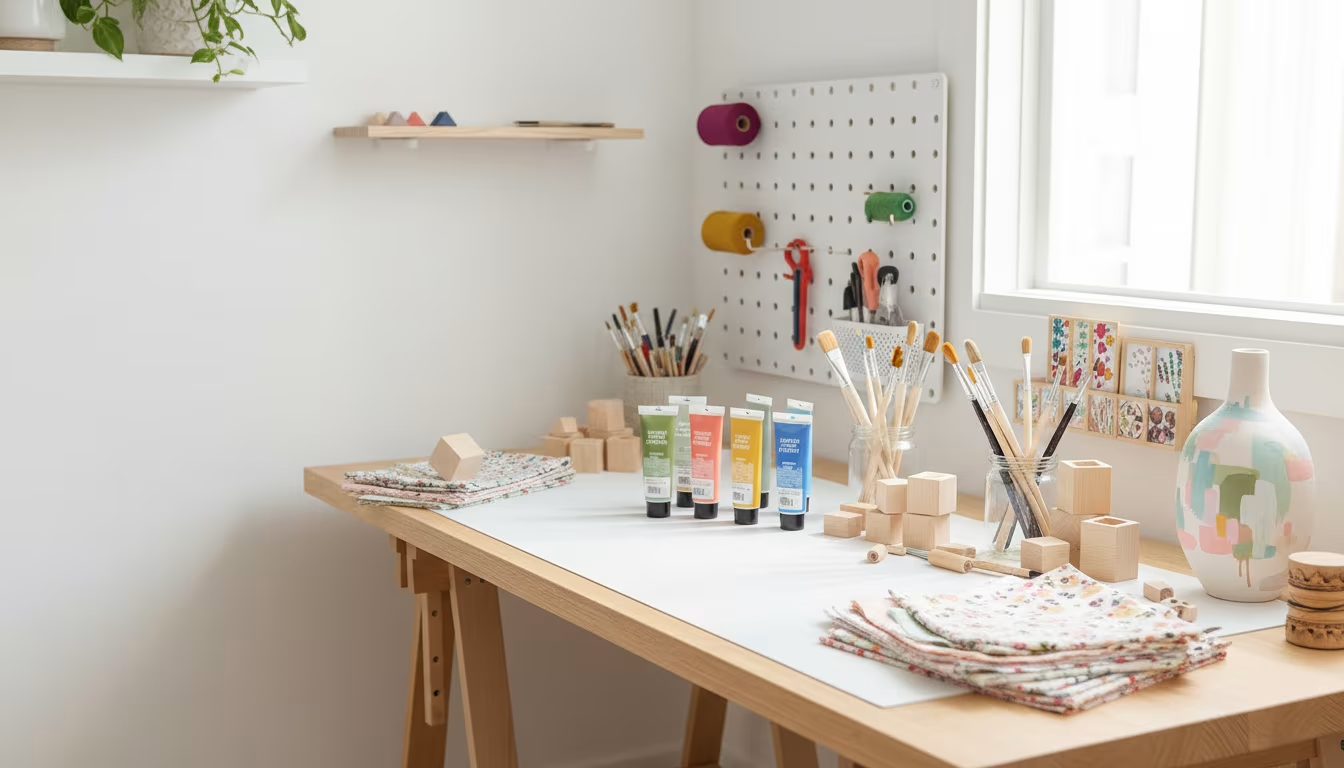
Beeswax wraps are a washable, reusable substitute for plastic cling film: a square of cotton stiffened with a wax blend that softens with the warmth of your hands and holds a fold around a bowl, a sandwich, or a cut vegetable. They cost a few dollars a piece to buy but almost nothing to make from fabric scraps, and one wrap lasts roughly six months to a year. This is a full walkthrough of the oven method, the material ratios that actually work, and how to keep the wraps usable once they're made.
What Beeswax Wraps Are
A wrap is cotton fabric infused with a mixture of beeswax, a small amount of oil, and usually a little tree resin. Warm, the coating is pliable and slightly tacky, so it clings to itself and to bowl rims; cool, it stiffens and holds that shape. The fabric stays breathable, which is why cheese, herbs, and cut produce often keep better in a wrap than sealed in plastic.
The wraps are reusable, hand-washable in cool water, and compostable at the end of their life. They are not for raw meat or anything that needs a hot wash, and they are not airtight, they slow moisture loss rather than stop it. The general concept and its history are summarized in the Wikipedia entry on beeswax wraps.
The Three Ingredients That Matter
A wrap made from beeswax alone works, but it tends to be stiff and prone to cracking along fold lines. Two additions fix that: jojoba oil for flexibility and pine resin for cling. All three should be food-grade.
| Ingredient | Role | Rough proportion |
|---|---|---|
| Beeswax pellets | Structure and stiffness; the base coating | 2 parts |
| Pine resin (rosin) | Adds tackiness so the wrap clings and seals | 1 part |
| Jojoba oil | Keeps the coating pliable, prevents cracking | A few drops per wrap |
Pellets are easier to distribute than a grated block, and food-grade is the standard to buy. Pine resin (also sold as rosin) is the ingredient people struggle to source; it comes as amber granules and is what gives a wrap its grip. If you can't find it at first, start with beeswax and jojoba oil only and add resin to later batches, the wraps will simply be less clingy.
A workable all-purpose ratio for a clingy wrap is roughly 2 parts beeswax to 1 part pine resin by volume, with a few drops of jojoba per square. More resin means more grip but a stiffer, stickier wrap; more oil means a softer, more foldable wrap that clings a little less. It's worth making one small test wrap and adjusting the balance to how you actually use them before committing to a large batch.
Fabric matters as much as the wax. Use 100% cotton with a tight weave, quilting cotton, old pillowcases, or a thrifted button-down shirt all work. Loose weaves shed fibers and hold wax unevenly; synthetics won't absorb it at all. Lightweight cottons wrap and fold more easily than heavy ones, so save the thick denim for larger, flatter covers. Fabric scraps from a thrift store keep the project close to free.
Tools You'll Need
The oven method needs almost nothing beyond the ingredients. Gather it all before you start, because once the wax melts you have to move quickly.
- An old baking sheet you don't mind dedicating to wax
- Parchment paper to line it (non-negotiable, or the pan is coated for good)
- A dedicated natural-bristle paintbrush, kept only for wraps
- Sharp fabric scissors
- A clothesline or drying rack, plus clips
- An oven set to 200°F (about 95°C)
Cutting Your Fabric
Wash and iron the cotton first so it lies perfectly flat; wrinkles trap uneven wax. Cut a range of sizes so you have the right wrap for different jobs. A practical starter set is 6x6 inches for lemon and avocado halves, 8x8 inches for sandwiches and small bowls, and 10x10 inches for larger dishes and bread.
Cut as straight as you can with sharp scissors, but the edges don't need to be perfect, they'll be sealed by wax and a slightly rustic edge is fine. Pinking shears, if you have them, give a zigzag edge that resists fraying.
The Oven Method, Step by Step
The oven heats the whole square evenly, which makes it more reliable than an iron for a smooth, consistent coat. A full batch takes about one to two hours start to finish.
- Line and lay out. Cover the baking sheet with parchment and place a single fabric square on it, flat, not overlapping any other piece.
- Sprinkle the mix. Scatter beeswax pellets evenly across the cloth, aiming for light, complete coverage rather than a thick pile. Add the pine resin granules and a few drops of jojoba oil on top. A 10x10 inch square takes roughly 1–2 tablespoons of the blend.
- Melt. Slide the sheet into the 200°F oven and watch it. The wax melts in about 3–7 minutes; the fabric turns translucent as it soaks through. Pull it the moment everything is liquid, scorching is unlikely at this low temperature but overbaking dries the coating.
- Spread fast. Working immediately with the dedicated brush, push any pooled wax into dry spots so the whole square is evenly saturated with no bare patches and no thick clumps. If a dry spot remains, add a pinch more mix and return it to the oven for a minute.
- Lift and cool. Pick the wrap up by two corners and hold it in the air 15–30 seconds until it firms, or drape it over a line. Don't let it touch anything while tacky. It's dry within minutes.
If a wrap ends up with too much wax sitting on the surface, press a second piece of dry cotton onto it while warm to blot the excess, you'll get two lightly coated wraps out of one over-waxed one.
First Use and Everyday Handling
A finished wrap smells faintly of honey and pine; a strong pine smell means a heavy resin hand next time. Before first use, scrunch the wrap in your hands for a few seconds. The warmth softens the wax and "activates" the cling, then press it around a bowl rim or fold it over a sandwich and hold for a moment so it sets to shape.
The seal comes entirely from body heat and pressure, not adhesive, so cold hands or a cold jar rim will cling less. Warm the wrap between your palms first, then press and hold for a few seconds; on a bowl, tuck the wrap down over the outside of the rim so the tension holds it in place.
What Wraps Are Good For
Wraps have a clear best-use range and a few things to avoid. They excel at half-used produce, a cut lemon, an avocado half, a wedge of cheese, and at covering bowls and wrapping bread, crackers, or a sandwich for a lunch. Because the cotton breathes, hard cheeses and leafy herbs tend to keep longer than they would sweating inside plastic.
Keep them off raw meat and raw fish, where a cool-water-only wash isn't enough for food safety, and away from anything hot or greasy, both heat and oil break down the coating. They also aren't a liquid seal: they slow moisture loss but won't stop a soup from sloshing. Used inside their range, a set of wraps replaces most day-to-day cling-film jobs.
Cleaning, Storage, and Re-Waxing
Wipe wraps with a cloth in cool water, using a little mild dish soap only when needed. Never use hot water, it melts the coating and ruins the wrap. Air-dry completely, then store rolled or folded flat in a drawer.
When a wrap stops clinging or the coating cracks and thins, it isn't finished, it's ready to refresh. Lay it back on parchment, sprinkle a light dusting of fresh blend over the worn areas, and run it through the same 200°F melt. Re-waxing restores the cling and extends the life by many more months, a single wrap re-waxed once or twice can stay in rotation for well over a year before the fabric itself gives out.
When a wrap is finally too worn to re-wax, it doesn't go in the trash: the cotton and natural wax coating are compostable, so a shredded old wrap can go on the compost heap or be used as a fire starter.
Common Mistakes and Fixes
Most first-batch problems come down to wax quantity and spreading.
- Too much wax makes a stiff, crumbly wrap that cracks when folded and leaves residue on your hands. Blot the excess with a dry cloth while warm, or scrape a little off the edges. Aim for the fabric to look translucent, not glazed.
- Too little wax leaves dry patches that won't seal. Sprinkle a bit more blend on those spots and re-melt for a minute.
- Uneven spreading gives thick, ridged edges. This is what the dedicated brush prevents, move fast before the wax sets.
- Rushing the cool-down and using a wrap before it's fully set leaves it tacky and messy. Let each one firm up completely.
To start, cut three squares, wash and press them, and make a single small test batch with beeswax and jojoba oil before committing to a resin blend. Once you see how the coating soaks in and stiffens, scaling up to a full set of kitchen sizes is the same process repeated, and a stack of five or six wraps from thrifted cotton is enough to retire the plastic roll for good.
Related Posts

Toilet Seat Slow-Close Hinge Replacement
A broken slow-close hinge makes the toilet seat slam or fail to stay up. Replacement is a...

Drywall Corner Bead Replacement After Damage
Damaged drywall corners with dented or split corner bead show ugly visible damage. The...
Strip Painted Brass Hardware Without Eating the Patina
The slow-cooker method strips paint from brass cleanly while keeping the aged surface intact....
Bathtub Resealing: When Silicone Beats Caulk and Vice Versa
Reseal a bathtub right: 100% silicone at the flexing tub-to-tile joint, acrylic caulk only on...
Comments
No comments yet. Be the first to share your thoughts!