The Complete Guide to Identifying and Removing Invasive Garden Plants
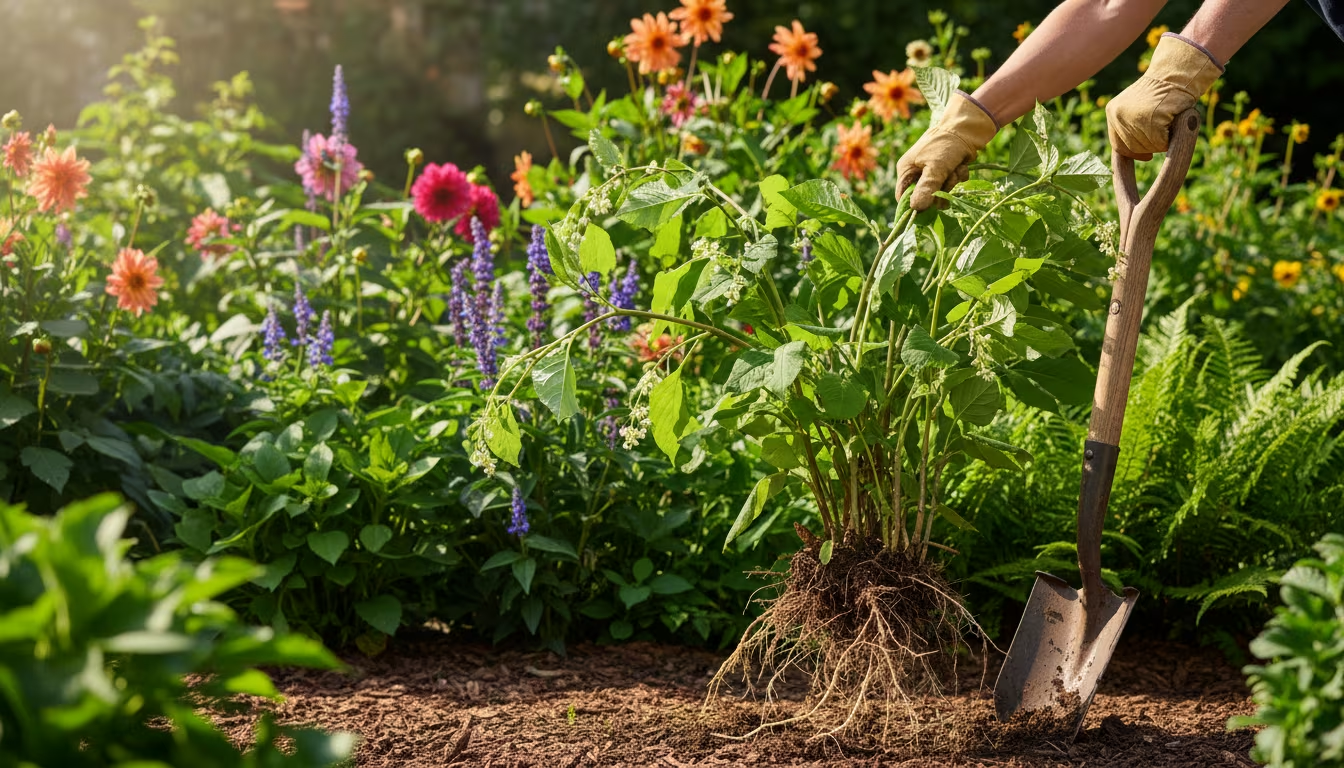
Confession time: I used to think my garden was a peaceful little haven. Then, one day, I looked around and realized a handful of plants had taken over, choking out everything I actually planted. It felt like a takeover, and honestly, a little overwhelming. Sound familiar?
Gardening can be amazing, but sometimes you've got unwelcome guests making themselves at home. This guide is all about spotting those plant invaders and getting them out of your space for good. We'll cover what they look like, why they're so darn persistent, and how to actually get rid of them without losing your mind (or your entire weekend).
Why This Actually Matters
Okay, so why should you care about a few weeds? Invasive plants aren't just annoying; they can seriously mess with your local ecosystem. They outcompete native plants, which are the food and shelter for local wildlife like birds and insects.
I learned this the hard way when I noticed way fewer butterflies in my yard. Turns out, the sprawling vine that had taken over my fence line wasn't providing anything for them. It was just... there. Taking up space and resources. It really hit home that a healthy garden means more than just looking pretty; it's about supporting life.
What Exactly Are Invasive Plants?
Think of invasive plants as the ultimate unwelcome guests. They're not from around here, and they're incredibly good at taking over. They spread aggressively, often outcompeting native plants for sunlight, water, and nutrients.
The key difference between a "weed" and an "invasive plant" is their impact. A regular weed might be a nuisance, but an invasive plant actively harms the environment and biodiversity. They're usually non-native and lack natural predators or controls in their new home, allowing them to spread unchecked.
The "Too Good to Be True" Spreaders
Many invasive plants are incredibly effective at reproducing. They can spread through seeds that travel on the wind or in animal droppings, or they can spread vegetatively through their roots or stems.
This means even a tiny piece left behind after you try to pull them can start a whole new plant. It’s frustrating, I know. It feels like you just battled a hydra.
Why Are They So Successful?
- Fast Growth: They often grow much faster than native plants, quickly shading out anything smaller.
- Aggressive Reproduction: Many produce a huge number of seeds or can spread rapidly from root fragments.
- Lack of Natural Enemies: Since they're non-native, local insects and diseases that might control them in their home territory aren't around.
- Adaptability: They can often tolerate a wide range of conditions, from dry to wet, sunny to shady.
Identifying Common Garden Invaders
This is where you become a plant detective. You need to know what you're looking for. Thankfully, many common invasives have pretty distinct characteristics.
The first step is to know your natives! Before you go pulling everything that looks unfamiliar, do a quick search for common plants in your region. Sometimes that "weed" is actually a beneficial native plant. Resources from your local extension office or native plant society are goldmines for this.
The Usual Suspects
There are tons of invasive plants out there, but a few pop up in gardens repeatedly. Getting familiar with these will give you a head start.
English Ivy (Hedera helix)
This one's a classic. It's a woody vine that climbs trees and structures, or it can spread as a ground cover. It has distinctive dark green, lobed leaves.
Why it's a problem: It smothers other plants and can even damage trees by constricting their growth and making them more susceptible to disease and wind damage. It also creates a monoculture, meaning it's the only thing growing.
Japanese Knotweed (Reynoutria japonica)
This is the one you REALLY don't want. It looks a bit like bamboo with hollow stems, large leaves, and frothy white flowers in late summer. It grows incredibly fast and can push through pavement.
Why it's a problem: It forms dense thickets that completely block out sunlight for other plants. Its roots can spread for yards and even cause structural damage to buildings and infrastructure. Seriously, it's a nightmare.
Garlic Mustard (Alliaria petiolata)
This is a biennial herb that's common in woodlands and gardens. It has heart-shaped leaves with scalloped edges that smell strongly of garlic when crushed. It typically bolts and flowers in its second year.
Why it's a problem: It forms dense stands that shade out wildflowers and tree seedlings. It also releases chemicals into the soil that inhibit the growth of other plants and harm beneficial soil fungi. That garlic smell? It's a warning sign.
Creeping Thistle (Cirsium arvense)
This is one tough thistle! It has spiny, deeply lobed leaves and pretty purple flowers. Its main issue is its extensive root system, which spreads underground.
Why it's a problem: It spreads relentlessly through its roots, creating dense patches that outcompete desirable plants for water and nutrients. It can be incredibly difficult to eradicate completely because of this underground network.
Canada Thistle (Cirsium canadense)
Wait, another thistle? Yes, and they're both problematic. Canada thistle also has spiny leaves and purple flowers but is often more upright and less prickly than creeping thistle. Its root system is also a major concern.
Why it's a problem: Similar to creeping thistle, it spreads aggressively via its roots, forming dense, impenetrable patches that crowd out other vegetation and can make areas unusable.
Butterfly Bush (Buddleja davidii)
This one is tricky because it's called "butterfly bush" and attracts butterflies. However, in many regions, it's invasive. It has long, lance-shaped leaves and showy spikes of fragrant flowers.
Why it's a problem: While butterflies love the nectar, it can outcompete native plants that are essential for the larval stage (caterpillars) of many native butterfly species. It also produces a massive amount of seeds that can spread far and wide.
How to Be Sure
If you're not 100% sure, don't despair. Take a clear photo of the plant, including its leaves, flowers (if any), and how it's growing. Then, use online resources.
Your local university extension office website is a great place to start. They often have photo guides and lists of invasive plants specific to your state or region. Native plant societies are also excellent resources. Sometimes, just showing a photo to a knowledgeable local nursery owner can help too.
The Real Fight: How To Get Rid of Them
Okay, you've identified the enemy. Now for the battle. Getting rid of invasive plants often takes persistence and a combination of methods. There's rarely a magic bullet, unfortunately.
The best approach usually depends on the type of plant, how established it is, and your own comfort level with different removal techniques. Don't get discouraged if it takes more than one try!
Step 1: Manual Removal (The Digging & Pulling Method)
For smaller infestations or less established plants, manual removal is your best bet. This means digging them up by the roots. It's labor-intensive, but it's effective and avoids chemicals.
The goal here is to get the entire root system. For plants like dandelions or garlic mustard, this is pretty straightforward. For something with a really deep taproot or a creeping root system, it's much harder.
What to Expect: This can be back-breaking work, especially for larger plants or dense patches. You'll likely get dirty. Wear gloves! Some plants have irritating sap.
Step 2: Smothering (The Sheet Method)
This is a fantastic non-chemical method for larger areas. You basically deprive the plant of sunlight, killing it over time. You'll need heavy-duty landscape fabric, thick cardboard, or old tarps.
Lay the material directly over the invasive plants, extending a good distance beyond the edges of the infestation. Weigh it down with rocks, bricks, or logs. Leave it in place for at least one full growing season, preferably longer.
What to Expect: It takes patience. You won't see results immediately, and the area will look unsightly for a while. Make sure the edges are well-sealed so light doesn't creep in.
Step 3: Cutting & Monitoring
For some larger invasives, like Japanese knotweed or certain vines, repeated cutting can weaken the plant over time. This is often a component of other methods, like manual removal or even as a precursor to chemical treatment.
Cut the plant back to the ground repeatedly throughout the growing season, whenever new growth appears. This depletes its energy reserves. It's not a standalone solution for most aggressive invasives, but it can be part of a larger strategy.
What to Expect: This requires consistent effort throughout the season. You might see the plant weaken, but it's unlikely to die from cutting alone. You'll need to combine this with digging or other methods.
Step 4: Chemical Control (Use With Caution!)
This is usually a last resort for me. If you're dealing with a widespread, aggressive infestation that manual removal just isn't touching, targeted herbicide application might be necessary. Always read and follow label directions very carefully.
Some herbicides work best when applied to cut stems (like for knotweed) to get the chemical directly into the plant's system. Others can be sprayed on the foliage. Choose an herbicide that targets broadleaf plants if you're trying to avoid harming grasses.
What to Expect: You need to be extremely careful to only treat the target plant and avoid drift onto desirable plants or water sources. Some invasives require specific types of herbicides or application methods. This can be stressful!
Step 5: Digging Deep for Root Systems
For plants with extensive rhizomes or deep taproots (like some thistles or knotweed), digging needs to be thorough. You might need a heavy-duty spade or even a mattock for tough root systems.
Go wider than you think you need to. Try to follow the root fragments as far as you can. It's brutal work, but missing even a small piece can mean the plant returns.
What to Expect: This is the most physically demanding method. You'll be digging for a long time and might need to make multiple passes over several seasons.
Step 6: Disposal is Key
This is super important and often overlooked! Don't just toss pulled invasive plants into your regular compost bin or leave them lying around. Many invasive plants can regrow from fragments or seeds left in piles.
Bag them securely in heavy-duty trash bags and dispose of them according to your local waste management guidelines. Some areas have specific recommendations for invasive plant disposal, like taking them to a designated landfill or green waste facility that can handle them properly.
What to Expect: You might need to buy extra trash bags. Don't just assume your regular compost will kill them; it's risky. Double-bagging is often a good idea.
Making It Stick: Preventing Re-infestation
Getting rid of invasive plants is only half the battle. The other half is making sure they don't come back and preventing new ones from taking hold.
This is where vigilance really pays off. It's a marathon, not a sprint. My own garden still has little surprises pop up every year, but I'm so much better at spotting them now.
Healthy Soil, Healthy Natives
The best defense against invasives is a strong offense: a healthy, thriving garden full of desirable plants. When your native plants and garden favorites are well-established, they can compete better with any newcomers.
Focus on building good soil health with compost, mulching, and proper watering. A dense planting of native species is your garden's best armor.
Mulch is Your Friend
A thick layer of mulch (2-4 inches) can suppress weed seeds and prevent dormant invasive seeds in the soil from germinating. It also helps retain moisture and improve soil health.
Just make sure you're not smothering your desirable plants, and replenish it as it breaks down. Avoid using mulch that contains invasive seeds itself (like some cheaper wood chip products).
Be a Watchful Neighbor
Invasive plant seeds can travel from nearby properties. Stay aware of what's happening in your neighbors' yards and in any undeveloped land nearby.
If you see an invasive plant taking hold on the edge of your property or in a shared space, address it early. A little effort now can save you a lot of work later.
Educate Yourself on New Additions
Before you buy any new plants for your garden, do a quick check to make sure they aren't known invasives in your area. Many nurseries are getting better about labeling, but it's always good to double-check.
Stick to native plants when possible! They're naturally adapted to your climate and provide the best support for local wildlife.
Common Mistakes (and How to Avoid Them)
We all make mistakes, especially when we're learning. With invasives, a few common errors can set your efforts back significantly.
One of the biggest pitfalls is not being thorough. You think you got it all, but a tiny root fragment survives, and BAM! It's back next year.
Mistake 1: Not Getting the Entire Root System
This is probably the number one reason people get frustrated. If you only pull off the top of the plant, leaving the roots, many invasives will just regrow. It's like pruning a weed – it just makes it bushier.
Solution: Dig deep and wide. Use a sturdy tool and be patient. If you're unsure, assume there's more root to get than you can see.
Mistake 2: Improper Disposal
Tossing invasives in the regular yard waste bin without checking local regulations, or worse, putting them in your home compost, can spread them. Some invasives can survive composting temperatures.
Solution: Bag them securely and research your local disposal options. When in doubt, treat them as regular trash.
Mistake 3: Giving Up Too Soon
Invasive plants are persistent. It's rare that you can get rid of them completely in one season. Seeing them come back can be disheartening.
Solution: Be persistent. Make a plan for follow-up checks throughout the season and into the next year. Celebrate the small victories – fewer plants this year is still a win!
Mistake 4: Treating the Wrong Plant
Accidentally removing native plants that are beneficial or treating them with herbicides is counterproductive. It damages your ecosystem and is a waste of effort.
Solution: Always identify a plant with certainty before removing it. Consult local resources if you're unsure.
Mistake 5: Not Addressing Re-infestation
You cleared an area, and now you think you're done. But seeds can blow in, or roots can spread from adjacent areas. Your job isn't finished once the visible plants are gone.
Solution: Regularly monitor cleared areas, especially for the first few years. Early detection is your best tool for preventing them from re-establishing.
The most effective way to manage invasive plants is through consistent, long-term effort, often combining multiple methods. Be patient with yourself and the process.
Frequently Asked Questions
What's the easiest invasive plant to remove?
Generally, annual invasives that spread only by seed (like some types of smartweed) are easier to manage than perennials with extensive root systems. If you catch them before they go to seed, pulling them is usually pretty simple.
Can I just mow over them?
Mowing can sometimes help control the spread of certain invasives by preventing them from seeding, but it rarely kills them, especially those with strong root systems. In fact, for some plants, mowing just encourages more growth. It's usually part of a larger strategy, not a solution on its own.
What if my neighbor's yard is full of invasive plants?
This is a tough one, and unfortunately, there's no easy fix. You can try talking to your neighbor politely about the issue, perhaps offering to help them tackle a small section. Sometimes, focusing on your own property and creating a strong buffer zone is the best you can do. Informing your local environmental agency might also be an option if the infestation is particularly severe and impacting a larger area.
How long does it take to get rid of invasive plants?
It depends entirely on the plant, the size of the infestation, and the methods you use. For small infestations of annuals, a single season might do it. For aggressive perennials with deep root systems, it can take several years of consistent effort to weaken and eradicate them. Think of it as reclaiming territory, step by step.
Is it really worth the effort to remove invasive plants?
Yes, absolutely! While it can feel like a daunting task, the benefits to your local ecosystem and the health of your garden are huge. By removing invasives, you're making space for native plants to thrive, supporting local wildlife, and creating a more resilient and beautiful environment. It’s an investment that pays off.
The Bottom Line
Dealing with invasive plants can feel like an uphill battle, but you're not alone! The most important takeaways are to identify them correctly, be persistent with removal, and prevent them from coming back.
Start small. Tackle one patch or one type of plant this season. Every little bit you remove makes a difference for your garden and the local environment. You've got this! 🌱