
Why Tool Libraries Let You Try Expensive Hobbies Before Committing

The tools are usually the real barrier to a new craft, not the skill. A table saw runs several hundred dollars and eats floor space; a starter metalworking kit of angle grinder, welding helmet, gloves, and stock adds up before you have made a single piece. A tool library removes that gamble. You pay a small annual membership and borrow professional-grade equipment the way you borrow a book, which lets you find out whether you actually enjoy woodworking or upholstery before spending hundreds on gear that might end up in the garage.
What a tool library is
A tool library is a community-run lending collection, usually operated by a non-profit, a maker space, or a branch of the public library system. Instead of books, it stocks tools: hand tools like hammers and screwdrivers, power tools like drills, circular saws, sanders, and random-orbit sanders, and specialized equipment such as sewing machines, pottery wheels, screen-printing kits, and woodworking or metalworking tools. Members pay a fee and check tools out for a set period. The model exists to share resources across a neighborhood so that expensive, occasionally-used equipment does not sit idle in a hundred separate garages.
How membership works
Joining is straightforward. You fill out an application, pay the fee, and attend a short orientation that covers safety and borrowing procedures. Some libraries require you to demonstrate basic competence on the more dangerous tools before you can take them home.
- Fees: commonly $50 to $150 per year for full access, with sliding-scale or volunteer-for-access options at many locations.
- Borrowing periods: typically one to two weeks, renewable if no one else is waiting; in-demand tools may carry shorter loan windows of three days.
- Condition: return tools on time and clean. Brush the sawdust off a saw, wipe debris from a drill, and coil cords neatly. Late or damaged returns usually incur fees, and repeated late returns can suspend borrowing privileges.
The real savings
The math is the strongest argument. Say you want to build a small bookshelf. A basic circular saw is $70 to $100; add a measuring tape ($15), safety glasses ($10), a speed square ($10), and a few clamps ($20 to $30) and you are past $100 for one project. A $75 annual membership covers all of those tools plus everything else in the collection for a year of projects.
The gap widens on bigger jobs. Restoring an old wooden chair might need a random-orbit sander, a palm router, and a set of woodworking chisels. Bought new, that is roughly $250 to $300. Borrowed for a week, it is a small loan fee on top of the membership. For a hobby you are still testing, that difference decides whether you ever start.
Space and access to better equipment
Storage is the quieter benefit. A scroll saw, a woodworking lathe, or a full set of clamps demands dedicated space that a small home or apartment does not have. Borrowing means the tools live at the library between projects and your floor stays clear.
The equipment also tends to be better than a beginner would buy. Tool libraries stock professional or semi-professional grade tools built for durability and precision, so you learn on gear that produces good results instead of fighting a cheap starter model. They also carry genuinely niche items, a book press for bookbinding, an anvil and forge for blacksmithing, that almost no one would purchase for a single experiment. Many libraries double as community hubs, running workshops and classes where a retired carpenter might walk you through a drill press or a fellow member shares upholstery tips over a shared bench.
How to find and join one
Finding a library takes a few minutes of searching, then a visit.
- Search online. Try "[your city] tool library," "tool lending library near me," or "community tool share." Check local government sites, community centers, and maker-space directories. If nothing turns up locally, widen the search to nearby towns.
- Check the inventory. On the library's site, look at membership fees, hours, and the tool list. Confirm they stock what your project needs, whether that is woodworking gear, sewing machines, or specific gardening equipment.
- Attend an orientation. Most require new members to attend one for safety and to learn the borrowing system. It is also where you meet the community and can ask questions.
- Join and borrow. Complete the paperwork, pay the fee, and reserve or pick up your first tool. Check that it works before you leave and that you understand its operation.
- Return it cleaned. Bring it back on time and in the condition you received it. Cleaning the tool is also a good moment to catch any developing fault.
For a sense of the wider movement, the Wikipedia entry on tool libraries outlines their history and how the lending model spread across cities.
Common mistakes to avoid
A few habits cause most of the friction with a shared collection.
Skipping the safety guidelines. Power tools cause serious injury when used wrong. Read the manuals and safety sheets, and ask for a refresher on any tool with unusual operating procedures before you switch it on.
Over-borrowing. These are shared resources. Take only what your current project needs and return it promptly, especially when you know someone else has requested it.
Returning tools dirty or damaged. Clean thoroughly after each use, and report any breakage immediately rather than trying to fix it yourself. Neglect leads to fees or suspended membership.
Forgetting the consumables. A borrowed sewing machine is useless without thread and fabric; a drill needs bits. Make a full project list that includes accessories, consumables like sandpaper and glue, and safety gear, and check what the library supplies before you arrive.
Frequently asked questions
What if there is no tool library in my town?
Check nearby cities, since many members drive twenty or thirty minutes for access. If nothing exists within range, look at maker spaces, which often rent bench time and tools by the month, or a hardware-store rental counter for one-off jobs. Some public libraries also lend a small "library of things" that includes basic tools even when there is no dedicated tool library.
Can I borrow tools for a commercial project?
Most libraries are aimed at hobbyists, DIYers, and community projects, and commercial use is often restricted or bumped to a higher membership tier. Check the specific library's rules before you rely on borrowed tools for paid work.
What happens if I damage a tool?
Normal wear is expected. Damage beyond that usually makes you responsible for the repair or replacement cost, so report any breakage immediately; catching it early often prevents a larger charge and keeps the tool available for other members.
If a pricey craft has been sitting on your someday list, look up whether your area has a tool library and borrow a hand saw and some scrap wood this weekend. It is the cheapest possible way to find out whether the hobby is for you.
First-project math:
| Item | Buy new | Tool library |
|---|---|---|
| Circular saw | $70–$100 | included |
| Tape, glasses, square, clamps | $35+ | included |
| Typical starter kit total | $250–$300 | $50–$150 per YEAR membership |
| Access options | — | sliding scale / volunteer-for-access at many |
Related Posts
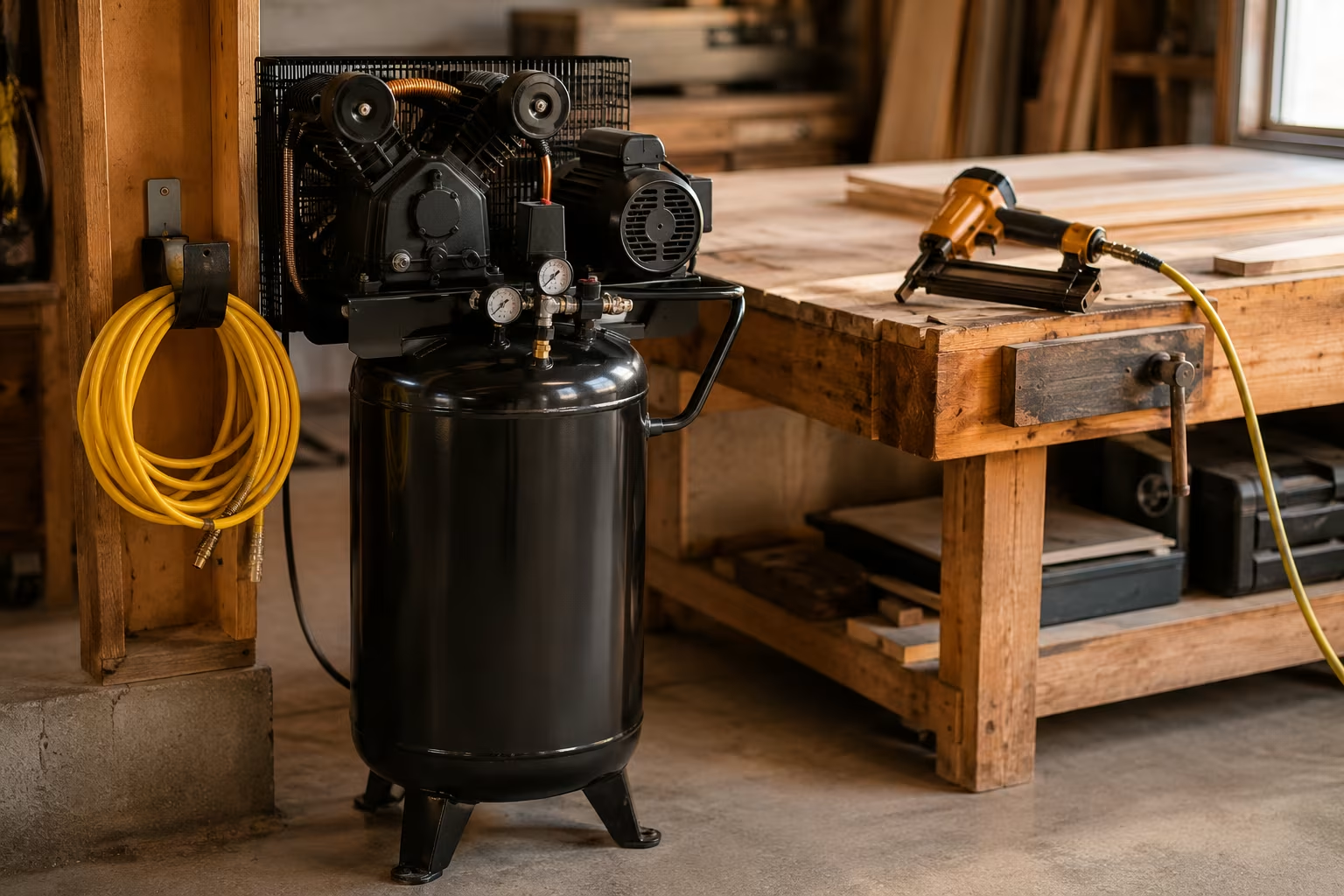
Workshop Air Compressor Sizing: CFM and SCFM
Air compressor matched to your tools means smooth work; too small means constant waiting. CFM...

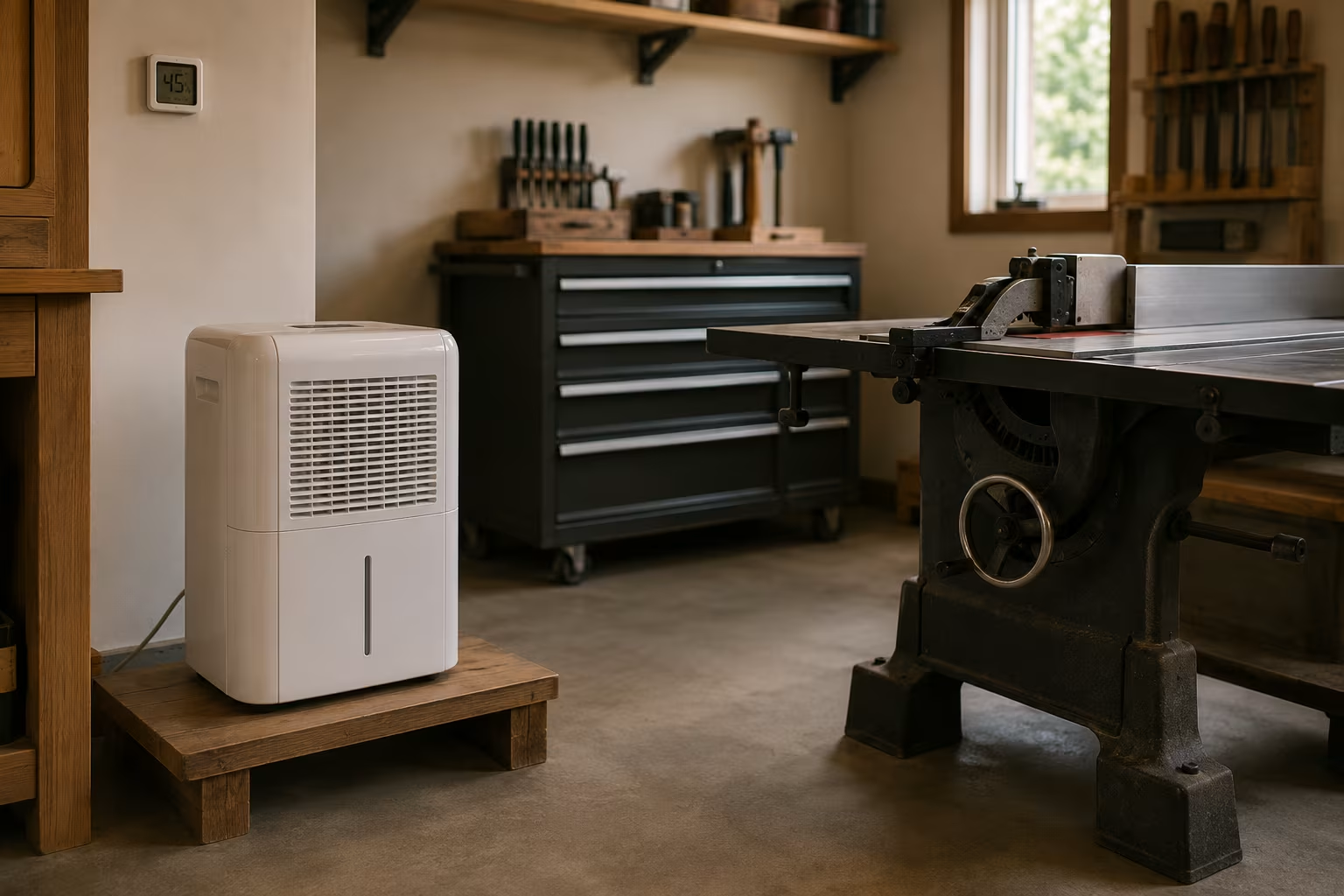
Workshop Dehumidifier Sizing for Tool Rust Prevention
Tools rust silently when shop humidity sits over 60%. The pint capacity that matches your shop...
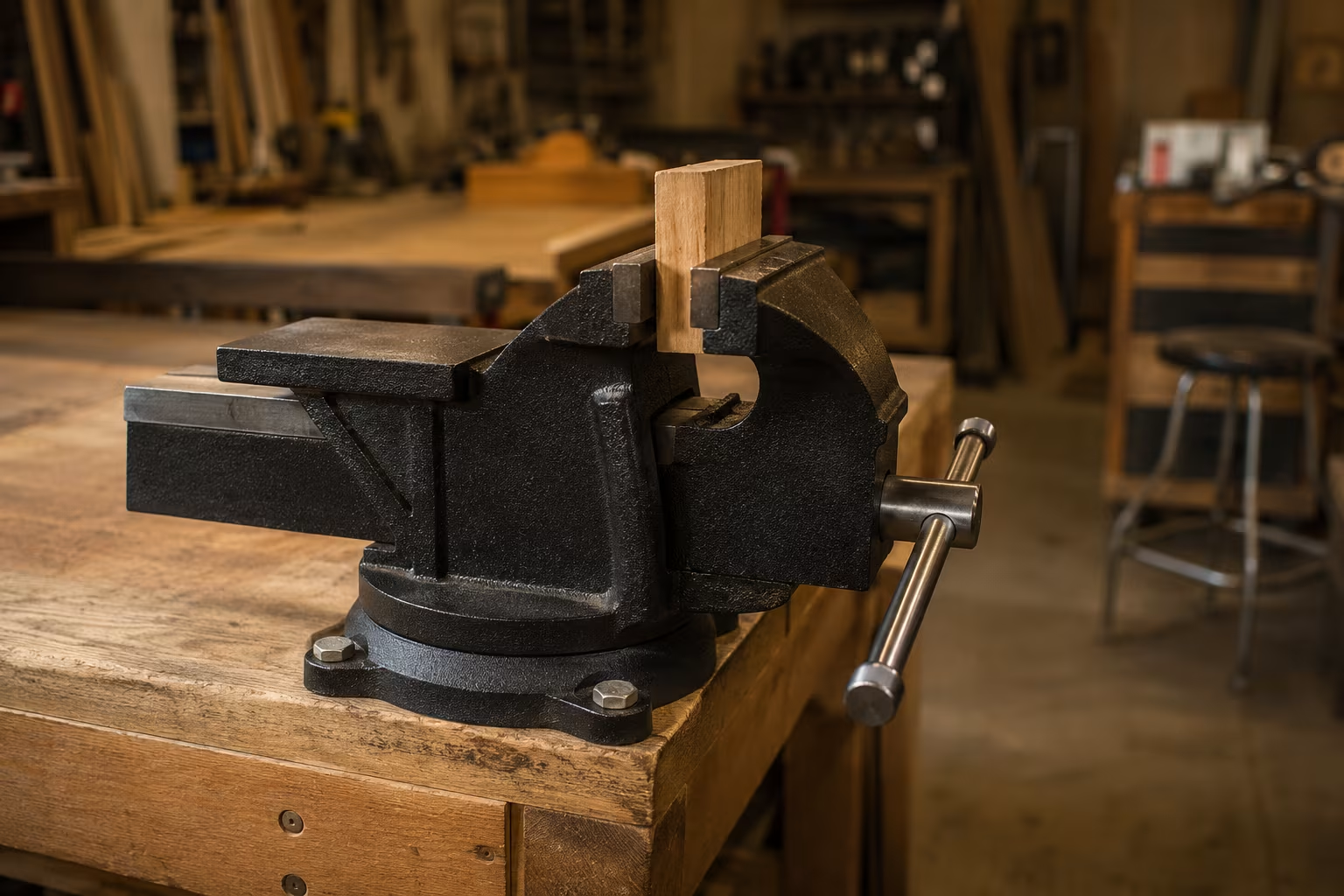
Bench Vise Sizing and Mounting for First-Time Buyers
Bench vises bolted to scrap plywood pull right out. The right size for the work, the right...
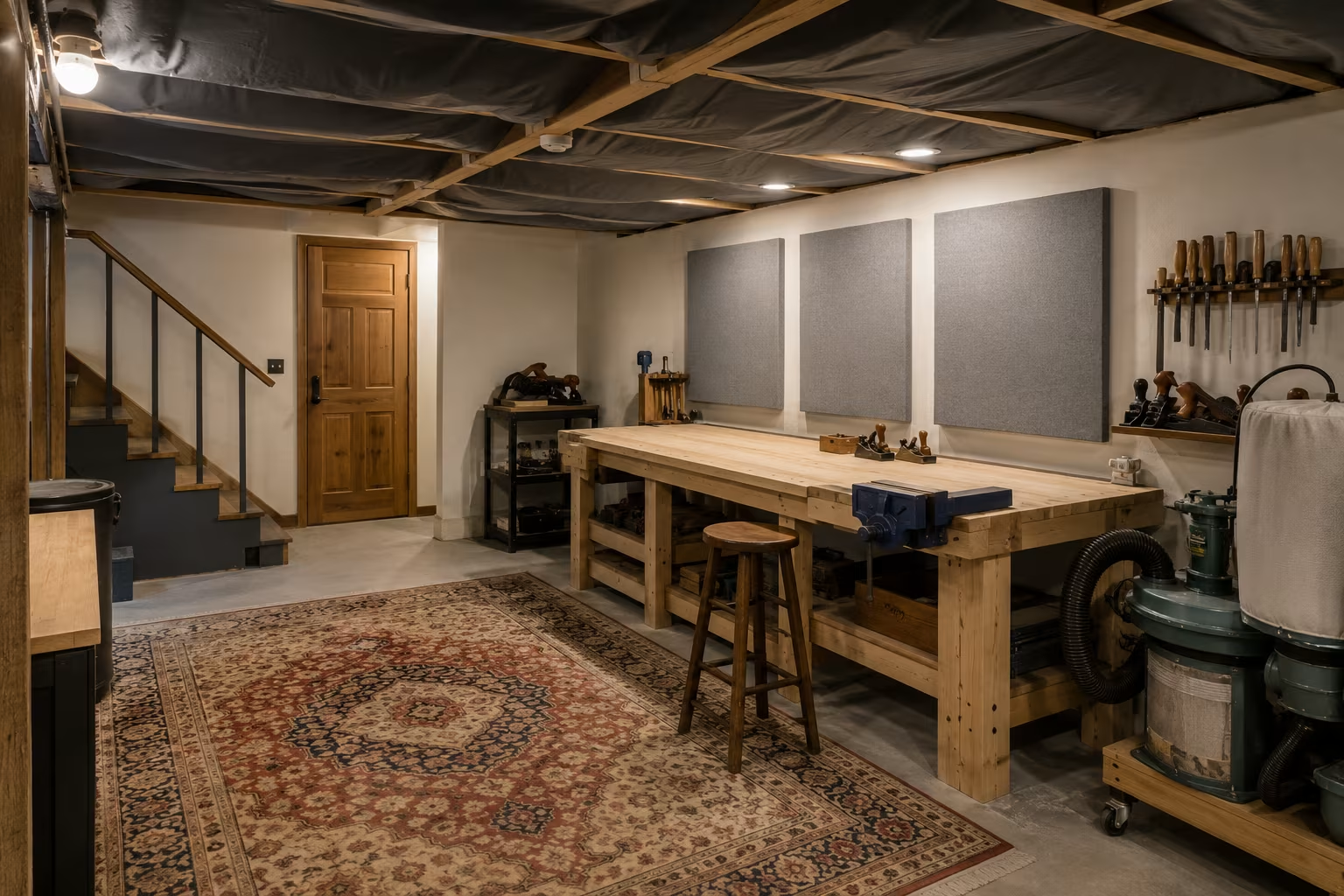
Soundproofing a Basement Workshop on a Renter's Budget
Basement shop noise traveling up to the family room is how you lose workshop privileges. The...
Comments
No comments yet. Be the first to share your thoughts!