
The Complete Guide to Needle Felting Realistic Animal Sculptures
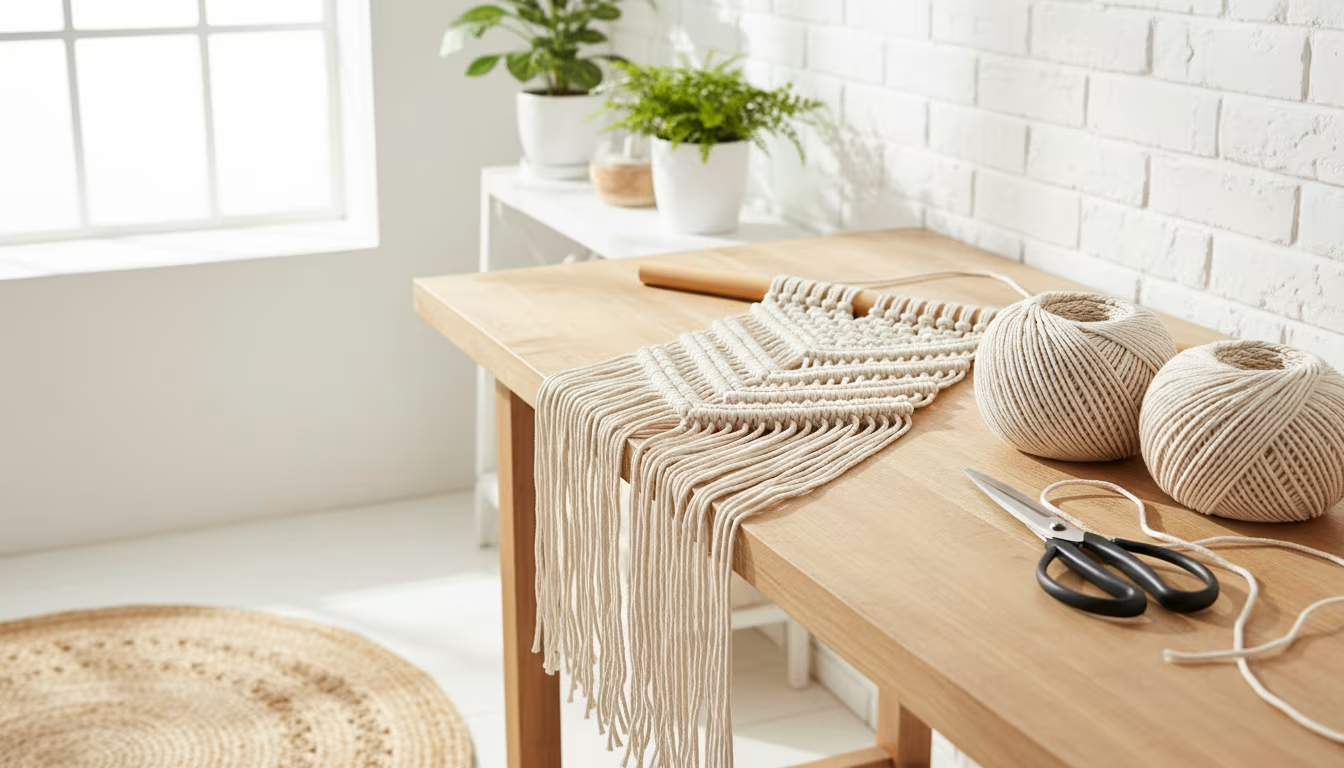
Needle felting turns loose wool fibers into a dense, sculptable material by repeatedly stabbing them with a barbed needle. The barbs catch and tangle the fibers, so the more you poke, the firmer the wool becomes and the more precisely it holds a shape. Realistic animal sculptures apply the same basic process with closer attention to anatomy, color blending, and surface detail. The technique is a branch of dry felting, and unlike wet felting it uses no water, which is what makes it forgiving: if a part looks wrong, you can add more wool and felt over it.
Tools and Materials You Need
Needle gauge is worth understanding before you buy, because it drives every stage of the work. Higher numbers mean finer needles: a 36-gauge has larger, more aggressive barbs that compact wool fast but leave visible holes, while a 40-gauge barely marks the surface and is reserved for the final smoothing pass. Triangular needles are the general workhorse, and star or spiral needles, with barbs on more edges, felt faster and are handy for surface finishing. Buying a small assortment rather than a single gauge lets you move from rough shaping to fine detail without fighting the tool.
A starter kit runs about $20 to $30 and covers most of what a first project requires. The core items:
- Felting needles in a few gauges. A 36-gauge (coarse) shapes and compacts quickly, a 38-gauge handles detail work, and a 40-gauge (fine) gives a smooth finish. A multi-needle tool speeds up the early bulk stage.
- A felting surface such as a high-density foam pad or a firm wool mat, which protects your work surface and your needles.
- Wool roving. Inexpensive core wool (usually undyed) builds bulk; colored topcoat wool covers the surface. Merino blends smoothly for color work, while Corriedale is a solid all-round felting wool.
- Finger guards in leather or rubber. The barbs are sharp and you will jab yourself without them.
- Small sharp scissors such as embroidery scissors for trimming stray fibers.
- An awl for making holes for eyes or whiskers, and craft pliers if you use wire armatures.
- E-6000 or fabric glue for securing glass eyes, beads, or whiskers that will not felt in on their own.
How the Core Shape Comes Together
Start with core wool and tear it rather than cut it, since torn ends interlock better. For a rounded body, loosely roll the wool into a ball or egg; for a long body like a weasel, roll a cylinder. Put on the finger guards, then poke firmly and evenly with the 36-gauge needle or a multi-needle tool, rotating the piece frequently so it compresses from all sides.
Keep going until the core is genuinely firm and holds its shape when squeezed, hard to bend rather than springy. An under-felted core is the single most common beginner failure, because a soft base cannot hold detail and leaves the finished sculpture floppy. At this stage you are building density and a rough silhouette, not refinement.
Using a Wire Armature for Posable Animals
For a sculpture you want to pose, or for thin legs that would otherwise sag, build a wire armature first. Pipe cleaners work for small pieces, while 18 to 22 gauge floral or aluminum wire suits anything larger. Bend the wire into a simple skeleton, twisting a spine with loops or extensions for legs and tail, then wrap each wire limb tightly with thin strips of core wool before felting so the wool grips the metal rather than spinning around it.
Felt the body over this wrapped frame as usual, keeping every wire end folded back on itself and fully buried in wool so no sharp point can work its way out later. An armature adds rigidity and lets you adjust a leg or neck angle after the fact, which is the difference between a static figure and one that reads as caught mid-movement. Skip it for simple rounded animals like a sleeping mouse, where a solid felted core holds the shape on its own.
Attaching the Head, Limbs, and Tail
Make each additional part separately from smaller amounts of core wool: a ball for the head, cylinders for legs, a thin cylinder or cone for a tail. Felt each one nearly firm but leave one end loose and fluffy, because that fluffy end is the join.
Hold the loose end against the body where the part belongs, then poke through the fibers into the body, working all the way around the joint and rotating as you go until it feels like one continuous piece rather than something stuck on. Reference photos matter here for angle and placement; getting proportions right early prevents problems that no amount of detailing can fix later. If a part looks wrong, pull it off and reattach it. Wool is forgiving that way.
Building Up Volume and Refining Contours
With the animal assembled, refine its shape using thin layers of core wool laid over areas that need a thicker chest or a more defined rump. These layers are for shaping and smoothing, not bulk. Felt them down with shallow pokes to avoid creating divots, and add wool in small amounts, since adding more is always easier than removing it.
Use your fingers to compress and guide the fibers as you poke, and switch to the 38-gauge needle for a smoother surface. The goal is to lock in the overall form, texture, and density before any color goes on.
Applying Topcoat Color and Blending
Tear off very thin wisps of colored wool, thinner than seems necessary, so you cover the core evenly without adding lumps. Lay a thin layer over an area and felt it with shallow, even 38-gauge pokes that attach only the surface fibers rather than driving deep into the core.
For gradients, layer a thin wisp of one color over another and felt lightly where they meet, or pull apart and mix two colors in your hand before applying them for a softer, more natural blend, the way a bird's wing or a tiger's coat shifts tone rather than changing at a hard line. Keep pokes shallow and even to hold a smooth, consistent color transition.
Work the color in a deliberate order: lay down the dominant base coat over the whole animal first, then add the second-most common markings, and finish with the smallest accents such as a white belly or dark ear tips. Building from largest area to smallest keeps the coverage even and stops later colors from bulging the surface. Because real animal coats are almost never a single flat tone, blending two or three closely related shades of the same color, rather than one uniform wool, is what pushes a sculpture from cartoon to convincing.
Sculpting the Face
The face carries most of the personality, and it is the part where realism is won or lost. For eyes, felt tiny black wool balls in place, use small black beads, or buy glass eyes made for felting; for glass eyes or beads, make an indentation with the awl and secure them with a strong adhesive such as E-6000. A single strand of white wool placed as a tiny highlight above the pupil adds a convincing spark.
For the nose, felt a small, tight ball of colored wool firmly into place and sculpt it with careful pokes to define its shape. The mouth is usually just a subtle groove: poke a gentle line or shallow V with the fine needle, or lay a single thin line of dark wool. Study reference photos for whether the eyes sit deep, whether the nose protrudes, and whether brow ridges exist, because those small reads make the biggest difference in how lifelike the piece looks.
Texture, Fur, and Finishing
Ears are two flat teardrop shapes felted separately with a fluffy base edge, then attached and felted around the base for an invisible join. Whiskers can be thin monofilament fishing line, horsehair, or stiff bristles set into awl-made holes with a dab of glue. For a shaggy coat, felt thin wisps of wool onto the surface and leave the ends loose; for short fur, use the fine needle with dense pokes to keep the surface tight, and a reverse felting needle, whose barbs face outward, can pull fibers out slightly for a naturally fuzzy texture. Thin patches of darker wool on the back or lighter wool on the belly mimic natural shading, which is also where a subtle surface application technique pays off.
Finish with the 40-gauge needle to smooth stray fibers and even the surface, firming any soft or wobbly spots so the piece feels dense and solid rather than squishy. Trim lingering loose fibers with sharp scissors, and if you used a wire armature, make sure every wire end is tucked away and fully covered by felt. A small realistic animal such as a mouse commonly takes 4 to 10 hours across several sessions; larger or more complex pieces can run past 20.
Common Mistakes and How to Avoid Them
Beyond an under-felted core, over-felting is the next trap: poking too hard or repeatedly in one spot with a coarse needle punches divots, so use even pressure and rotate often. Needles break when bent, levered, or driven in at an angle, so poke straight in and straight out and replace any bent needle before it snaps. Working in big chunks of wool instead of thin wisps produces lumpy results, so build up slowly. Skipping reference photos leads to proportion errors that detailing cannot rescue, so check them from the first shaping pokes. Finished pieces should not be washed, because water and agitation cause the wool to wet-felt, shrink, and distort; spot-clean dust with a lint roller or a barely damp cloth and let it air dry fully. Start with a simple animal, keep the core firm, and treat each lumpy attempt as fixable, since in most cases you can felt an oversized part down or add wool to build a small one back up.
Needle gauge map:
| Gauge | Job | Note |
|---|---|---|
| 36 (coarse) | shape and compact fast | leaves visible holes |
| 38 | detail work | the middle needle |
| 40 (fine) | smooth finishing | — |
| Armature | pipe cleaners small; 18–22 ga wire larger | E-6000 for glass eyes |
| Starter kit | $20–$30 | covers a first project |
Related Posts

Beginner Pottery Wheel Speed for Centering
Centering clay needs high wheel speed and firm pressure. Most beginners use too low speed.

Calligraphy Ink Comparison for Cotton Paper
Modern dip pen calligraphy needs ink that doesn't bleed on absorbent cotton paper. India ink...
Knitting Needle Materials Compared: Wood vs Metal vs Plastic
Knitting needle material changes how stitches slide, how cold or warm the needle feels, and how...
Beginner Watercolor Paper Choice for Textured Washes
Watercolor paper is the single biggest gear decision a beginner makes. Weight, surface texture...
Comments
No comments yet. Be the first to share your thoughts!