
Must-Have School Supplies for Students
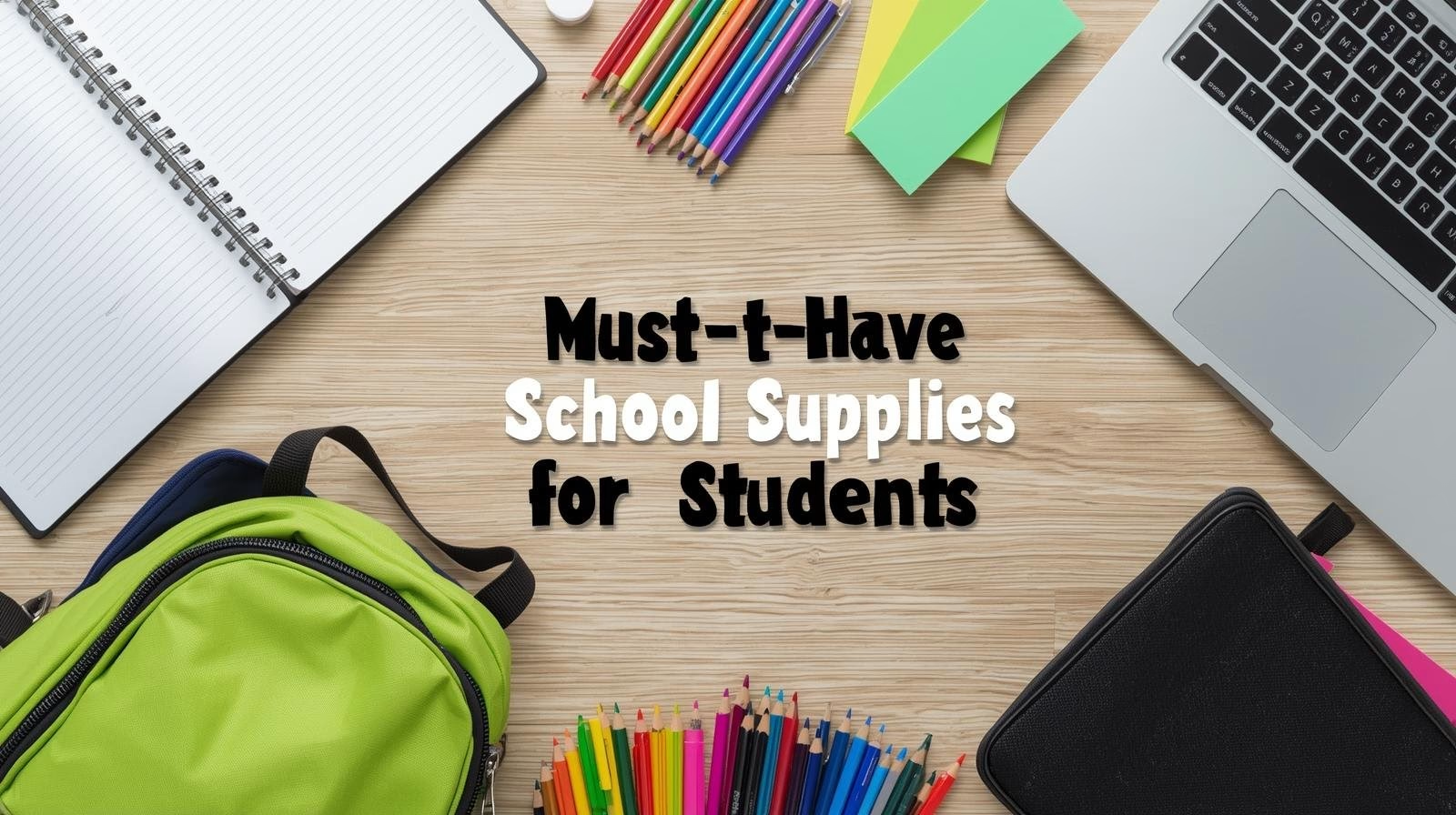
The right supplies do not guarantee a good school year, but the wrong ones create friction every single day: a pencil that will not sharpen, a binder that splits at the rings, a dead laptop mid-lecture. This list covers what actually earns its place in a backpack, organized so you can skip what does not apply to your grade level and avoid buying twice.
Shop the core items in late summer, when back-to-school promotions cut prices on pens, paper, and notebooks by a third or more, and buy the technology separately when student discounts appear rather than bundling everything into one expensive trip.
Stationery That Gets Used Daily
Basic writing tools are the foundation, and they disappear faster than anything else. Stock blue, black, and red ballpoint pens; a red pen matters for self-marking. Gel pens write more smoothly and suit note-heavy students, while ballpoints last longer and rarely smear, so a mix of both covers most situations. Add mechanical pencils in the 0.7 mm size, which resists snapping better than 0.5 mm, or a dozen standard No. 2 wooden pencils for tests that require them. Round out the kit with a white vinyl eraser, which lifts graphite more cleanly than the pink cap type, a roll of correction tape rather than liquid fluid that needs drying time, a small handheld sharpener with a shavings reservoir so it works away from a bin, three or four highlighter colors for a simple color-coding system, and a 30 cm ruler that doubles for math and general use. The word "stationery" itself has a long history worth a glance on the Wikipedia entry for stationery. Buy pens and pencils in bulk packs of a dozen or more; the per-unit price drops sharply and students lose them constantly, so treat the first pack as a starting reserve, not the whole year's supply.
Notebooks, Paper, and How to Sort It
Paper choice depends on how a student works. Spiral notebooks, ideally one 70-sheet book per subject in a distinct color, keep class notes together and flip open flat; college-ruled lines fit more writing per page for older students, while wide-ruled suits younger hands. Sturdier composition books suit journaling and lab notes because the sewn binding survives a semester in a bag without the wire snagging. For students who reorganize constantly, a single one-inch ring binder with loose-leaf paper and five-tab subject dividers beats separate notebooks, because pages can be added, removed, and resequenced as a course moves. Add a pad of sticky notes for reminders and page markers, and a stack of 3x5 index cards for flashcards and quick memorization drills. Choose covers made of poly rather than flimsy card stock; they cost a little more and survive being crushed at the bottom of a bag all year. A reinforced pencil pouch that clips into the binder rings keeps writing tools with the paper instead of loose in the bag.
Backpacks and Staying Organized
A backpack carries weight for hours, so fit matters more than looks. Loaded, it should never exceed 10 to 15 percent of the student's body weight, and both padded straps should be worn to spread the load across the shoulders. Look for a padded back panel, a separate laptop sleeve, and at least two main compartments. Pack heavier books flat against the back panel and lighter items toward the front so the weight sits close to the spine. Inside, small zip pouches keep pens, chargers, and cables from migrating to the bottom. For organizing paperwork at home, a desktop tray and a two-pocket folder per class stop loose handouts from vanishing.
Technology and Study Aids
Digital tools now sit alongside pens on most supply lists. A laptop or tablet handles research and typed assignments; a power bank of at least 10,000 mAh keeps it alive through a long day; and a USB drive of 32 GB or more gives you a physical backup when the cloud is unreachable. Wired earbuds avoid the charging and pairing headaches of wireless ones during class. A basic four-function calculator covers early grades, while high-school math and science usually require a scientific model, and some courses specify a graphing calculator by name, so confirm the exact model with the teacher before buying.
For studying itself, flashcards suit vocabulary and formulas, sticky flags mark textbook passages without damaging pages, and a small whiteboard with dry-erase markers turns problem-solving into something you can wipe and redo. A clip-on reading lamp saves late-night sessions in a shared room, and noise-canceling or well-sealed over-ear headphones block distraction during focused work in a busy house or library.
Health, Comfort, and Locker Setup
A few non-academic items keep small problems from derailing a day. A refillable water bottle of around 750 ml supports focus, since even mild dehydration dulls concentration. Keep a travel pack of tissues and a small bottle of hand sanitizer for allergy season and crowded classrooms, and stash a granola bar or piece of fruit to steady energy through back-to-back periods. Tuck a couple of adhesive bandages and any personal medication into an outer pocket where they are easy to reach.
For students with a locker, a small shelf insert doubles usable space and stops a stack of books from collapsing every time the door opens, and a magnetic cup holds spare pens and a mini whiteboard for reminders. A compact mirror and a couple of magnetic hooks for a jacket or gym bag finish a setup that keeps the daily carry light, because anything stored at school is weight the backpack no longer has to hold.
Essentials by Grade Level
Needs shift as students get older. This table maps the core kit to each stage so you buy what fits rather than a generic pile.
| Category | Elementary | Middle / High School | College |
|---|---|---|---|
| Writing | No. 2 pencils, jumbo eraser, crayons | Pens, mechanical pencils, highlighters | Pens, highlighters, sticky flags |
| Paper | Wide-ruled notebooks, folders | One notebook per subject, binder | Loose-leaf binder, legal pads |
| Technology | Optional tablet | Laptop or tablet, basic calculator | Laptop, power bank, 32 GB+ USB drive |
| Carry | Light backpack, lunch box | Ergonomic backpack, laptop sleeve | Backpack or laptop bag, planner |
| Extras | Glue sticks, safety scissors | Scientific calculator, index cards | Noise-canceling headphones, desk organizer |
Building the List Without Overspending
The total adds up fast, so sequence the buying. Start with the consumables in bulk during the back-to-school sales window, when pens, paper, and notebooks are discounted most, and hold off on technology until student-discount promotions appear separately. Reuse last year's binders, backpack, and calculator if they are still sound, since a scientific calculator or a well-made bag easily lasts several years. Thrift stores often carry barely used backpacks, desk organizers, and binders at a fraction of retail, and many software brands and electronics retailers cut prices once you verify enrollment. Refillable pens and recycled-paper notebooks trim both cost and waste over a full year. Above all, buy against the actual course requirements rather than a generic list, because the single most expensive mistake is buying a graphing calculator or specialty item a class never asks for.
Related Posts
Cordless Battery Platform Lock-In: How to Pick a Brand
Every cordless brand wants you locked in. The lock-in is real and one-direction. The brand...

Drill Bit Sets: Twist, Brad-Point, and Forstner Real-Use Map
Most home shops own three drill bits they actually use and twenty they bought once and forgot....
Beginner Cricut Blade Set: What You Actually Use Daily
The Cricut starter blade list is longer than most beginners need. The two or three blades that...
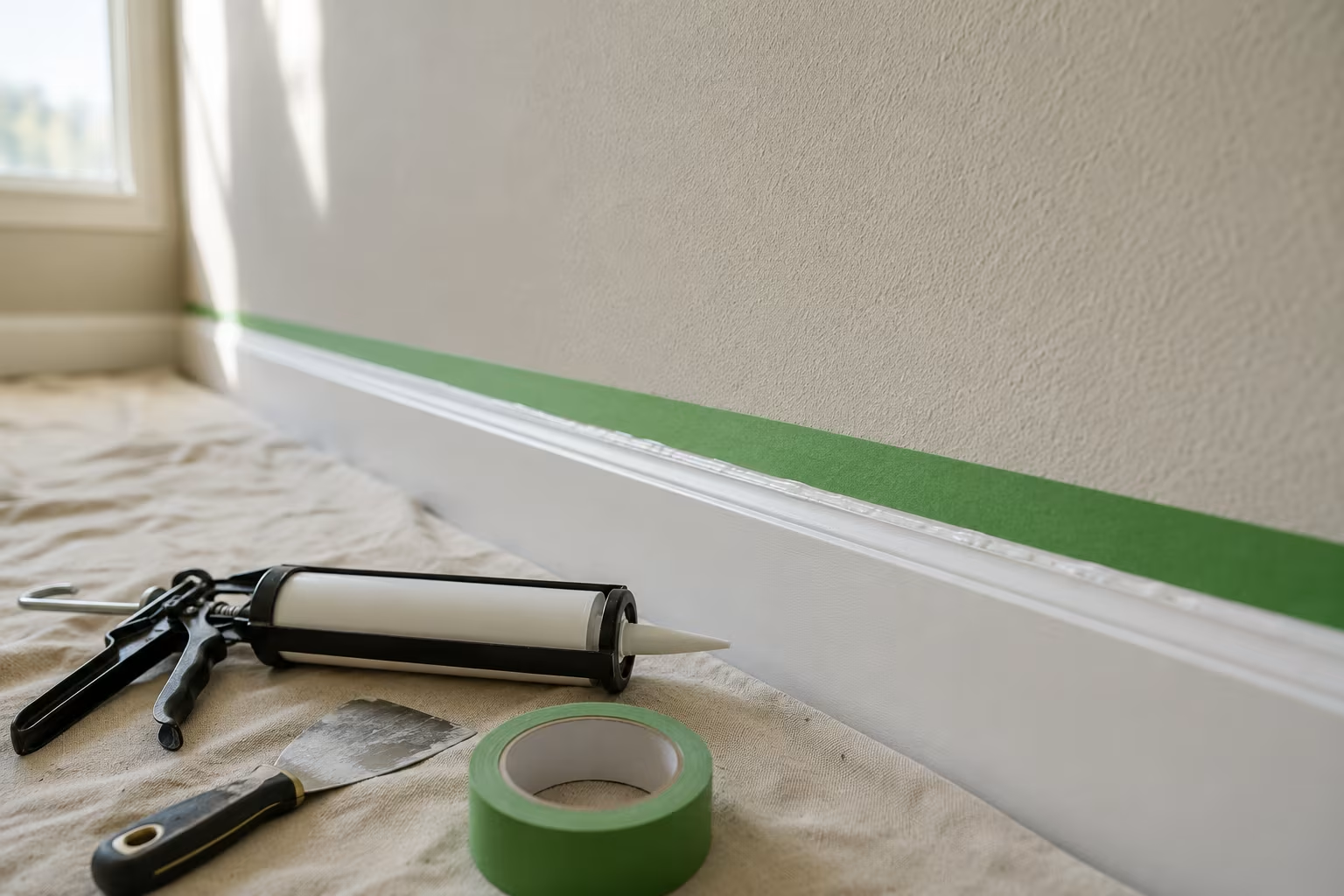
Painter's Tape for Crisp Lines on Textured Wall Surfaces
Standard blue tape bleeds on textured walls. The specialty tapes, caulk-edge-seal step, and...
Comments
No comments yet. Be the first to share your thoughts!