
Why Brad Nailers Are the Most Versatile Power Tool for Craft Rooms
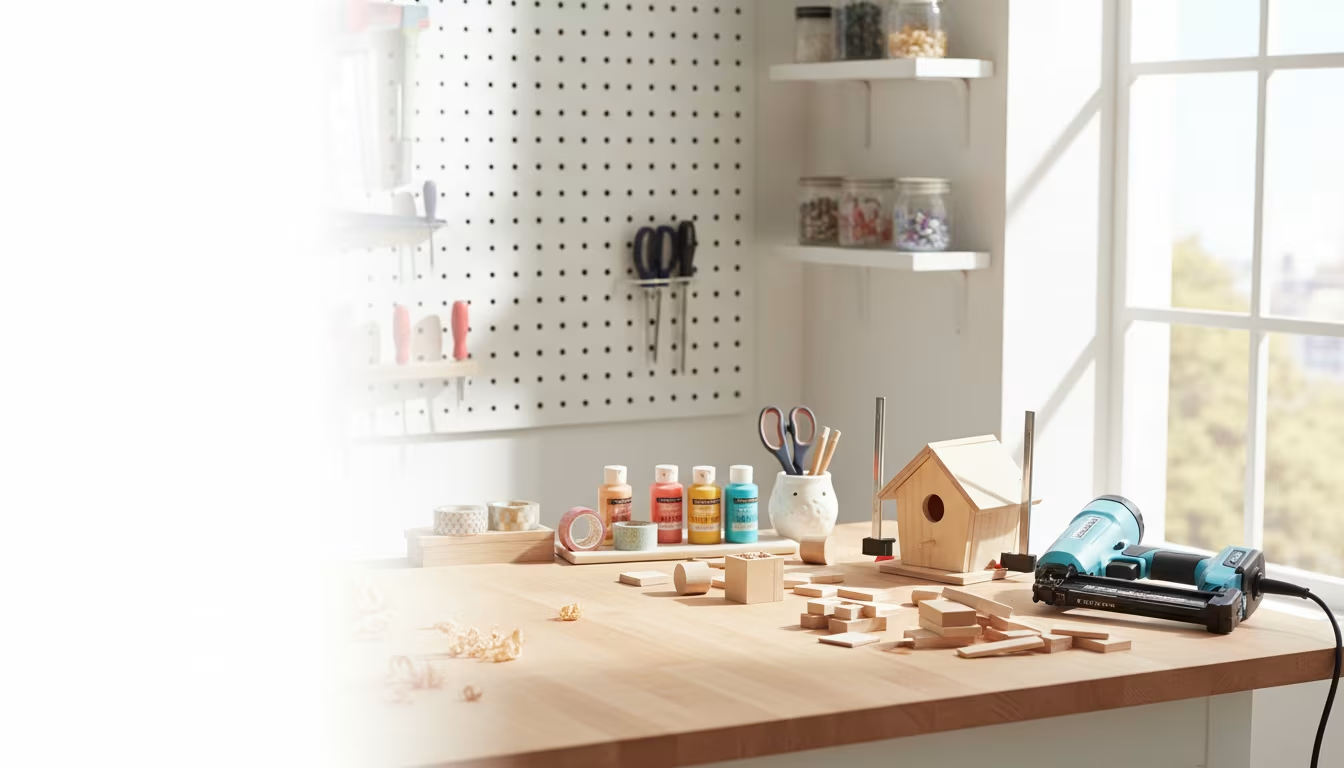
A brad nailer is one of the most useful power tools you can keep in a craft room, and most people underestimate it because they associate nail guns with framing and construction. A brad nailer drives thin, headless nails called brads into wood, holding pieces together instantly instead of waiting on glue and clamps. Building a spool organizer that would take an hour of glue-and-clamp work drops to about 20 minutes with a stronger joint. This covers what the tool is, the types available, what it can build, and how to run one without the common frustrations.
What a brad nailer actually is
A brad nailer fires thin 18-gauge nails into wood using compressed air or an electric mechanism, driving each brad with a single quick burst. The nails are much finer than framing nails, with heads so small they leave a hole that all but disappears after filling. That fine profile is the whole point: brads hold trim, small boxes, cabinets, and craft assemblies together without splitting delicate stock or leaving obvious nail heads. Think of it as a precision fastener for light, detailed work rather than structural building.
The three types and which one fits a craft room
Brad nailers come in three drive types, and the right one depends on your space and how often you will use it.
- Pneumatic: The most common and generally most powerful. It needs an air compressor and hose. Good if you already own a compressor, but the hose is awkward to manage in a small room.
- Cordless electric (battery): The sweet spot for most crafters. It runs on a rechargeable battery with no hose or compressor, so you move freely. It is bulkier and costs more upfront, but the convenience is hard to beat in a tight workspace.
- Corded electric: The cheapest option, plugged into a wall outlet, with no batteries to charge. The tradeoff is the cord, which is a nuisance to route around projects.
For a craft room, a cordless electric model usually makes the most sense. The freedom from hoses and cords matters when you are maneuvering around a table, and you can carry it outside for dusty jobs without dragging a compressor along.
Brads versus finish nails
Brad nailers are easy to confuse with finish nailers, and they are close cousins. The difference is nail size. Brads are very thin 18-gauge nails with tiny heads; finish nails are thicker, typically 15- or 16-gauge, with slightly larger heads. Brads are less likely to split thin or delicate wood and leave a nearly invisible hole, while finish nails hold more weight but leave a mark that usually needs filling. For most craft work, where you are joining thinner materials like plywood or MDF and appearance matters, brads are the right choice.
What you can build with one
The tool earns its place through range. It is not just for large woodworking; it shines on small, detailed builds.
Furniture fixes and upgrades
Loose trim on a thrifted dresser or a detached decorative piece takes a bit of wood glue and a couple of well-placed brads to repair. The same approach adds decorative molding to plain furniture, turning a basic cabinet or wooden box into something more detailed with minimal skill.
Small storage solutions
Drawer dividers, small bins, and custom organizers come together quickly. Cut thin plywood or MDF, add glue, and brad-nail the pieces into fitted dividers for craft drawers, or build small boxes to hold buttons, beads, and floss. Custom-fit storage is where a brad nailer sees the most use in a craft room.
Cardboard and mixed-media structures
For sturdy cardboard builds, such as playhouses or large dioramas, brads give stronger joints than glue or tape alone; use the shortest brads available so they do not punch through. On paper and mixed-media pieces, the nailer handles the structural wooden or cardboard framework rather than the thin paper itself, for example a frame for a papier-mache sculpture.
Picture frames and mirrors
Assembling frame corners is fast and tight with a brad nailer, and the small heads fill and sand almost invisibly. It also attaches backing boards neatly, replacing fiddly staples or hand-driven nails.
Matching brad length to your material
Getting the brad length right prevents both blowouts and weak joints. A common rule is to choose a brad roughly two to three times the thickness of the top piece you are fastening, without punching through the back of the assembly. The guide below covers typical craft-room stock; always confirm your specific nailer's compatible lengths and gauge in its manual.
| Material being fastened | Suggested brad length | Notes |
|---|---|---|
| 1/4-inch plywood or thin trim | 5/8 to 3/4 inch | Short brads avoid poking through the back |
| 1/2-inch plywood or MDF | 1 to 1 1/4 inch | The everyday craft-project range |
| 3/4-inch stock and box corners | 1 1/2 to 2 inch | Longer brads for more holding depth |
| Sturdy cardboard structures | 5/8 inch or shorter | Keep short so points do not pass through |
Getting started safely
The first time you pick one up it feels heavier and louder than expected, so build comfort before building a project.
- Gather supplies and safety gear. You need the nailer, its power source, and a box of correctly sized brads. Always wear safety glasses, without exception, since even a small nail can ricochet. Hearing protection helps too.
- Load the brads. Slide open the magazine, lay the strip in facing the correct way against the pusher, and close it until it clicks. Seat them straight; crooked brads jam. Load only what you need for the task so a bumped trigger cannot waste a full strip.
- Practice on scrap. Use a piece of scrap 2x4 or leftover plywood. Most brad nailers have a safety contact tip that must be pressed against the surface before the trigger fires. Press it firmly, pull the trigger, and get a feel for the recoil and how deep the head sits.
- Try a simple box or frame. Cut four sides to length, run a thin bead of glue along one edge, butt the next piece at 90 degrees, and drive two or three brads along each joint. You get a finished box in minutes and practice square joints.
- Fill the holes. Once the glue is dry, press wood filler or spackle into each hole, let it cure, then sand flush. After sanding you can paint, stain, or seal, and the fasteners vanish.
Common problems and how to fix them
Splitting the wood. Most likely near an edge or in thin plywood and veneers. Use the shortest brad that works, keep away from the very edge, and for delicate stock rely on glue and clamps as the main bond with brads only holding it while it cures.
Jams and misfires. Usually the brads are loaded wrong, the battery is low, or the compressor is underpowered. Disconnect the power or air first, then open the nose to clear the jam per the manual, and recheck the loading.
Accidental double-fire. Bumping the trigger or the contact tip can throw an extra nail. Keep your finger off the trigger unless you are actively nailing, and stay aware of where the contact tip is resting.
Nails too deep or too shallow. This is the depth setting on electric models or the air pressure on pneumatic ones. Practice on scrap and adjust until the head sits just below the surface, countersunk enough to fill but not blown through the wood.
Questions people ask
Do I need a compressor?
Not necessarily. Pneumatic models need one, but cordless battery-powered brad nailers run without a compressor or hose, which is the most convenient setup for a home craft room.
Can I skip the wood glue?
Not for anything that needs to last. Brads provide mechanical hold, but glue creates the real bond between the pieces. Use the nailer to hold parts in place while the glue cures, not as the sole fastener.
Is it worth it for only small projects?
If those small projects involve assembling wood at all, such as boxes, organizers, or frames, the time saved and the cleaner, stronger joints usually justify a modest cordless model.
Buy the correct brads before the tool ever touches a real project, then spend ten minutes firing into scrap to dial in the depth setting for the material you use most. That short practice session is what separates a clean, near-invisible fastener from a split edge or a proud nail head, and it makes the first actual build go smoothly.
Related Posts
Caulk Types Compared: Silicone vs Latex vs Hybrid
Caulk choice depends on the joint's water exposure, movement, paintability, and life expectancy....

Cordless Battery Platform Lock-In: How to Pick a Brand
Every cordless brand wants you locked in. The lock-in is real and one-direction. The brand...
Drill Bit Sets: Twist, Brad-Point, and Forstner Real-Use Map
Most home shops own three drill bits they actually use and twenty they bought once and forgot....
Beginner Cricut Blade Set: What You Actually Use Daily
The Cricut starter blade list is longer than most beginners need. The two or three blades that...
Comments
No comments yet. Be the first to share your thoughts!