
Why Makerspaces Are Replacing Traditional Hobby Stores in Cities
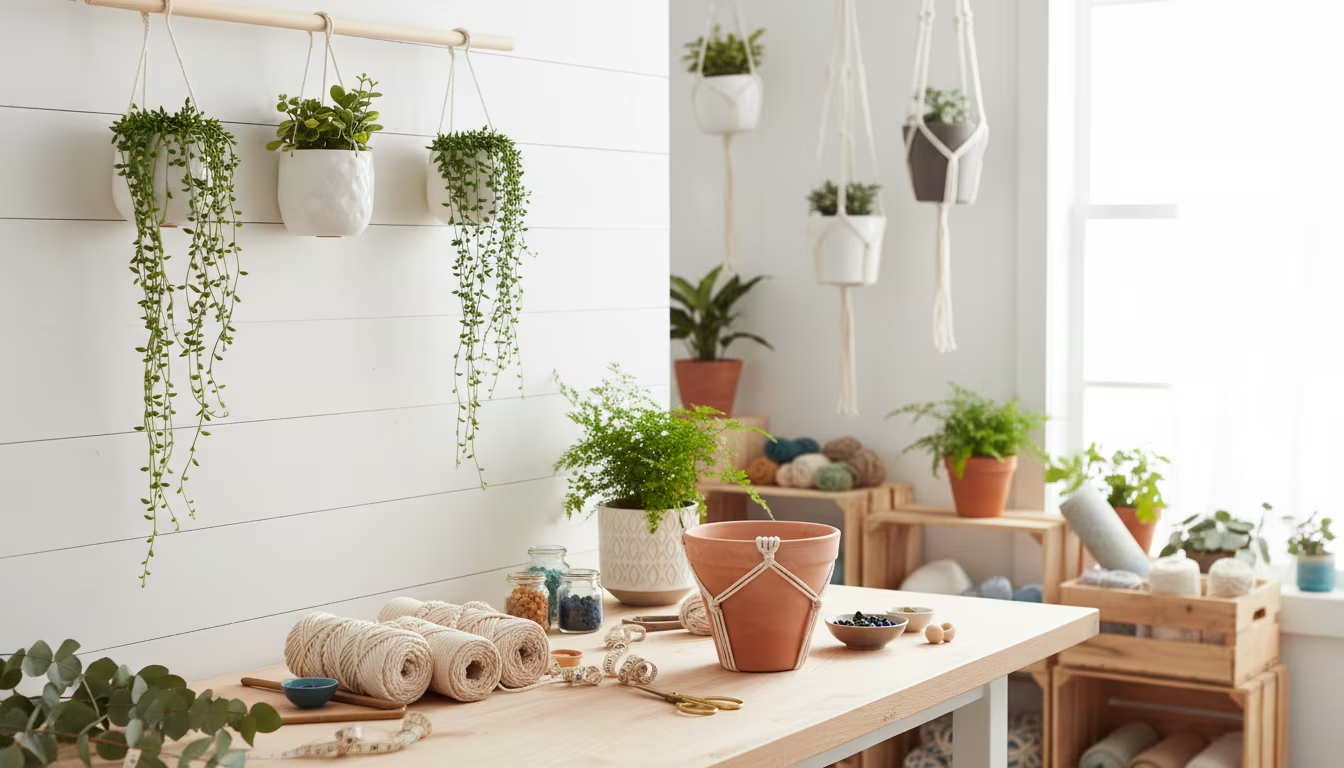
The barrier to most new hobbies is rarely interest; it is the price of the equipment and the space to use it. A table saw runs $500 or more, a laser cutter costs thousands, and a pottery kiln needs a dedicated corner and its own wiring. A makerspace, a shared membership workshop, removes that upfront wall by letting you use industrial tools for a monthly fee instead of buying them. That model is why makerspaces have spread across cities and increasingly into smaller towns, drawing hobbyists who would otherwise stall before starting.
What a Makerspace Provides
A makerspace is a shared workshop stocked with equipment most people cannot justify buying or housing. Beyond the machines, it functions as a learning center and a community. The value comes down to three things.
Access to expensive tools. A typical space holds gear worth far more than any single member could afford: table saws, CNC routers, 3D printers, laser cutters, vinyl cutters, plasma cutters, welding stations, and pottery wheels. Instead of spending $1,500 on a woodworking planer, you pay a membership and use one when a project needs it. Even shared infrastructure like a proper dust-collection system is a real benefit. You can also test crafts without committing: try glass etching on the sandblaster, custom shirts on the screen-printing setup, or intricate cuts on the laser before buying anything of your own.
Instruction and mentorship. Nearly every makerspace runs safety classes and workshops on operating its tools, and a great deal of informal learning happens alongside them. Working next to people who are experts in different fields means a stuck joinery cut or a jig question often gets solved in minutes rather than hours of trial and error.
Community. A room full of people working on different projects but sharing a passion for making generates ideas, tips, and occasional collaborations. It also replaces the isolation of working alone in a garage with a built-in support system, and extra eyes on a project regularly catch problems you would miss. The hackerspace and makerspace movement grew out of exactly this mix of shared tools and shared knowledge.
How to Find and Join One
Getting started is straightforward, and most spaces actively welcome newcomers. Work through it in order:
- Search broadly. Try "makerspace near me," "hackerspace [your city]," and "community workshop [your city]." Also check alternate names like fab lab, tech shop, or unique local names, since not every space uses the word makerspace.
- Match the tools to your craft. Review each space's equipment list, usually on an About or Tools page. If you want a CNC router or a specific screen-printing rig, confirm it is actually there; spaces vary and some lean toward electronics, textiles, or digital fabrication.
- Compare membership tiers. Fees commonly range from around $40 a month for basic access during set hours to $150 or more for 24/7 access with project storage. Many also sell day passes or project-specific rates for one-off use.
- Visit in person. Take a free tour, open-build night, or open house. Watch the tools in use, talk to members and staff, and gauge the community, cleanliness, and atmosphere before committing.
- Take the intro safety class. Most spaces require a safety class before you can use the big machines like table saws, laser cutters, and CNC routers. Even if you have used a similar tool, the class covers that space's specific equipment and protocols, and it is a low-pressure way to meet people.
Common Missteps to Avoid
A few mistakes trip up new members more than any others:
- Skipping proper training. Watching videos is not the same as being checked out on an industrial tool. Take the required safety classes and ask when unsure; most makers would far rather answer a question than see someone hurt or a machine damaged.
- Not respecting shared space. Leaving messes, monopolizing a tool, or not returning items sours the environment fast. Clean up, put tools back, and leave equipment better than you found it, because someone is waiting to use that drill press next.
- Over-committing early. Signing up for the top 24/7 tier before you know your real usage often means paying for access you do not use. Start with a lower tier or day passes and upgrade once you know how often you actually go.
- Being afraid to ask. Everyone started as a beginner. A simple "how did you get that cut so clean?" usually earns a generous answer and breaks the ice with the community.
Frequently Asked Questions
Is a makerspace really cheaper than buying tools?
For big-ticket items, yes. A membership might be $75 a month, while a decent table saw runs $500 and a laser cutter costs thousands. If you only need such tools occasionally or want to try several crafts, membership is the clear budget choice.
Do I need to be an expert to join?
No. Many makerspaces are built for beginners, with intro classes and patient members happy to help. You will find every level there, from first-timers to professionals; curiosity matters more than experience.
What if I only do one craft, like paper art?
Even single-craft makers benefit. A laser cutter handles intricate paper cuts in minutes, a large-format printer produces oversized backdrops, and a vinyl cutter makes custom stencils and stickers, opening precise possibilities that are hard to achieve by hand.
How long does it take to learn a new tool?
A basic safety class for a band saw or 3D printer often runs a couple of hours. Getting genuinely comfortable takes practice, maybe a few weeks of regular use, but structured instruction and on-hand help make it far faster than learning alone.
Is it worth it if I already have a home workshop?
Often, yes. A makerspace gives access to tools you likely lack room for, such as a metal shop, plasma cutter, or spray booth, plus community and a change of scenery. Think of it as an extension of your setup rather than a replacement.
If cost or space has kept a craft on your someday list, the practical next step is to find one nearby, take the tour, and sign up for a beginner class. For under the price of a single power tool, you get access to a full shop and the people who know how to run it. Skills like hand-stamped metal jewelry made without expensive tools become even easier once a shared workshop puts the right equipment within reach.
Own vs. share, in numbers:
| Item | Buy it | Makerspace |
|---|---|---|
| Table saw | $500+ | included in membership |
| Woodworking planer | ~$1,500 | included |
| Laser cutter | thousands | included |
| Membership | — | ~$40/mo basic hours → $150+/mo for 24/7 + storage |
| Safety class | — | a couple of hours per machine |
Related Posts
Workshop Air Compressor Sizing: CFM and SCFM
Air compressor matched to your tools means smooth work; too small means constant waiting. CFM...

Workshop Dehumidifier Sizing for Tool Rust Prevention
Tools rust silently when shop humidity sits over 60%. The pint capacity that matches your shop...
Bench Vise Sizing and Mounting for First-Time Buyers
Bench vises bolted to scrap plywood pull right out. The right size for the work, the right...
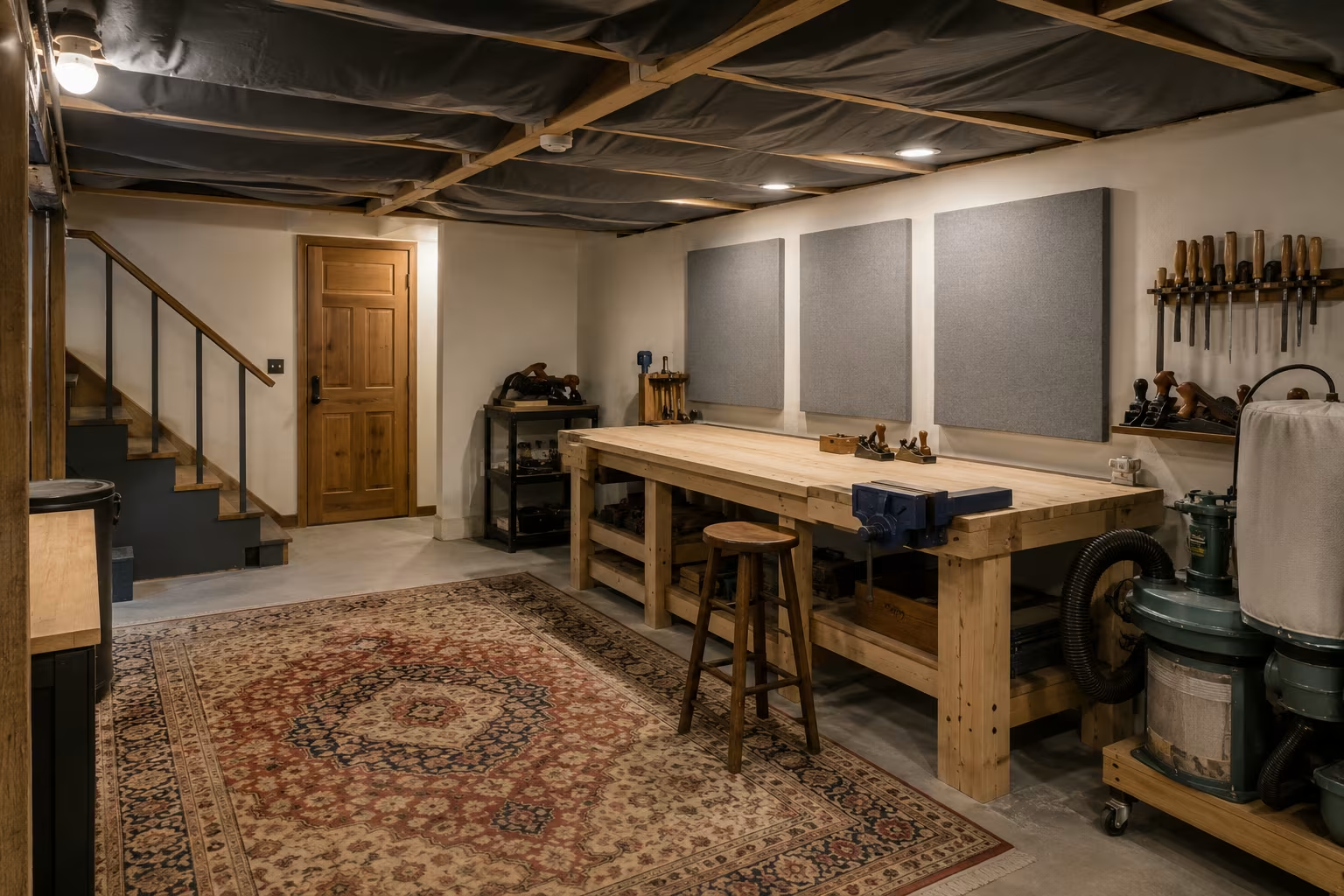
Soundproofing a Basement Workshop on a Renter's Budget
Basement shop noise traveling up to the family room is how you lose workshop privileges. The...
Comments
No comments yet. Be the first to share your thoughts!