
How to Use Oversized Art to Simplify Your Wall Decor Strategy

One large piece of art can settle a blank or cluttered wall faster than a dozen small frames. Instead of arranging and rearranging a gallery wall, you make a single decision that anchors the room, sets a focal point, and leaves the surrounding space calm. Oversized art also tends to cost less than people expect, since a $20 yard-sale canvas or a thrifted frame filled with your own fabric can do the work of an entire wall's worth of prints. The catch is scale, placement, and hanging hardware, and getting those three right is the whole job.
Why One Large Piece Simplifies a Wall
A gallery wall requires you to balance sizes, spacing, and dozens of nail holes, and small errors compound across the whole arrangement. A single oversized piece removes that math. It gives the eye one clear place to land, which reads as a deliberate design choice rather than an afterthought. It also reduces visual noise: scattering many small objects makes a wall feel busy, while one large work creates breathing room. And it is often cheaper, because one big canvas frequently costs less than several framed prints once you add up frames and mats.
What Counts as Oversized
"Oversized" is about proportion, not a fixed measurement. The piece should be large relative to the wall and to the furniture beneath it. A useful rule: art hung above furniture should span roughly two-thirds to three-quarters the width of that furniture. A 30-by-40-inch print that feels large on its own can still look like a postage stamp above a long sofa or a king bed. Before buying, tape the rough dimensions onto the wall with painter's tape so you can judge the true scale in place, then consider going a little bigger than your first instinct.
The table below gives working targets for common furniture widths and the eye-level height most pieces are hung at.
| Furniture below | Typical width | Target art width (approx. 2/3–3/4) | Hang height |
|---|---|---|---|
| Standalone wall | — | At least 40 in. on one side | Center at 57–60 in. from floor |
| Sofa | 84 in. | 56–63 in. | Bottom edge 6–8 in. above sofa back |
| Console table | 48 in. | 32–36 in. | Bottom edge 6–10 in. above top |
| King bed | 76 in. | 50–57 in. | Bottom edge 6–9 in. above headboard |
Sourcing Affordable Oversized Art
Thrift stores, estate sales, and flea markets are the most reliable sources for large pieces under $50. Look past the image itself: a dated floral canvas is worth buying for a good frame, and canvases can be painted over entirely. Browsing local thrift stores regularly turns up frames and canvases that only need a fresh coat of paint or a swapped insert. Habitat for Humanity ReStore locations, run by the Habitat for Humanity organization, are another good hunting ground for large empty frames and salvaged materials at low prices.
Beyond secondhand, you can order a large digital print and have it produced at a local print shop, hang an oversized tapestry or textile, or use a big decorative mirror as your statement piece. Do-it-yourself options are the cheapest of all: an abstract painted on a large canvas with leftover house paint, or a piece of plywood covered in salvaged wallpaper inside a thrifted frame, can look professional for near nothing.
Choosing Your Medium
The "canvas" does not have to be a stretched painting. A framed print reads polished and formal; an unframed canvas feels more contemporary. Textiles such as a vintage rug or a woven wall hanging add texture and warmth that flat art cannot. A large framed mirror doubles as art while reflecting light and making the room feel more open. An empty frame is a medium in itself: fill it with tie-dyed fabric, a painted panel, or wallpaper remnants to build a custom piece for the price of the frame. Match the medium to the room's mood and to your budget rather than defaulting to a bought print.
Orientation is part of the choice too. A horizontal, landscape-format piece suits the space above a sofa or console because it echoes the furniture's width, while a tall vertical piece works better on a narrow stretch of wall or beside a doorway. Square formats are the most forgiving and read as contemporary. If you are printing a digital file, check the aspect ratio against the wall you taped out so the finished piece fills the space you intended rather than arriving smaller or more cropped than expected.
Placement and Hanging Height
The standard is to hang art so its center sits at eye level, roughly 57 to 60 inches from the floor, but you adjust over furniture. Above a sofa, keep the bottom edge about 6 to 8 inches above the sofa back so the art connects visually to the seating instead of floating. On a standalone wall, stay closer to the eye-level rule. Before committing to nail holes, hold the piece up or have someone help, step back, and check how it relates to the furniture, curtains, and other objects in the room. Hanging too high is the most common error and makes a space feel disconnected; when unsure, err slightly lower.
Hanging Heavy Pieces Safely
Large art can be heavy, so the hardware matters more than for a small frame. Locate wall studs with a stud finder and drive screws into them for substantial pieces. Where a stud is not available, use heavy-duty drywall anchors or toggle bolts rated for the weight, and always compare the hardware's rating to the estimated weight of the art. For big pieces, use two D-rings or two picture-wire anchor points spaced apart rather than a single central hook; this distributes the load and makes leveling far easier. A homemade fabric-over-frame piece, for example, should hang from picture wire fixed to two anchor points in studs.
Keeping It Simple Around the Piece
The value of oversized art is that it stands alone, so resist filling the wall around it. Adding small frames, shelves, or trinkets nearby quickly undoes the clean look you were after. Keep the surrounding area minimal: a single plant on a nearby table or a couple of books is plenty. A console table below the piece can hold one or two objects without competing. If a wall still feels bare, the fix is usually to let the art breathe rather than to add more around it.
Common Mistakes to Avoid
Choosing something almost-but-not-quite oversized. A piece that is only slightly larger than a poster does not command the wall. Tape out the size, then push it bigger; the genuinely dramatic scale is usually larger than you first imagine.
Ignoring furniture and room flow. Art that is much wider or narrower than the furniture below looks unbalanced, and a huge piece can overwhelm a narrow hallway. Step back and read the whole wall as one composition.
Hanging too high. Keep the center near eye level and, over furniture, keep the 6-to-8-inch gap above the sofa back. Starting high makes the room feel formal and cold.
Over-accessorizing. Three shelves of trinkets and a small gallery wall around a big piece defeat its purpose. Let it carry the wall.
Fearing DIY. Oversized art does not have to be professionally made. Painted abstracts, stretched patterned fabric, and repurposed thrift finds all work at scale and often feel more personal.
Frequently Asked Questions
How big is oversized, exactly?
There is no single number because it depends on proportion. For a typical living-room wall, aim for at least 40 inches on one side, often larger. Above a sofa, target at least two-thirds the sofa's width.
Where can I find affordable oversized art?
Thrift stores, estate sales, and flea markets for large canvases and frames; local print shops for enlarged digital files; and textiles such as patterned fabric stretched over a frame or hung directly.
Can I use oversized art in a small room?
Yes. A single large piece can make a small room feel more expansive and intentional by avoiding the visual clutter of many small items. It draws the eye and helps a room feel larger. Just watch how far the piece projects from the wall.
Can a large mirror stand in for art?
Yes. A big decorative mirror functions as an oversized piece, reflects light, and makes a room feel larger. Match its frame and style to the room.
How do I hang something very heavy?
Find studs with a stud finder and screw directly into them, or use toggle bolts and high-rated drywall anchors. Use at least two spaced anchor points for stability and check the weight rating.
What kind of art works best at large scale?
Abstracts, minimalist designs, landscapes, and graphic prints read well from a distance because they do not depend on fine detail. Bold color, texture, or sweeping composition makes the strongest impact.
Once the piece is up, the practical test is to live with it for a few days before patching any holes: if it feels too high or slightly small, take it down and adjust, since a single large work is far easier to move and re-level than a whole gallery arrangement.
Related Posts
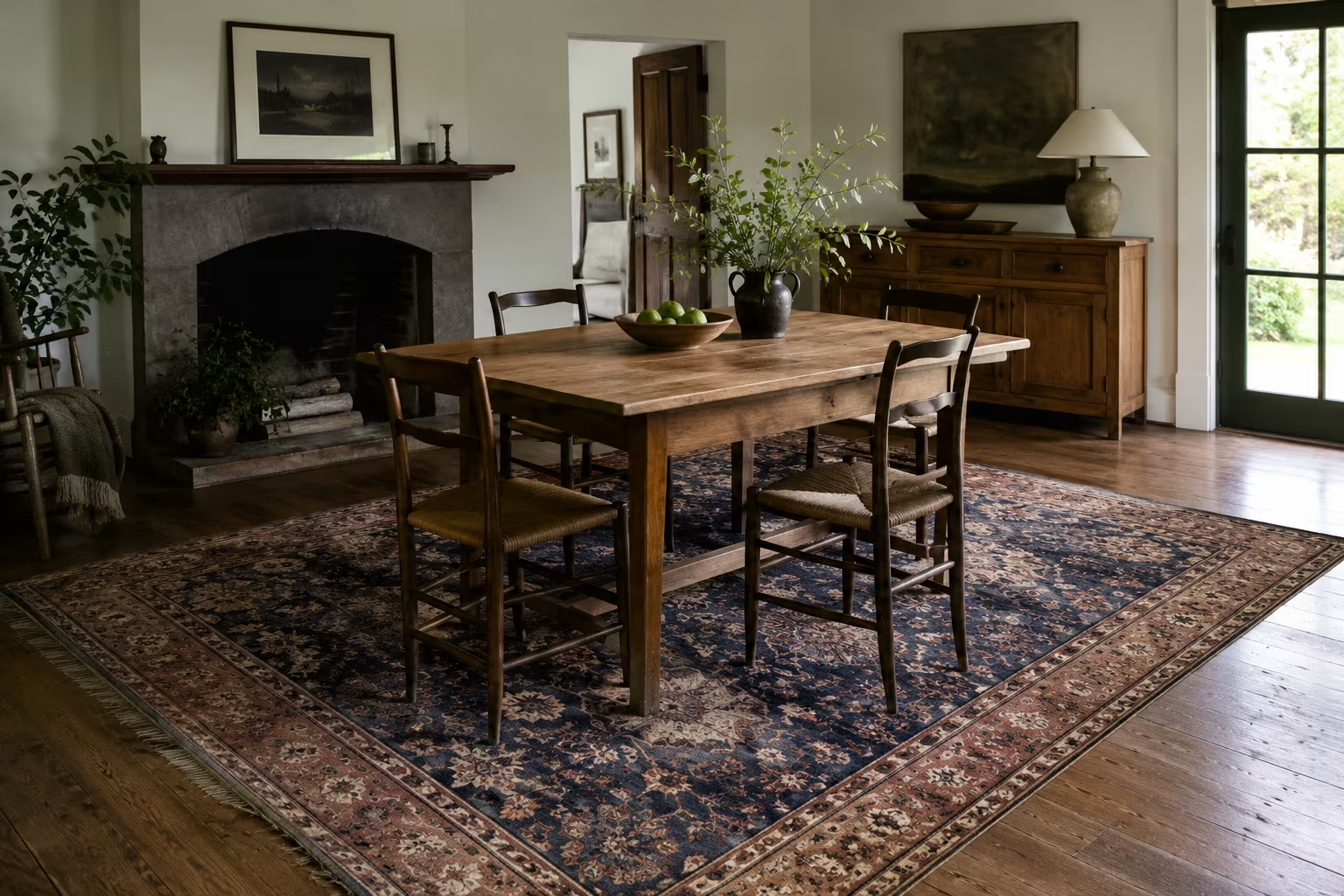
Area Rug Size Under Dining Table
A rug too small under dining table looks like a mistake. Chairs must stay on rug when pulled out.

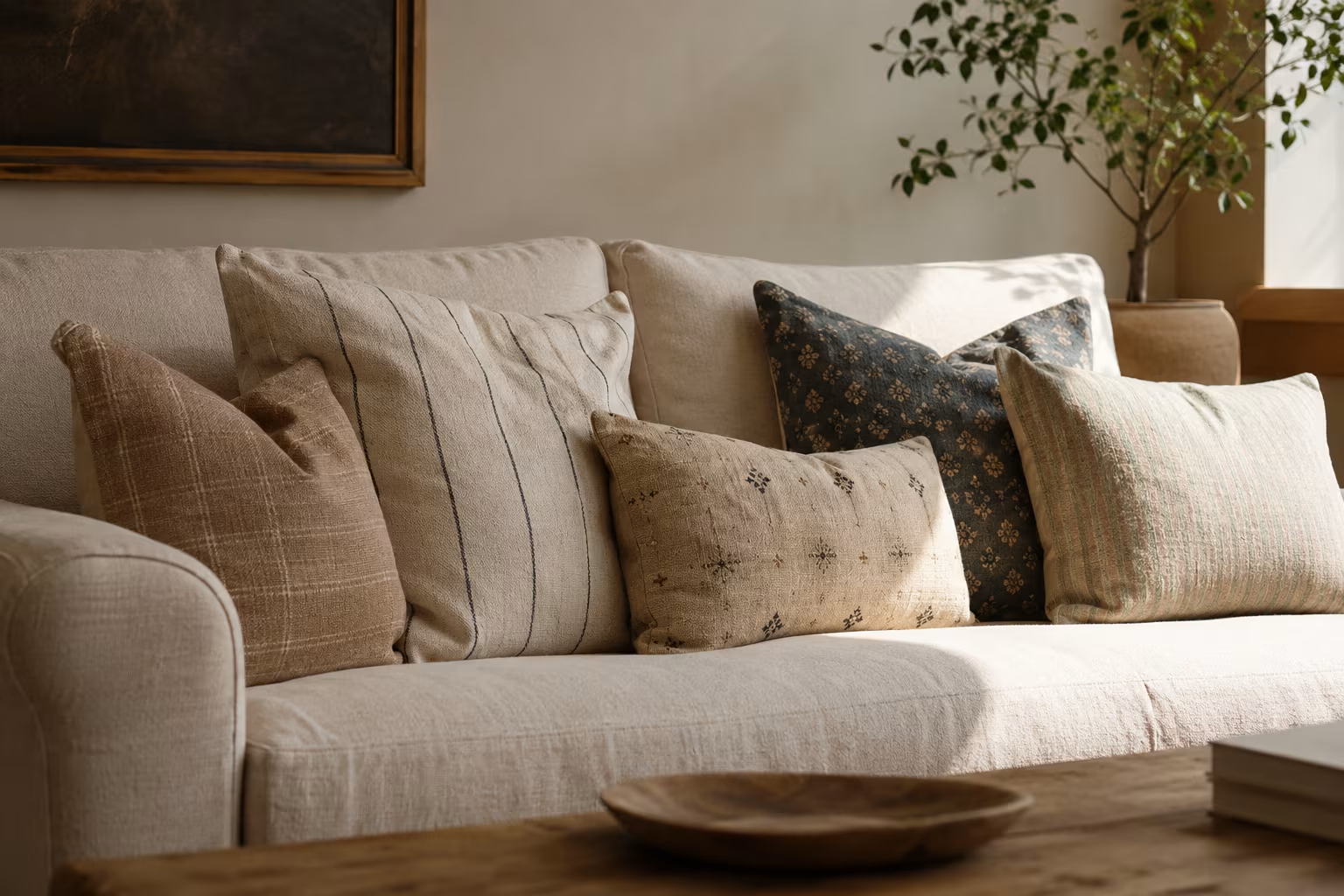
Sofa Pillow Combinations That Don't Fight
Throw pillows pile up over years. Rules for color, texture, pattern, and size.
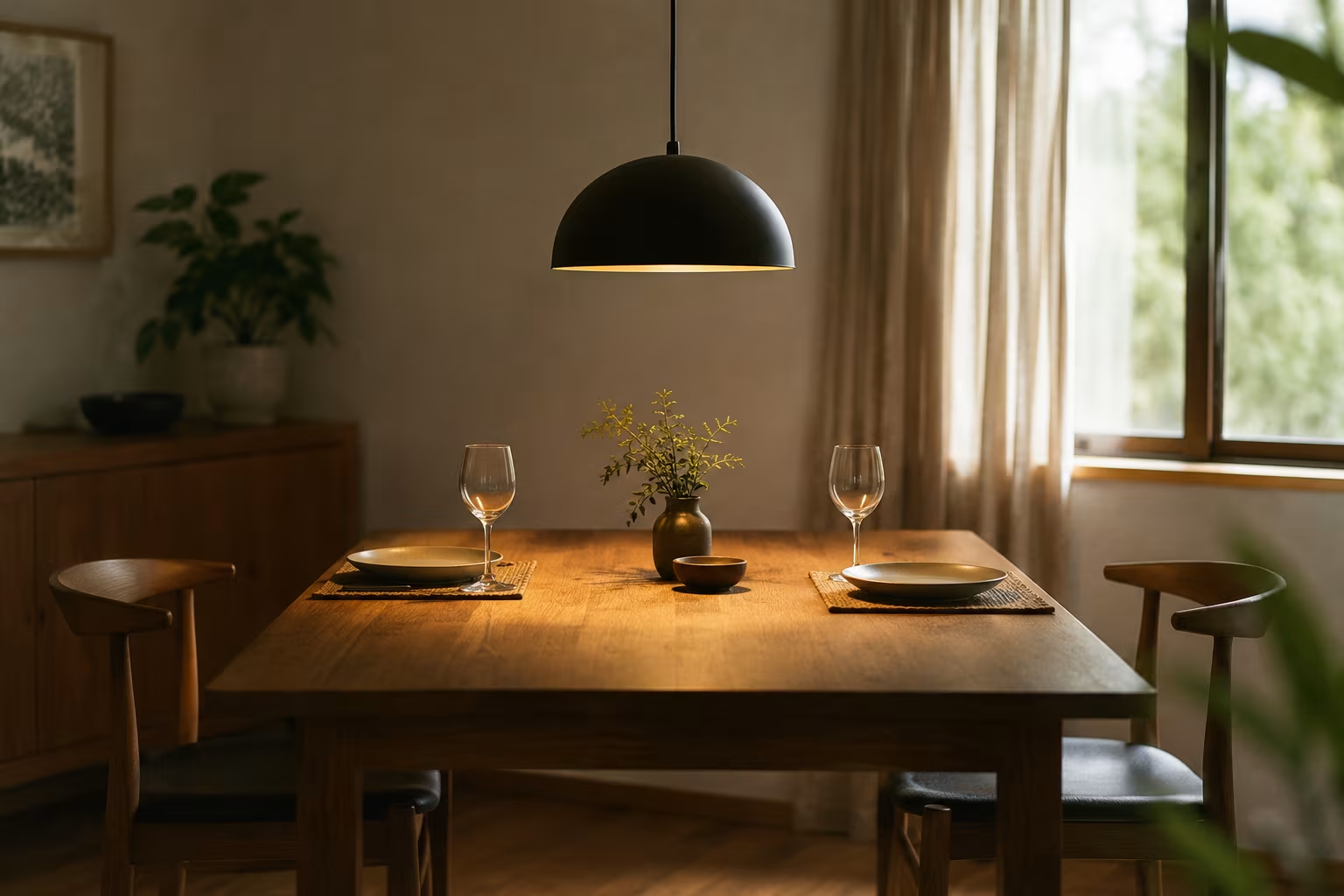
Light Fixture Height Over Dining Table: The Rule
The right pendant light height over a dining table is calculated, not guessed. The standard...
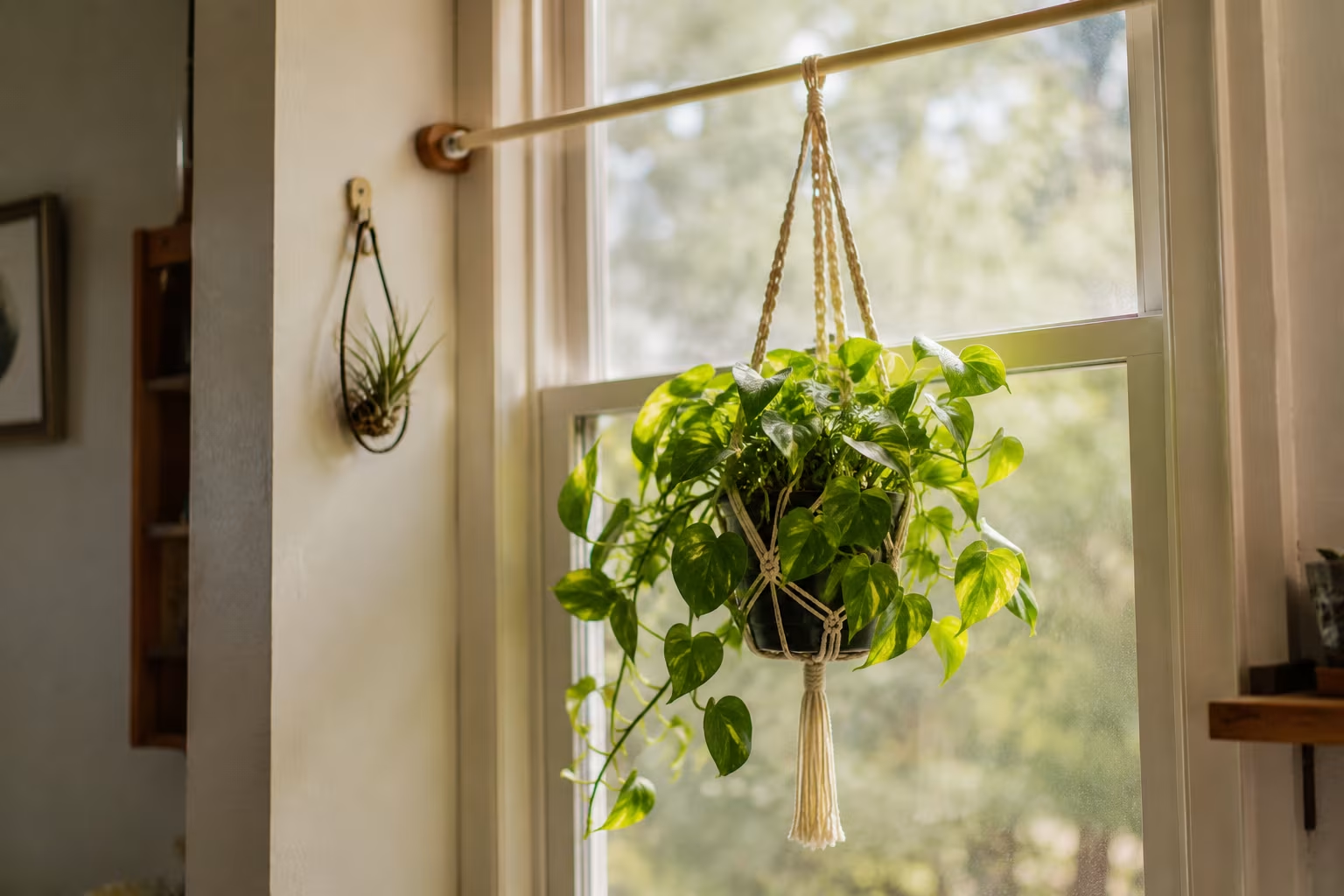
Hanging Plants Without Ceiling Hooks for Renters
Hanging plants brighten any room but drilling into the ceiling isn't always an option....
Comments
No comments yet. Be the first to share your thoughts!