
Macrame Cord Choice for Beginners: Single-Twist vs 3-Ply
The short answer
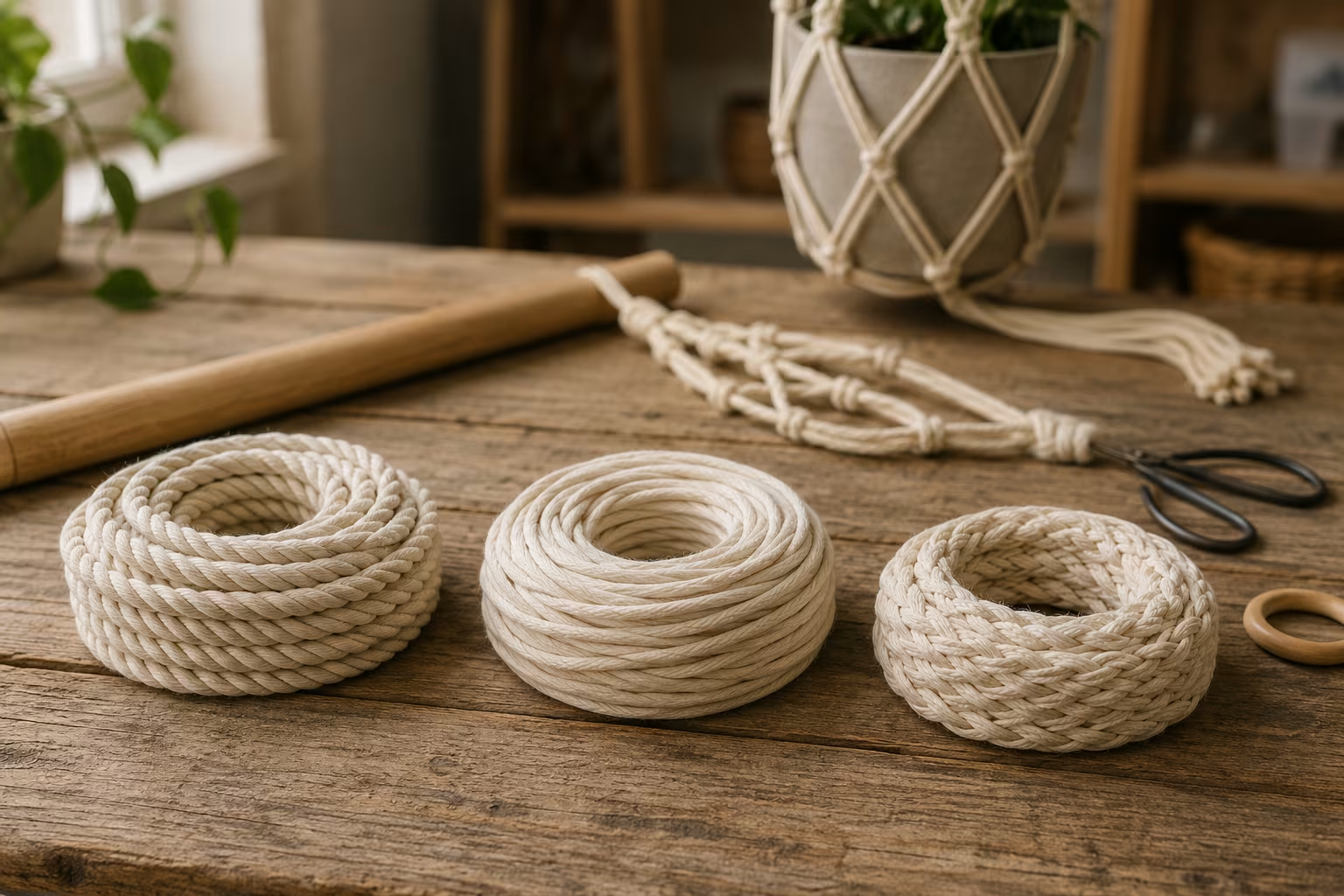
For a first macrame project, buy 3-ply 100% cotton cord in 4mm thickness. The three-stranded twist resists tangling, shows knots clearly, and is forgiving when you make and unmake practice knots. Cotton is soft on the hands, holds knots without slipping, and looks the part for the wall hangings and plant hangers that most beginners want to make.
Single-twist cord (the loose untwisted cord that produces the soft fluffy fringe many tutorial photos show) is harder to work with as a beginner and frays during practice. It comes later, once you have the knot vocabulary and just want a different finished look.
Braided cord (the tightest, most defined twist) gives the sharpest knot definition and the cleanest finish, but does not unravel into the fringe most beginners want at the bottom of their first piece. Save it for jewelry, key fobs, and projects where the structured finish is the goal.
If you can only buy one cord type to start with, 3-ply 4mm cotton is the answer. The other two earn their place as your projects develop.
What "3-ply", "single-twist", and "braided" actually mean
These three terms describe how the fibres inside the cord are organized.
3-ply cord consists of three separate yarn bundles twisted together. Each bundle is itself a small twist of finer threads. The three bundles spiral around each other along the cord's length, creating a visible spiral pattern when you look closely. The structure is strong, holds shape during knotting, and unravels into three separate strands when you cut the end and brush it out.
Single-twist cord consists of one bundle of fibres twisted in one direction, like a thin rope. There are no separate plies to unravel into; the whole cord either holds together or fluffs out into a soft mass. The structure is softer than 3-ply and feels more drape-y. Single-twist also fringes out into a fluffy cloud rather than three separate strands.
Braided cord consists of multiple yarn bundles braided over and under each other in a tighter mechanical pattern. Braided cord is the most stable structure of the three — it holds its shape under tension, slides cleanly through knots, and resists pilling. The trade-off is that braided cord does not fringe at all; the cut end stays as a cut end.
Each construction gives a different look to the finished piece. Plan the cord type around the look you want.
Cotton versus other fibres
Cotton is the dominant fibre in beginner macrame for several reasons. It is soft on hands during long sessions, holds knots without slipping, accepts dye well for coloured cords, and looks natural in the boho aesthetic most starter projects target.
Cotton's downsides are real but minor for indoor projects: it absorbs moisture (not suitable for outdoor use unless treated), stretches slightly under heavy load (a plant hanger holding a heavy pot may sag over months), and shows dirt readily on natural colours.
Other fibres each have specific niches:
Jute and hemp are coarser, harder on the hands, and look more rustic. Good for plant hangers (the rough surface grips the pot better than cotton), pet leashes, and outdoor projects where moisture resistance matters more than aesthetics.
Synthetic blends (polyester, nylon, paracord) resist moisture, hold up outdoors, and come in vibrant colours that cotton cannot match. Less soft on hands; less ideal for the boho look. Used for outdoor projects, jewelry, and projects where colour saturation matters.
Wool blends are unusual but exist for specialty work. Soft, warm-feeling, expensive. Niche use.
For 95% of beginner projects, 100% cotton is the right choice. The other fibres earn their place when you have specific requirements that cotton does not meet.
Cord diameter — 3mm versus 4mm versus 5mm
The cord diameter determines knot size, project scale, and how long the project takes.
3mm cord creates small, tight knots. Good for jewelry, small wall hangings (under about 12 inches wide), keychains, and projects where fine detail matters. Takes longer to cover a given area because each knot is small.
4mm cord is the all-purpose default. Knots are clearly visible but not bulky. Works for plant hangers, medium wall hangings (12-24 inches wide), and most beginner projects. The right starting point for almost everyone.
5mm and larger creates substantial, dramatic knots. Good for large wall hangings, statement pieces, and projects where the texture is part of the design. Heavy in the hand; takes more cord (which costs more); finishes faster because each knot covers more ground.
Beginners often gravitate toward 5mm because the bigger knots feel more satisfying. The trade-off is cost — a 5mm cord uses about 2.5 times the fibre of a 3mm cord, so a large 5mm project may cost significantly more in materials.
Start with 4mm. Move up or down once you have a sense of what scale your projects want.
Calculating how much cord you need
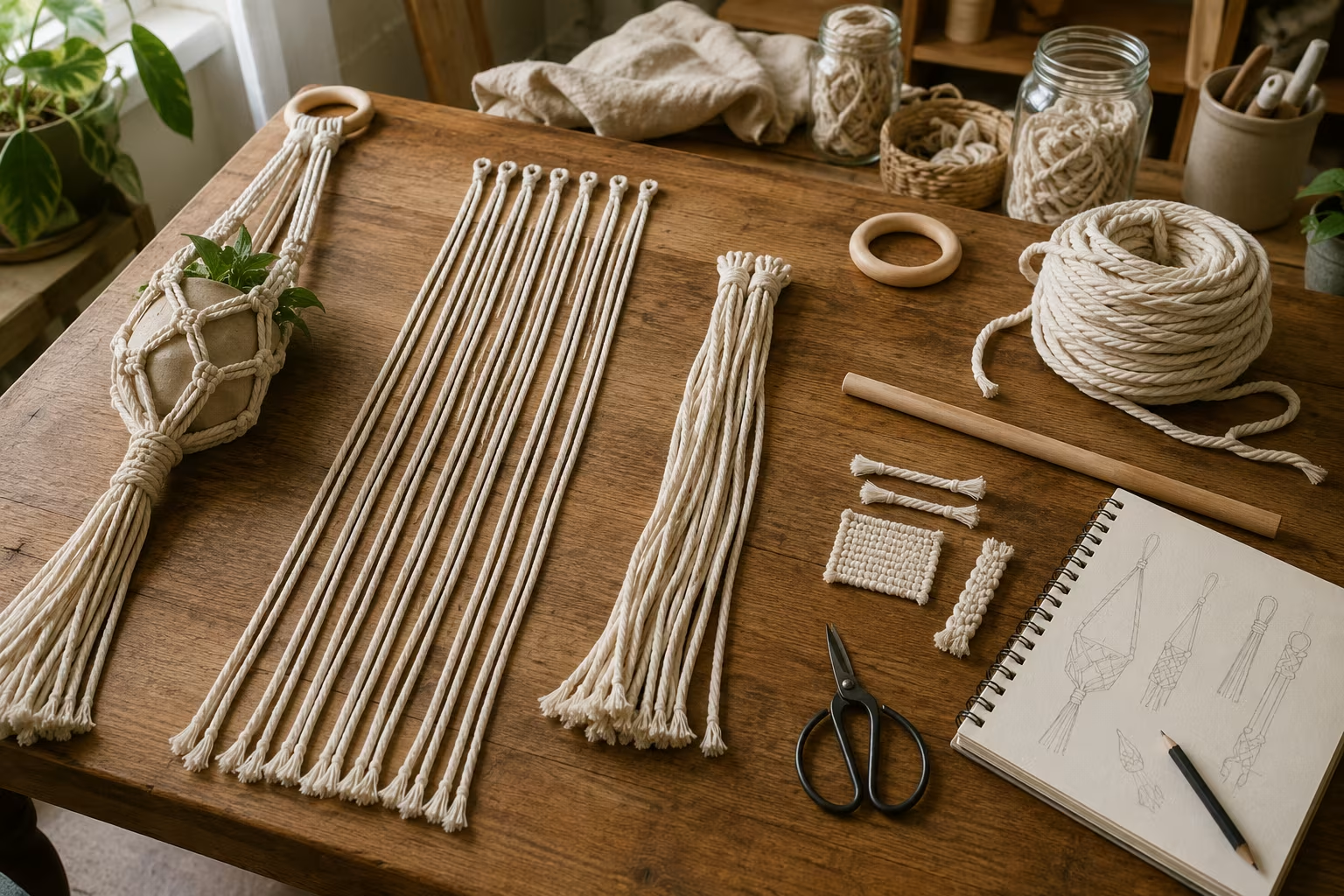
Cord requirements vary by project but a useful starting heuristic: each cord in a finished piece is roughly 4 times the finished length, sometimes 6-7 times for dense or knot-heavy designs.
For a simple plant hanger that finishes at about 30 inches long, plan for 8 cords of 4-foot lengths each. A wall hanging that finishes at 24 inches tall with dense knots needs cords of roughly 6 feet each.
Buy more than the calculation suggests. Running out mid-project means buying another batch of cord that may not match (cotton dye lots vary subtly). 10-20% over the calculated amount is sensible margin.
Cord is sold by weight or by yardage; check both numbers on the package. A pound of 4mm cotton cord is typically 60-80 yards depending on the manufacturer. Plan total yardage needed, then buy enough for that yardage plus margin.
What to make as a first project
Beginner-friendly first projects in order of increasing complexity:
Simple plant hanger. Four cords folded to make eight working strands, basic alternating square knots down the body, gathered at the bottom. Finishes in an hour or two of work. Forgiving of mistakes.
Small wall hanging with fringe. Eight to twelve cords on a dowel, mixed square knot and half-hitch patterns, untwisted fringe at the bottom. Two to four hours of work. The fringe step is where single-twist or 3-ply choice matters most visually.
Coaster set or small mat. Tight grid of square knots forming a flat piece. Works through repetition, building knot speed. Four hours of work.
Larger wall hanging with pattern. A specific design with multiple knot types, decreasing or increasing cord groupings, deliberate negative space. Six to twelve hours of work. Best after several smaller pieces.
Skip ambitious first projects (large multi-coloured wall hangings, complex patterns). The discipline of basic knot consistency matters more than the project's complexity at first.
Knot vocabulary worth learning early
Three basic knots cover roughly 80% of macrame:
Square knot. Two cords wrap around two filler cords, alternating sides. The most common knot in macrame.
Half hitch. A single cord wraps around another cord. Used in diagonals, spirals, and chevron patterns.
Lark's head. The mounting knot that attaches cords to a dowel or other support.
The other dozen-plus named macrame knots are variations or combinations of these three. Master the basics first; learn variations as projects demand them.
Each cord type takes the same knots, but the visible result differs. 3-ply shows knot structure cleanly because the three plies catch on each other and hold the knot's shape. Single-twist softens knot edges and gives a more organic look. Braided produces the most defined and graphic knot appearance.
Common beginner cord problems
Cord twists and tangles as you work. Likely 3-ply that has been worked too much in one direction. Pause occasionally and let the cord untwist by hanging from a height; the spiral relaxes.
Cord starts to fray or pull apart mid-project. Either you bought low-quality cord that is shedding fibres, or you are pulling knots too tight and stressing the cord beyond its design. Loosen the next few knots and check whether the issue continues.
The piece looks frayed and amateur. Often the cord ends were trimmed by cutting straight across with dull scissors. Sharp scissors and a clean diagonal cut give a more deliberate finished edge.
Knots loosen overnight. Cord that is too stiff or too slippery for the knots being used. Switch to a softer cord (cotton instead of synthetic) or to a knot pattern with more cord crossing (square knots over half hitches).
Storage and care for unused cord
Buy cord and you will accumulate partial spools and leftovers. Storage matters for keeping it usable.
Wind unused cord into loose hanks or onto cardboard before storing. Tight tangles in a bag fuse over months and become unusable.
Keep cord in a cool dry place. Damp environments encourage mildew on cotton; direct sunlight fades dyed cord.
Label each storage hank with the cord type, size, and source. Months later when you are matching cord for a new project, the label saves the time of unwinding and inspecting.
A first-project shopping list
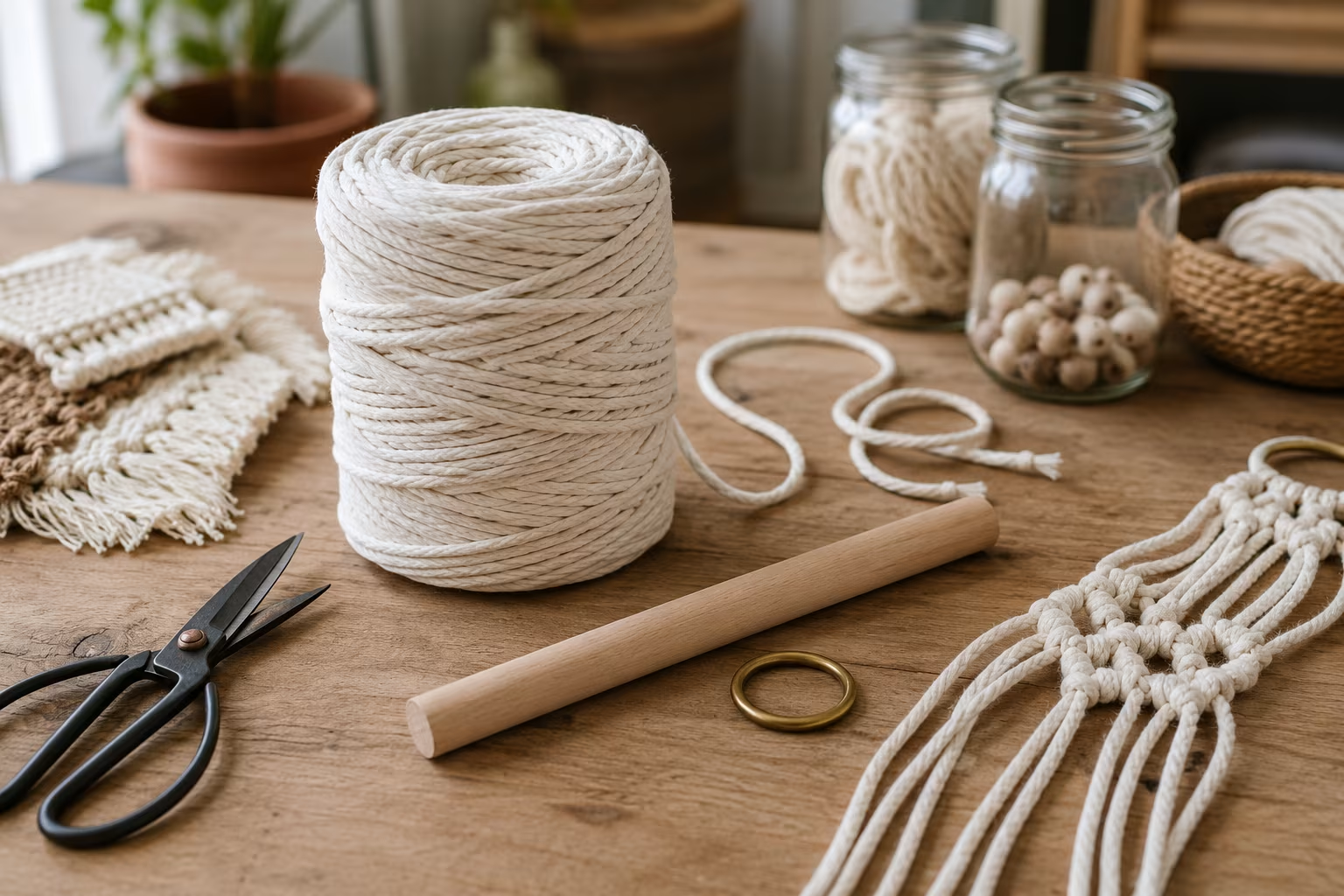
For a beginner committing to a first plant hanger or small wall hanging:
- 1 pound of 100% cotton 3-ply cord in 4mm, natural unbleached colour
- A wooden dowel for the top of a wall hanging (12-18 inches), or a metal ring for a plant hanger
- Sharp fabric scissors
- A measuring tape or yardstick
- A simple beginner-friendly pattern (many available free online)
That is the entire kit. Total cost is moderate as of 2026 — confirm current pricing at a craft supplier before buying — and the supplies cover several first projects with enough cord left to practice knots between them.
Moving beyond beginner cord
Once you have made a few pieces and developed knot discipline, the other cord types open up the design space.
Single-twist for projects where the soft fringe matters. Wall hangings with elaborate fringe finishes look strikingly different in single-twist versus 3-ply.
Braided for jewelry, key fobs, leashes, and structured pieces where the knot definition is the design.
Coloured cord (in any construction) for pieces where the colour is the visual element. Most makers use natural cotton for the body and accent with colour rather than working entirely in colour.
The cord type, the colour, and the knot pattern are three independent design choices. Mixing them creates the visual variety that distinguishes macrame styles.
Storage and longevity of cotton macrame cord
Cotton macrame cord lasts indefinitely when stored properly but degrades quickly under poor conditions. Three factors shorten the cord's usable life: humidity (encourages mildew and weakens fibres), direct sunlight (UV fades natural colours and weakens fibres), and rough handling (frays the strands and creates weak spots).
Store unused cord in a cool dry place, away from windows. A closet shelf works well; a basement may be too humid; an attic may be too hot. Wind partial spools onto small cardboard rectangles or into loose hanks before storing — never let cord sit as a tangled pile.
For cord that has been used in a project and removed, the cord can usually be re-used if it has not been knotted too tightly or for too long. Cord that has held tight knots for months may have permanent twist patterns that prevent it from working cleanly in a new project. Test with a small piece before committing the whole length.
When the cord becomes too fluffy or fragile for projects, consider repurposing for less demanding uses — packaging, plant ties, rope-tied gift wrapping. Cotton cord is biodegradable and can also go into compost for full disposal.
A few words on the macrame community
The contemporary macrame community is active online and through craft stores. Pattern libraries (free and paid), video tutorials, and online communities make beginner learning easier than it has ever been. Specific knot techniques, project ideas, and troubleshooting help are widely available.
For in-person learning, look for craft store classes, library programs, and community art centres that occasionally run macrame workshops. Hands-on instruction speeds up the learning curve dramatically compared to videos alone.
Recap on first cord purchase
For a clean first purchase: one pound of 4mm 3-ply natural cotton cord, a wooden dowel, and sharp scissors. That covers a first plant hanger or small wall hanging with cord left over for knot practice.
Cord comparison for the first knot:
| Cord | Character | Buy it when |
|---|---|---|
| 3-ply 4mm cotton | holds knot definition, forgiving | THE beginner answer |
| Single-twist | soft, unravels into fringe | fringe-heavy wall hangings |
| Braided | round profile, no fringe | clean modern pieces |
| Fiber | 100% cotton | right for ~95% of beginner projects |
Related Posts
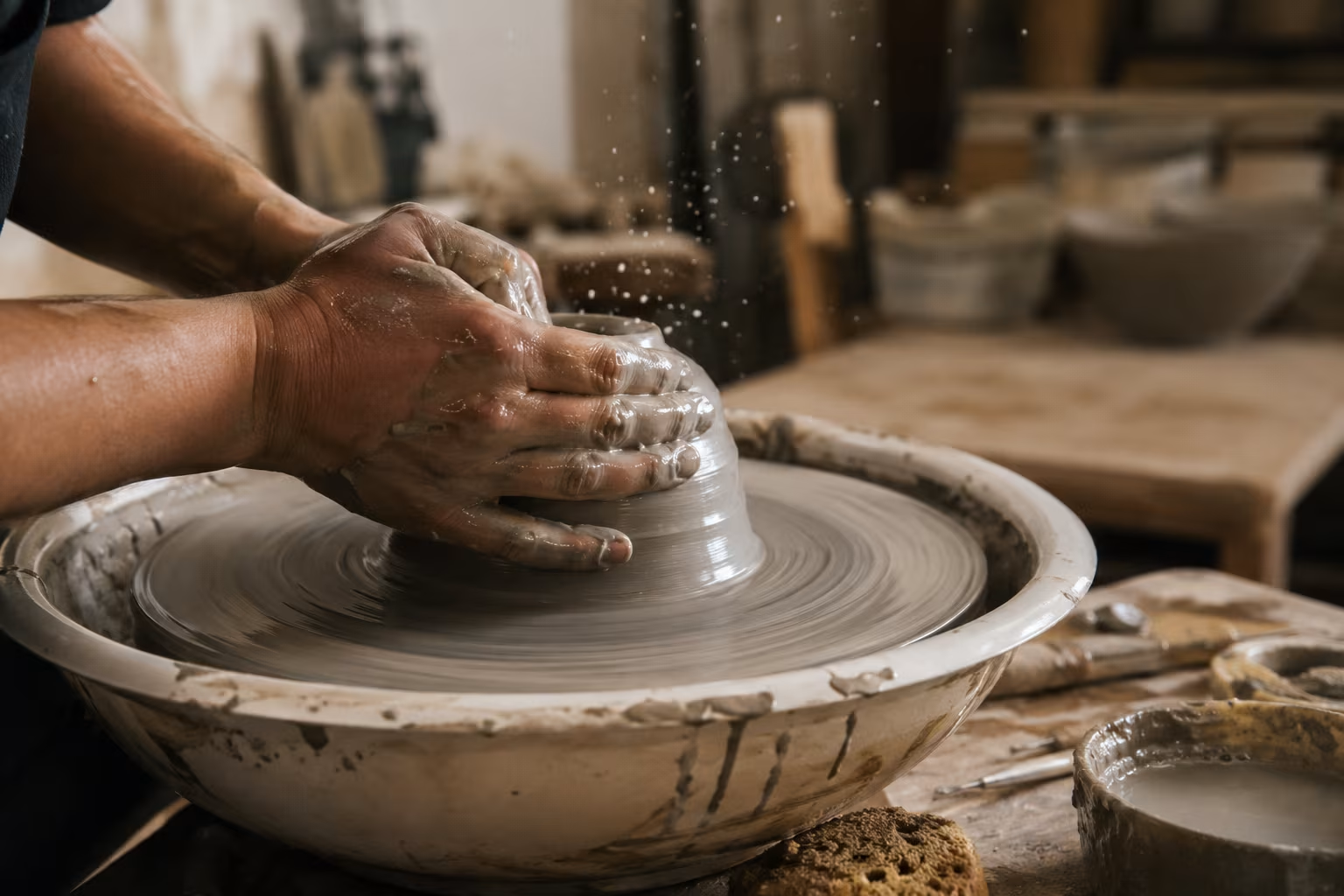
Beginner Pottery Wheel Speed for Centering
Centering clay needs high wheel speed and firm pressure. Most beginners use too low speed.

Calligraphy Ink Comparison for Cotton Paper
Modern dip pen calligraphy needs ink that doesn't bleed on absorbent cotton paper. India ink...
Knitting Needle Materials Compared: Wood vs Metal vs Plastic
Knitting needle material changes how stitches slide, how cold or warm the needle feels, and how...
Beginner Watercolor Paper Choice for Textured Washes
Watercolor paper is the single biggest gear decision a beginner makes. Weight, surface texture...
Comments
No comments yet. Be the first to share your thoughts!