
Workshop Dust Collection on a Tight Budget: Real Options
The short answer
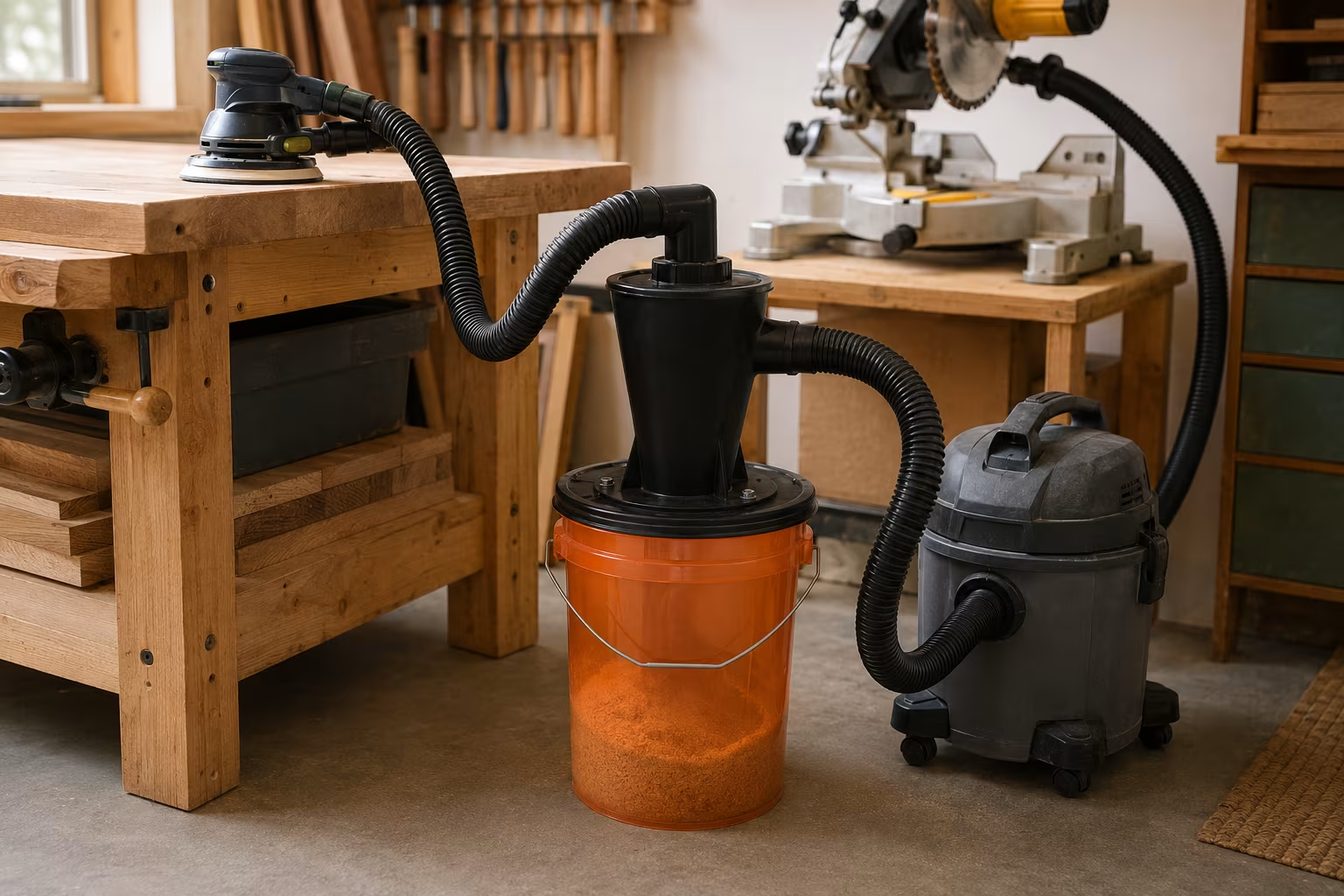
For a small workshop on a tight budget, a quality shop vacuum with a HEPA filter paired with a cyclone separator (like the Dust Deputy or Mullet) covers most dust collection needs for a fraction of the cost of a stand-alone dust collector. The shop vac provides the suction; the cyclone separator pulls heavy dust into a separate bucket before the fine dust reaches the shop vac's filter, dramatically extending filter life and reducing the cleanup interval.
This combined setup handles a typical small shop's tools — sanders, routers, mitre saws, drum sanders, even small jointer and planer if you connect carefully. For a large stationary table saw or a thickness planer with a 4-inch dust port, a dedicated dust collector is the better tool. But for shops where space and budget are constrained and tools are mostly handheld plus a few benchtop pieces, the shop vac plus cyclone covers 90% of the work for roughly 25% of the cost of a stand-alone collector.
The HEPA filter on the shop vac matters. Standard shop vac filters capture down to about 5 microns; HEPA captures 99.97% of particles down to 0.3 microns. The fine dust is what causes long-term respiratory problems, and the HEPA upgrade is the difference between a shop that protects your lungs and one that does not.
What dust collection actually needs to do
Workshop dust comes in two ranges: large chips and shavings, and fine airborne dust. The two need different handling.
Large chips. The visible chunks from a planer, the curls from a hand plane, the chunks from a tablesaw rip. Easy to vacuum or sweep, settle quickly, mostly a housekeeping issue.
Fine airborne dust. Particles small enough to stay suspended in air for minutes to hours. These reach the deep lung tissue when inhaled. The respiratory hazard.
Different woods produce different fine dust hazards. Walnut, cocobolo, MDF dust, and some exotic species are particularly problematic. Pine dust is less hazardous but still causes respiratory irritation in heavy exposure. All sustained dust exposure builds toward sensitization over years.
The dust collection system must capture both ranges. Large chips first (collected by the cyclone), fine dust second (captured by the HEPA filter).
Shop vac selection
The shop vac is the heart of the budget setup. The choice matters.
Power and airflow. Look for at least 5 peak HP and 150+ CFM rating. Higher numbers help; the most useful spec is the actual airflow at the hose end, which is often much lower than the rated peak.
Wet/dry capability. Most shop vacs can handle both. Useful for occasional spills and cleanup beyond dust work.
Auto-on outlet. A built-in outlet that turns the shop vac on automatically when the connected tool is powered. The Festool CT, the Fein Turbo, and several others have this. Saves the manual switching every time a tool turns on. Worth the cost for daily use.
Hose diameter. A 1.25-inch or 1.5-inch hose is standard for shop vacs. Smaller hoses lose airflow; larger hoses do not fit shop vac fittings.
HEPA filter compatibility. Confirm a HEPA filter is available for the model you choose. The basic standard filter is not enough.
The right shop vac is a one-time purchase that lasts 10-20 years of normal use. Spending more upfront on a quality unit pays back over the long lifespan.
Cyclone separator basics
A cyclone separator is a simple device that uses centrifugal force to separate heavy dust from the air stream before it reaches the shop vac's filter.
The setup: an inverted cone-shaped chamber sits on top of a 5-gallon bucket. The shop vac's hose connects to the cyclone's top outlet; the tool's dust port connects to the cyclone's side inlet. Air and dust flow into the cyclone, spin around the chamber, and the heavy dust drops into the bucket below while the cleaner air goes up to the shop vac.
The Dust Deputy is the best-known consumer cyclone. The Mullet, Oneida Dust Cobra, Dust Right, and several others compete in the same price range.
The cost of a cyclone is moderate. It pays back almost immediately in extended filter life (you empty the bucket instead of cleaning the filter) and in cleaner exhaust air from the shop vac.
A typical small-shop session may fill the bucket once or twice during a heavy work day. Empty into a trash bag, reset, continue.
HEPA filter — what it does and doesn't
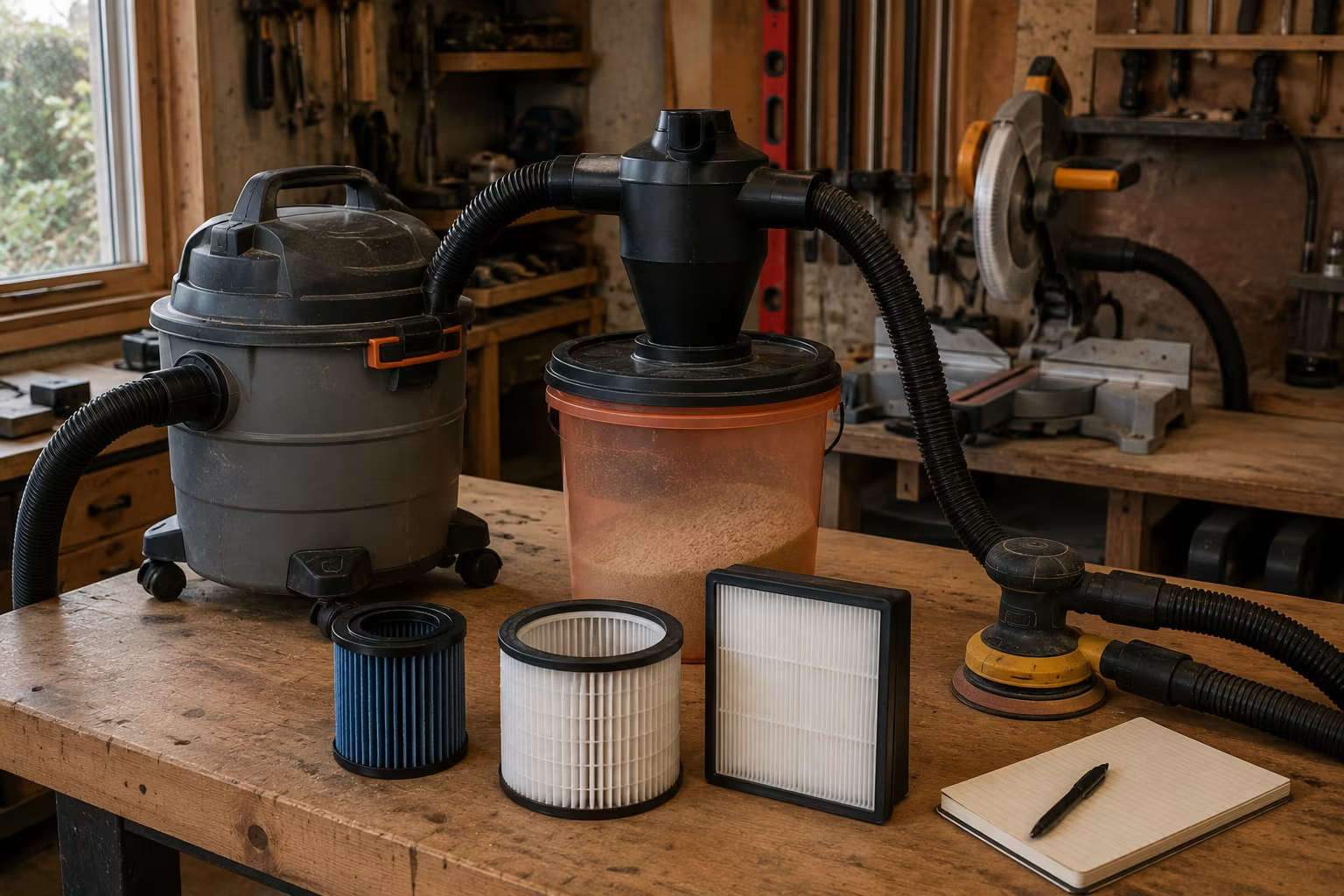
The HEPA filter is what makes the dust collection actually protective of your lungs.
A standard shop vac filter is rated for 5-micron particles. Particles smaller than this pass through and re-enter the room air. The 5-micron threshold is large enough that most fine dust slips through.
A HEPA filter captures 99.97% of 0.3-micron particles. Almost all woodworking fine dust is larger than 0.3 microns, so the HEPA filter captures essentially all of it.
HEPA filters do cost more than standard filters — typically several times the cost. They also clog faster with the same volume of dust because they capture more particles per cubic foot of air.
The cyclone separator pre-filter dramatically extends HEPA filter life. With a cyclone catching the bulk of the dust, the HEPA filter sees only the finest dust and lasts a long time between replacements.
For shops working with exotic woods, MDF, or other high-hazard materials, HEPA is essential. For shops working with only common softwoods in small volumes, standard filtration may be adequate; HEPA is the higher-protection choice when affordable.
Tool-specific connections
Connecting tools to the dust collection system is where many budget setups fall apart. Each tool has a different port size, and the wrong adapter means leaks and reduced suction.
Random orbital sanders. Most have a 1-inch or 1.25-inch port. A standard shop vac hose with a tapered fitting connects directly or with a small adapter.
Mitre saws and table saws. Often have a 2-2.5 inch port designed for dust collectors, not shop vacs. An adapter from 2.5 inches to the shop vac's hose size connects them, but the shop vac's lower airflow means most of the saw's dust still escapes. For these tools, a dust collector with a 4-inch hose is genuinely better, but a shop vac is workable for occasional use.
Routers. Hand-held routers vary. Router tables with dedicated dust ports work well with shop vacs through an adapter.
Drum sanders and thickness sanders. Often have 2.5-inch ports. Shop vacs handle small drum sanders but struggle with larger ones; the volume of dust exceeds what the shop vac can move.
Hand planes and chisels. No dust port. The mess is collected by hand or with a separate sweep-then-vacuum cycle.
A small assortment of adapters and connectors handles most tool-to-shop-vac connections. Festool's hose system is the most refined but most expensive; Universal Cleansweep and similar third-party adapter kits provide most of the same functionality at lower cost.
Stand-alone dust collectors — when they win
For some shops and some tools, a dedicated dust collector outperforms the shop-vac-plus-cyclone setup.
Stand-alone collectors are designed for high-volume air movement. They move 600-1500 CFM versus a shop vac's 150-200 CFM. For tools with 4-inch ports and high dust output (large table saws, thickness planers, jointers, large drum sanders), the dedicated collector captures dust the shop vac cannot.
The trade-off is cost (a quality single-stage dust collector starts around several hundred dollars; cyclone two-stage units are higher), space (collectors are larger and harder to move), and noise (collectors are louder than shop vacs).
For a small shop where the largest tools are benchtop or small floor-standing (a job-site table saw, a small bandsaw, a small drum sander), the shop vac plus cyclone is the better choice.
For a shop with full-size cabinet saws, large planers, large jointers, or production-volume work, a dedicated collector is the right tool.
The path forward for many growing shops is to start with the shop vac plus cyclone and add a dedicated collector later if the workload demands it.
Routing and accessories
Beyond the vac itself, accessories matter for daily use.
Hose length and storage. A 15-25 foot hose reaches most tools without moving the vac. Hose storage (a wall-mounted reel or hook) keeps the hose tidy when not in use.
Wand and brush attachments. For sweeping and general cleanup beyond tool dust. The standard shop vac brush attachment handles bench surfaces and floor cleanup well.
Crevice tool. For pulling dust out of small crevices in tool bases and corners.
Multiple connection points. Some shops install permanent dust collection ducting along ceilings or walls with drop-down ports at each tool location. The shop vac connects to the duct at one end; the tools connect at the duct's drops. Cleaner installation than dragging hoses around.
Maintenance routine
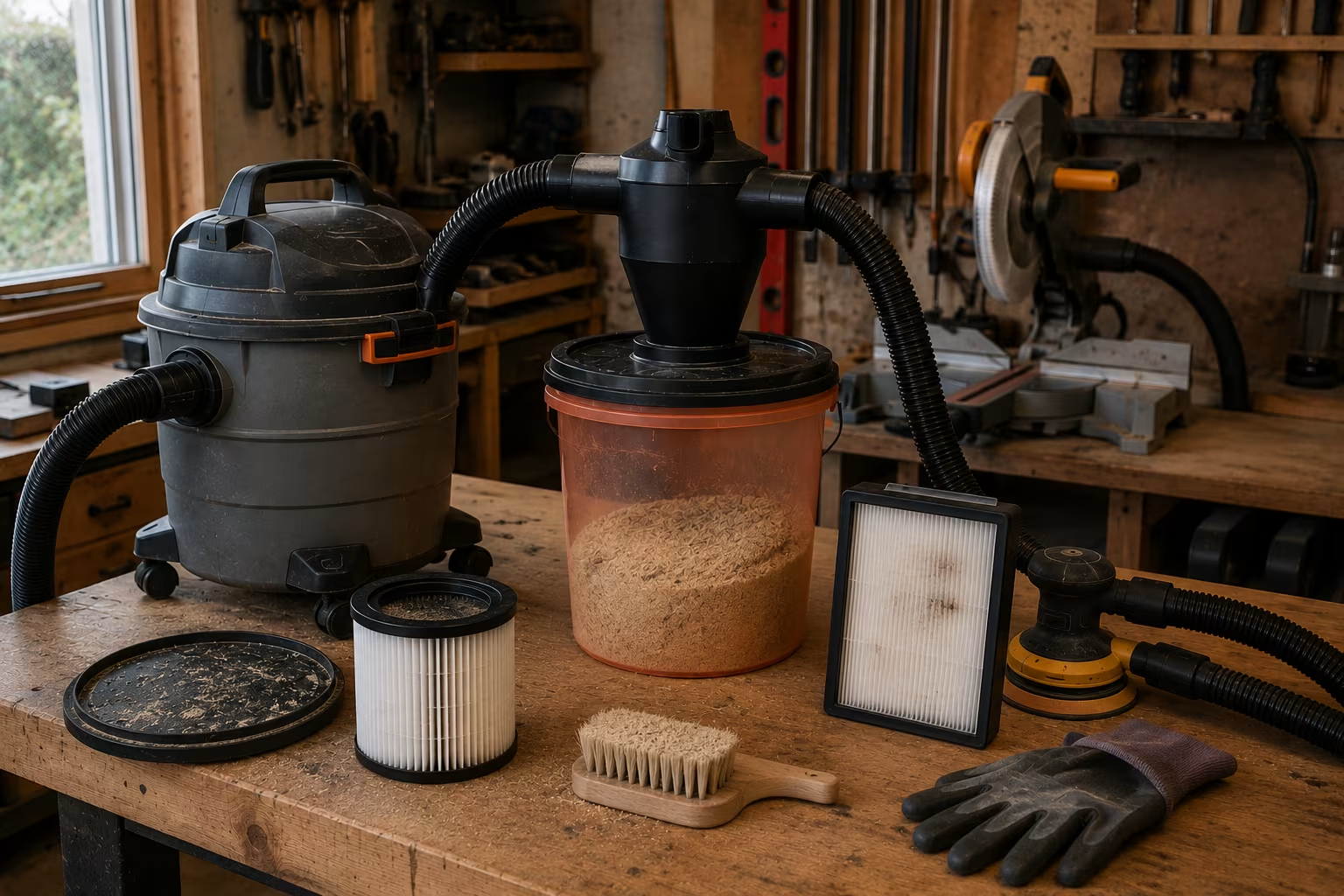
A dust collection system needs periodic maintenance to keep working.
Empty the cyclone bucket after each project session. Letting it fill to capacity reduces the cyclone's efficiency and starts to send dust to the shop vac filter.
Tap the shop vac filter weekly. A few firm taps dislodge clinging dust. For HEPA filters, do not blow with compressed air (damages the pleats); tap or brush gently.
Replace the filter when it cannot be cleaned. HEPA filters eventually clog beyond what cleaning can recover. A new filter every 1-3 years is normal for active shops.
Check hose connections for leaks. A hose slightly disconnected from a tool loses suction without obvious signs. Tape connections or use locking fittings.
Check the shop vac's bag if equipped. Some shop vacs use disposable dust bags inside the canister; these need periodic replacement.
The maintenance keeps the system performing at its rated capacity. A neglected system can lose half its effective airflow within a year.
Building toward a full setup over time
For a shop on a budget, the dust collection system can be built up incrementally.
Month one: quality HEPA shop vac with adapters for the most-used tools.
Month two-three: Dust Deputy or similar cyclone separator on a 5-gallon bucket.
Month four-six: dedicated hoses and hose storage. Connect to the most-used tools permanently.
Month seven-twelve: wall-mounted ducting if the shop layout supports it. Auto-on switch upgrades. Additional accessories.
Year two and beyond: a dedicated dust collector for the largest tools if the workload demands it.
This phased approach lets the shop's dust collection grow with the shop's tools. The investment spreads out; each addition makes the existing system more useful; the lung protection benefit accrues from the first month.
Safety beyond dust collection
Dust collection is part of a broader shop safety system. Several other practices complement the collection system.
Wear a respirator for high-dust operations. Even with dust collection at the tool, fine dust escapes capture. A P100 respirator or a powered air-purifying respirator gives the lung protection that collection cannot fully provide.
Use eye protection. Wood chips and particles enter eyes during many shop operations. Safety glasses are the minimum; chip-resistant safety glasses or a face shield for the highest-risk tools.
Use hearing protection. Shop tools are loud; cumulative hearing damage over years is real. Ear plugs or over-ear protection during tool use.
Maintain good shop ventilation beyond the dust collection system. An exhaust fan or open garage door during heavy sanding clears residual airborne dust that escapes the collection system.
Specific tool considerations for budget setups
Some tools work well with shop-vac dust collection; others need more capacity.
Works well with shop vac: random orbital sanders, mouse sanders, hand-held belt sanders, plunge routers (when used in router tables with proper dust collection), small mitre saws, scroll saws, oscillating spindle sanders.
Works marginally: full-size table saws (the dust port is typically 2.5-4 inches; shop vac handles some of the dust but not all), benchtop planers (high dust volume strains shop vac capacity), large drum sanders.
Does not work well with shop vac: large floor-standing jointers and planers, full-size cabinet table saws with overhead blade guards, industrial-scale shaper operations. These need dedicated collectors.
For shops that combine handheld and small benchtop work (the typical home shop), the shop vac plus cyclone setup handles 90%+ of the dust collection needs. The remaining tools either get worked outdoors, with extra respirator use, or the shop saves for a dedicated collector to add later.
The protective benefit accumulates over years. A shop with dust collection from the start avoids the lung damage that surfaces decades later in shops that worked without protection. The investment, modest in equipment cost, pays back enormously in long-term respiratory health.
Shop vac spec floor:
| Spec | Minimum | Note |
|---|---|---|
| Power / airflow | 5 peak HP, 150+ CFM | — |
| Hose | 1.25–1.5 inch standard | — |
| Filter | standard ~5 micron; HEPA 99.97% @ 0.3 | fine dust is the health issue |
| 4-in dust ports | table saw, planer → dedicated collector | a vac cannot feed them |
| Lifespan | 10–20 years | one-time purchase |
Related Posts
Workshop Air Compressor Sizing: CFM and SCFM
Air compressor matched to your tools means smooth work; too small means constant waiting. CFM...

Workshop Dehumidifier Sizing for Tool Rust Prevention
Tools rust silently when shop humidity sits over 60%. The pint capacity that matches your shop...
Bench Vise Sizing and Mounting for First-Time Buyers
Bench vises bolted to scrap plywood pull right out. The right size for the work, the right...
Soundproofing a Basement Workshop on a Renter's Budget
Basement shop noise traveling up to the family room is how you lose workshop privileges. The...
Comments
No comments yet. Be the first to share your thoughts!