
Single-Bay Garage Workshop Layout Without Losing the Car
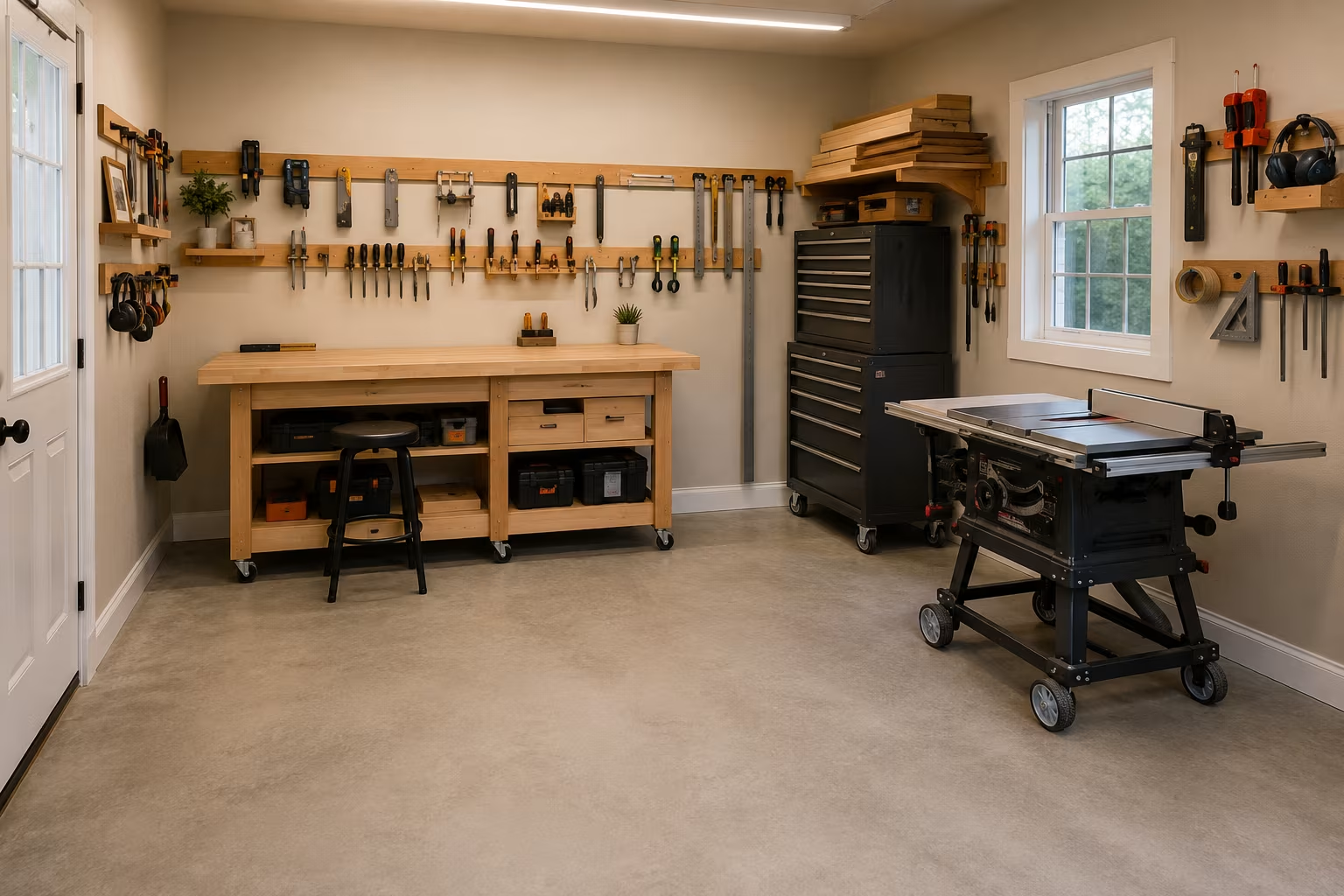
A single-car garage — typically about 10 by 20 feet — can hold a real workshop and still park a car if the layout follows two rules: heavy tools live on locking casters and roll to the perimeter when the car comes in, and everything that does not roll lives on the walls. The car centerline stays empty when needed and occupied when not. The five-minute clear-out is the whole system: roll the workbench to the wall, roll the table saw under its outfeed shelf, roll the tool cart into its corner, push the dust collector against the back wall. Five wheeled stations, under five minutes, and the car parks where it always did.
The single biggest mistake is buying stationary tools — a table saw bolted to the floor, a benchtop sander permanently mounted, a workbench that will not move. Once any major item is fixed in place, the layout can no longer make room for the car. Everything wheels, or it lives on a wall.
Measuring the real available space
Published "single-car garage" dimensions vary widely: small older homes have 9-by-18 garages, modern builds run 12 by 24, and many garages lose space to water heaters, electrical panels, washers, or support posts. Measure the inside dimensions wall to wall, then subtract the real obstructions before you plan anything.
| What to subtract | Typical dimension |
|---|---|
| Wall-mounted water heater | 24 inches of width |
| Electrical panel clearance | 18 inches of width |
| Car depth (midsize sedan) | 16-18 feet |
| Car depth (full-size pickup) | 18-21 feet |
| Door-open clearance, each side | 3 feet minimum |
| Walking space, driver door to back | 2-3 feet |
What remains is the workshop footprint. For a typical 10-by-20 garage with a midsize sedan, that is roughly 4 to 5 feet of depth across the back wall and along one side wall, plus some usable space in front of and beside the car while it is parked.
The mobile-station layout
The workable plan commits to mobile heavy tools and perimeter storage. The table saw, the workbench, the cordless tool cart, a planer or benchtop sander if owned, and the dust collector all sit on locking casters or wheeled cabinets. They roll toward the centerline for use and back against the walls when the car needs to park. When the car is out, walking around the table saw is possible because the car is not there; when it returns, the tools roll back and the centerline opens.
The walls carry everything else: hand tools on French cleats or pegboard, lumber racks, clamp racks, finishing supplies on shelves. Nothing sits on the floor unless it rolls. Dust-collection ducts can run along the ceiling rafters and drop a flexible hose at each tool's working position, retracting out of the way when the tool moves.
When the layout still fails, the cause is usually one of three. The garage is genuinely too small — under 9 by 18 — so the shop fits but the car does not. The car is too big, a full-size pickup or large SUV in a compact bay. Or the tools are oversized: a full cabinet saw and a large jointer will not share the space. Scaling down to job-site portable tools — a small table saw, a benchtop drill press, a lunchbox planer — lets a real workshop fit alongside a car, trading capacity per tool for the workshop existing at all.
Casters and wheels that actually work
Casters separate genuinely mobile tools from tools that are mobile only in theory. The right ones lock on at least two of the four wheels (all four is better), are rated well above the tool's load, and run 4-inch or larger wheels so they ride over cracks and cords instead of catching on them. Total-locking casters, where one lever locks both swivel and roll, beat wheel-only locks for a workbench that must hold still under heavy work.
Cheap casters fail under sustained load, so spend here — this is the part you touch every time you reposition the shop. Some tools, table saws especially, come with manufacturer mobile-base kits; those work but usually cost more than a shop-built base of plywood, a 2x4 frame, and four casters, and the DIY base leaves room for tool storage underneath.
Heavy tools and where they live
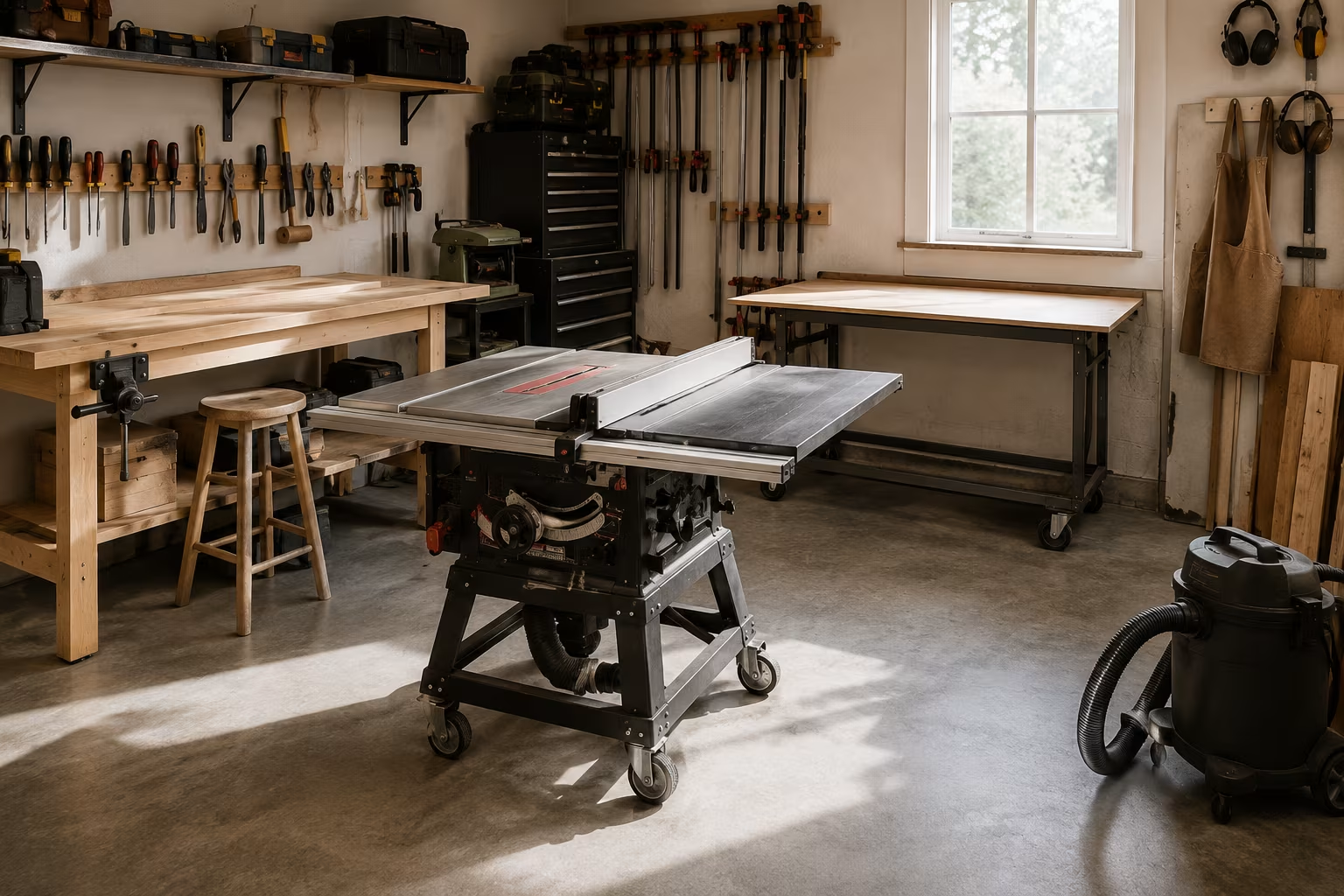
The table saw is usually the centerpiece: roll it to the middle to rip or crosscut, and against the wall otherwise, with an outfeed table that folds down or rolls out behind it for any cut longer than the saw's own table. The workbench — a 24-by-60-inch flat top is typical for a small shop — sits against a wall with the car in and pulls perpendicular with the car out; it needs heavy wheels and a flat base that plants firmly when locked so it does not rock under load.
The dust collector, a small two-stage cyclone or a HEPA shop vac, follows the active tool on a wheeled base with a hose hanger built in. The cordless tool cart is a four-foot rolling cabinet with drawers for batteries, chargers, drills, and drivers that parks in a corner when idle. A benchtop drill press, bandsaw, and oscillating sander can share one rolling table, hot-swapped on the same platform to save floor space.
Wall storage that recovers the floor
Vertical storage is the rule: anything on the floor stays in the way, anything on the wall or ceiling stays out of it. Above the workbench, run pegboard or French cleats for the hand tools you reach for constantly — screwdrivers, chisels, marking gauges, small squares, files. Store lumber along the longest wall, vertical for sheet goods and horizontal for boards on a simple wall-mounted rack.
Clamps hang on cleats or pegs so the rack eats no floor. Finishing supplies belong in closed cabinets away from where saws throw dust. Overhead racks on rafter-mounted brackets hold sheet goods, long boards, and seasonal items as dead storage, and narrow rolling cabinets (12-18 inches wide, 6 feet tall) fit between the workbench and the wall and pull out for access. A wall-mounted folding workbench — plywood hinged to the wall — gives an emergency assembly surface with no permanent footprint.
Dust collection for a small shop
Dust collection is the upgrade that pays back across the whole workshop. A HEPA-rated shop vac connected to power tools through a small hose captures most of the fine dust at the source, and a cyclone separator such as a Dust Deputy in front of it extends bag life and reduces filter clogging. For higher-volume tools — table saw, planer, thickness sander — a dedicated collector with 4-inch ports outperforms a shop vac but costs more and takes more room; a 1 to 1.5 HP cyclone collector on wheels is the sensible compromise for a single-car-garage shop.
Run ducting along the ceiling if the budget allows; otherwise drag the collector to each tool. Either way, the collector should be the last station to roll back into position when you clear the floor for the car.
Lighting and climate control
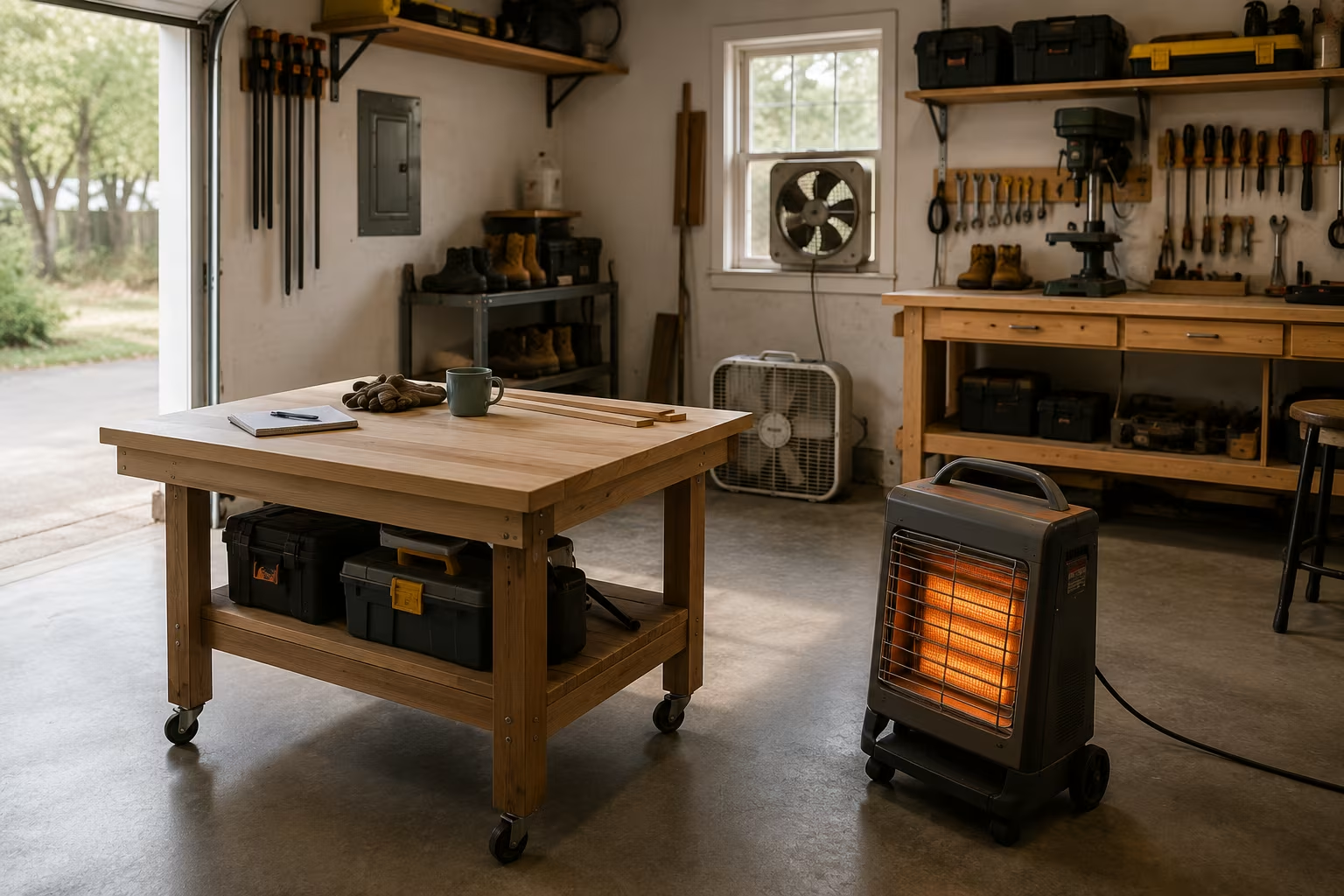
Most single-car garages ship with one overhead bulb and a couple of windows, which is inadequate for precision work. Mount two or three 4-foot LED strip lights across the ceiling rafters for flat, even light that kills the shadows under tools, then add task lighting — a clip-on or flexible-arm LED at the workbench and over the table saw — for marking, fitting, and finishing. Avoid yellow incandescent or halogen: the cast distorts colour in finish work and the heat is unwelcome in summer.
For cold-climate winter use, a small portable electric heater warms the immediate work area, and a wall-mounted garage heater transforms cold-weather shop time if you use the space often. In summer, ventilation matters more than air conditioning: a box fan in the open door plus an exhaust fan pulling hot air out beats trying to cool a garage with the door up. A small dehumidifier and a wall hygrometer protect stored wood from the moisture cycling that warps boards over months.
Electrical, air, and fire safety
A workshop running several power tools needs more outlets than the standard 2-3 a garage provides — plan for 8 to 12 distributed around the work area. Adding them is a moderate job for a licensed electrician: a dedicated circuit or two from the panel, outlets in conduit along the wall, and GFCI protection, which is required in garages. Heavy tools like a table saw or compressor benefit from a dedicated 20-amp circuit to prevent nuisance trips on startup. Floor-run power strips are the wrong answer: they trip people, drop voltage over length, and often cannot handle the current shop tools draw.
A small pancake or hot-dog compressor in the farthest corner, feeding a wall-mounted hose reel near the bench, keeps nail-gun capability while partly muffling the noise; cordless brad nailers have improved enough that many small shops skip the compressor entirely. Keep an ABC-rated fire extinguisher by the door and check its gauge annually, store finishes in a flammables cabinet away from heat, and spread or seal oil-soaked rags in a metal can since drying oils like linseed can self-ignite. The single biggest predictor of whether a garage workshop lasts is whether the floor-clearing routine becomes reflex — a five-minute reset repeated daily is the discipline that keeps both the car and the shop alive.
Related Posts
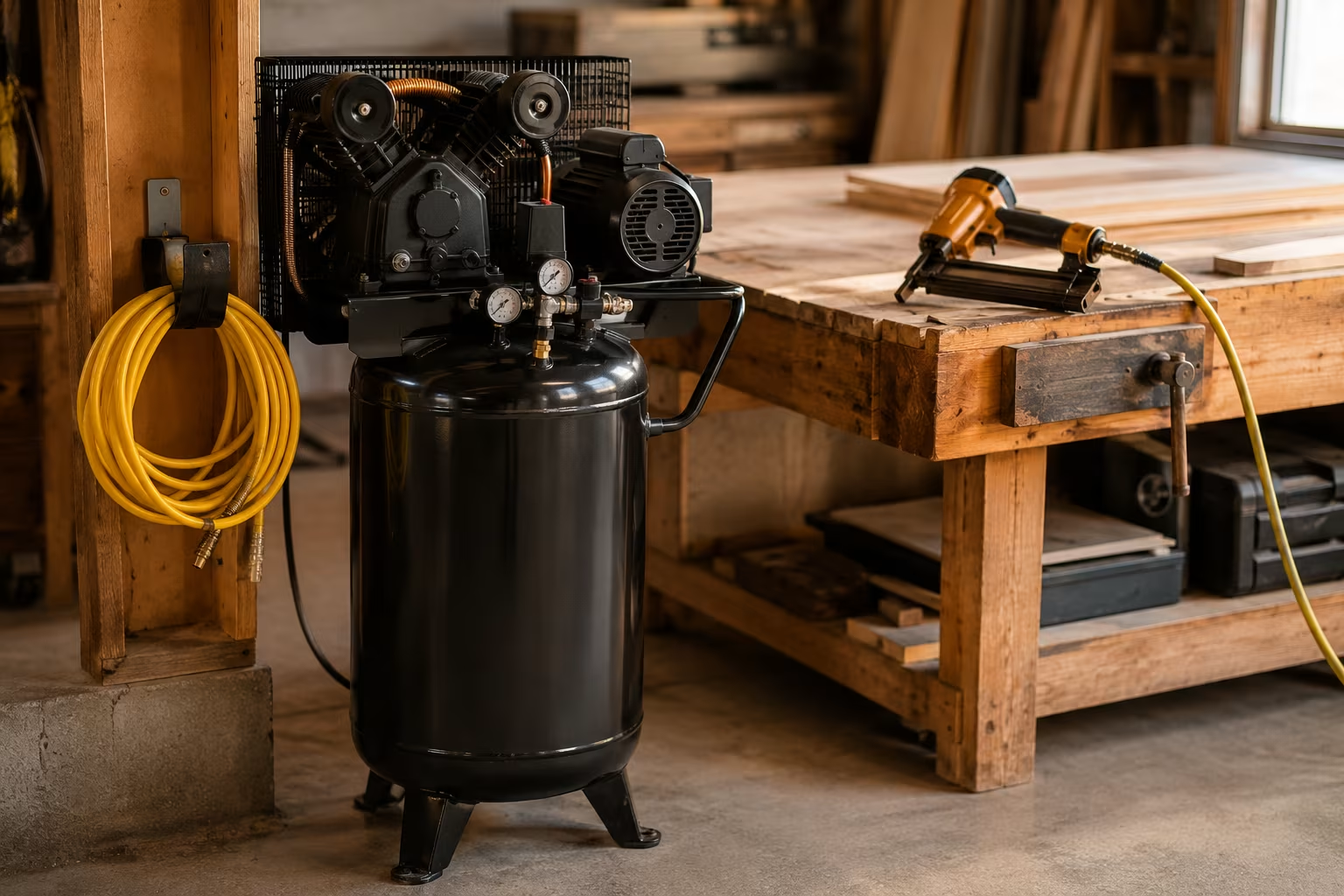
Workshop Air Compressor Sizing: CFM and SCFM
Air compressor matched to your tools means smooth work; too small means constant waiting. CFM...

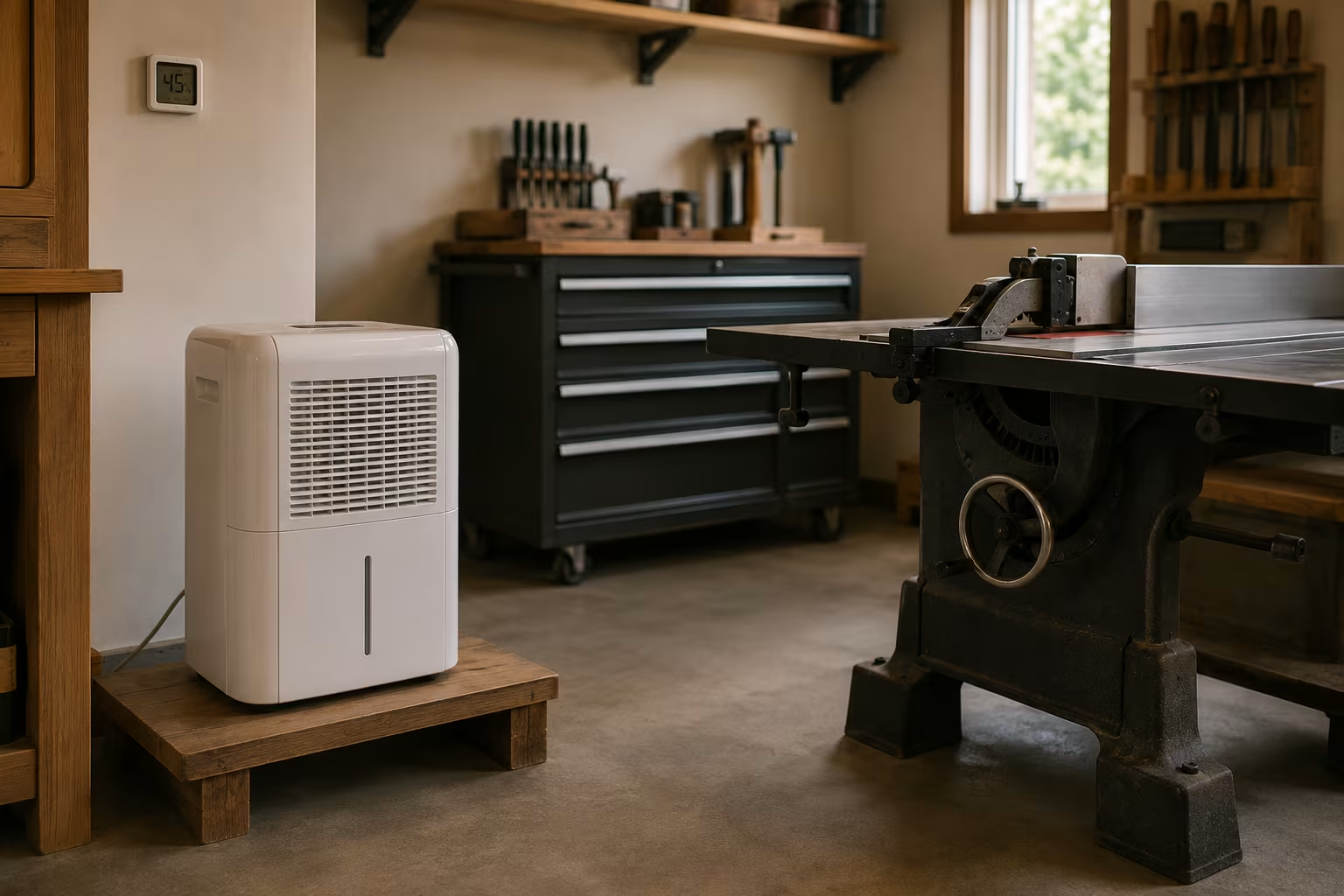
Workshop Dehumidifier Sizing for Tool Rust Prevention
Tools rust silently when shop humidity sits over 60%. The pint capacity that matches your shop...
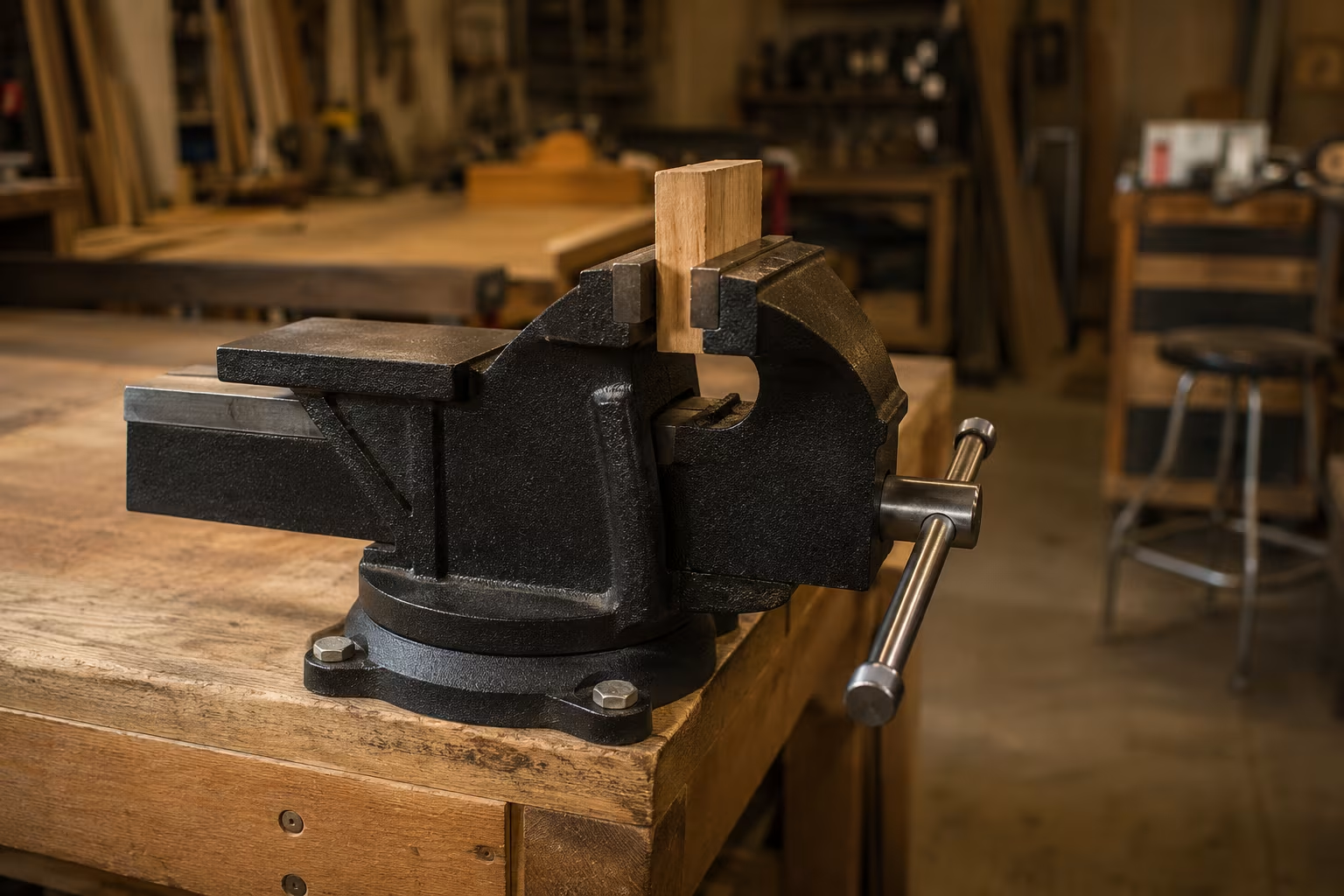
Bench Vise Sizing and Mounting for First-Time Buyers
Bench vises bolted to scrap plywood pull right out. The right size for the work, the right...
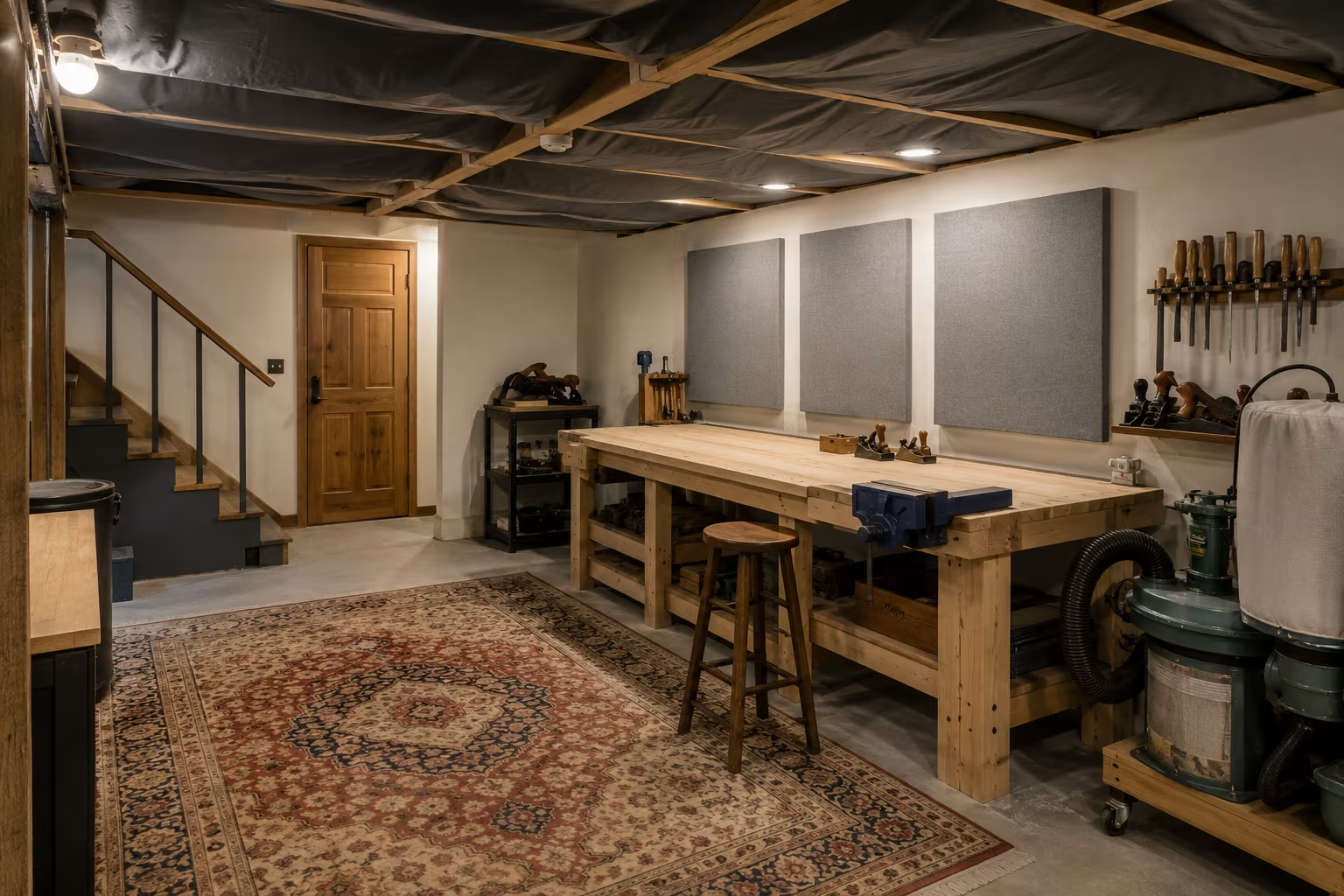
Soundproofing a Basement Workshop on a Renter's Budget
Basement shop noise traveling up to the family room is how you lose workshop privileges. The...
Comments
No comments yet. Be the first to share your thoughts!