
Why Replacing Cabinet Hardware Is the Cheapest Kitchen Makeover
Swapping cabinet knobs and pulls is the cheapest meaningful kitchen update there is. A full set of new hardware often runs under $40, installs with a screwdriver, and changes the look of a room without touching the cabinets, counters, or paint. If the new hardware matches your existing hole spacing, the whole job is a couple of hours of unscrewing and screwing.
Why Hardware Matters
Knobs and pulls are the jewelry of a kitchen: small, but among the first things your hand touches and a major part of the overall look. Old, tarnished, or mismatched hardware drags down otherwise solid cabinets and reads as dated even when the boxes are perfectly good. Flimsy gold-plated pulls from the 1980s, for instance, can make solid-wood cabinets feel tired, and replacing them for under $40 resets the whole impression.
The upgrade is functional too. Knobs that are hard to grip or pulls that snag clothing make daily use annoying, so new hardware improves both the look and the feel of every cabinet you open. It is a small investment that pays off many times a day and pairs well with other low-cost refreshes like new handmade kitchen decor.
Knobs, Pulls, and Backplates
Cabinet hardware covers any functional or decorative piece that helps you open a door or drawer, mainly knobs, pulls, and hinges. It is a standard part of cabinetry, and understanding the differences before you shop saves ordering the wrong thing.
- Knobs attach with a single screw at one point. They come in round, square, T-shaped, and novelty forms, suit a clean understated look, and usually cost a little less per piece than pulls.
- Pulls (handles) attach with two screws set a fixed distance apart. Bar, cup, arched, and flat styles lean modern or industrial, and the two-point mount feels sturdier on heavy drawers and is often easier to grip.
- Backplates are flat pieces that sit behind a knob or pull. They add a decorative element and, usefully, cover old screw holes, shadows, or minor damage from previous hardware.
Hinges are the fourth piece. Most people leave them alone unless they are broken or highly visible, though matching visible hinge finishes to new knobs and pulls produces a more cohesive result.
Assess and Measure What You Have
Start by measuring, because the measurement decides how much work follows. For knobs, you only have a single screw hole to note. For pulls, measure the distance between the centers of the two screw holes, the "center-to-center" or hole spacing, and write it down.
This number is the whole game. If you buy new pulls with the exact same center-to-center spacing, you can reuse the existing holes and skip drilling entirely, which is by far the fastest path. Common spacings include 3 inches, 3.75 inches, and 5 inches, but measure yours rather than assuming. If your new hardware does not match, you will fill the old holes and drill new ones, which is still straightforward but adds a step.
Choosing New Hardware
Gather inspiration from Pinterest, Instagram, or home decor magazines, paying attention specifically to hardware finishes: brushed nickel, matte black, brass, or polished chrome. Consider whether you want the hardware to contrast with the cabinets or blend in, and how it relates to your existing faucet and appliance finishes so a new rustic bronze does not clash with stainless steel and white.
Mixing is allowed and often looks intentional, for example pulls on drawers and knobs on doors, as long as you keep the finish consistent or clearly complementary. For the actual buying, big-box stores, Amazon, Wayfair, and specialty sites usually beat local prices and selection. Habitat for Humanity ReStores often stock new-in-box hardware for a fraction of retail, and architectural salvage yards carry unique vintage pieces. Buy a few extras; matching discontinued hardware later is a headache.
Installation Step by Step
If you can use a screwdriver, you can do this. The work divides into the easy path (same holes) and the slightly longer path (new holes).
- Remove the old hardware. Unscrew from the inside of the door or drawer, usually a Phillips head. Work gently on fragile pieces to avoid chipping the cabinet finish, and keep old screws in a bowl.
- Clean or fill. If the new hardware reuses the old holes, wipe the surface with mild soap and water to remove grime, which alone freshens the cabinet. If you are relocating hardware, fill the old holes first: wood filler on painted cabinets, sanded smooth and touched up with paint; a wood-matching filler or repair kit on stained or wood-grain cabinets, which takes more patience for a clean result.
- Make a template. For new holes, cut a template from cardboard or painter's tape and mark your chosen hole positions on it. On doors, hardware usually sits on the stile opposite the hinges, about 2 to 4 inches from the top or bottom edge. On drawers, center it horizontally, and either center it vertically or place it slightly above center. The template keeps every cabinet consistent.
- Drill. Line up the template, mark with a pencil, and drill pilot holes with a 3/16-inch or 1/4-inch bit as the hardware specifies, always drilling from the front straight through. Clamp a scrap block against the inside face where the bit exits to prevent tear-out splintering.
- Install. Insert screws from the inside and thread the knob or pull on from the outside. Snug the screws just until the hardware is secure; overtightening digs into the cabinet.
- Finish up. Wipe away pencil marks and fingerprints, clear any sawdust, and cycle each door and drawer a few times to confirm everything feels right.
Common Mistakes
Measuring wrong, or not at all. The most common error is ordering a full set of pulls that turn out a few millimeters off the existing center-to-center spacing. Double-check before you buy.
Ignoring the rest of the kitchen's finishes. Hardware that fights your faucet, appliances, and lighting undermines the update. Choose a finish that complements or deliberately contrasts the overall palette.
Forgetting how it feels. A pull can look great and still be uncomfortable to grip or sharp on the edges. Handle a sample before committing, especially for drawers you open constantly.
Rushing the drilling. A careful template and double-checked marks prevent crooked hardware, which is impossible to unsee once installed.
Small details are not small. They are the thread that ties a whole space together.
Frequently Asked Questions
Do I need new holes to switch knobs for pulls? Yes. Knobs use one hole and pulls need two at a set spacing, so you fill the single knob hole and drill two new ones.
What about unusual or custom cabinets? Even custom cabinets typically use standard center-to-center spacings. If your existing hardware is genuinely unique, fill the old holes and drill for any standard hardware you like.
Where do I find budget hardware? Thrift stores, architectural salvage yards, and online clearance sections are the best value, with strong deals on Amazon and Etsy, especially in bulk. Watch for big-box sales and discontinued styles.
Can I mix knob and pull styles? Yes, and it adds personality. A popular approach is knobs on doors and pulls on drawers. Keep the finish consistent for cohesion even when shapes differ.
How long does an average kitchen take? With 20 to 30 pieces and matching hole spacing, about 2 to 4 hours. Drilling new holes and patching pushes it to a full weekend, roughly 6 to 10 hours including drying time.
What tools do I need? A Phillips screwdriver (and possibly a flathead), a tape measure, a pencil, and a drill with the right bits if drilling. A cardboard template helps enormously, plus wood filler and fine sandpaper if you are patching.
Should I replace the hinges too? Not necessarily. Hidden European hinges can stay unless broken. Visible hinges may be worth swapping to match the new finish or to upgrade to soft-close, which adds cost and labor for a fully cohesive look.
The hardware swap, timed and measured:
| Parameter | Value | Note |
|---|---|---|
| Budget | often under $40 for a full set | screwdriver-only install |
| Common pull spacings | 3, 3.75, 5 inches | measure yours — never assume |
| Door placement | stile opposite hinges, 2–4 in from edge | pilot holes 3/16 or 1/4-inch bit |
| Same-holes swap | 2–4 hours for 20–30 pieces | new holes + patching = 6–10 h weekend |
Related Posts

Toilet Seat Slow-Close Hinge Replacement
A broken slow-close hinge makes the toilet seat slam or fail to stay up. Replacement is a...

Drywall Corner Bead Replacement After Damage
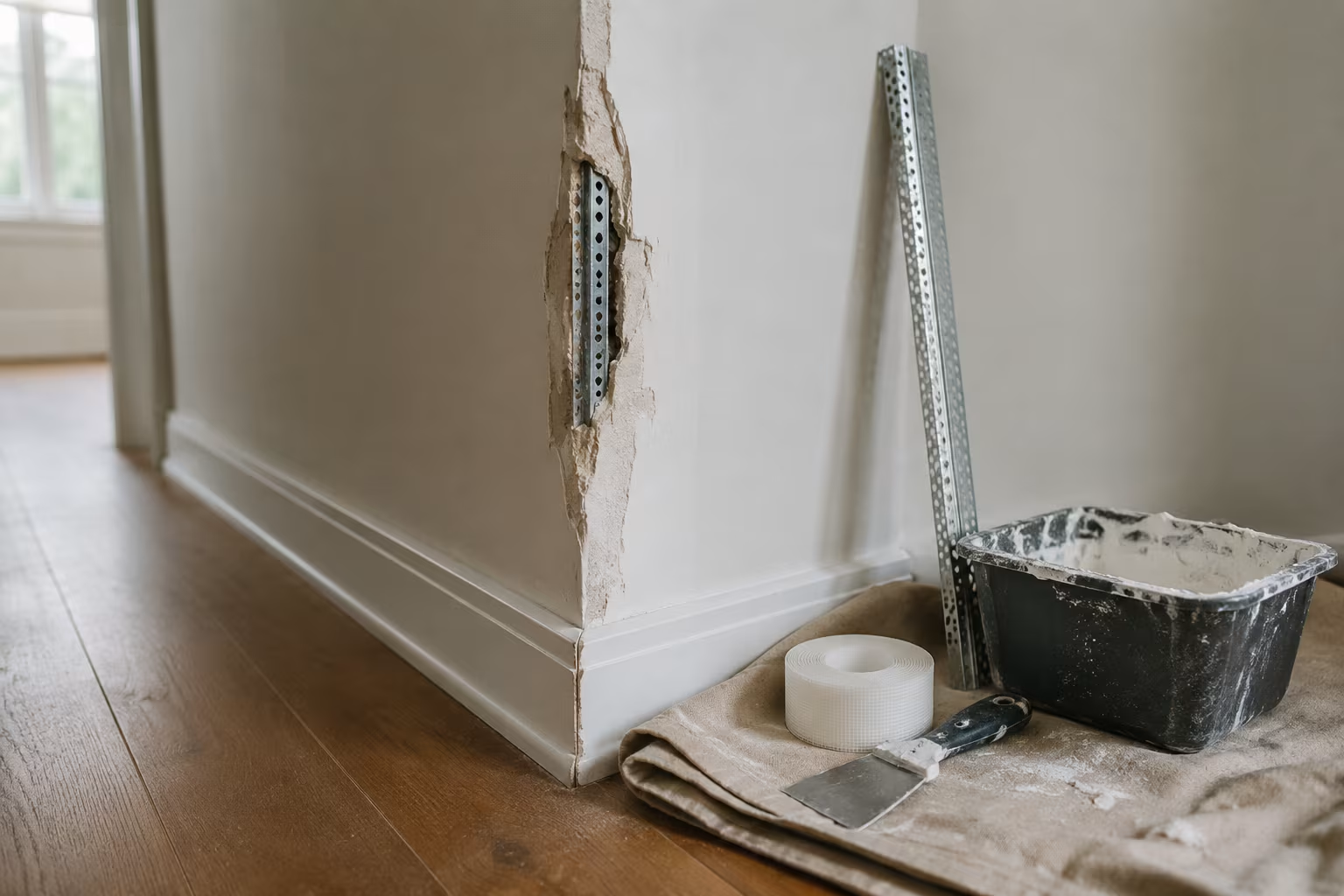
Damaged drywall corners with dented or split corner bead show ugly visible damage. The...
Strip Painted Brass Hardware Without Eating the Patina
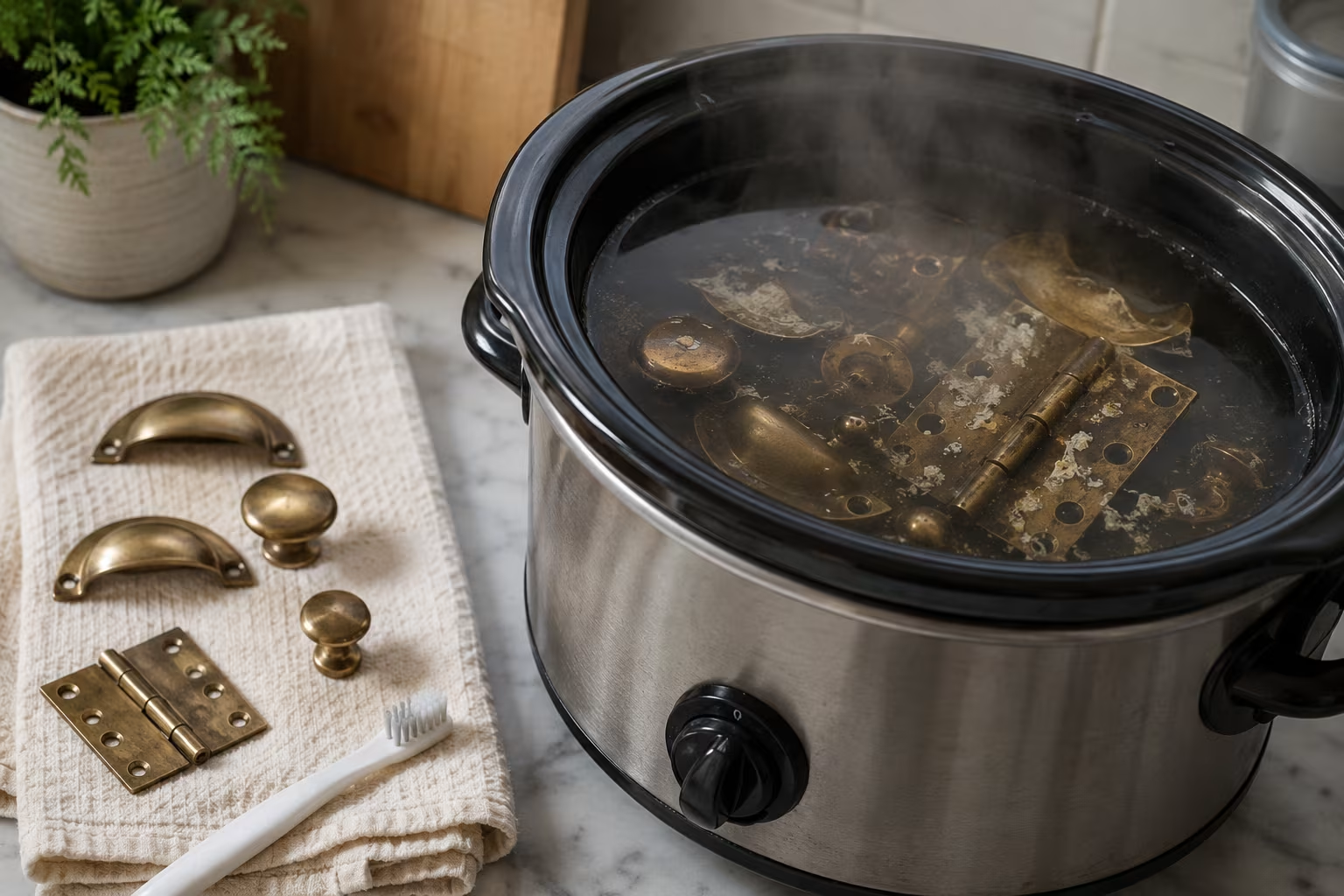
The slow-cooker method strips paint from brass cleanly while keeping the aged surface intact....
Bathtub Resealing: When Silicone Beats Caulk and Vice Versa
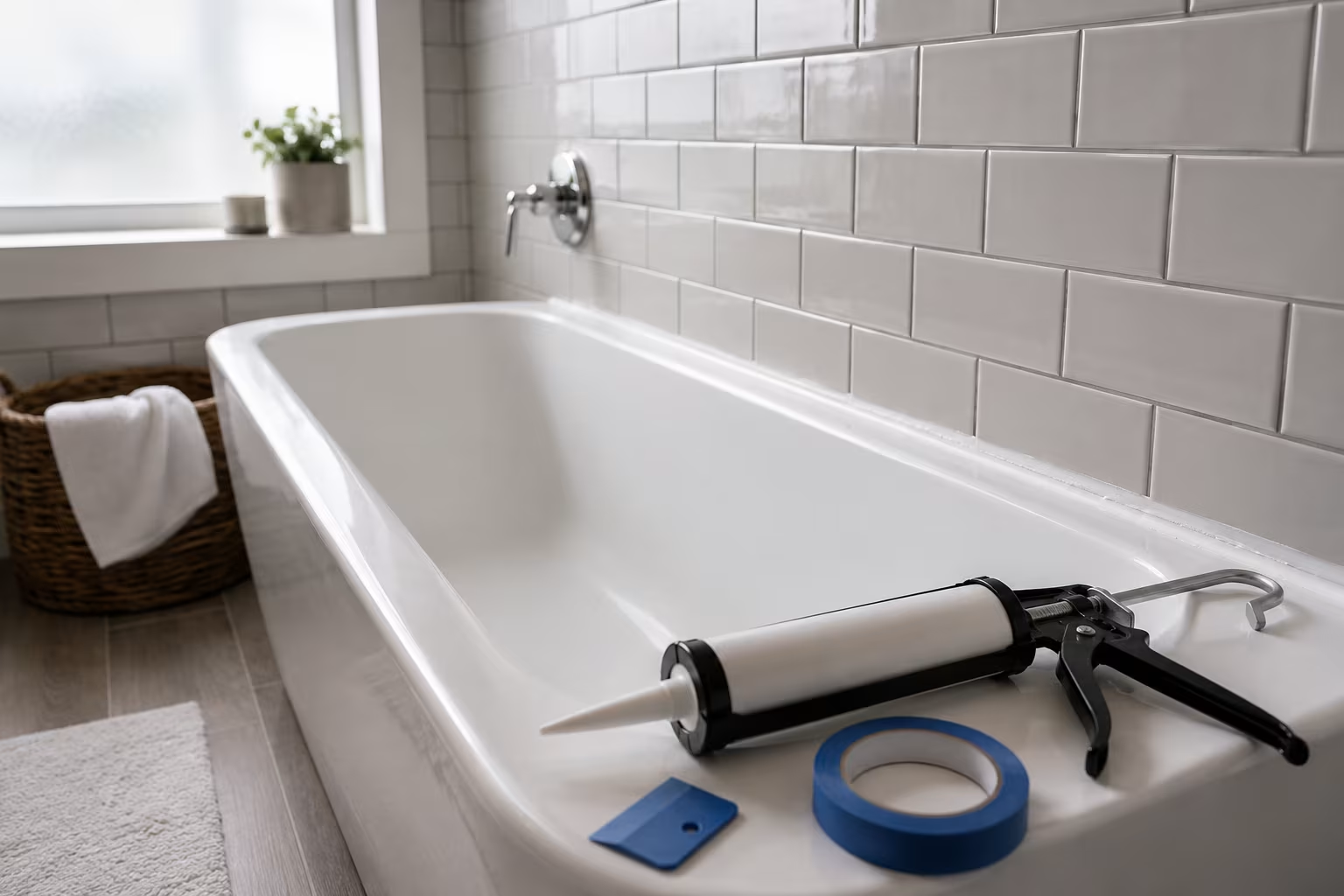
Reseal a bathtub right: 100% silicone at the flexing tub-to-tile joint, acrylic caulk only on...
Comments
No comments yet. Be the first to share your thoughts!