Decor

Why Limewash Paint is the Ultimate Minimalist Wall Transformation
Why Limewash Paint is the Ultimate Minimalist Wall Transformation

Why Limewash Paint is the Ultimate Minimalist Wall Transformation

Hey there, makers and dreamers! 👋 You know that feeling, right? You're scrolling through Pinterest, admiring all those perfectly serene, minimalist interiors. Everything looks calm, lived-in, but also super chic.

Then you glance at your own walls and think, "Mine just look... flat." Or maybe you're stuck in a color rut, wanting a refresh but intimidated by picking just the right shade of beige or white.

I totally get it. I used to stare at blank walls for weeks, agonizing over paint swatches. I wanted something more than just a solid color, something with a bit of soul, but I didn't want to go overboard with wallpaper or crazy textures.

Well, friends, I stumbled upon a game-changer for those walls. Today, we’re diving into limewash paint. We’ll talk about what it is, why it’s fantastic, and how you can actually put it on your walls without losing your mind.

Why This Actually Matters

Okay, so why should you even care about a specific type of paint? Because it’s not just paint; it’s an instant mood setter for your entire room. Seriously.

Regular paint gives you a block of color, which is fine, but limewash paint gives you depth and character. It brings an organic, almost ancient texture that makes a space feel both modern and timeless.

I painted my bedroom with limewash last year, a soft off-white shade. Before, it felt a little sterile. Now, it has this incredible subtle movement, like clouds or a watercolor painting, and it just instantly elevated the whole vibe.

It’s a way to add personality and a quiet luxury to your home without needing a huge budget or a complete overhaul. It's DIY elegance, and I'm here for it.

What Even is Limewash Paint?

Let's break down this magical stuff. Limewash paint isn't new; it's actually super old. People have been using it for centuries, especially in Europe, for its durability and beautiful finish.

Essentially, it's a paint made from crushed limestone that's been burned, mixed with water to create lime putty, and then aged. When you apply it, the lime reacts with carbon dioxide in the air to harden, creating a durable, breathable finish.

What makes it so special is its appearance. It dries with a soft, matte, chalky finish that's inherently variegated. You get these natural tonal variations and subtle cloud-like effects that you just can't achieve with regular latex paint.

It’s not meant to be a uniform, flat color. That's the beauty of it. It’s supposed to look a little uneven, a little organic, and that’s what gives it so much character.

The Look You're After

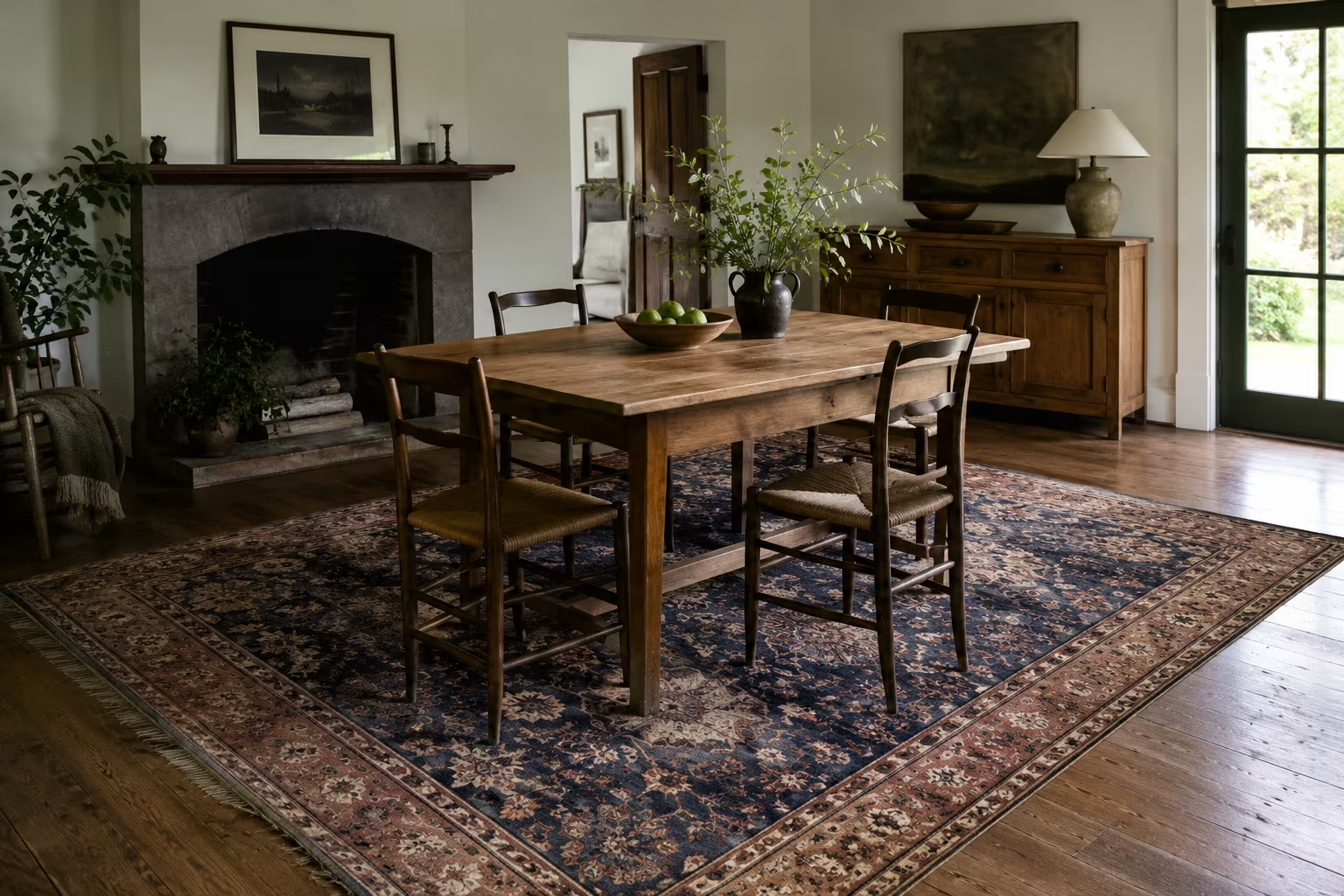
So, what kind of aesthetic does limewash create? Think soft, faded frescoes or ancient plaster walls. It’s got a very earthy, natural feel.

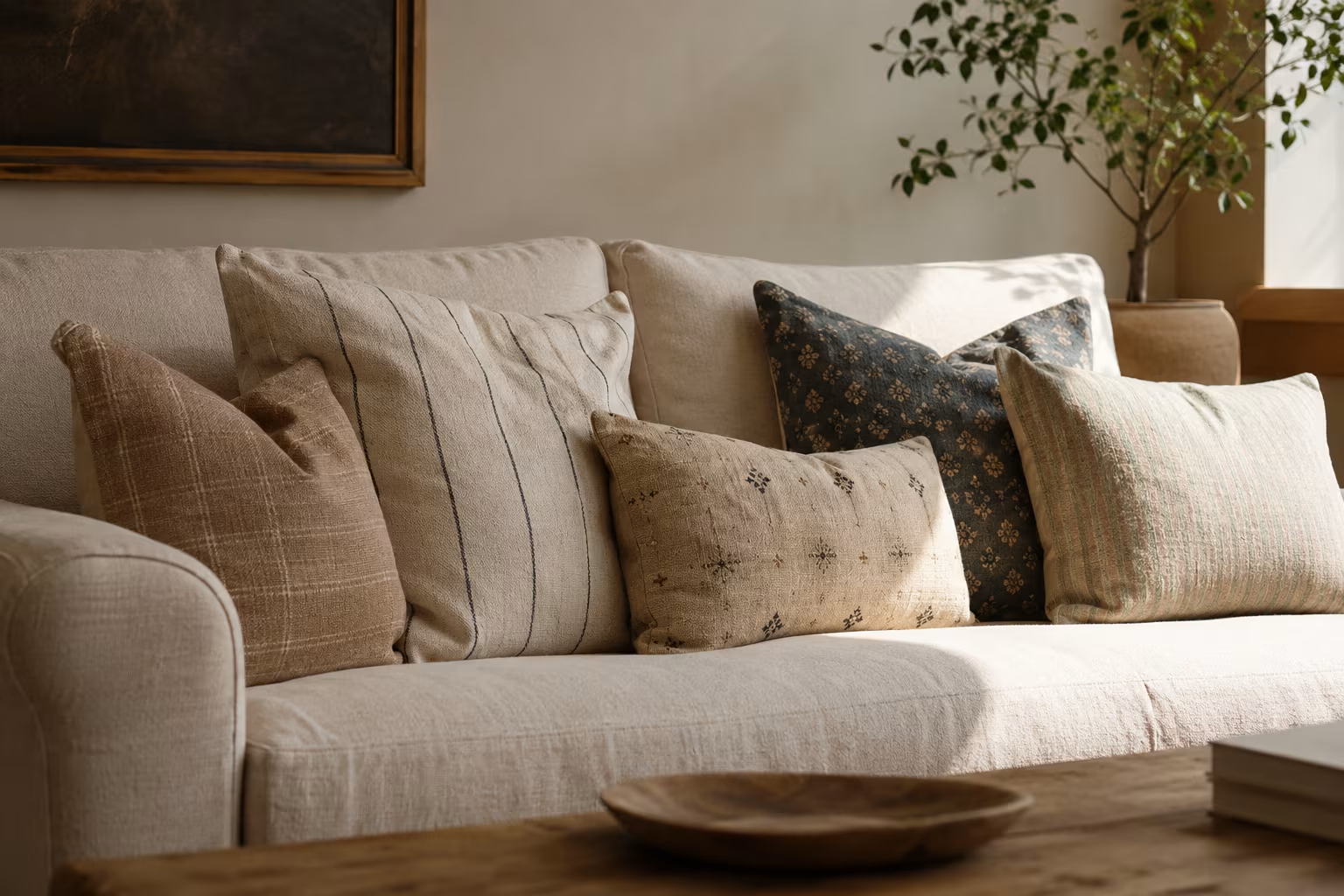
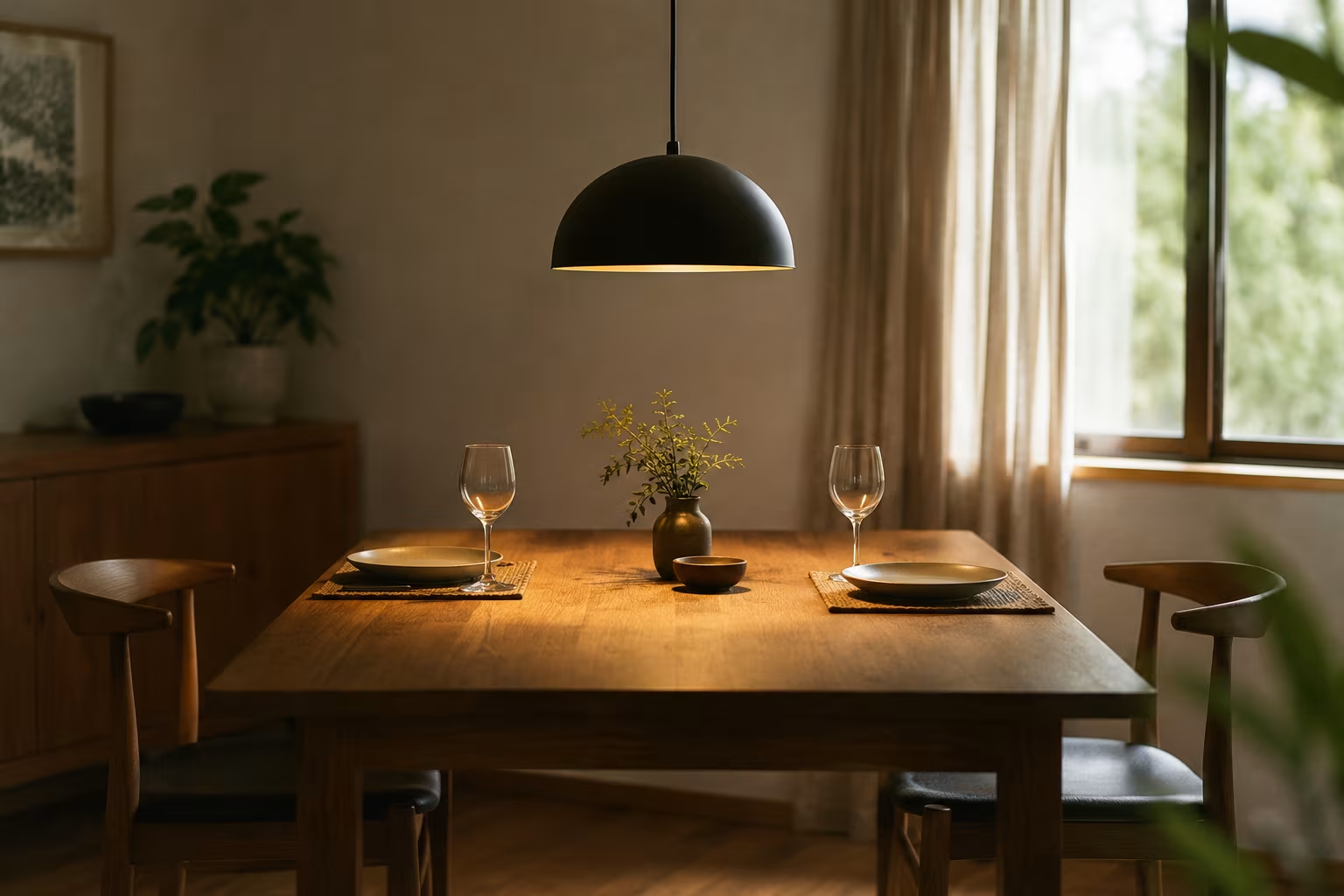
It adds texture without being rough, and depth without being busy. It really lets other elements in your room—like furniture, art, or plants—shine, by providing a calm, sophisticated backdrop.

  • Subtle Movement - The paint dries with natural variations, creating a soft, cloud-like effect. It's never static.
  • Matte Finish - It has a super flat, velvety matte look, absorbing light rather than reflecting it. This creates a really soft glow.
  • Organic Feel - Because it's a natural material, it brings an earthy, rustic elegance that complements minimalist and natural decor beautifully.

Why I'm Obsessed (beyond Just the Look)

Okay, the look alone probably sold you, right? But there’s more to love about limewash paint than just its stunning aesthetics. As a maker, I always appreciate materials that do more than just sit there.

First off, it’s generally more eco-friendly than synthetic paints. Most limewash brands use natural pigments and have very low or zero VOCs (volatile organic compounds). That's a big win for indoor air quality, especially if you’re sensitive to paint fumes.

It's also incredibly breathable. Unlike latex paints that form a plastic-like film, limewash allows walls to "breathe," which can be great for older homes or areas prone to moisture, helping to prevent mildew.

And for all you DIYers, it's pretty durable! Once cured, it's a robust finish. It doesn't chip or peel like some paints, and it actually hardens over time, becoming stronger as it absorbs carbon dioxide from the air.

I used it in my living room, which gets a lot of foot traffic (and dog traffic!), and it’s held up beautifully. A quick wipe with a damp cloth usually takes care of any minor marks.

How to Actually do It

Alright, let’s get down to the nitty-gritty: putting this stuff on your walls. Don't be intimidated! It's different from regular painting, but once you get the hang of the technique, it's really satisfying.

The biggest difference is that you're not aiming for perfection. You're aiming for organic texture and variation. That's actually less stressful, I think!

Here’s the basic rundown of how I tackled my bedroom walls. You’ll probably want a partner for the full room, but you can definitely do a small accent wall on your own.

Step 1: Prep Your Walls (the Unfun but Crucial Part)

Just like any painting project, preparation is key. You'll want to clean your walls thoroughly to remove any dust, dirt, or grease. A quick wipe-down with a damp cloth and a little dish soap usually does the trick.

Make sure your walls are completely dry before moving on. Fill any holes or cracks, sand them smooth, and wipe off the dust. You're building a good foundation for that beautiful finish.

Trust me, skipping this step will haunt you later. I once tried to shortcut cleaning on a cabinet project, and the paint just didn't adhere right. Learn from my mistakes!

Step 2: Prime, Prime, Prime! (and Use the Right Kind)

This is probably the most important step for limewash, and it’s where many beginners go wrong. You can't just slap limewash over any old paint.

You need a specific kind of primer: a breathable mineral primer, often called a "blocker" or "sealer" primer. This primer creates an even, slightly absorbent surface that allows the limewash to bond properly and achieve its characteristic look.

Using a regular latex primer will seal the wall too much, preventing the limewash from penetrating and reacting correctly. Your final result will look flat and patchy, not cloud-like.

Apply one or two coats of the mineral primer according to the manufacturer's instructions, ensuring full, even coverage. Let it dry completely – usually 24 hours – before you even think about the limewash.

Step 3: Stir Your Paint (don't Shake!)

Limewash paint separates a lot more than regular paint. The pigment and lime particles will settle at the bottom. So, before you start, give it a really good stir with a paint stirrer. Don't use a paint shaker like at the hardware store – it can introduce too much air.

Keep stirring frequently during application too. This ensures you're always picking up a consistent mix of pigment and lime, which is essential for that lovely, subtle variation in color.

I keep my stirrer in the bucket and give it a swirl every time I dip my brush. It seems like a small thing, but it really does make a difference in the finished look.

Step 4: Grab Your Brush (and Make It a Good One)

Forget your standard paint roller for limewash. You're going to need a large, natural bristle brush. Think of it like a masonry brush, often a rectangular or oval shape, around 4-6 inches wide.

Why a specific brush? The natural bristles hold more paint and allow you to apply it in the characteristic cross-hatch or irregular strokes needed to get that cloudy effect. A synthetic brush or roller will give you a much flatter, streakier look.

I found a decent 5-inch natural bristle brush for about $25 at my local hardware store. It was an investment, but worth it for the right finish.

Step 5: Apply the First Coat (the Fun Part!)

Here’s where the magic happens. Dip your brush into the limewash, but don't overload it. You want enough to work with, but not dripping.

Apply the paint to the wall using loose, random, overlapping strokes. Think in "X" or "W" patterns, or just really free-form, short strokes. You're not trying to create perfect straight lines or even coverage at this stage.

The goal is to create variation. Work in small sections, maybe 2x2 or 3x3 feet, blending your strokes into each other. Don’t try to paint a whole wall section in one go. Keep a wet edge as you move along.

You'll notice it looks a bit transparent and streaky at first. Don't panic! It will dry much lighter and more opaque, with those lovely variations starting to appear. That’s totally normal.

Step 6: Let It Dry (patience is a Virtue)

Limewash needs time to dry and cure. For the first coat, most brands recommend waiting at least 8-12 hours, or even overnight, before applying the second coat.

Resist the urge to go back and touch up areas once it starts to dry. Limewash dries quickly on the surface, and going over partially dry paint will just leave brush marks and mess up the texture.

Just step away and let it do its thing. It’s a paint that really benefits from patience. My first attempt had some weird touch-up spots because I was impatient, and I had to learn that lesson the hard way.

Step 7: Apply the Second Coat (bringing It to Life)

The second coat is where the limewash really starts to sing. Apply it using the exact same random, overlapping, cross-hatch strokes as the first coat.

This second layer builds on the variations from the first, intensifying the color and creating that beautiful, multi-dimensional cloudy effect. You'll see the depth truly come through.

Again, maintain a wet edge and work in manageable sections. Some rooms might even benefit from a third coat if you want a deeper color or more pronounced effect, but two is usually perfect.

Step 8: Curing Time and Final Reveal

Once your final coat is on, let it cure completely. This can take anywhere from a few days to a few weeks, depending on humidity and ventilation.

During this time, the paint will continue to react with the air, hardening and developing its full chalky, matte finish. The color might also subtly change or deepen slightly.

Stand back and admire your handiwork! It's such a different feeling than a regular paint job, and the subtle variations make your walls feel truly unique. I still stare at my bedroom walls sometimes, just appreciating the texture.

Making It Stick / Common Mistakes

Even though limewash is forgiving in its application style, there are a few places where people usually trip up. Knowing these ahead of time can save you a lot of frustration (and maybe a re-do!).

The biggest mistake, I've seen, is treating it like regular paint. It just isn't. It's a mineral coating, and it behaves differently.

"Limewash isn't about covering a wall; it's about letting the wall tell a story through texture and light."

Mistake 1: Skipping the Right Primer

I mentioned this, but it bears repeating. Using a standard latex primer or no primer at all is a recipe for disaster. The limewash won't adhere or perform correctly, leaving you with patchy, uneven, or peeling results.

Always, always use a specialized mineral or breathable primer recommended by the limewash manufacturer. It’s an extra step and cost, but it’s non-negotiable for success.

Mistake 2: Applying Too Uniformly

If you're used to painting for perfectly smooth, even coverage, you might subconsciously try to achieve that with limewash. Don't! This will make your walls look streaky, not cloudy.

Embrace the randomness. Those irregular, overlapping strokes are what create the characteristic depth and movement. It takes a little trust to let go of perfection, but it's worth it.

Mistake 3: Using the Wrong Brush (or a Roller!)

A small, synthetic brush or a roller simply won't give you the desired effect. Rollers lay down paint too evenly and don't allow for the varied texture that a large, natural bristle brush does.

The right tools really do make a difference here. Invest in that good quality limewash brush. You'll thank yourself later when you see the beautiful finish.

Mistake 4: Not Testing a Patch

Colors look different on a swatch than on a whole wall. Limewash colors also dry significantly lighter than they appear wet. This means what you see in the bucket isn't what you'll get.

Always paint a test patch (at least 2x2 feet) in an inconspicuous area, or on a large piece of cardboard. Let it dry completely through both coats. Observe it in different lighting throughout the day.

This gives you a realistic idea of the final color and texture. I always do this now, especially after a project where the color ended up way lighter than I expected.

Mistake 5: Not Stirring Frequently Enough

As I said, limewash components settle quickly. If you don't stir regularly while painting, you'll end up with areas that have more pigment and areas that have more lime, leading to very noticeable inconsistencies in color and texture.

Keep that stir stick handy and give the paint a good mix every few minutes, especially when refilling your tray or dipping your brush.

Frequently Asked Questions

Is Limewash Paint Durable Enough for High-traffic Areas?

Absolutely! Once limewash paint is fully cured, it forms a very hard and durable finish. It can stand up well to everyday wear and tear, making it suitable for living rooms, hallways, and even some light commercial spaces.

Just remember it's a matte finish, so it doesn't have the sheen or slickness of an eggshell or semi-gloss paint. For really intense areas, some people add a breathable topcoat, but I haven't found that necessary in my home.

Can I Use Limewash in Bathrooms or Kitchens?

You can! Because it’s a breathable coating, it handles moisture better than some traditional paints, making it less prone to mildew. However, it's not designed to be scrubbed vigorously like a kitchen or bathroom specific latex paint.

For areas with direct water splashes (like inside a shower or behind a sink), you might want to consider a protective, breathable sealer. For general walls in these rooms, it works beautifully and adds a spa-like feel.

How Many Coats of Limewash do I Actually Need?

Typically, two coats of limewash paint are recommended for optimal coverage and to achieve the signature depth and variation. The first coat can look a little translucent and patchy, which is totally normal.

The second coat really builds up the color and texture, bringing out those beautiful cloudy effects. Some really light colors or if you're going over a very dark wall might benefit from a third thin coat, but two is usually the standard.

What Kind of Primer Should I Use, Specifically?

You need a mineral-based, breathable primer. Brands that make limewash paint will usually also sell their own compatible primer. Look for terms like "mineral primer," "alkali-resistant primer," or "limewash primer."

It's formulated to allow the limewash to bond and react correctly with the wall, creating the desired aesthetic. Don't substitute with a regular latex primer; it will prevent the limewash from working its magic.

Is Limewash Hard to Remove or Paint over Later?

It’s not necessarily "hard" to remove, but it's different. Because limewash penetrates the surface, it's not like peeling off a layer of latex paint. You generally don't "remove" it.

If you want to change colors or go back to regular paint, you'll need to apply another compatible primer over the limewash first. This creates a new, stable surface for your next paint choice. I haven't had to do it yet, but I know a good primer always helps.

Is Limewash Worth the Extra Cost Compared to Regular Paint?

This is a big one, because limewash is often more expensive per gallon than standard latex paint. My last gallon was about $70, where a similar quality latex paint might be $40-50.

However, I firmly believe it's worth it for the unique aesthetic and feel it brings to a room. It adds an artisanal, high-end look that you just can't replicate cheaply. For me, it's an investment in the overall feel of my home, not just a paint job.

The Bottom Line

Limewash paint is more than just a trend; it's a timeless way to add organic beauty and quiet sophistication to your home. It’s got a learning curve, sure, and it's not a rush job, but the results are absolutely stunning.

If you’re craving walls with personality, that minimalist, Wabi-Sabi vibe, and a connection to natural materials, then limewash is definitely something you should explore. Don't be afraid to try it on a small wall first. You might just fall in love with the process and the incredible transformation it brings. Happy making! ❤️

Laura Hayes
Written by

Laura Hayes

Maker and craft enthusiast from Portland, Oregon. I've been documenting my DIY journey since 2019 - everything from woodworking to paper crafts. When I'm not in my garage workshop, you'll find me hunting for supplies at thrift stores.