
Beginner Watercolor Paper Choice for Textured Washes
The short answer
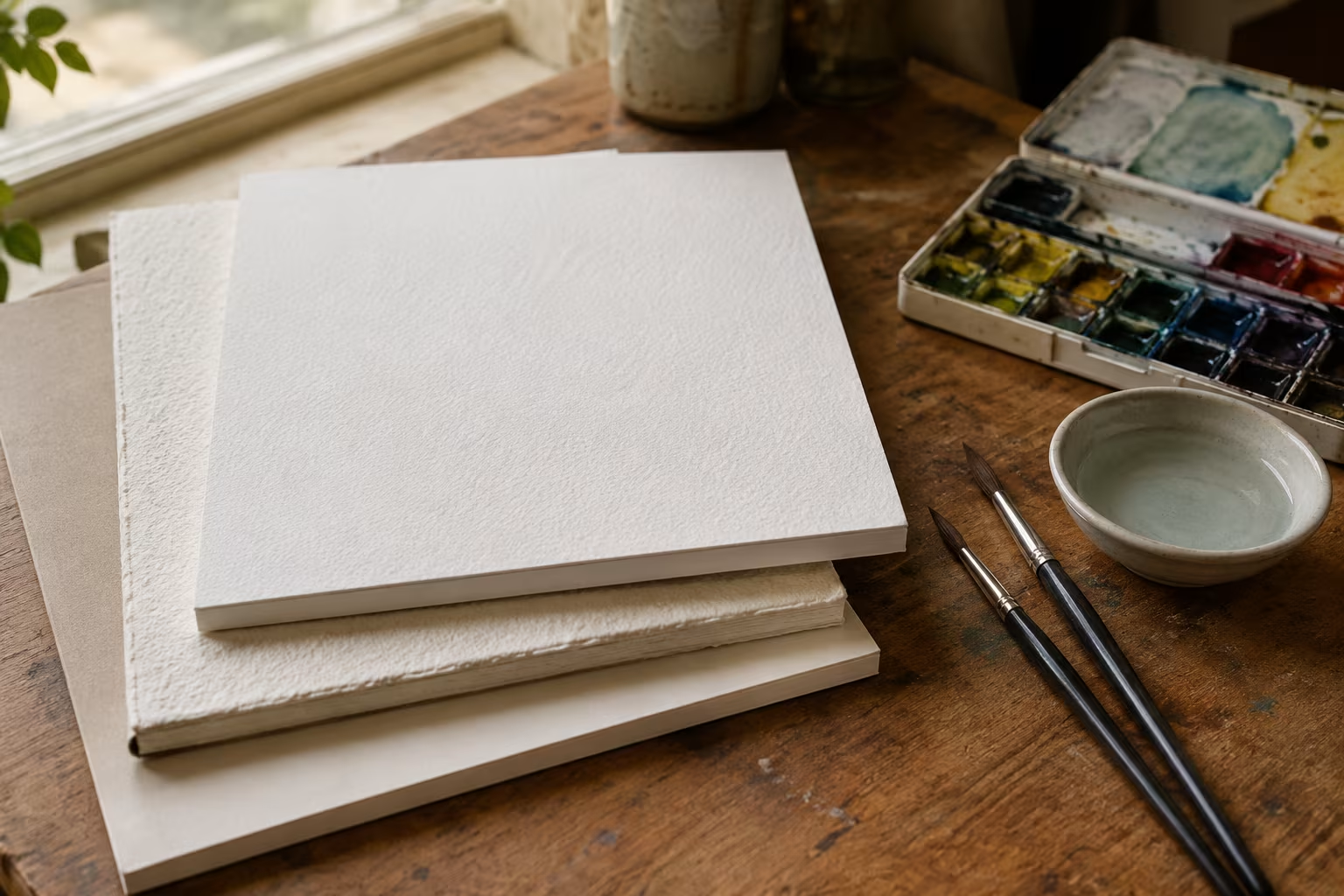
For a beginner committing to watercolor, the right starting paper is 140 lb (300 gsm) cold-press cotton paper from a known brand — Arches, Saunders Waterford, Fabriano Artistico. The weight handles standard washes without buckling badly, the cold-press texture suits most subject matter, and cotton holds wet washes far longer than cellulose, giving you time to work.
Skip the cheap student-grade pads sold at general craft stores. They are usually thin cellulose paper that buckles, tears under masking tape, and lets washes dry too fast. The cost saving is real but the frustration is also real, and many beginners who try watercolor on bad paper conclude they don't enjoy watercolor when the actual problem was the paper.
The trade-offs that matter: cold-press for most work, hot-press for detailed botanical or portrait work, rough for landscape and texture-heavy painting. 140 lb is the standard weight; 300 lb is luxurious and never buckles but costs significantly more. Cotton paper costs roughly twice cellulose for the same sheet size but the painting experience is a different category.
Paper weight and what it means
Watercolor paper weight is measured in pounds per ream (US) or grams per square meter (international). The common weights:
90 lb (200 gsm) thin paper. Buckles severely under any wash. Not recommended for actual painting; sometimes sold as practice pads.
140 lb (300 gsm) the standard. Most watercolor pads and blocks are this weight. Handles normal washes with minor buckling that flattens after drying.
300 lb (640 gsm) heavy, almost cardboard. Does not buckle. Costs roughly twice the 140 lb price. Used for important paintings or when you don't want to stretch paper.
Heavier weight does not change painting technique — it changes what the paper does under water. A 140 lb sheet will buckle under a heavy sky wash and have small ripples after drying; a 300 lb sheet stays flat. Both can produce the same finished painting; the heavy paper just makes the painting process feel more stable.
For most beginners, 140 lb is the right starting weight. The flatness advantage of 300 lb does not justify the cost premium when you're still learning. Move to 300 lb when you have specific paintings worth the investment.
Cold-press, hot-press, rough
The surface texture of watercolor paper changes everything about how it accepts pigment.
Cold-press (CP) medium texture, slight bumps. The most versatile and the right starting choice. Most subject matter works on cold-press. The texture catches pigment unevenly, which is what creates the "watercolor look" people associate with the medium.
Hot-press (HP) smooth surface. Pigment sits on top rather than being held by texture. Good for tight, detailed work — botanical illustration, portraits, calligraphy combined with watercolor. Less forgiving of washes; pigment can pool and dry hard-edged.
Rough heavily textured surface. The texture is so pronounced that it dominates the painting. Used for landscape work where the texture suggests grass, rock, foliage. Less suitable for fine detail.
The cold-press recommendation for beginners is not a default; it's because cold-press teaches the medium's natural behavior. Once you understand how watercolor works on cold-press, you can choose hot-press or rough deliberately when a specific painting wants those properties.
Cotton versus cellulose
Watercolor paper is made from either cotton fiber or processed wood pulp (cellulose). The difference is substantial.
Cotton paper longer fibers, more absorbent, holds water longer, allows lifting and re-wetting. The standard for serious watercolor. Brands: Arches, Saunders Waterford, Fabriano Artistico, Winsor & Newton Professional.
Cellulose paper shorter fibers, less absorbent, water dries faster on the surface. Sometimes treated to behave more like cotton but never matches it. Lower cost. Brands: Strathmore 400, Canson XL, student-grade Fabriano lines.
The practical difference on cotton paper, a wet wash stays workable for 5-15 minutes depending on humidity. On cellulose, the same wash dries in 2-5 minutes. The longer working time on cotton lets you blend, lift, and add detail while the paper is still wet — fundamental watercolor techniques that cellulose paper makes much harder.
A beginner who tries to learn wet-on-wet techniques on cellulose paper concludes the technique doesn't work. The technique works fine; the paper was wrong.
Brand recommendations
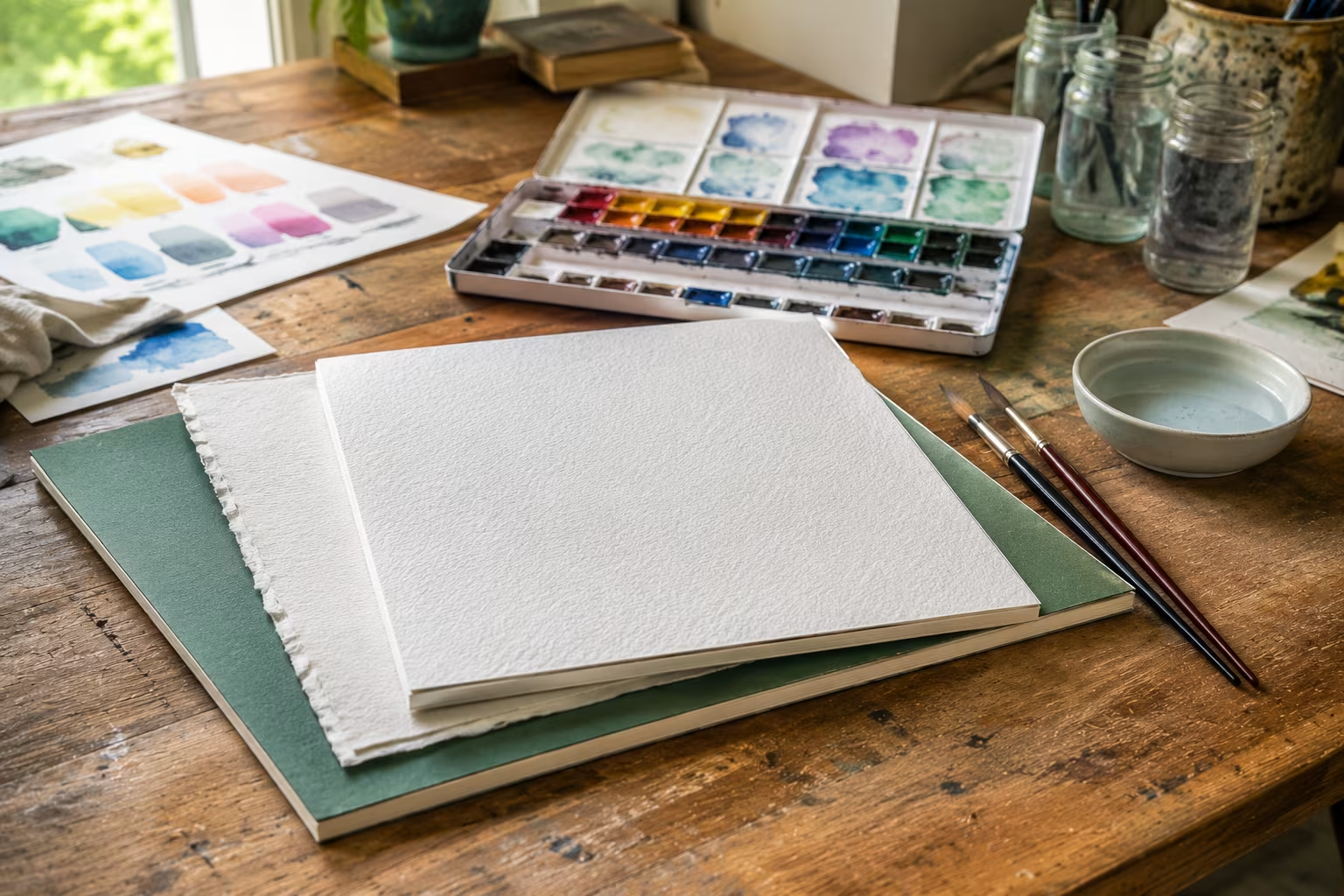
The watercolor paper market has consolidated around a few professional brands.
Arches (French) the most recognized professional watercolor paper. Made from 100% cotton, gelatin-sized, available in CP, HP, and rough. Slightly more expensive than other professional brands. The paper most painters use for finished work.
Saunders Waterford (English) close to Arches in quality and reputation. Some painters prefer it for being slightly less absorbent (longer working time on top); others find Arches more absorbent in a good way.
Fabriano Artistico (Italian) cotton paper at slightly lower price than Arches or Saunders. Less brand recognition but quality is comparable.
Winsor & Newton Professional a more recent entry into the high-end market. Reportedly good but less established reputation.
For student-grade (still cellulose-based but better than craft store paper): Strathmore 400 series, Canson XL. These work for practice and learning but eventually you'll want to move to cotton for finished paintings.
Stretching paper or using a block
Watercolor paper buckles under water. Three solutions to the buckling problem.
Stretching soak the paper for 5-10 minutes, lay flat on a board, tape all edges with brown gummed tape, let dry overnight. The dry paper is stretched tight on the board and won't buckle further. After painting, cut the painting off the board, discarding the taped edges.
Pre-stretched watercolor blocks pads with all four sides glued. The paper is held flat by the glued edges. Paint on the top sheet; when finished, separate with a palette knife.
Heavy paper without stretching 300 lb paper barely buckles. If you can afford it, this is the most flexible approach.
Beginners often start with blocks because they require no preparation. Stretching is more involved but cheaper per painting. Heavy paper is the most expensive per painting but the most professional feel.
Sizing in paper
Watercolor paper is sized (treated with gelatin or similar) to control absorbency. Sizing affects how water and pigment behave on the surface.
Heavily sized paper water beads on top, slower absorption, pigment sits on the surface more. Better for hard edges and detail work.
Lightly sized paper water absorbs quickly, washes spread freely, pigment sinks into the paper. Better for soft, atmospheric work.
Most professional papers are moderately sized. Hot-press papers often have heavier sizing; rough papers often have less.
You don't usually choose paper by sizing directly; you choose by texture and brand, and sizing comes with that choice.
Storage and handling
Watercolor paper changes with environment. Important habits:
Store flat or rolled loosely, not folded. Fold creases damage the surface and never paint cleanly.
Keep dry. Watercolor paper absorbs ambient humidity over months in a humid room. The paper still works but the surface character changes slightly.
Avoid touching the painting surface with oil from fingers. Skin oils repel water and create fish-eye spots when painted over. Hold paper at the edges.
Use the painting side. Watercolor paper has a "right" side (the more textured side on cold-press, the smoother on hot-press). The watermark in the corner is usually readable from the painting side.
Trim with a sharp blade against a straight edge, not scissors. Torn or ragged edges look unfinished on display.
What to actually buy as a beginner
A reasonable starter watercolor paper kit:
One 9x12 inch block of Arches 140 lb cold-press, 12 sheets. This gets you ten serious paintings without preparation. Use for paintings you want to keep or show.
One 12x16 inch pad of Strathmore 400 series cold-press, 15 sheets. Lower-cost paper for practice, exercises, color tests. Use freely without worrying about cost per sheet.
One sketchbook size (5x7 or smaller) watercolor pad of either cotton or quality cellulose. Use for everyday quick sketches and journaling.
This combination handles practice, learning, and serious work with appropriate paper for each level. Total cost is moderate but not extravagant.
Avoid the temptation of large multi-sheet pads of cheap cellulose paper at art supply stores. The savings is real but you'll waste sheets discovering that they don't take watercolor well, and you'll learn watercolor more slowly because the paper is fighting you.
A note on Yupo and synthetic surfaces
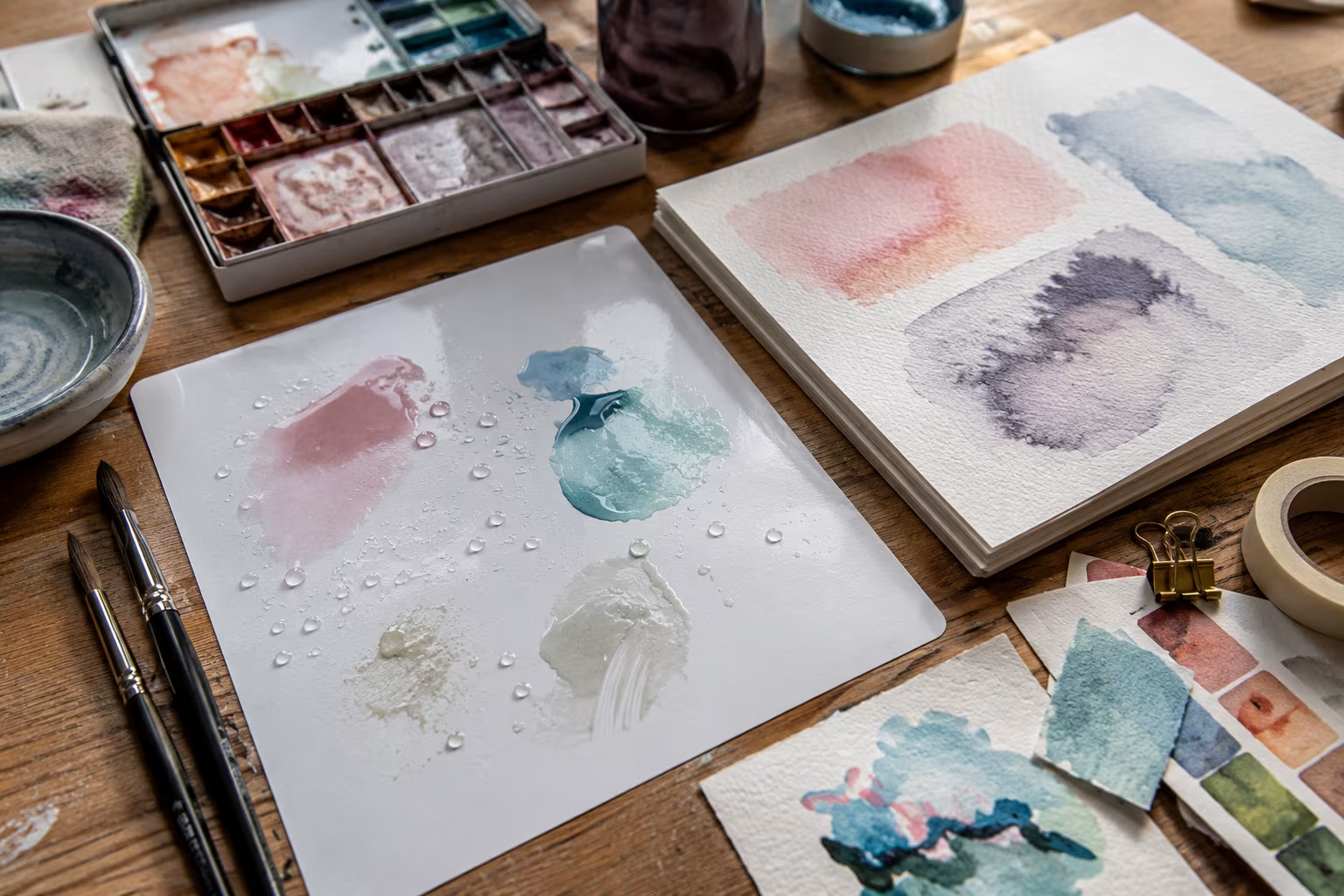
Yupo is a plastic-based "paper" that some watercolorists use. Water beads completely on top; paint can be lifted and reworked indefinitely. It produces a distinctive look that suits abstract and experimental work.
Yupo is not a beginner paper. It teaches the wrong instincts — paint doesn't sink in, washes behave nothing like real paper. Try it after you understand watercolor on real paper.
Similar surfaces (Aquabord, illustration board) have their place but aren't watercolor paper substitutes. Each is its own medium with its own learning curve.
The traditional cotton paper experience is the foundation. Start there, paint on it for months, and then experiment with alternatives once the basics are second nature.
Watercolor Paper Brands and Sourcing
The paper market for watercolor artists ranges from student-grade to fully professional cotton sheets. Arches (France) is widely considered the global benchmark; their 100% cotton, mould-made paper in 300 gsm cold-press finish costs roughly 25-45 USD per 22x30 inch sheet (as of 2026 — confirm current pricing before relying). Saunders Waterford (St Cuthberts Mill, England) offers comparable quality at slightly lower prices and is favored by many British painters. Fabriano Artistico (Italy) provides a brighter white tone preferred by botanical illustrators.
Mid-range options include Hahnemühle The Collection (Germany), Bockingford (cellulose-cotton blend), and Canson Heritage. These run 8-18 USD per sheet and serve well for studies, color tests, and final pieces when budget matters. Student-grade papers — Canson XL, Strathmore 400 series, Winsor & Newton Cotman pads — sit in the 30-80 USD per 20-sheet pad range and are appropriate for daily practice and skill-building.
Texture choice dramatically affects technique. Hot-press (HP) paper is smooth, ideal for fine line work, botanical illustration, and portraits where blending control matters. Cold-press (CP / NOT) has moderate texture, the workhorse of most watercolorists, balancing detail capability with characteristic granulation. Rough paper has pronounced texture, best for loose landscapes, atmospheric washes, and dramatic sky studies. A beginner typically starts with cold-press 300 gsm; advanced painters keep all three textures in studio rotation.
Stretching and Mounting Techniques
Heavier papers (300 gsm and above) usually don't require stretching for small studies, but anything 24x18 inches or larger benefits from proper mounting. The classic stretch method: soak the sheet in clean water for 5-8 minutes, lay it on a wooden board, tape all four edges with gummed kraft tape (Lineco, Gummed Brown Paper Tape — about 8-15 USD per roll), and let it dry flat for 8-12 hours. The paper contracts as it dries, creating a drum-tight surface that resists buckling even under heavy washes.
Stretching frames offer another solution. Wooden stretcher frames with stainless clips (sold by Daniel Smith, Jackson's Art Supplies) hold paper tension throughout a session without taping. They cost 60-180 USD depending on size and pay back the investment within a year of regular use.
Lighter weight papers (190 gsm and below) almost always require stretching for any serious work. Skipping this step leads to warping, pooling, and uneven drying — frustrating outcomes that often discourage beginners who mistake material issues for skill failures.
Brush and Pigment Pairing for Texture Work
The brush makes the wash. For textured paper, kolinsky sable rounds (sizes 8-14) hold maximum water for long unbroken washes; Da Vinci Maestro series 10 and Winsor & Newton Series 7 are workshop standards, running 80-300 USD per brush depending on size (as of 2026 — verify pricing). Synthetic blends like Princeton Heritage, Escoda Versatil, and Rosemary R6 Series offer reasonable performance at 15-60 USD per brush and serve well for daily practice.
Pigment selection interacts with paper texture too. Granulating pigments like ultramarine blue, viridian, cerulean, raw umber, and burnt sienna settle dramatically into rough surfaces, creating natural texture without effort. Smooth, staining pigments like phthalo blue, quinacridone rose, and Hansa yellow distribute evenly and suit hot-press paper. Daniel Smith's PrimaTek line (lapis lazuli, malachite, hematite) features extremely granular pigments treasured by landscape painters.
Pre-mixing wash colors in palette wells before starting saves intervention during the actual wash, which is critical because once water is on textured paper, the painter has roughly 30-90 seconds before flow control becomes impossible.
Paper weights, decoded:
| Weight | Behavior | Verdict |
|---|---|---|
| 90 lb (200 gsm) | thin, buckles under washes | practice only |
| 140 lb (300 gsm) cold-press cotton | the standard | THE beginner answer |
| 300 lb (640 gsm) | never buckles | ~2× the price — later |
Related Posts
Beginner Pottery Wheel Speed for Centering
Centering clay needs high wheel speed and firm pressure. Most beginners use too low speed.

Calligraphy Ink Comparison for Cotton Paper
Modern dip pen calligraphy needs ink that doesn't bleed on absorbent cotton paper. India ink...
Knitting Needle Materials Compared: Wood vs Metal vs Plastic
Knitting needle material changes how stitches slide, how cold or warm the needle feels, and how...
Hand-Sewn Leather: Saddle Stitch Spacing That Actually Holds
Saddle stitching looks simple and fails subtly. Wrong spacing pulls thin leather apart. The...
Comments
No comments yet. Be the first to share your thoughts!