
Workshop Air Compressor Sizing: CFM and SCFM
The short answer
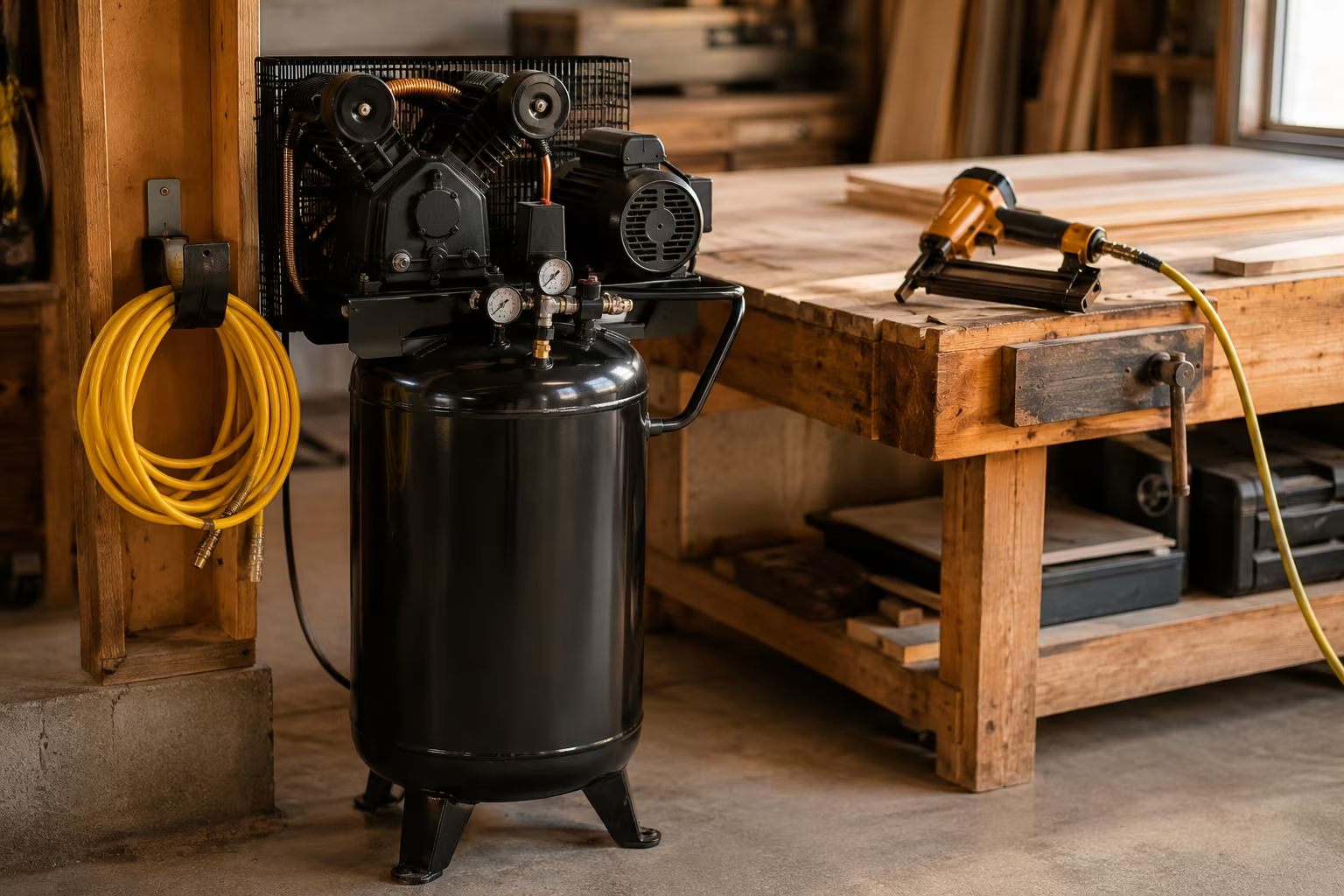
An air compressor sized correctly for your tools runs intermittently and keeps up with demand. Undersized, it runs constantly and tools sputter as the tank empties. Oversized, it costs more upfront and uses more electricity. Match the compressor's SCFM rating to 1.5x your highest-demand tool's CFM requirement.
For occasional brad nailing and tire inflation, a 1-2 gallon pancake compressor (under 3 SCFM) is fine. For framing nail guns and small air sanders, a 4-6 gallon compressor (5 SCFM). For consistent air tool use (impact wrenches, larger sanders, paint spraying), a 20-30 gallon compressor (7-10+ SCFM). For automotive shop use with multiple tools simultaneously, 60+ gallon with 12+ SCFM.
The SCFM rating matters more than the tank size for sustained tool use. A small tank can supply high-demand tools briefly; sustained use needs both adequate SCFM and adequate tank.
CFM vs SCFM
CFM (cubic feet per minute) is the volume of air a compressor delivers.
SCFM (standard cubic feet per minute) is the same measurement at standardized conditions (typically 90 PSI, 68°F, sea level). SCFM is the apples-to-apples rating that lets you compare compressors fairly.
Tool manufacturers list air consumption in CFM or SCFM at specific pressures (usually 90 PSI). Match the tool's requirement to the compressor's SCFM at the same pressure.
A compressor's CFM at 0 PSI (free air delivery) is impressive but useless — tools need air at working pressure.
Tool air consumption
Common tools and their air consumption at 90 PSI:
Brad nailer (18 gauge): 0.5-1 CFM intermittent.
Framing nailer: 2-4 CFM intermittent.
Impact wrench (1/2 inch): 3-5 CFM continuous.
Air ratchet: 2-5 CFM continuous.
Random orbital sander: 5-9 CFM continuous.
Spray gun (HVLP, small): 3-7 CFM continuous.
Spray gun (HVLP, large): 8-13 CFM continuous.
Sandblaster: 10+ CFM continuous (often needs dedicated compressor).
Intermittent vs continuous matters: intermittent tools (nail guns) work in bursts and let the compressor catch up between shots. Continuous tools (sanders, sprayers) demand sustained air supply.
Tank size considerations
The tank stores compressed air for use between pump cycles.
1-2 gallons: smallest portable compressors. Sufficient for inflating tires and very light intermittent nailing. Pump runs frequently.
4-6 gallons: small portable. Light nailing and occasional small tool use.
20-30 gallons: stationary or large portable. Most home shop use cases.
60-80 gallons: serious shop compressors. Multiple tools, paint spraying, professional work.
Larger tank means less frequent pump cycling and steadier pressure during tool use. A small tank with adequate SCFM can supply tools but the pump runs almost constantly.
Single vs two-stage
Single-stage compressors compress air once to operating pressure (typically 125-135 PSI maximum). Most home and light shop compressors.
Two-stage compressors compress air in two steps to higher pressures (175-200 PSI). Industrial and serious shop use. More efficient, cooler operation, longer pump life.
For most home workshops, single-stage is sufficient. Two-stage matters for high-volume professional use.
Oil-lubricated vs oil-free
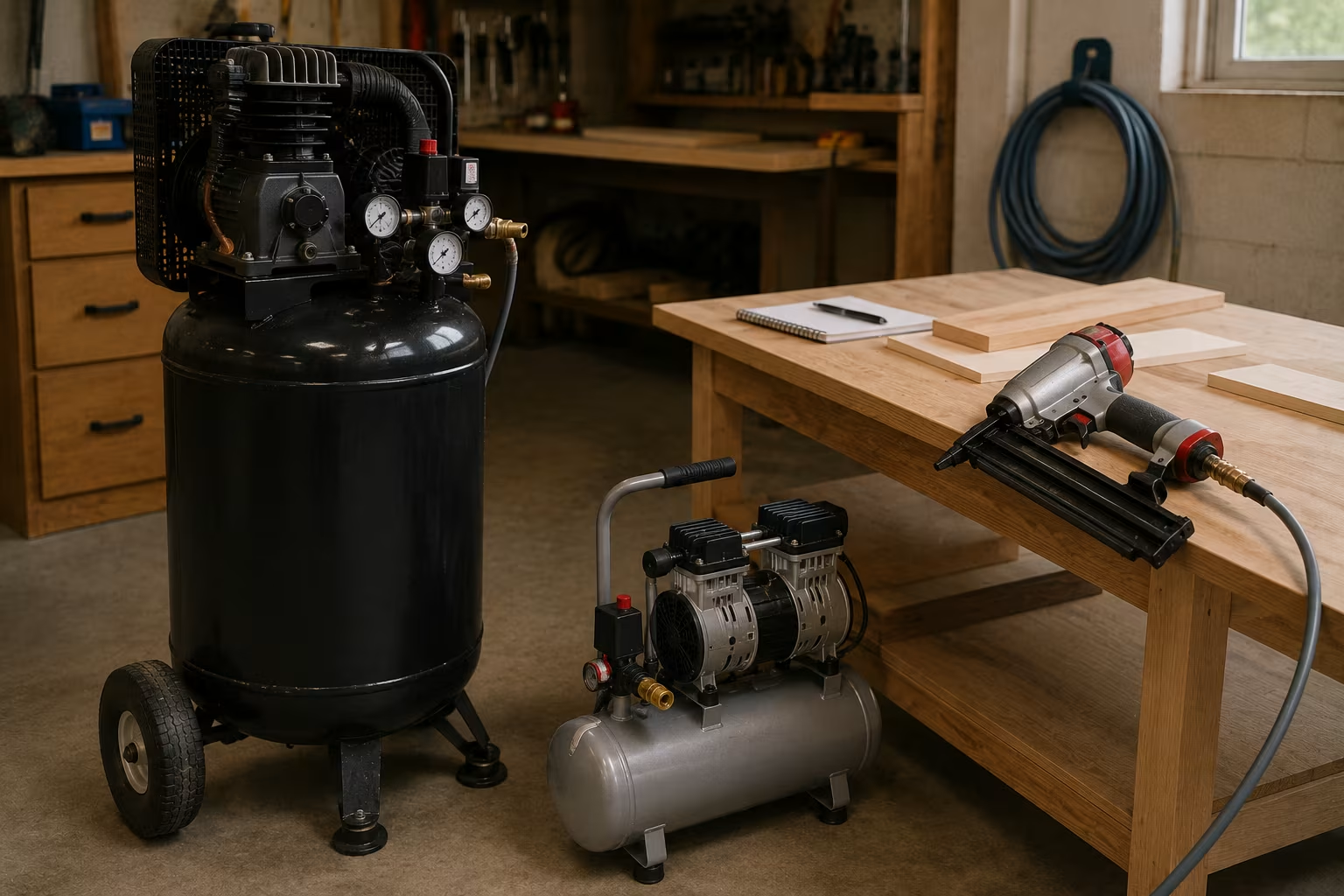
Oil-lubricated: traditional design, quieter, longer life, but requires oil checks and changes.
Oil-free: newer technology, lighter, no oil maintenance, but louder and shorter rated life.
Oil-free compressors have improved significantly. For occasional shop use, oil-free is fine and easier. For heavy professional use, oil-lubricated still wins on longevity.
Voltage and power
110V/15A compressors: most portable and small stationary units. Plug into standard outlets. Limited to about 2 HP motor.
110V/20A compressors: require dedicated 20-amp circuit. Up to about 3 HP motor.
220V compressors: serious shop equipment. Require 220V wiring (electrician usually needed). 5+ HP motors. Better efficiency for sustained use.
The voltage requirement determines installation cost. Adding a 220V circuit costs hundreds in electrician fees.
Noise considerations
Compressors are loud. dB ratings vary dramatically.
Quiet oil-lubricated: 60-70 dB. Manageable in residential settings.
Standard portable: 80-90 dB. Loud — hearing protection recommended.
Industrial: 90+ dB. Definite hearing protection.
For shops in residential areas, look for "quiet" or "low noise" rated compressors. The premium for quieter models is real but the difference is significant.
Practical sizing for common shop setups
Occasional weekend DIY (tire inflation, brad nails, occasional small tools): 3-6 gallon pancake or hot dog compressor, 2-3 SCFM. Cost is modest.
Active home workshop (regular finish nailing, occasional spray painting, light sanding): 20-30 gallon, 6-7 SCFM. Cost is moderate.
Serious home shop (frequent spray painting, impact wrench use, multiple tools): 60-80 gallon stationary, 10+ SCFM. Cost is significant.
Professional automotive or fabrication: 80+ gallon two-stage, 15+ SCFM, possibly with multiple compressors in parallel.
Match the compressor to your most demanding regular use, not your occasional rare use. A small compressor handles occasional use fine; constant work demands appropriate sizing.
Tank pressure and regulation
Compressors have two pressure points: cut-in (when pump starts) and cut-out (when pump stops). Typically cut-in around 95 PSI, cut-out around 125-135 PSI.
The regulator at the air outlet lets you set the working pressure your tools need (usually 90 PSI).
Tools running at higher pressure than rated wear out faster. Tools running at lower pressure than rated underperform.
Keep the regulator at the tool's rated pressure, not the compressor's maximum.
Maintenance basics
Drain the tank after every use. Condensation in the tank causes rust and contamination.
Check oil level (lubricated compressors). Change oil at recommended intervals.
Check the air intake filter. Replace when dirty.
Inspect hoses and connections for leaks. Leaks waste energy and air supply.
Keep the compressor clean. Dust on the cooling fins reduces efficiency.
A well-maintained compressor lasts 10-20 years of regular use. Neglect cuts this significantly.
Air Compressor Categories and Workshop Match
The air compressor market spans from small pancake-style units for inflating tires to massive industrial rotary screw compressors. For most home workshops, three categories cover the needed range:
Pancake compressors (1-6 gallon tanks): portable, lightweight, designed for nail guns and small inflation tasks. Brands like Porter-Cable C2002 (6-gallon, 150 psi max), Bostitch BTFP02012 (6-gallon, 150 psi), Makita MAC2400 (4.2-gallon, 130 psi). Prices 80-250 USD (as of 2026 — confirm current pricing). CFM output typically 2-3 at 90 psi — adequate for finish nailers, brad nailers, light spray work but not for sustained operation of impact wrenches or sanders.
Hot dog and twin-stack compressors (4-10 gallon tanks): mid-size portable units handling more demanding tools intermittently. Brands like DeWalt DWFP55126 (6-gallon, 165 psi), Husky Hi-Flo H1820F (20-gallon wheeled, 200 psi). Prices 150-450 USD. CFM 3-5 at 90 psi. Suitable for occasional impact wrench use, brad nailer continuous duty, small HVLP spray gun for cabinetry.
Vertical/horizontal large tank compressors (20-80 gallon tanks): stationary or wheeled workhorses for serious workshops. Brands like Quincy QT-54 (60-gallon, two-stage, 175 psi), Eagle EA-9000V (60-gallon, single-stage, 135 psi), Ingersoll Rand SS3F2-GM (60-gallon, two-stage, 175 psi). Prices 500-2500 USD. CFM 6-15 at 90 psi. Handles continuous impact wrench operation, full-size HVLP spray guns, die grinders, plasma cutters.
Industrial rotary screw compressors (20+ HP, large oil-injected): for production shops and continuous high-demand applications. Outside scope for typical home workshops.
Calculating Required CFM
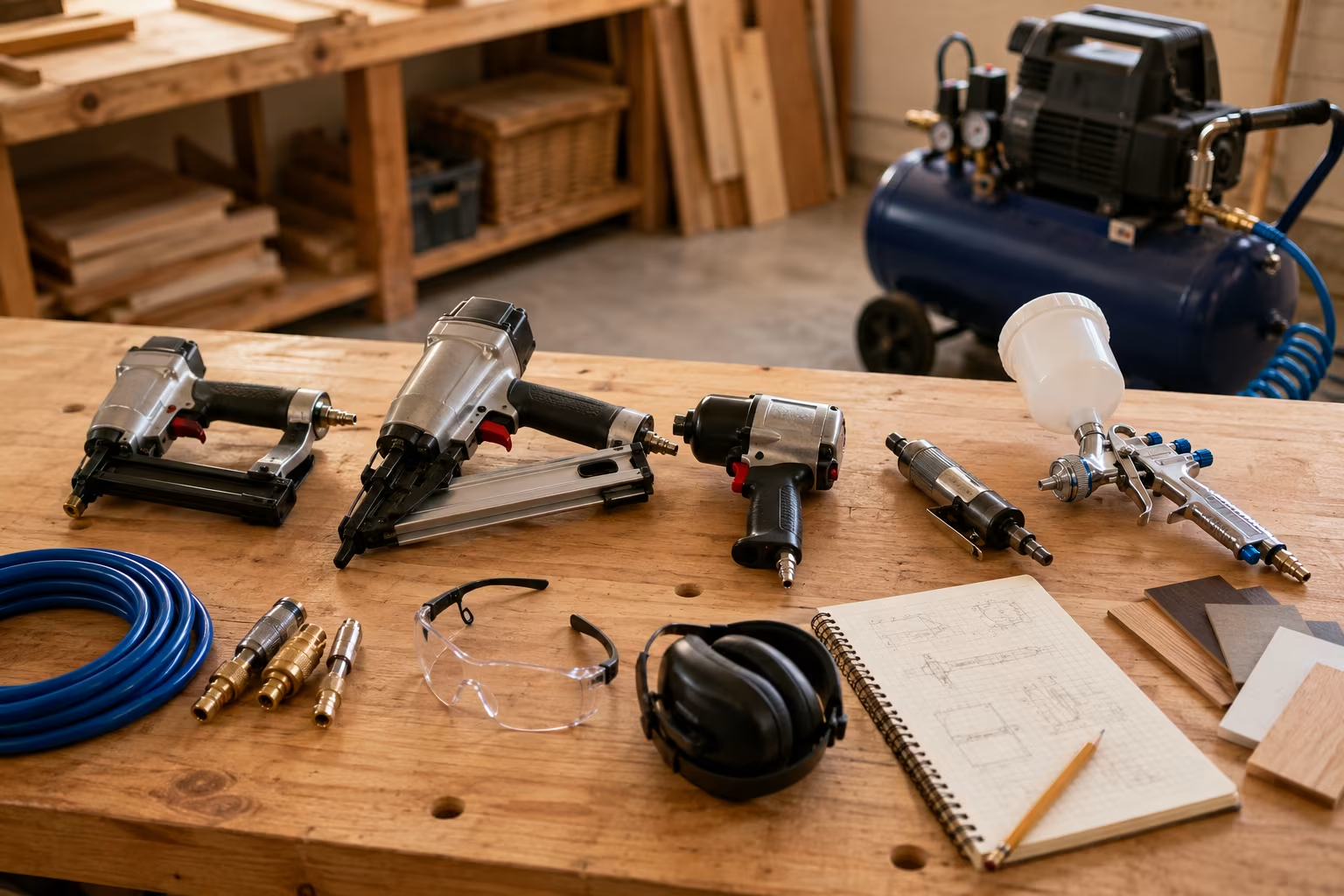
Air-powered tools list their required CFM (cubic feet per minute) at specific pressure ratings. Common tools and their CFM requirements at 90 psi:
Brad nailer: 0.3 CFM (intermittent use, so even small compressors handle it)
Framing nailer: 2.5 CFM intermittent — works with most pancake compressors
Impact wrench (1/2 inch): 4-6 CFM continuous — requires larger tank
Die grinder: 5-8 CFM continuous — minimum 20-gallon compressor recommended
HVLP spray gun (cabinet quality): 11-15 CFM continuous — requires 60+ gallon compressor
Sandblaster: 15-30 CFM continuous — heavy-duty stationary compressor required
Cut-off tool: 5-8 CFM continuous — 20+ gallon compressor
The rule of thumb: total compressor CFM rating should exceed the highest single-tool requirement by 30-50% for sustained use. Tanks larger than 20 gallons provide reservoir buffer for brief CFM peaks above continuous output.
For a typical mixed-use workshop (occasional impact wrench, framing nailer for projects, small spray work), a 20-30 gallon compressor with 5-7 CFM at 90 psi handles most needs. For dedicated spray finishing or sustained heavy tool use, scale up to 60+ gallon with 8-12 CFM.
Oil-Lubricated vs Oil-Free Compressors
Two fundamentally different pump designs serve different priorities:
Oil-lubricated compressors: traditional design with oil bath lubricating the piston. Quieter, longer lifespan (10-25 years typical), but require maintenance (oil changes every 100-200 operating hours). Higher initial cost. Better for sustained heavy use. Most large stationary compressors use this design.
Oil-free compressors: synthetic-lubricated or PTFE-coated cylinders eliminate oil requirements. Lighter weight, no maintenance beyond air filter changes, immediately ready for paint spray applications (no oil contamination in air line). Shorter lifespan (5-10 years typical) and louder operation. Higher continuous noise output. Most portable pancake and hot-dog compressors use this design.
For workshops doing significant paint spray work, oil-free compressors avoid oil contamination problems entirely. For workshops emphasizing tool longevity and sustained use, oil-lubricated designs offer better long-term value despite higher maintenance.
Single-Stage vs Two-Stage
Single-stage compressors compress air to final pressure in one pump cycle. Maximum pressure typically 135-150 psi. Less expensive, lighter weight, adequate for most home workshop needs.
Two-stage compressors compress air partially in first cylinder, then fully in second smaller cylinder. Can produce higher pressure (175-200+ psi) more efficiently. More expensive, heavier, longer-lasting. Required for sustained high-pressure applications like sandblasting and continuous heavy tool use.
For most home workshops, single-stage compressors at 135-150 psi handle all common tools. Upgrade to two-stage when running multiple high-CFM tools simultaneously or operating air tools 4+ hours daily.
Installation Considerations
A stationary workshop compressor benefits from proper installation:
Location: cool, dry, well-ventilated space. Compressors generate heat; cramped spaces shorten lifespan. Allow 18-24 inches clearance on all sides for airflow.
Electrical: large compressors often require 220V dedicated circuits with 20-30 amp service. Verify electrical capacity before purchasing. Installation by licensed electrician typically 200-500 USD if new circuit needed.
Drainage: compressors produce water condensation that must drain from tanks. Daily manual drain valve operation prevents tank rust. Automatic drain valves (50-150 USD) automate this maintenance.
Air line plumbing: hard-piped air lines (copper, galvanized steel, or specialized air system aluminum like RapidAir) outlast flexible hoses and provide quick-disconnect access throughout the shop. Initial plumbing cost 300-1500 USD depending on workshop size and complexity.
Noise reduction: enclosed compressor sheds with sound-absorbing insulation reduce neighborhood complaints. Outdoor location with insulated enclosure handles 80+ dB compressors that would be intolerable indoors.
Properly sizing an air compressor avoids both undersized frustration (tools cycling on and off, paint runs from inconsistent pressure) and oversized expense (paying for capacity never used). The match between workshop activity and compressor specifications creates years of reliable tool performance.
Maintenance and Longevity
Routine maintenance dramatically extends compressor lifespan:
Daily: drain water from tank (manual valve or check automatic drain operation), check oil level (oil-lubricated models), inspect air filter (clean or replace as needed).
Weekly: clean exterior cooling fins, verify safety valve operation by briefly pulling release ring.
Monthly: change air filter element (10-30 USD per filter), check belt tension on belt-drive models, verify tank pressure relief at rated maximum.
Quarterly: oil change for oil-lubricated models (oil cost 15-30 USD, ISO 100 compressor oil grade), inspect drive belt for cracks or fraying.
Annually: pressure test tank for leaks (soap and water on connections to find slow leaks), inspect check valve operation, replace any worn fittings.
A well-maintained 60-gallon stationary compressor typically runs 15-25 years before major rebuild. Neglected units often fail within 5-8 years from tank rust, motor burnout from overheating, or pump failure from oil contamination.
Safety Considerations
Compressed air storage represents significant energy that can be dangerous if mishandled. Safety practices:
Never modify safety relief valves or alter pressure settings beyond manufacturer specifications. The valve is the last defense against catastrophic tank rupture.
Use only proper rated air hoses and fittings. The 250 psi rated hose handles all standard compressor outputs; 600 psi rated for specialty applications.
Never point air guns at people, even with low pressure. Air at 30 psi can cause serious eye injuries; higher pressures can penetrate skin and cause embolisms.
Wear ANSI-rated safety glasses whenever operating air tools. Air-driven debris travels at high velocity in unpredictable directions.
Keep first-aid supplies accessible. Air-pressure injuries from leaks or hose ruptures look minor but can drive contaminants deep into tissue.
Annual tank inspection identifies internal rust before catastrophic failure. Used compressors with unknown history should have tank inspected by certified shop before being put into service. A properly maintained workshop compressor supports decades of reliable productive work.
Related Posts
Workshop Dehumidifier Sizing for Tool Rust Prevention
Tools rust silently when shop humidity sits over 60%. The pint capacity that matches your shop...

Bench Vise Sizing and Mounting for First-Time Buyers
Bench vises bolted to scrap plywood pull right out. The right size for the work, the right...
Soundproofing a Basement Workshop on a Renter's Budget
Basement shop noise traveling up to the family room is how you lose workshop privileges. The...
Workshop Lighting Without Glare on Finished Surfaces
Bright workshop light reveals detail and bounces off fresh varnish into your eyes. The diffused...
Comments
No comments yet. Be the first to share your thoughts!