
Knitting Needle Materials Compared: Wood vs Metal vs Plastic
The short answer
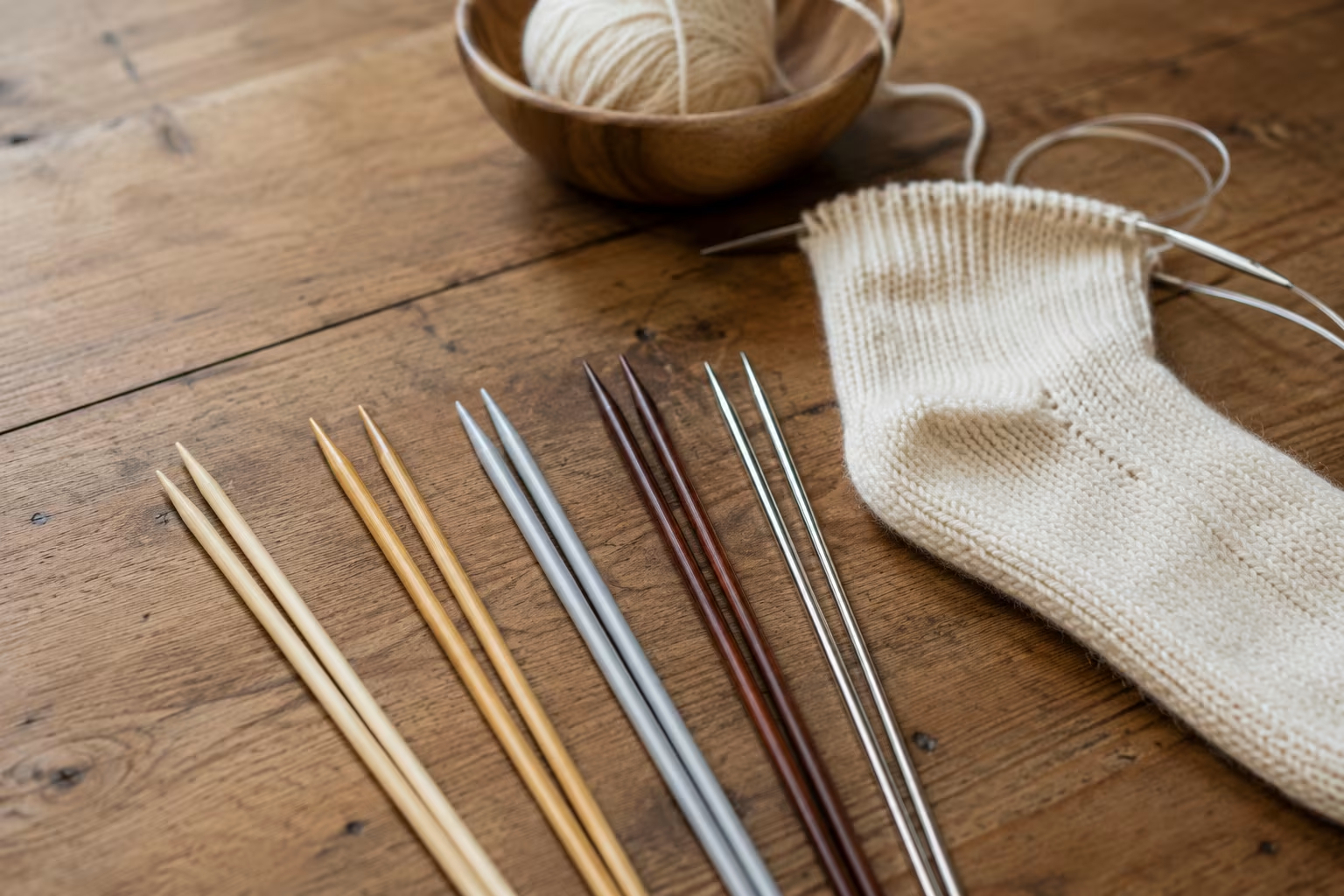
Knitting needle material affects how fast stitches slide off, how the needle feels in the hand, and how it works with different yarns. Wood needles (bamboo, birch, rosewood) are warm to the touch, have moderate grip, and are forgiving for beginners. Metal needles (aluminum, nickel-plated, steel) are slick and fast, work well for tight stitchers, and feel cool. Plastic needles are lightweight and quiet but can flex under tension and are usually a budget choice.
For a beginner starting with worsted-weight yarn and a standard project, bamboo or birch needles in size US 7-8 (4.5-5 mm) are the right choice. The slight grip prevents stitches from sliding off accidentally, the warmth feels pleasant, and the material is forgiving of inconsistent tension that beginners have.
Once you've worked through several projects, your tension stabilizes and you may want faster needles. Metal needles become appealing for production knitting — sweater bodies, large blankets, anything where speed matters. Specialty wood needles (rosewood, ebony) become appealing for the aesthetic and feel rather than performance.
Bamboo needles
Bamboo is the entry-level wood needle most knitters start with. Light, warm, slightly grippy, and inexpensive.
Stitch behavior yarn doesn't slide too easily. New knitters appreciate this — stitches don't accidentally drop off the needle as often. Experienced knitters working with slippery yarn (silk, bamboo blends, mercerized cotton) sometimes prefer bamboo for the same reason.
Pricing among the most affordable needle materials. A standard 14-inch single-point set in multiple sizes costs less than equivalent metal or specialty wood.
Durability bamboo needles can split or break with rough use or with very fine sizes (under 3 mm). The points wear over time and become less sharp.
Common brands Clover Bamboo, Knit Picks bamboo, generic bamboo sets. Clover is the established premium bamboo brand; less expensive bamboo works fine but the points may be less refined.
Birch and other hardwood needles
Birch needles are a step up from bamboo. Slightly heavier, slightly smoother, often more refined points.
Stitch behavior: smoother than bamboo, faster stitching. Still warm and pleasant to hold. The slight smoothness is a comfortable middle ground for many knitters.
Other hardwoods include maple, walnut, rosewood, ebony. These are specialty woods — more expensive, more attractive, often sold as luxury knitting tools rather than everyday needles.
Brands: Knit Picks Rainbow Wood, Lykke (Danish, premium), Pony Maple, Crystal Palace. Lykke has become a popular premium brand for serious knitters.
Birch and other hardwood needles last longer than bamboo and feel more substantial.
Aluminum and metal needles
Metal needles are the speed knitter's choice. Slick, smooth, durable.
Aluminum the classic metal needle material. Coated to prevent corrosion, comes in various colors. Lightweight, fast, affordable. The needle most production knitters use for everyday work.
Nickel-plated brass heavier, even slicker than aluminum, premium feel. Addi Turbo is the most recognized brand — German-made, smooth as glass, often described as the gold standard for fast circular knitters.
Steel usually reserved for very small needle sizes (under 2.5 mm) for fine knitting like socks, lace, and gloves. Very durable, very precise points.
Speed stitches glide off metal needles with almost no friction. This is good for tight stitchers and speed knitters but bad for new knitters or anyone working with slippery yarn — stitches drop off more easily.
Temperature metal feels cool, sometimes too cool. Wood remains room temperature; metal pulls heat from your hands. Some knitters find this fatiguing during long sessions in cool rooms.
Plastic needles
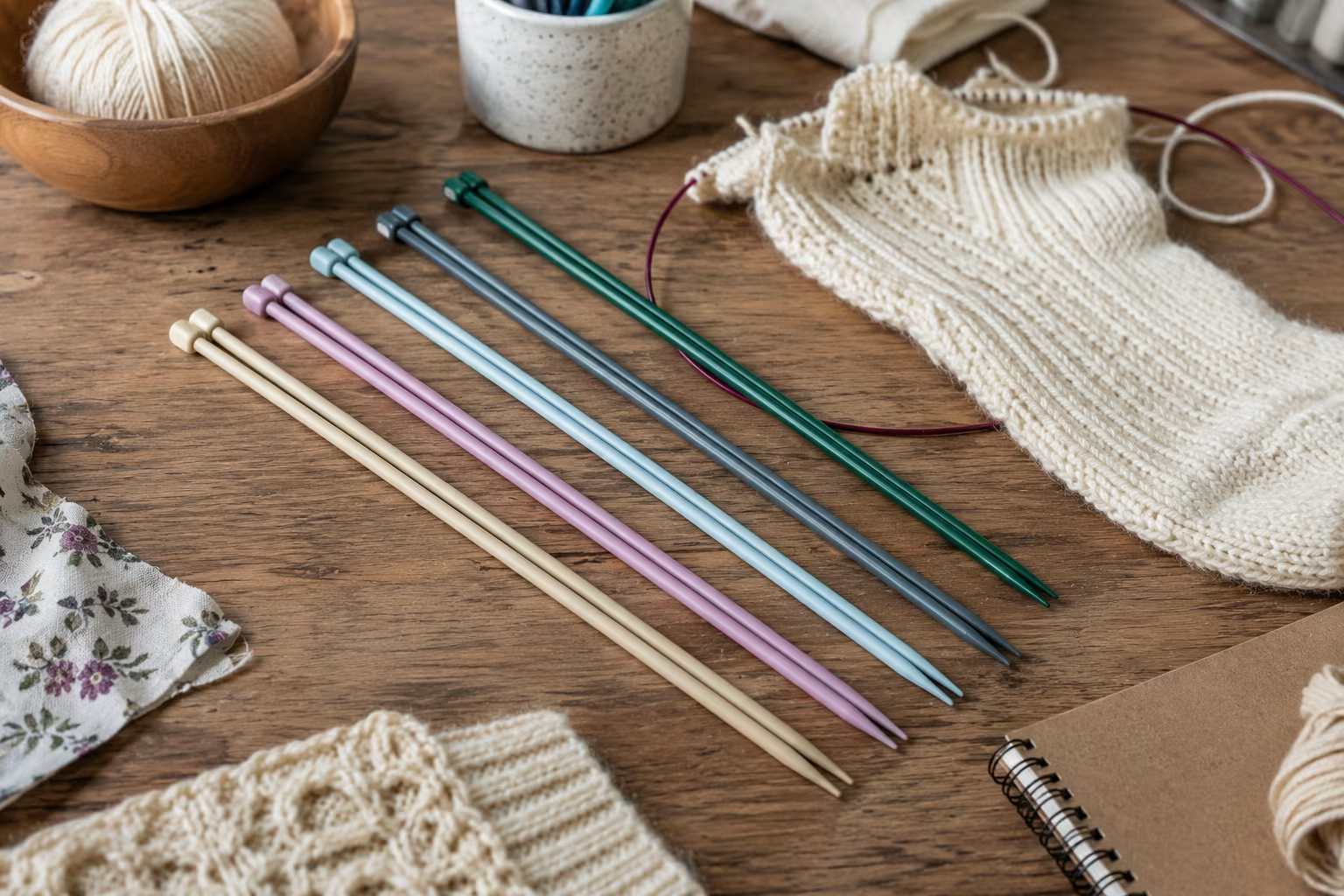
Plastic needles are usually the cheapest option. Light, warm, quiet.
Performance light enough not to cause hand fatigue, warmer than metal, quieter than both wood and metal in terms of the click when stitches move. The quiet matters for some knitters.
Flexibility plastic needles can flex slightly under tension. For most knitters this is unnoticeable; for very tight knitters or large projects with lots of stitches, the flex can be uncomfortable.
Durability plastic can crack or break with sufficient force. Cheap plastic needles wear out faster than wood or metal of the same size.
Brands Pony, Susan Bates, generic plastic sets. Often the choice for children learning to knit or for budget-conscious beginners.
For an adult committing to knitting, plastic is rarely the right choice. The price difference between plastic and quality bamboo or aluminum is small, and the quality difference is substantial.
Yarn material matters
The right needle material depends partly on the yarn you're using.
Slippery yarns (silk, mercerized cotton, bamboo, rayon blends): pair with grippier needles. Bamboo or birch slow the yarn down and prevent stitches from sliding off.
Sticky yarns (wool, especially rough wool): pair with smoother needles. Metal or polished wood lets the yarn move freely without catching.
Springy yarns (most wools, blended yarns): work with either smooth or grippy needles. The yarn's natural elasticity makes the needle material less critical.
Heavy or chunky yarns: any needle material works at large sizes. The needle's diameter is the dominant variable.
Fine yarns (lace weight, fingering): the needle's point sharpness matters more than the material. Steel and quality hardwood have the sharpest points; bamboo points are blunter and harder to insert into tight stitches.
Needle types beyond material
Material is one variable; needle type is another.
Straight needles standard pair of needles with a stopper at one end. Used for flat knitting. Available in 10-inch, 14-inch lengths. Becoming less common as circular needles dominate.
Circular needles two needle tips connected by a flexible cable. Used for knitting in the round (sweaters, hats) and increasingly for flat knitting too. The cable lets long projects rest in the lap without weight on the wrists.
Double-pointed needles (DPNs) sets of 4 or 5 short pointed needles. Used for small circular knitting (socks, sleeves, hat tops). A traditional approach; the magic loop technique on circular needles is the modern alternative.
Most modern knitters use circular needles for nearly everything, even flat knitting. The material question applies equally to circulars.
Interchangeable needle sets
For a knitter making multiple projects, an interchangeable circular needle set can replace dozens of fixed needles.
How they work a small selection of needle tips (different sizes) plus a small selection of cables (different lengths). Tips screw or click into cables to make any combination of needle size and cable length.
Brands Knit Picks Interchangeables (affordable, wide range of woods and metals), Addi Click (premium, smooth click system), ChiaoGoo Twist (popular among lacework knitters), HiyaHiya Sharp (very pointed tips).
Cost a full interchangeable set costs significantly more than a single pair of needles but less than buying individual needles in many sizes. For active knitters this is the right purchase after the first year.
Needle size sizing systems
Two main sizing systems are used internationally.
US sizes 0, 1, 2, 3, 4, 5, 6, 7, 8, 9, 10, 10.5, 11, 13, 15, 17, 19. Increases roughly with diameter.
Metric (mm) 2.0, 2.25, 2.5, 2.75, 3.0, 3.25, 3.5, 3.75, 4.0, 4.5, 5.0, 5.5, 6.0, 6.5, 8.0, 9.0, 10.0, 12.0, 15.0.
The conversions don't always match exactly between brands. A US 7 from one brand may be 4.5 mm; from another brand 4.25 mm. The metric measurement is the more reliable specification.
Pattern instructions usually give both systems. Match the metric size when in doubt.
What to actually buy
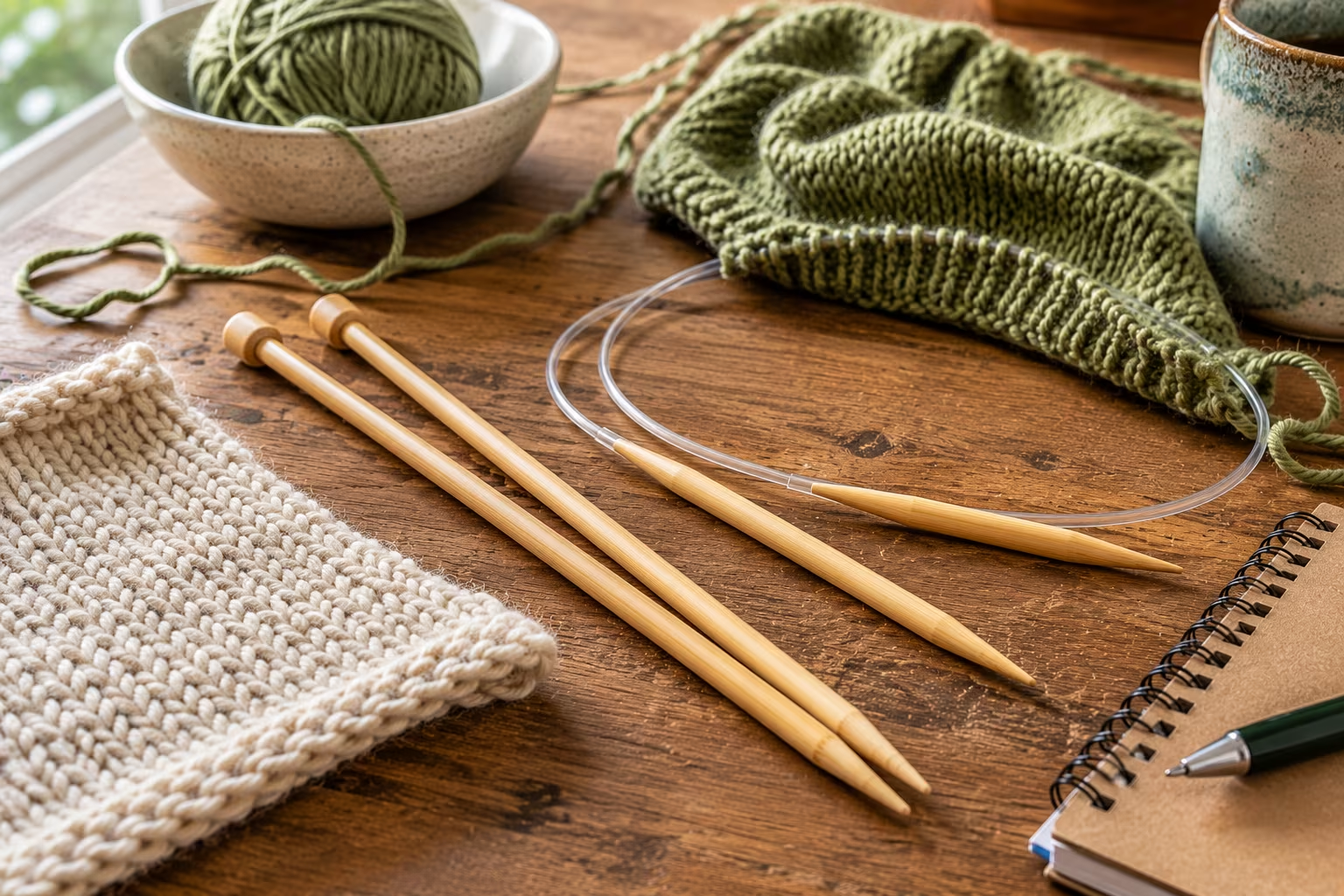
For a beginner a single pair of US 7 (4.5 mm) bamboo or birch needles, 10-14 inches long, plus a circular needle of the same size with a 32-inch cable. Total cost is modest. This kit handles most beginner projects (scarves, simple hats, washcloths, basic sweater bodies).
For a knitter ready to commit an interchangeable circular set from Knit Picks (affordable wood or nickel plated options) or ChiaoGoo (premium). Total cost is moderate but you'll never buy individual needles again.
For specialty knitters dedicated sets in specific materials — Addi Turbo for fast speed, Lykke for warm wood feel, HiyaHiya Sharp for lace work. These are accessories to a main set, not replacements.
The needle material is a small but real part of knitting enjoyment. Try different materials and let your preferences develop. There's no objectively best material; there's only what feels right in your hands with your yarn for your project.
Brand Comparisons and Pricing Realities
The knitting needle market spans dramatically different price points and quality tiers. ChiaoGoo Red Lace stainless steel circulars (Taiwan) sit in the 14-22 USD range per fixed circular (as of 2026 — confirm current pricing) and remain the workshop standard for lace knitters who need both sharp tips and durable cables. The cables on ChiaoGoo are coated wire that resists kinking even after years of bag travel.
Addi Turbo (Germany) is the brass-nickel-plated speed favorite. Their slippery surface accelerates stockinette work by 15-25% for most knitters once muscle memory adapts. Sets cost 18-28 USD per fixed circular. Addi Lace needles, with sharper points for working complex lace patterns, run slightly higher.
Knit Pro / KnitPicks Karbonz uses carbon fiber wrapped around steel core. They're lightweight, warm to the touch, and exceptionally strong despite small diameters. Particularly favored for size US 0-2 (2.0-2.75 mm) where steel tips can bend under heavy yarn tension. Prices run 8-16 USD per fixed circular.
Lykke Driftwood (USA) and Pony Pearls (India) offer bamboo and birch wood alternatives at 6-14 USD per fixed circular. Wood needles are quieter (no metal clicking), grippy enough to control slippery silk yarns, but slower for plain stockinette work compared to metals.
Premium tier includes Signature Needle Arts (USA) — fully customized turned aluminum needles with the knitter's choice of tip type, finish, and color. They run 35-95 USD per fixed circular. Many lace knitters consider them the absolute pinnacle for fine work; the price reflects American workshop craftsmanship and lifetime warranty.
Interchangeable Sets Versus Fixed Circulars
A serious knitter eventually faces the choice: build a collection of fixed circulars (one per size and length combination) or invest in an interchangeable set (tips that screw onto various cables). Each approach has merits.
Fixed circulars advantages cables are bonded permanently to tips, so there's no unscrewing problem mid-project; immediately available without assembly; preferred by lace knitters who fear cable loosening during intricate work.
Interchangeable advantages significantly fewer purchases for the same coverage (one set replaces dozens of fixed pairs); cables can be swapped mid-project to change from magic loop to single circular; far more portable for traveling knitters.
Popular interchangeable sets ChiaoGoo Twist Red Lace (US 2-15 sizes, 90-160 USD), Addi Click Turbo (US 4-15, 200-280 USD), KnitPicks Options (US 4-17, 70-130 USD), Lykke Driftwood Set (US 3-17, 130-200 USD). For most knitters, a mid-tier interchangeable set delivered to home for around 100-150 USD provides excellent long-term value.
Care and Lifespan Considerations
Quality needles last decades with basic care. Steel needles can be wiped clean with a dry microfiber cloth after each session; never store metal needles in damp environments because moisture promotes plating wear and oxidation marks. Wood needles benefit from occasional waxing — beeswax or carnauba wax buffed gently restores smoothness and prevents fiber catching. Bamboo needles can develop minor splinters around the tips over years of use; light sanding with 600-grit paper restores function.
Cable replacement is the common failure point for interchangeable sets. Most manufacturers sell replacement cables at 4-10 USD each, and a worn cable shouldn't be cause for replacing the entire set.
Project Type and Needle Match
Different projects benefit from different needle materials. Lace shawls with cobweb-weight merino need sharp tips and grippy surface — wood or carbon fiber excel here. Cabled aran sweaters in worsted-weight wool work fastest with smooth metal needles like Addi Turbo because cables require frequent stitch shuffling and metal slides quickly.
Sock knitting demands flexibility because most modern technique uses magic loop or two-circular methods that flex repeatedly. Steel needles handle this flexing far better than wood, which can develop weakness at the tip-cable junction over hundreds of sock projects.
Stranded colorwork (fair isle, Norwegian patterns) benefits from grippy wood needles because the floats and multiple yarn strands need physical resistance to settle in proper tension. Slippery metal can cause stranded patterns to bunch.
Beginners are best served by mid-range bamboo or birch needles (Clover Takumi at 5-10 USD, Knitter's Pride Dreamz at 7-13 USD). The grip prevents stitches from sliding off accidentally — a common frustration source for new knitters using slick metal needles too early. Beginners who try cheap aluminum or plastic needles often abandon knitting prematurely; the right starter tools matter more than most realize.
Related Posts
Beginner Pottery Wheel Speed for Centering
Centering clay needs high wheel speed and firm pressure. Most beginners use too low speed.

Calligraphy Ink Comparison for Cotton Paper
Modern dip pen calligraphy needs ink that doesn't bleed on absorbent cotton paper. India ink...
Beginner Watercolor Paper Choice for Textured Washes
Watercolor paper is the single biggest gear decision a beginner makes. Weight, surface texture...
Hand-Sewn Leather: Saddle Stitch Spacing That Actually Holds
Saddle stitching looks simple and fails subtly. Wrong spacing pulls thin leather apart. The...
Comments
No comments yet. Be the first to share your thoughts!