
How to Hang a Heavy Mirror on Drywall Without Studs
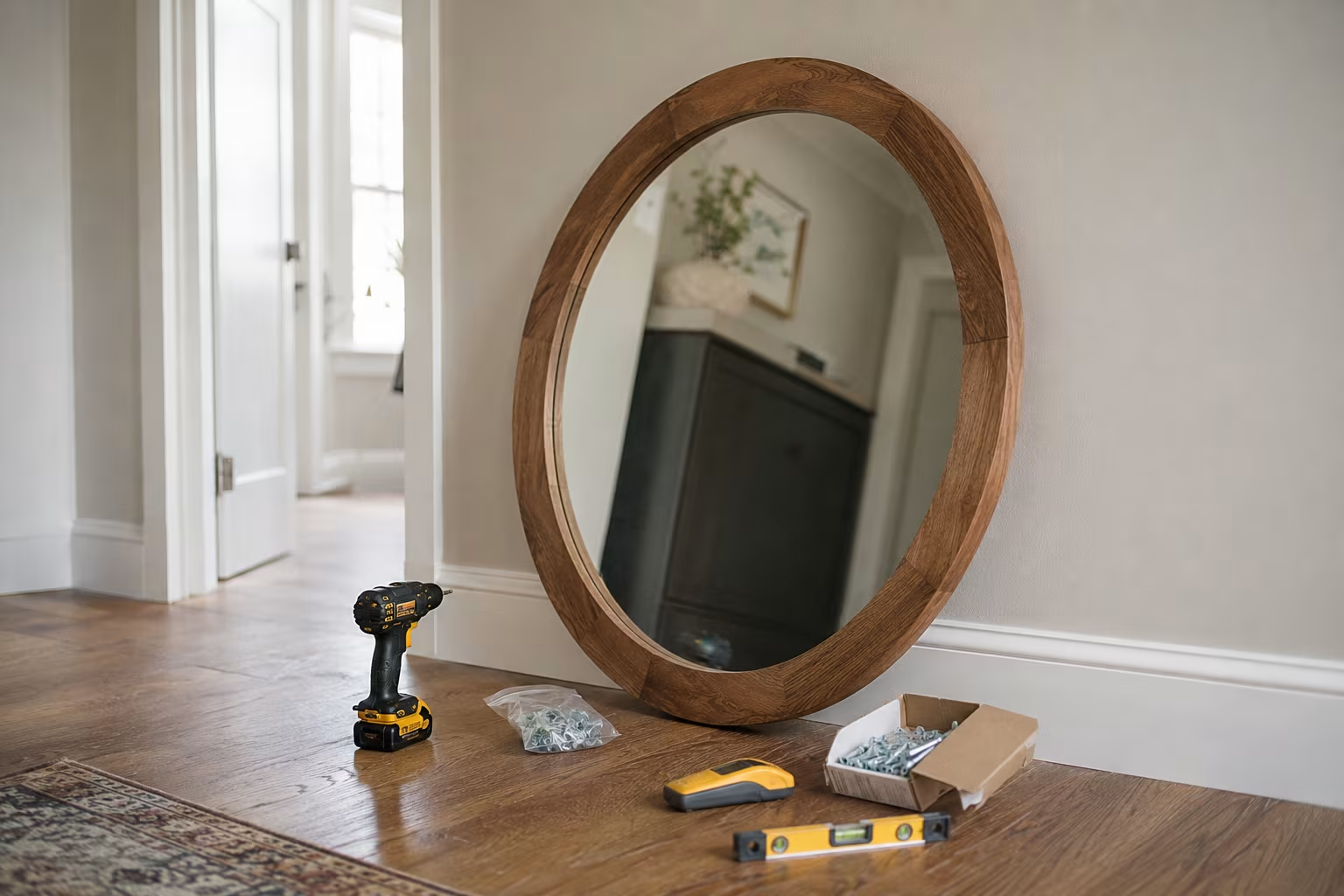
The short answer
If the studs are not where you need them, two heavy-duty toggle bolts (3/16 inch or larger) or two snap-toggle anchors will hold a typical wall mirror up to about 50-100 pounds on half-inch drywall, provided the wall is sound and the anchors are installed correctly. Spread the weight across two anchors rather than one, set them about the width of the mirror's hanging hardware apart, and seat the toggle wings flat against the back of the board before tightening.
The part that fails is rarely the anchor — it is the install. Anchors pull out because the hole was oversized, the wings never seated against the back of the drywall, or the screw was overtightened until it crushed the drywall paper. Slow down and an anchor rated for 80 pounds holds 80 pounds; rush it and the same anchor tears a chunk of wall out at 20. For anything past roughly 100 pounds, stop fighting drywall: find a stud, span two studs with a cleat, or pick a different wall.
How much weight your wall has to hold
Weigh the mirror rather than guessing. A standard 24x36-inch framed mirror with a wood frame usually runs 15-25 pounds; a heavier ornate frame pushes to 30-40; a full-length or floor-leaner you are wall-mounting can reach 60-100. Without a number you cannot size hardware. A bathroom scale reads it closely enough: stand on the scale holding the mirror, subtract your own weight, and round up. Ten seconds of weighing decides whether the wall needs two 3/16-inch toggles or a stud-mounted cleat.
The back of the mirror matters too. D-rings spread the load evenly across two anchors. A single sawtooth hanger at the top forces everything into one point and has no place on a heavy mirror — replace it with two D-rings and wire first, and make sure those D-rings screw into solid frame wood, not thin backing or staples. Whatever the mirror weighs, multiply by at least 1.5 when choosing anchors: a 40-pound mirror rides on hardware rated for 60 or more, and that margin absorbs seasonal humidity (drywall softens slightly when damp), accidental knocks, and the slow creep of an anchor settling into a softening hole over years.
Toggle bolts: the workhorse anchor
A traditional toggle bolt is two parts: a long machine-thread bolt and a spring-loaded butterfly wing that threads onto its end. You collapse the wings, push them through a hole, they spring open behind the drywall, and tightening pulls them flat against the back of the board. Rough holding values in half-inch drywall: a 1/8-inch toggle holds roughly 30-50 pounds, a 3/16-inch toggle about 70-110, and a 1/4-inch toggle around 100-150. Brands vary — treat the package number as a ceiling, not a floor.
The downsides are real. The hole has to be large enough for the collapsed wings to pass, usually half an inch or more, so it shows if you ever remove the mirror. The wings cannot be reused — back the bolt out and they drop into the wall cavity. And if you do not hold tension while tightening, the wings spin freely and never bite; the fix is to pull the bolt toward you with one hand while driving with the other. For anything you might remove and rehang, the traditional toggle has the right hold for the cost but the worst removal story.
Snap-toggles: easier install, same hold
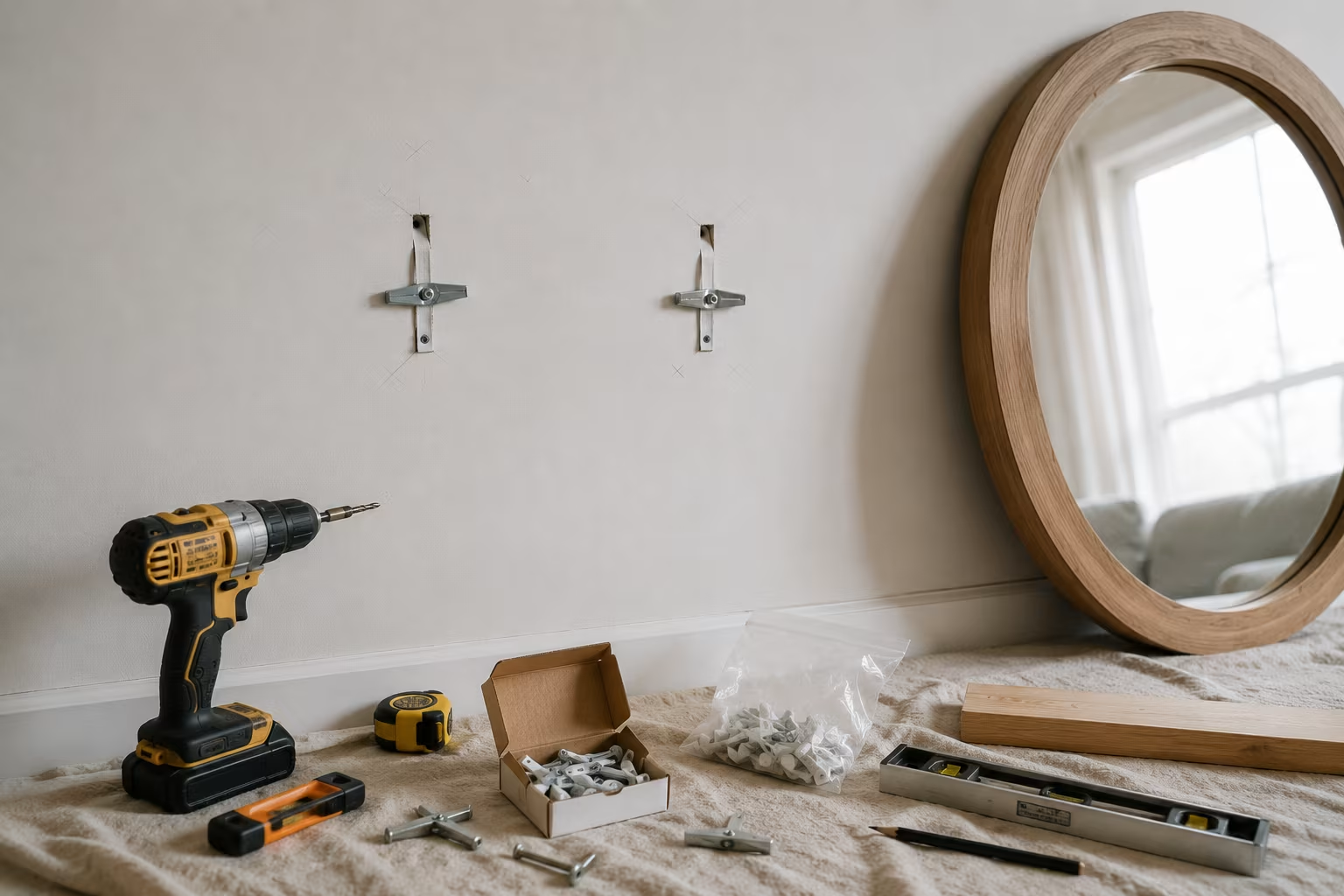
Snap-toggle and strap-toggle anchors solve the removability problem. The metal wing stays attached to a plastic strap; the strap holds the wing against the back of the drywall while you thread the screw through it from the front, and the screw can come out and go back later without losing the anchor in the wall. Brand-name snap-toggles in half-inch drywall often claim around 200 pounds per anchor; real-world holding is closer to a reliable 100-150, which is still well beyond any wall mirror.
The routine is hard to botch: drill the hole to the size on the package (usually about half an inch), insert the wing, pull the strap so the wing seats against the back of the board, slide the plastic cap down until it sits flush, snap off the excess strap, then drive the screw through the cap into the wing. It is faster than a traditional toggle and almost impossible to install badly, and for a homeowner hanging one mirror the slightly higher cost is worth it.
Why two anchors beat one
A single 1/4-inch toggle rated for 150 pounds can technically hold a 50-pound mirror, but a mirror on one anchor pivots. It rotates around that single point every time someone bumps a corner; over months the rotation enlarges the hole, the anchor loosens, and the mirror drops. Two anchors set at the width of the mirror's hardware stop the rotation, split the load, and shrug off small knocks.
Install order matters. Hang the mirror hardware on a level line first, mark both anchor positions with the mirror held in place, take it down, drill and set both anchors, then rehang. Measuring anchor positions from the mirror's dimensions on paper introduces a small error every time and leaves the mirror slightly tilted. Because most mirrors' hardware sits closer together than studs allow, this two-anchor approach is usually the right one when no stud lines up — correctly sized and installed anchors do not need a stud.
French cleats for the heaviest mirrors
For very heavy mirrors — 60-100 pounds and up — on a wall with no usable studs, a French cleat moves the load to where studs do exist. A French cleat is a strip of wood ripped at a 30- or 45-degree angle along one edge: one strip screws into studs on the wall, the matching strip mounts to the mirror back, and the angled edges lock together. The mirror lifts off cleanly for removal, and the cleat spreads the load along its whole length instead of two points. It is the safer choice for anything over about 50 pounds even when toggles would technically hold, and the right answer for mirrors in earthquake-prone regions or above a bed.
Problem walls: old, damaged, or plaster
Not every wall is sound half-inch drywall. Walls older than about 1955 are likely plaster on lath — harder, more brittle, and prone to cracking around a hole; drill slowly with a sharp bit and never hammer-drill. Damaged drywall that is water-stained, sagging, or patched many times cannot be trusted with heavy loads at all; a spot that gives when you press it means no anchor will hold, so repair the area or move the install to sound wall. Quarter-inch drywall, found in some closets and older homes, holds less than half-inch — cut any anchor's rated capacity in half and look harder for a stud.
The install routine that does not fail
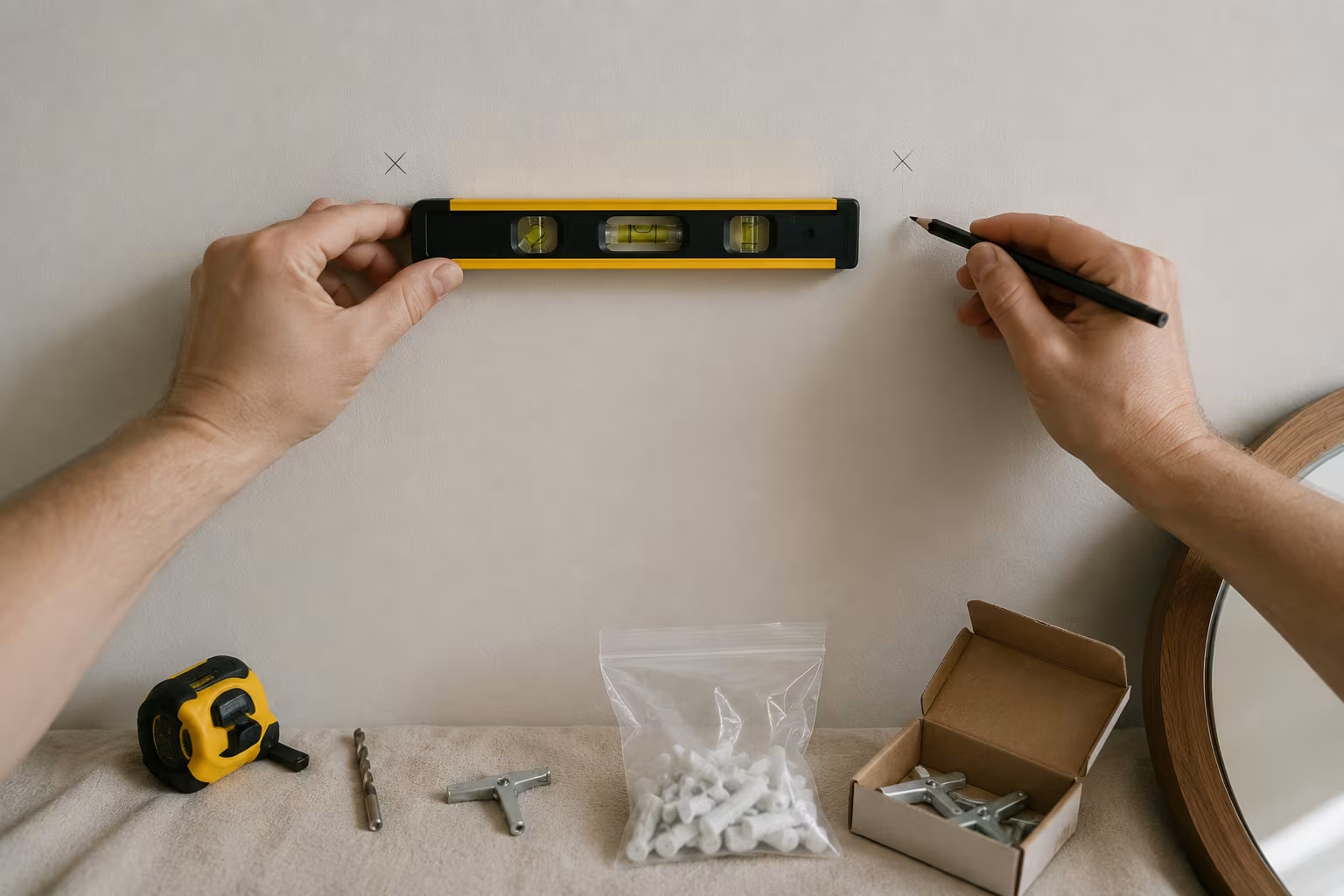
Measure the centers of the two D-rings and transfer them to the wall, marking a small pencil X at each anchor point. Use a level between the two marks so they are exactly horizontal — a quarter-inch tilt here shows on the finished mirror. Drill each hole to the size the anchor maker specifies; larger is not safer, since an oversized hole gives the wing or strap less board to grip.
Set the anchors. For traditional toggles, thread the wing onto the bolt, collapse it, push it through, and pull back gently to seat the wings before tightening. For snap-toggles, follow the package steps exactly. Tighten until snug, not crushing: the drywall paper should not deform under the head. If the driver suddenly spins easily, you have crushed the drywall behind the anchor — back off and move the install over, then patch the failure. Hang the mirror and tap a corner to check for swing; any movement means take it down and reset.
When to refuse, and how to borrow a stud
Some cases are not worth anchoring into drywall at all: a mirror over 100 pounds, a mirror above a bed or a sofa where people sit, a wall that is old, soft, or repeatedly patched, or a spot near a frequently slammed door where vibration works anchors loose over time. In each, locate two studs and install a horizontal piece of 1x4 or a French cleat across them for a hanging point that ignores the mirror's weight — 30 minutes of extra work for a connection that does not fail.
Studs are rarely absent. Most walls frame studs every 16 inches (or 24 in newer construction), so one or two usually sit near the mirror, just not exactly where the hardware wants them. A magnetic stud finder catches the drywall screws driven into studs; an electronic finder reads density changes and is faster on big walls — run either slowly and mark every hit. If the studs sit three or four inches off, span them with a 1x4 painted to match the wall, and drive the mirror hardware into that solid wood: you borrow stud strength sideways. While you are at it, upgrade weak frame hardware — swap small factory D-rings for heavier ones with longer screws into solid frame wood, and replace wire hangers with two-point D-rings, since the wire's attachment points are the usual failure in frame-related mirror falls. A wall anchor is only ever as strong as the frame hardware feeding load into it.
Drywall holding power, by the numbers:
| Anchor | Holds (1/2-in drywall) | Rule |
|---|---|---|
| 1/8-in toggle | ~30–50 lb | — |
| 3/16-in toggle | ~70–110 lb | two of these carry most mirrors |
| Past ~100 lb | stop — find a stud or cleat | drywall is not the answer |
| Safety factor | weigh the mirror × 1.5 | 24×36 framed ≈ 15–25 lb; ornate 30–40 |
Related Posts

Toilet Seat Slow-Close Hinge Replacement
A broken slow-close hinge makes the toilet seat slam or fail to stay up. Replacement is a...

Drywall Corner Bead Replacement After Damage
Damaged drywall corners with dented or split corner bead show ugly visible damage. The...

Strip Painted Brass Hardware Without Eating the Patina
The slow-cooker method strips paint from brass cleanly while keeping the aged surface intact....
Bathtub Resealing: When Silicone Beats Caulk and Vice Versa
Reseal a bathtub right: 100% silicone at the flexing tub-to-tile joint, acrylic caulk only on...
Comments
No comments yet. Be the first to share your thoughts!