
How to Create Whimsical Wire Wall Art for Your Living Room
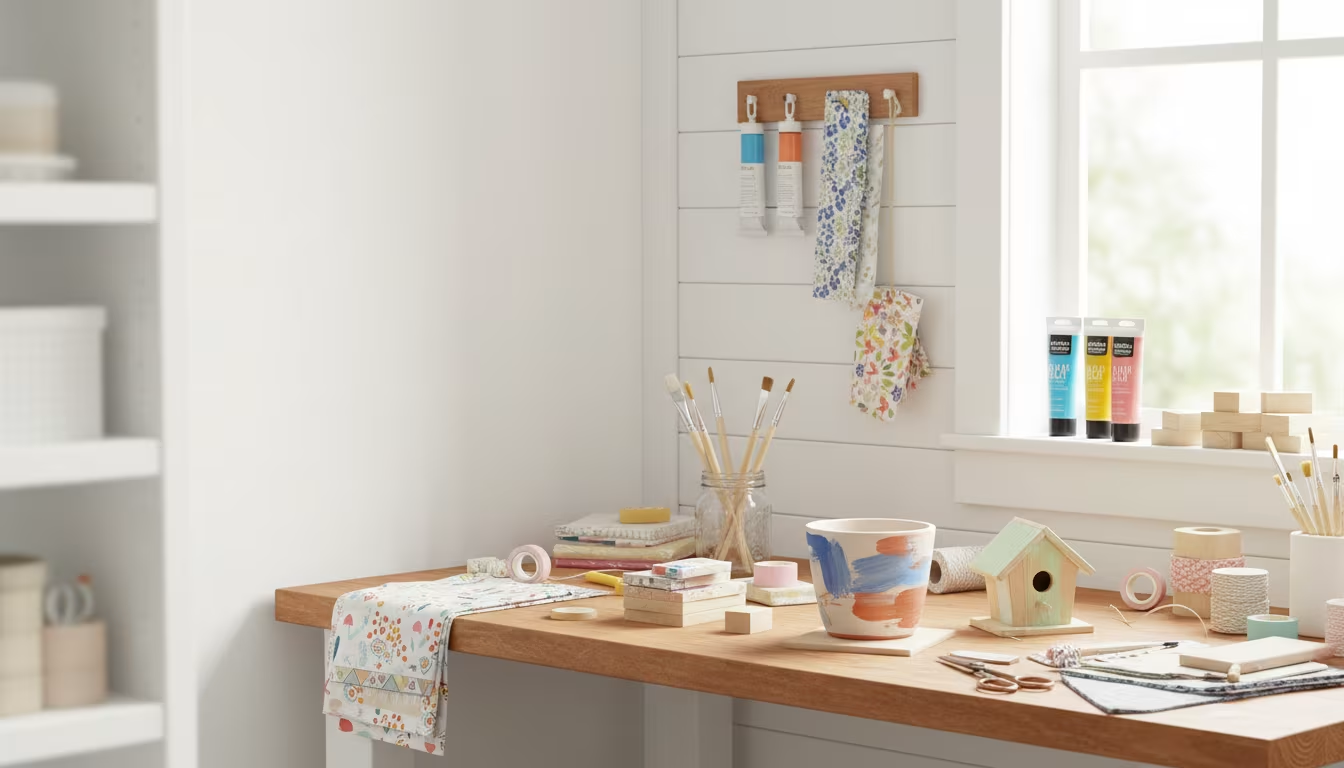
Wire wall art turns a few dollars of metal into a personal, sculptural piece—a leaf outline, a single word, an abstract line, a pet silhouette. Roughly $20 of wire and a couple of pliers can produce a custom piece that would cost $100 or more from an artisan market. The whole craft comes down to choosing forgiving wire and bending it patiently against a sketch.
Choosing your wire
Three properties decide how wire behaves: gauge, type, and temper.
Gauge is thickness, and the numbering runs backward—the higher the number, the thinner the wire. This table covers the useful range for wall art:
| Gauge | Relative thickness | Best for |
|---|---|---|
| 10–12 | Thick | Large pieces needing rigid structure; hard on the hands |
| 14–16 | Medium | Best all-round starting point; holds shape, still bendable |
| 18 | Medium-thin | Smaller designs and tighter curves |
| 20–26 | Thin | Fine detail, wrapping, and securing joints |
Type matters as much as gauge. Aluminum is soft, cheap, and bends by hand—the easiest starting point, though too soft for large unsupported shapes. Copper is stiffer, still workable, and develops a patina over time. Steel and galvanized steel are much stronger and hold precise shapes, but they need good pliers and more hand strength. Craft wire, usually coated copper or aluminum, comes in colors but must be thick enough to hold the shape. The American wire gauge system standardizes these thicknesses across metals, so a 16-gauge label means the same diameter whichever type you buy.
Temper is how hard the metal is. Dead-soft wire bends easily and suits intricate curves; half-hard balances pliability and hold; full-hard resists bending and is not a starting point. For a first project, 14- or 16-gauge dead-soft aluminum lets you focus on technique instead of fighting the material.
A spool of craft aluminum wire runs about $6 to $12 for 30 to 50 feet, enough for several pieces, and it is sold at most craft stores and hardware stores as well as online. Buy a little more than a project seems to need; a continuous design uses more length than the flat sketch suggests once every curve is accounted for, and running short mid-piece means starting over.
Tools you'll need
- Wire cutters: a dedicated pair—scissors will not cut wire and will be ruined trying.
- Round-nose pliers: tapered jaws for loops, curves, and spirals.
- Flat-nose pliers: wide flat jaws for gripping and sharp angular bends.
- Chain-nose pliers: narrower tapered jaws for tight spaces. If buying only two, get round-nose plus flat- or chain-nose.
- Nylon-jaw pliers (optional): straighten and shape without marring coated or colored wire.
- Sketch paper, pencil, permanent marker, and masking tape for planning the design and holding work in place.
- Safety glasses: cut wire ends fly.
A cheap starter set of jewelry pliers usually bundles round-, flat-, and chain-nose together for under $15, which is enough for a first several projects.
Design ideas to start with
Keep the first design simple and forgiving. Abstract lines and loops hide small imperfections, so they are ideal for learning the bends. Single words or a family initial in a flowing continuous line look striking and only need you to plan the path from letter to letter. Nature shapes—a leaf, a flower, a bird, a mountain range, a constellation—translate cleanly into wire, as does a minimalist silhouette traced from a photo of a pet or a plant. Sketch a few options at the size you want before committing to wire.
Sketch before you bend
Freehanding a complex design in wire leads straight to frustration. Draw the design at the exact final size—write out the word, draw the leaf, or trace a printed image. Mark guide lines where the major bends and curves fall. Aim for a single continuous line where possible, planning how the wire flows from one letter or element to the next without a break. A continuous line is stronger and cleaner than a design pieced from separate joined sections.
Bending and shaping
Estimate the length you need and add 15 to 20 percent; trimming excess is easy, but adding wire mid-design is not. Cut from the spool and straighten kinks with nylon-jaw pliers or your fingers before you start—kinks are far harder to remove once shaping begins.
Tape the sketch flat and work from one end, matching the wire to the drawn lines:
- Use round-nose pliers for curves and loops, rotating slowly to form each curve. The spot on the jaw where you grip sets the loop size—closer to the tip makes tighter loops.
- Use flat-nose pliers for sharp, angular bends and to flatten a section straight.
- Make small bends and compare to the sketch constantly rather than forcing a bend in one motion.
- Expect to over- or under-bend and ease the wire back gently; a clean circle often takes two or three attempts.
Grip firmly but not so hard that the jaws leave marks, and back off if the wire starts to feel stiff and springy—repeatedly bending the same spot work-hardens the metal until it eventually snaps.
A word is a good illustration of the continuous-line approach. Start at the leading edge of the first letter and bend through it without cutting, then carry the wire into the next letter along a connecting stroke rather than lifting off. Cursive-style lettering suits this best because the letters already flow together. For a shape like a leaf, form the outer outline first, then bring the wire back through the center to make the vein, keeping the whole thing one unbroken piece so it holds together without extra joins.
Adding details and texture
Once the main shape holds, layer in detail. Thin 24- to 26-gauge wire wrapped around the main line adds contrast, spirals, or bound crossing points with a neat, stitched look. Small beads thread onto the wire before you close a loop to trap them. For an artisanal finish, tap flat sections with a light jeweler's hammer on a hard block or small anvil—the hammered texture catches light—but stop before the blows distort the shape. A tiny dab of super glue holds discreet contact points, since aluminum is not usually soldered.
Finishing and hanging
Inspect for sharp ends and tuck or trim them flush with the cutters. Copper can be polished with a soft cloth and metal polish; aluminum needs only a wipe. A coat of clear acrylic sealant protects the piece and adds a slight sheen, useful in humid rooms. To hang, bend a small loop at a discreet point on the back with round-nose pliers and use a nail, an adhesive hook, or fishing line. Larger pieces need two or three hanging points to sit flat against the wall—useful when filling a bare stretch above a living room sofa. Wire art is light, so most pieces hold on a small nail or a removable adhesive hook rated for a pound or two; only large steel-wire designs need a wall anchor. Spreading the weight across two points also stops a wide piece from tilting or sagging in the middle over time.
Common problems and fixes
Kinks and dents: usually from gripping too hard. Straighten with nylon-jaw pliers and avoid squeezing with metal jaws; if a kink sets, work it out slowly or snip and redo that section.
Wobbly, uneven shapes: a sign of rushing. Make smaller bends, compare to the sketch often, and remember thicker wire holds its shape more reliably.
Piece won't lie flat the wire twisted while bending. Lay it on a table, press down section by section, and make tiny corrective twists with flat-nose pliers where it bulges.
Wire snapping mid-bend over-worked metal. Avoid bending the same point repeatedly, and switch to a softer temper if it keeps breaking.
Sore hands the wire is too thick or hard for your hand strength. Take breaks, use pliers with comfortable grips, or drop to a thinner gauge or softer temper for the next project.
Related Posts
Beginner Pottery Wheel Speed for Centering
Centering clay needs high wheel speed and firm pressure. Most beginners use too low speed.

Calligraphy Ink Comparison for Cotton Paper
Modern dip pen calligraphy needs ink that doesn't bleed on absorbent cotton paper. India ink...
Knitting Needle Materials Compared: Wood vs Metal vs Plastic
Knitting needle material changes how stitches slide, how cold or warm the needle feels, and how...
Beginner Watercolor Paper Choice for Textured Washes
Watercolor paper is the single biggest gear decision a beginner makes. Weight, surface texture...
Comments
No comments yet. Be the first to share your thoughts!