
Workshop Dehumidifier Sizing for Tool Rust Prevention
The short answer
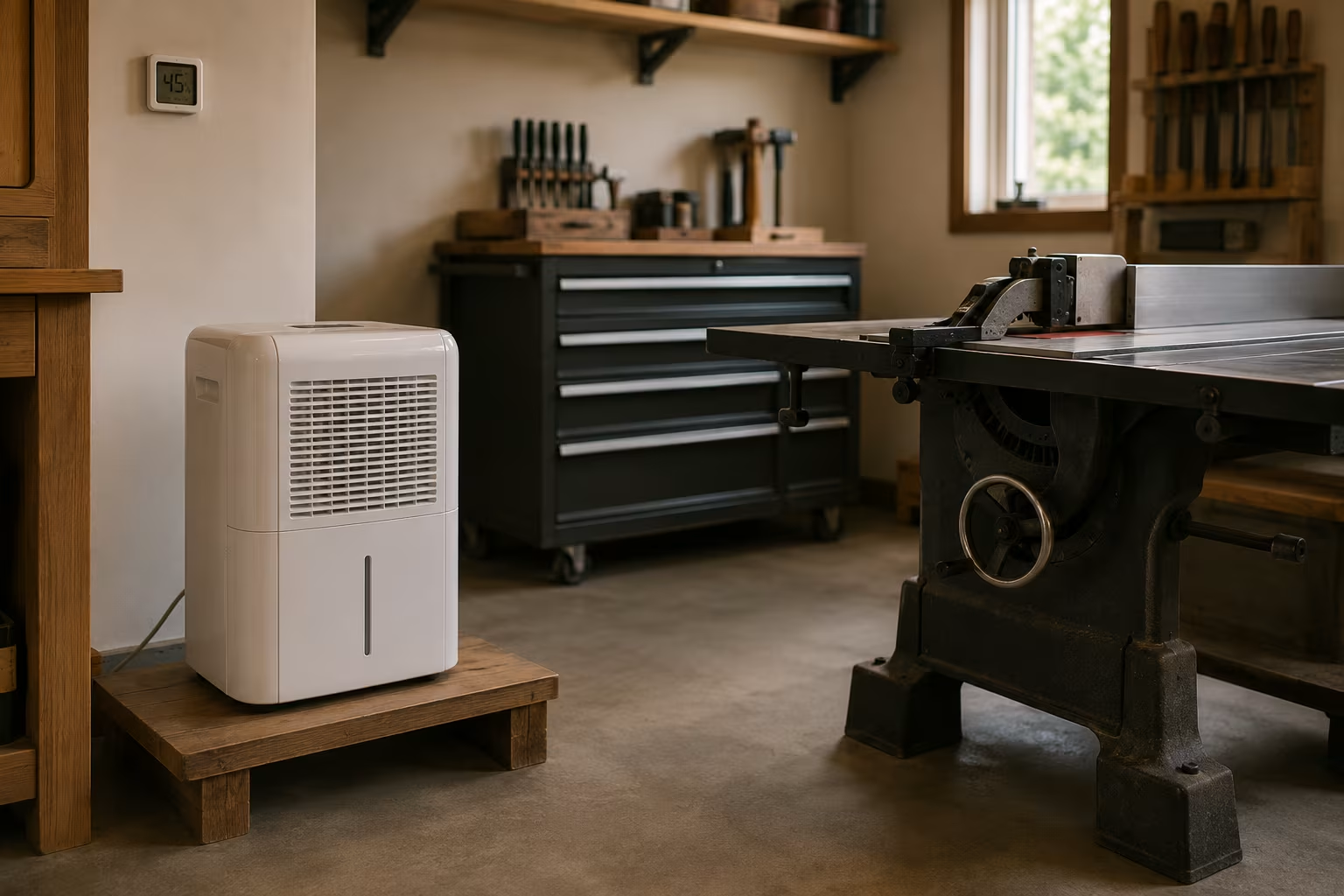
For workshops up to about 500 square feet with moderate humidity, a 20-30 pint dehumidifier maintains the 40-50% humidity range that prevents tool rust. For 500-1500 square feet, 30-50 pints. For larger spaces or basements with heavy moisture, 50-70+ pints. The pint number refers to the unit's water-removal capacity per 24 hours under standardized testing conditions.
The target humidity for a workshop is 40-50% RH. Below 40%, the air is dry enough that some wood projects may experience excessive shrinkage; above 60%, tools begin to rust on uncoated surfaces and finishes (especially water-based ones) take longer to cure. The middle range balances both concerns.
Placement matters as much as sizing. The dehumidifier should sit in the area with the most airflow and run when the shop is closed. A dehumidifier in a corner with no airflow processes only the local air; a dehumidifier in a central position with a small fan pushing room air past it processes the whole shop.
Why tool rust happens
Tool rust is iron or steel reacting with moisture and oxygen to form iron oxide. The reaction requires:
- Iron or steel surface exposed (uncoated, unprotected)
- Moisture present (humidity or direct water)
- Oxygen present (essentially always, in normal air)
Of these three, moisture is the only one you can control easily. Surface protection (oil, wax, finish) and the air itself are harder to alter than the humidity level.
At humidity below about 40%, rust forms slowly enough that uncoated steel tools survive months without visible oxidation. At humidity around 50%, rust begins forming over weeks. Above 60%, visible rust appears within days on unprotected surfaces.
The shop's seasonal humidity cycle determines the rust pressure. Summer humidity in many climates exceeds 70%; winter humidity can drop below 30%. A dehumidifier maintains 40-50% year-round, eliminating the summer spike that causes the worst rust damage.
Sizing by square footage and conditions
The standard sizing recommendation from AHAM (the Association of Home Appliance Manufacturers) provides baseline capacity per square footage.
The baseline: 1 pint of capacity per 24 hours per 50 square feet of space at moderately damp conditions (50-60% RH).
Adjusted for workshop conditions where rust prevention is the priority:
Up to 500 sq ft, moderate humidity: 20-30 pint unit. Adequate for a typical single-car garage workshop.
500-1000 sq ft, moderate humidity: 30-40 pint unit. Larger garages or basements.
1000-1500 sq ft: 40-50 pint unit. Two-car garages or large basements.
1500+ sq ft, or any space with very damp conditions (basements, garages with concrete-floor humidity, areas near washing machines or water lines): 50-70+ pint unit. Or consider multiple smaller units distributed.
For workshops with very damp conditions (humidity often above 70%, visible moisture on concrete floors, occasional water intrusion), upsize from the baseline by one tier. A typical 1000 sq ft basement workshop with damp issues wants a 50-pint unit rather than the 30-40 pint baseline.
The standardized rating is at 80°F and 60% RH. Real-world extraction at cooler temperatures and lower humidity is 30-50% lower than the rated capacity. Sizing slightly larger than the baseline compensates for this real-world derating.
Specifications beyond capacity
Beyond the pint rating, other specifications affect dehumidifier usefulness.
Drain options. Most units have a removable water bucket that you empty manually. For unattended operation (a basement workshop you visit only occasionally), a continuous drain hose option lets the unit drain into a sink, floor drain, or condensate pump. Look for "continuous drain" or "drain hose" in the product description.
Pump option. Some units have a built-in pump that pushes water up to a higher drain location (a utility sink several feet above the unit, or out a basement window). More expensive than basic units but essential for some installations.
Built-in humidistat. A humidistat measures the ambient humidity and turns the unit on and off to maintain the set level. Almost all modern dehumidifiers have this; older or budget models may run continuously regardless of humidity. The humidistat saves significant energy.
Energy Star rating. More efficient units use less electricity for the same dehumidification. Workshops that run the unit year-round benefit substantially from Energy Star efficiency.
Frost protection. Lower-temperature workshops (cold basements, unheated garages in winter) may freeze the cooling coils inside the dehumidifier and damage it. Look for "frost-free operation" or specified operating range that covers your shop's temperatures.
Noise level. Dehumidifiers are not silent. A noisy unit in a shop you work in is annoying; the noise level in dB is rarely specified clearly but reviews mention it.
Placement and airflow
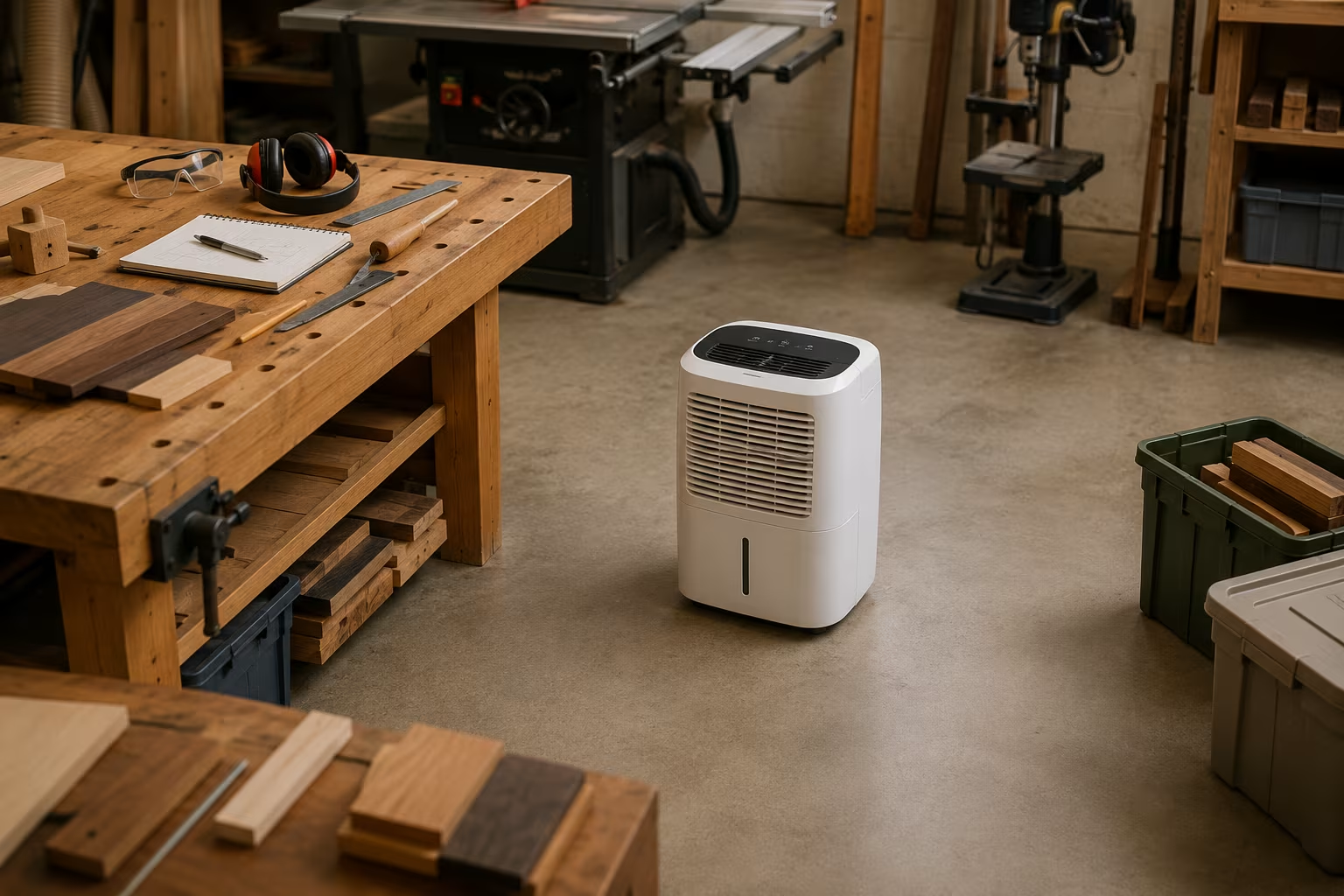
The dehumidifier's location affects how well it dehumidifies the entire space.
Central location. A unit in the middle of the shop pulls air from all directions. Corner placement processes only the air near the corner.
Airflow around the unit. Leave at least 6-12 inches of space around the dehumidifier on all sides. Tight placement (in a closet, against multiple walls) restricts airflow.
Avoid blocking the air intake or output. The unit pulls air in through one side and pushes it out through another. Furniture, boxes, or curtains blocking either side reduce efficiency.
Pair with a small fan. A small oscillating or box fan that pushes shop air past the dehumidifier increases the unit's effective coverage. Useful especially in large spaces or shops with poor natural airflow.
Lift off the floor. Some shop floors (concrete in particular) hold humidity. A dehumidifier sitting directly on the floor processes the high-humidity layer near the floor first; the rest of the room's air is processed less efficiently. A small platform 6-12 inches above the floor improves overall room dehumidification.
Drain location. If using continuous drain, the drain hose needs a path to its destination that does not freeze (avoid running through unheated areas in winter) and does not back up under load.
Tools and surfaces most at risk
Some tools and surfaces rust faster than others.
Hand tools with bare steel. Files, planes, chisels with uncoated blades, hand saws, screwdrivers, pliers. These rust visibly within weeks of high humidity exposure.
Cast iron table tops. Table saw tops, jointer beds, planer tables, drill press tables. Large flat surfaces of unfinished cast iron rust evenly across the surface, creating brown discoloration. The rust is removable but persistent.
Saw blades. Steel saw blades develop surface rust on exposed surfaces. Carbide-tipped blades are slightly more resistant but still vulnerable on the steel body.
Drill bits. Especially on uncoated HSS bits. The cutting edges develop rust pits that compromise drilling performance.
Chisels stored without protection. Chisel edges are particularly susceptible because the very fine cutting edge has minimal mass to resist corrosion.
Cordless tool batteries. Lithium-ion batteries are weather-sensitive. Heat and humidity reduce battery life. High-humidity shops shorten battery lifespan.
For each of these, the dehumidifier's protection comes from maintaining low ambient humidity. Direct protection (a light coat of oil, a wax finish, storage in a sealed container) provides additional defense.
Direct tool protection beyond dehumidification
Even with a dehumidifier, direct tool protection extends life.
Light oil coating. A wipe with a slightly oiled rag (3-in-1 oil, mineral oil, or camellia oil for Japanese-style tool care) provides a thin protective film. Apply periodically; renew when the film evaporates.
Wax finishes. Paste wax (carnauba or microcrystalline) on cast iron table tops creates a more durable protective film. Apply twice a year; the wax also helps wood slide across the surface for woodworking applications.
Vapor corrosion inhibitor (VCI) products. Plastic emitters that release rust-preventing vapor into a sealed storage container. Useful for stored tools and tools in toolboxes. Brands include Bull Frog, Boeshield, and others.
Silica gel desiccants. Small packets that absorb moisture. Useful inside sealed toolboxes or drawers. Renewable by heating in an oven.
Dedicated tool storage cabinets. Sealed cabinets with their own moisture control (vented to room air or with internal desiccants). The most expensive option but provides excellent protection.
The combination approach: dehumidifier for room-level humidity, wax/oil for direct surface protection, sealed storage with desiccants for the most vulnerable tools. Layered defense extends tool life dramatically.
Energy considerations
Dehumidifiers use significant electricity. A 30-pint unit running continuously may use 300-500 watts; over a month of constant operation, the energy cost adds up.
The humidistat helps. A properly sized unit with humidistat runs only when humidity rises above the setpoint, then shuts off. In moderate seasons, the unit may run only a few hours per day. In humid seasons, it may run continuously.
For year-round operation, Energy Star rated units use 15-30% less electricity for the same dehumidification. The price premium pays back over a year or two of operation.
For shops in cold climates, the dehumidifier's heat output (the unit produces some heat as a byproduct) can help warm the shop slightly during cool weather. The heat is incidental and not enough to replace dedicated heating, but it does offset some heating load.
A workshop humidity control plan
For a typical home workshop in a moderate humidity region:
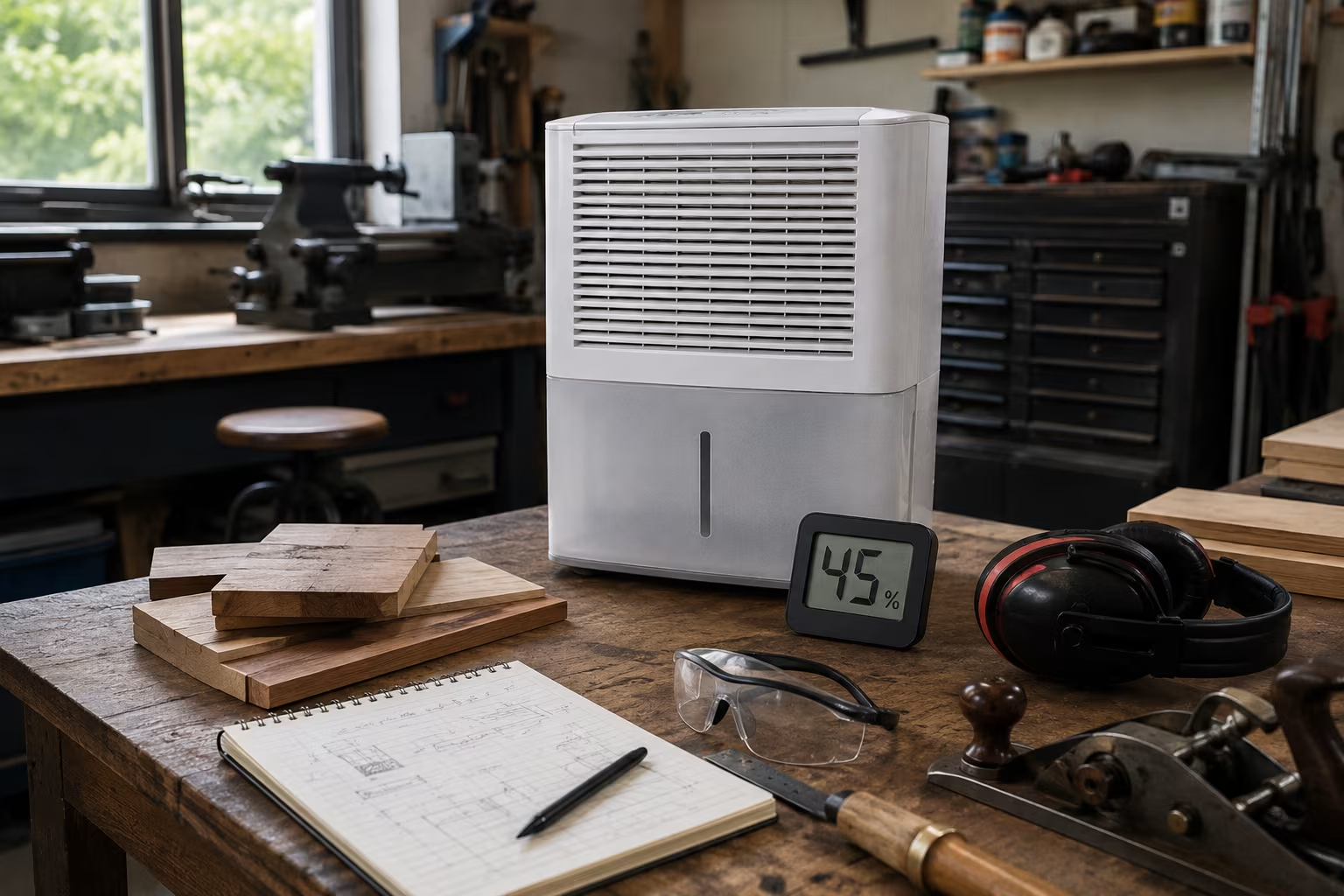
Year-round target. 40-50% RH. The dehumidifier is set to 45% as a midpoint.
Equipment. A 30-50 pint dehumidifier appropriate for the shop size, with continuous drain plumbed to a sink or floor drain. A hygrometer (humidity meter) mounted in the shop to verify the actual humidity level.
Operation. Continuous operation through high-humidity seasons (typically May through September in temperate climates). Reduced operation through dry seasons.
Maintenance. Monthly cleaning of the dehumidifier's air filter. Annual deep cleaning of the cooling coils. Replacement of the unit when capacity drops noticeably (typically 5-10 years for quality units).
Direct tool protection. Wax application to cast iron table tops twice a year. Oil wipe on hand tools every few months. Sealed storage with desiccants for the most rust-vulnerable tools.
Monitoring. Periodic check of the hygrometer reading. Adjustment of the dehumidifier setpoint if humidity drifts above or below target.
The combined approach maintains tool quality across years. The dehumidifier investment is moderate; the tool protection benefit accumulates over the life of every shop tool.
Long-term considerations
A workshop dehumidifier is a long-term investment in shop quality.
A typical quality dehumidifier lasts 5-10 years of regular use before performance degrades or the unit fails. Replacement is part of the cost of shop maintenance.
The tools protected by the humidity control last decades longer than they would in an uncontrolled shop. A chisel that costs significantly more new survives in a humidity-controlled shop for the user's lifetime; the same chisel in an uncontrolled humid basement may have pitted edges within a few years.
The economic case for the dehumidifier: the cost over its lifespan is small compared to the value of tools protected. For a shop with even moderate tool investment, the dehumidifier pays back in extended tool life within a few years.
For a workshop building a long-term tool collection, the humidity control is one of the foundational shop systems. Without it, tools accumulate rust over years even with careful direct protection. With it, the shop environment itself protects the investment.
Heat versus humidity in different climates
Workshop humidity control varies by climate.
Humid summer climates (southeastern US, coastal regions, tropical areas). The dehumidifier runs continuously through summer months. The unit's heat output is incidental and tolerable.
Humid winter climates (basements in cold-winter regions where indoor heating creates humidity through cooking and bathing). The dehumidifier runs at reduced rate but consistently.
Dry summer climates (southwestern US, desert regions). The dehumidifier may not be needed during summer. Tool storage protection still helps; the unit runs minimally.
Very cold winter climates. Some dehumidifiers are not rated for low temperatures (below about 40°F/5°C). For cold-shop applications, look for low-temperature operation specifically.
For most temperate-climate home shops, the dehumidifier runs heavily May through September and lightly through the rest of the year. The seasonal pattern is predictable.
Combining dehumidifier with shop ventilation
Some shops use mechanical ventilation (exhaust fans, fresh air intake) to handle dust and odor. Ventilation also affects humidity control.
During high-humidity outdoor conditions, ventilation brings in humid outdoor air that the dehumidifier must then process. The ventilation and dehumidifier work against each other.
The right balance: use ventilation when outdoor humidity is below indoor target (often early morning or evening in many climates). Close ventilation during humid outdoor periods.
For shops with serious dust collection, the system pulls air from inside the shop and exhausts to outside. The exhaust must be matched by air entering somewhere — either through ventilation openings or through leaks. This affects the dehumidifier sizing; air constantly being replaced is air the dehumidifier processes repeatedly.
For most home shops, the simpler approach works: run the dehumidifier consistently, ventilate sparingly during ideal conditions, accept the energy cost as part of shop maintenance.
A hygrometer in the shop confirms whether the actual conditions match the dehumidifier's target. Periodic spot-checks reveal whether the sizing and placement are working as intended.
Sizing by space:
| Space | Capacity | Note |
|---|---|---|
| Up to ~500 sq ft | 20–30 pints/24h | — |
| 500–1500 sq ft | 30–50 pints | — |
| Bigger / wet basements | 50–70+ pints | — |
| Target humidity | 40–50% RH | >60% rusts tools; <40% over-shrinks wood |
Related Posts
Workshop Air Compressor Sizing: CFM and SCFM
Air compressor matched to your tools means smooth work; too small means constant waiting. CFM...

Bench Vise Sizing and Mounting for First-Time Buyers
Bench vises bolted to scrap plywood pull right out. The right size for the work, the right...
Soundproofing a Basement Workshop on a Renter's Budget
Basement shop noise traveling up to the family room is how you lose workshop privileges. The...
Workshop Lighting Without Glare on Finished Surfaces
Bright workshop light reveals detail and bounces off fresh varnish into your eyes. The diffused...
Comments
No comments yet. Be the first to share your thoughts!