
Beginner Hand Embroidery Hoops: Sizing for Long Projects
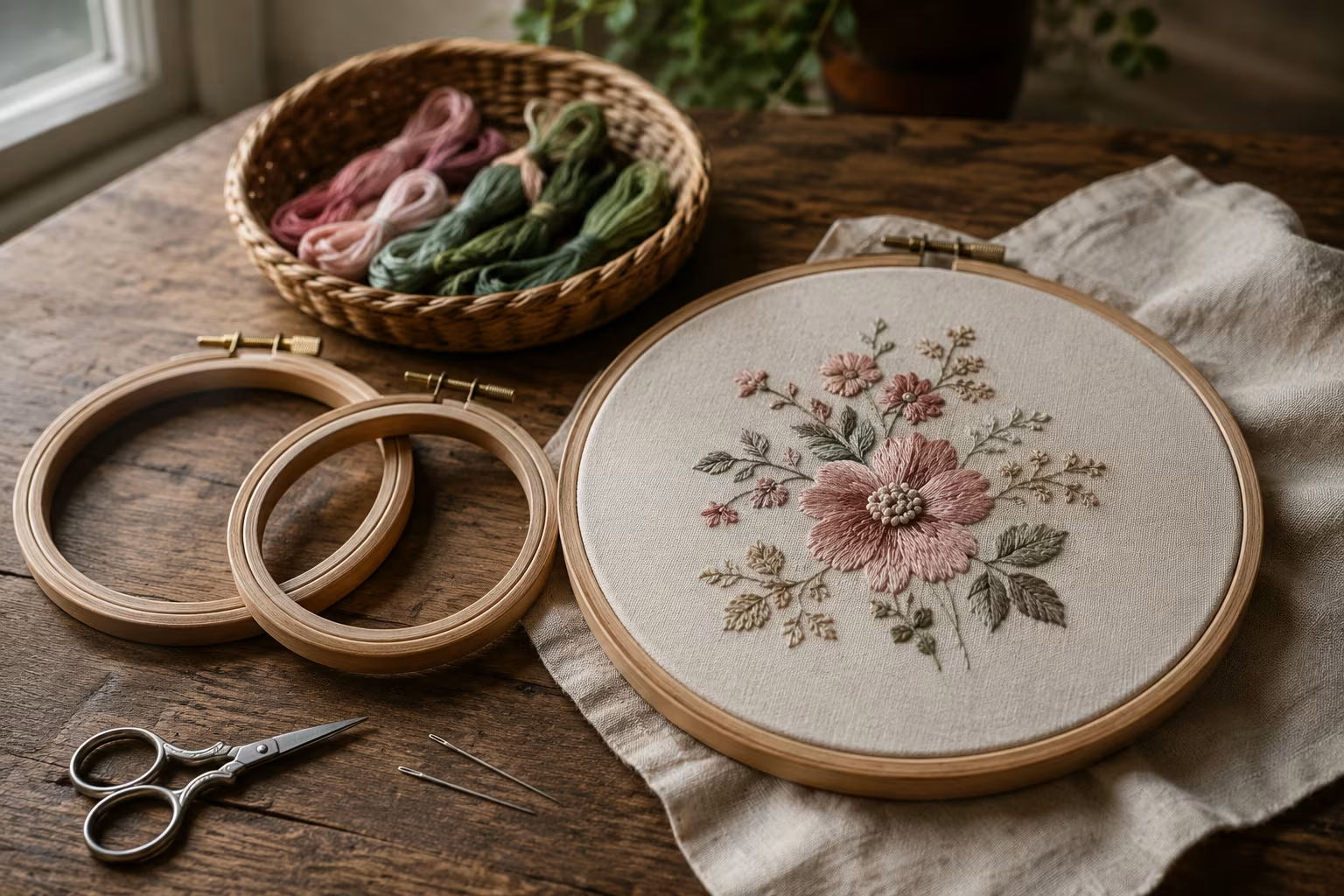
For a beginner starting a project that will take more than one sitting, a 6-inch or 8-inch beechwood hoop is the right first choice. Six inches fits comfortably in one hand and suits small samplers, hoop art, and the corner of a larger piece; eight inches lets you work a whole section before re-hooping, which matters on longer projects where re-hooping risks crushing the stitches already worked. Avoid bamboo hoops for active stitching — they lose tension quickly and their rougher inner edges catch thread — and skip the impressively large 10-to-12-inch hoop, which is harder to keep evenly tensioned and harder to hold for a long session. Start at 6 or 8 inches and graduate up only if a project demands it.
What hoop size actually controls
Diameter sets two things: how much of the design fits inside the hoop at once, and how comfortably you can hold it while stitching. The fit matters most for work done in sections. A small hoop forces frequent re-hooping as you move across the design, and each re-hooping risks crushing raised stitches such as French knots or bullion stitches. A larger hoop reduces the number of re-hooping events for a given piece.
Comfort matters most for long sessions. A hoop held for two hours wears on the wrist if it is too large or heavy, and 6 to 8 inches is the sweet spot for most adult hands — smaller for fine detail or for children, larger only for very simple work where the hoop barely moves. A single-sitting piece like a four-inch monogram needs one hoop for the whole job; a sampler or quilt block means choosing between re-hooping often in a small hoop or managing tension carefully in a larger one.
Wood, bamboo, plastic: what each is for
Beechwood and other hardwoods are the standard reliable choice: smooth inner edges that do not catch thread, good tension over long sessions, and a lifespan measured in years with light care. Cost is moderate to high. Birch plywood hoops, the cheap import wood, work as a starter but often have rough inner edges and loose screw hardware.
Bamboo looks rustic and costs little, but it loses grip on fabric over time and its grain irregularities snag floss; treat it as a display frame for finished pieces rather than a working tool. Plastic with a lipped inner ring, such as the Susan Bates Hoop-La or Frank A. Edmunds series, clamps fabric between an inner lip and the outer ring and holds tension long after a wood hoop would loosen — useful for very long projects, loose fabrics, or thick laid-thread work, though the visible plastic clashes with displayed hoop art. Basic plastic hoops are light children's-craft tools whose grip fades; fine for one evening, not for serious work.
Tension over weeks and re-hooping
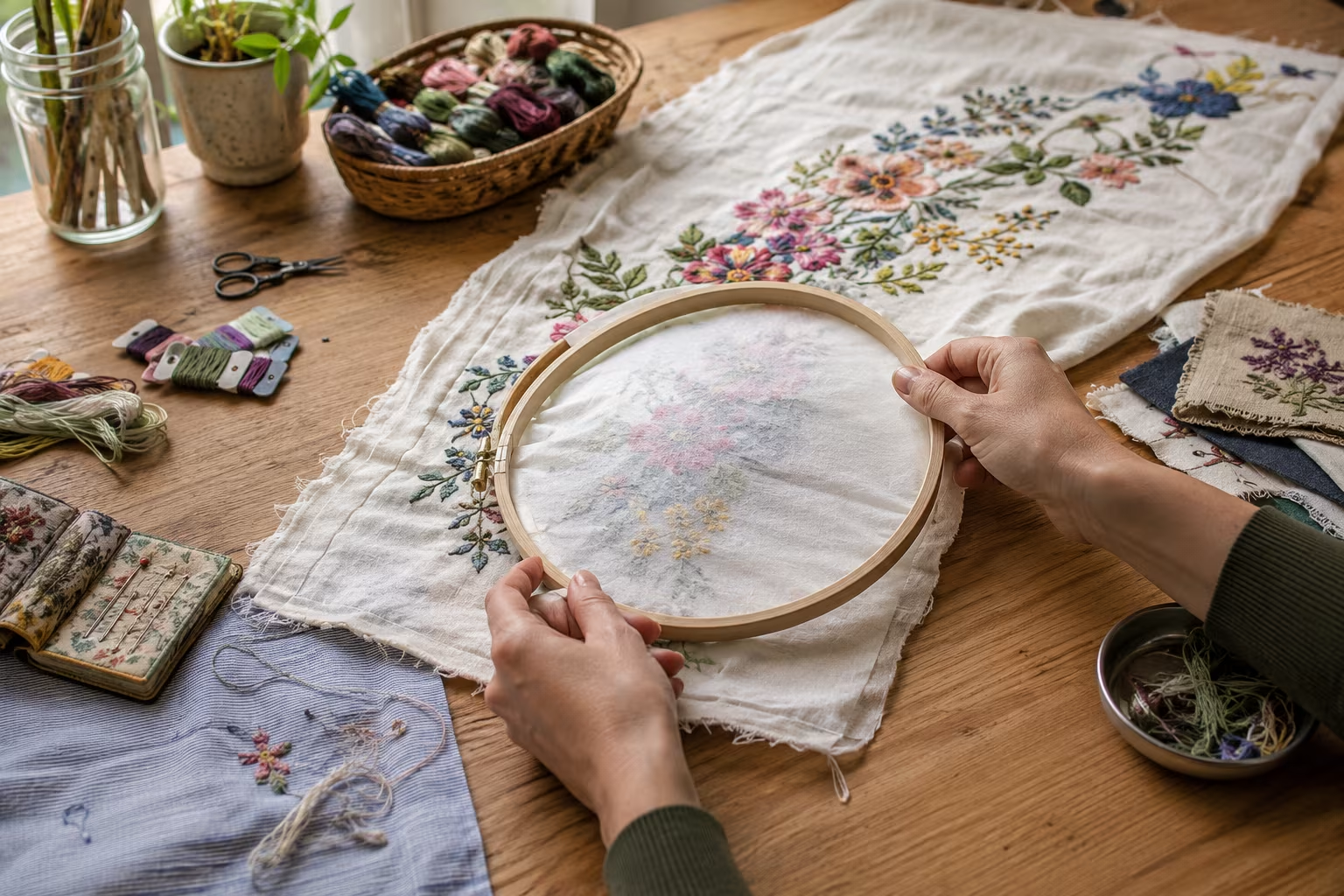
A project that lives in a hoop for weeks goes through tension cycles as humidity shifts the fabric and the screw loosens each time you set it down. Tighten the outer screw at the start of every session, pressing the inner ring up into the outer ring so the fabric pulls evenly. A wrap of cotton bias or twill tape around the inner ring of a wood hoop improves grip and prevents slippage. For work that will sit for months, take it out of the hoop between sessions — stitches held under tension for long periods can distort permanently — and store it flat.
When you must re-hoop, protect raised stitches: lay a scrap of tissue paper or cotton over the worked area before setting the inner ring, slip the hoop over the work, tighten gently, then remove the tissue. Flat stitches like satin, long-and-short, and back stitch recover from hoop pressure within minutes; raised stitches such as French knots, bullions, and Turkey work deform permanently, so plan the hooping to keep them outside the hoop edges. For projects built mostly of raised work, a stretcher frame — a Q-snap or scroll frame — holds the fabric without the squeeze of a hoop and is genuinely the better tool.
The screw, hoop care, and holding it
The screw at the top of the hoop is the part that wears. Cheap screws strip, jam, or sit at an angle that prevents even tensioning, while quality hoops use brass or stainless screws that turn smoothly across many cycles. When buying in person, tighten and loosen the screw a few times: it should turn with light finger pressure and the two halves of the fitting should align without a gap. A loose screw mid-session can be nipped tighter with a small flat screwdriver.
Wood hoops last a long time with light care — wipe with a dry cloth, store out of sunlight and humidity, and keep a tiny drop of light oil on the screw threads. Do not store a wood hoop fully tightened for long periods, since the wood compresses and can warp the fitting; loosen it halfway between projects. Once a wood hoop starts losing grip, usually after 5 to 10 projects, the bias-tape wrap restores it. For long sessions, a folding floor stand, lap stand, or seat frame holds the hoop at height and frees both hands, which is worth the cost for anyone who stitches more than an hour at a stretch or has wrist strain.
A starter kit and sizes by project
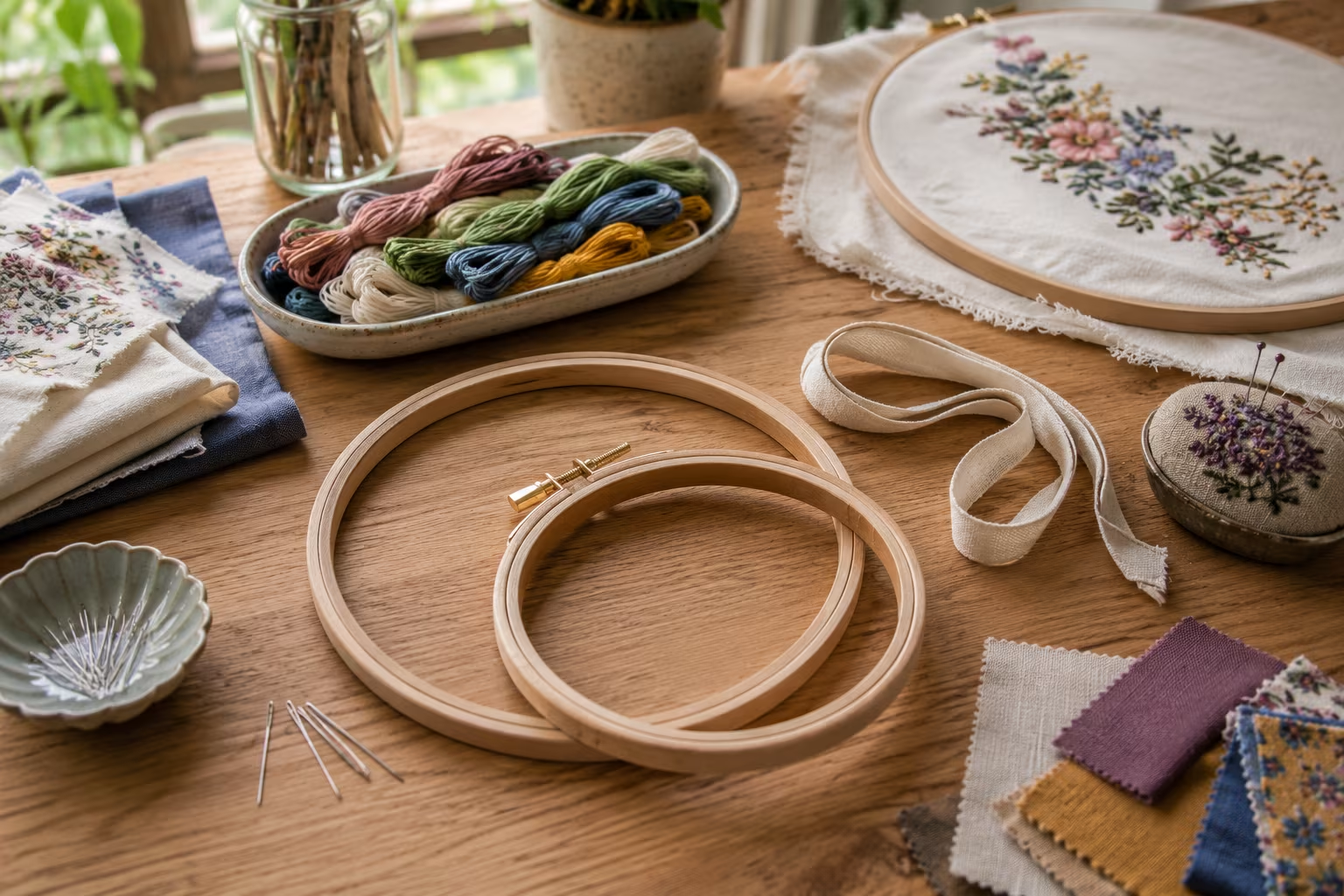
A workable beginner kit is a 6-inch and an 8-inch beechwood hoop, a length of cotton bias tape for wrapping inner rings, a basic floss collection in colours you actually want, a few sharp embroidery needles in sizes 7 and 9, small embroidery scissors, and a fabric tested for tension behavior. Match the fabric to the work — a tight, even weave such as Aida cloth for cross-stitch or quilting cotton for surface embroidery holds tension, while loose-weave fabric slips under any hoop.
Size the hoop to the project: a 5- or 6-inch hoop for small hoop art that finishes in the hoop you stitched in; 7, 8, or 9 inches for medium hoop art depending on the margin; 3 to 4 inches for patches and small motifs; 8 or 10 inches for samplers, with the expectation of re-hooping as the design grows. Hand quilting uses bigger 14-inch or larger hoops, or a rectangular Q-snap, because the layered fabric needs more room. The two mistakes to avoid throughout are overtightening, which can split a wood hoop, and switching between hoop and frame mid-project, which changes the tension and how the finished stitches read.
Hoop sizing at a glance:
| Project | Hoop | Note |
|---|---|---|
| First hoop for long projects | 6 or 8 inch beechwood | the 2-hour-hold comfort zone for most adults |
| Finish-in-hoop art | 5–6 inch | the hoop becomes the frame |
| Larger pieces | 7–9 inch, move as you go | graduate up only when a project demands it |
| Avoid | bamboo for active stitching | loses tension; rough edges catch thread |
| Grip fading | after 5–10 projects | a cotton bias-tape wrap restores it |
Related Posts
Beginner Pottery Wheel Speed for Centering
Centering clay needs high wheel speed and firm pressure. Most beginners use too low speed.

Calligraphy Ink Comparison for Cotton Paper
Modern dip pen calligraphy needs ink that doesn't bleed on absorbent cotton paper. India ink...
Knitting Needle Materials Compared: Wood vs Metal vs Plastic
Knitting needle material changes how stitches slide, how cold or warm the needle feels, and how...
Beginner Watercolor Paper Choice for Textured Washes
Watercolor paper is the single biggest gear decision a beginner makes. Weight, surface texture...
Comments
No comments yet. Be the first to share your thoughts!