
Sealing Watercolor Wood Slices for Indoor Display Pieces
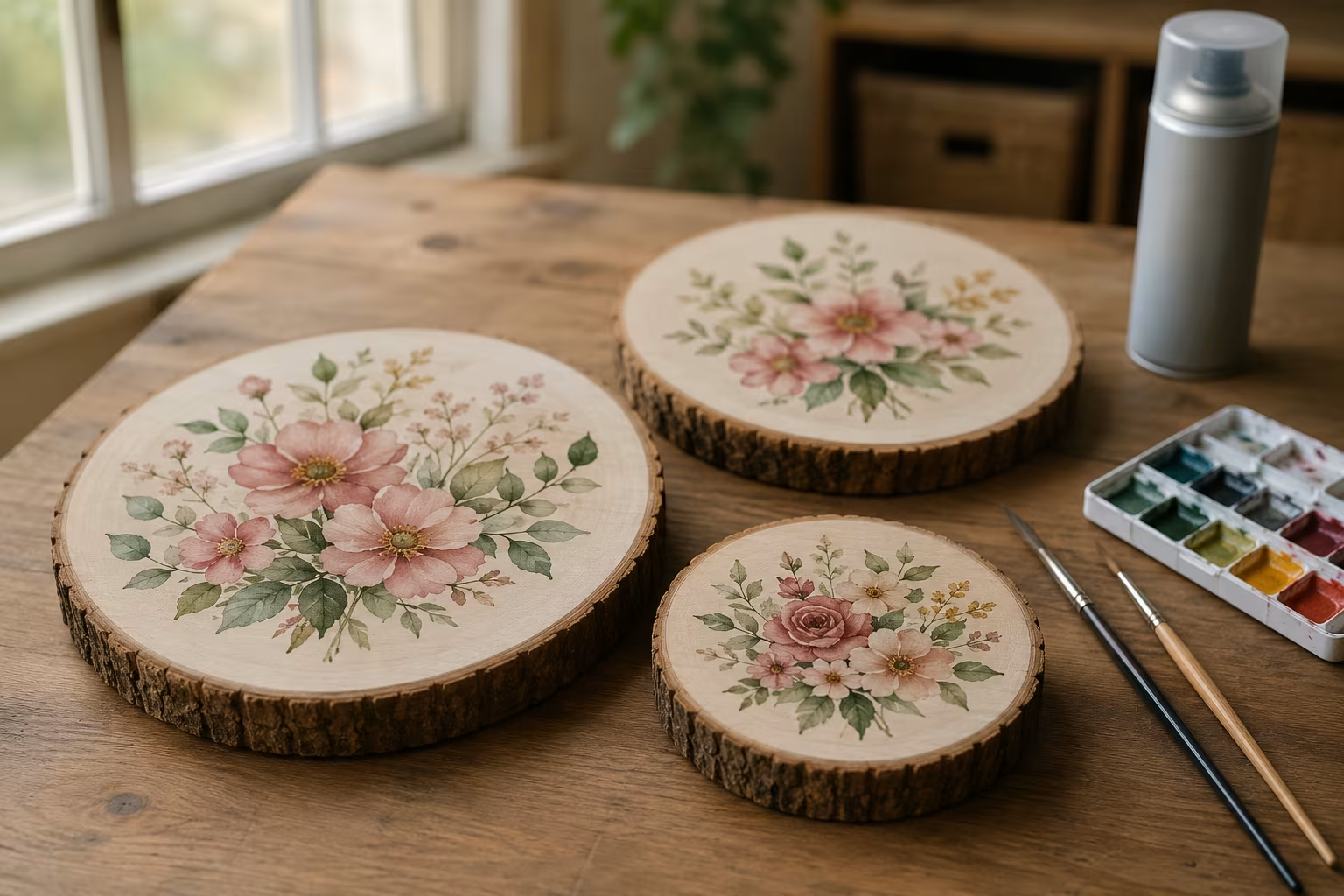
Watercolor on raw wood spreads unpredictably and fades quickly without preparation and sealing. The reliable process has three stages: prime the wood slice with a watercolor ground or a thinned white acrylic wash to control absorbency, paint the design with normal watercolor technique, then seal with two or three light coats of clear, non-yellowing acrylic spray once the paint is fully dry. Skip the priming and the paint sinks unevenly into the grain, giving fuzzy edges and patchy colour; skip the sealing and the colours fade within months of indoor display, especially under any light carrying UV. The brush-on Mod Podge crafters know from other projects is the wrong tool here — brush strokes lift wet pigment and leave drag marks, so spray application is non-negotiable.
Why raw wood and watercolor fight
Wood is porous and absorbs unevenly. The grain includes lighter springwood that drinks liquid fast and denser summerwood that resists it, so watercolor on raw wood follows that pattern — spreading into the absorbent bands and pooling on the resistant ones. Coverage varies randomly, lines spread into vague shapes, and soft washes turn patchy. The control watercolor gives on paper disappears. The fix is to even out absorbency before any paint touches the surface, and a primer coat is what restores predictable behavior.
Three priming options that work
Each primer trades cost against how paper-like the painted surface behaves.
| Primer | Application | How it behaves | Best for |
|---|---|---|---|
| Watercolor ground (Daniel Smith and others) | Two thin coats, dry between, sand lightly with very fine grit | Most paper-like: washes flow, lifting and dry-brush both work | Committed artists wanting full watercolor control |
| Thinned white acrylic (about 1:3 paint to water) | Two coats, dry, light sand | Good absorbency control; lifting is harder than on paper | Most beginner projects, lowest cost |
| Acrylic gesso | Standard white gesso, dry, optional light sand | Non-absorbent, paint-on-plastic feel; some effects lost, bold colour very controllable | Experimental, high-control approaches |
For most first projects the thinned white acrylic option is the right starting point: titanium white thinned roughly one part paint to three parts water, brushed across the slice in two coats and lightly sanded, controls absorbency at a fraction of the cost of a dedicated ground.
Surface preparation before priming
The slice should be flat, smooth, and clean before primer goes on. Raw craft-store slices range from quite smooth to rough with bark fragments still attached. Sand the painting face with 220-grit sandpaper to knock down high spots and splinters, sand the edges only enough to remove sharpness, and wipe with a tack cloth to clear the dust. If you want to keep bark on the edge as a design element, do not sand it — brush it gently to remove loose debris and leave the texture. Discard any slice with visible mould or fungal growth; sealing over mould does not stop it, and the piece will deteriorate behind the finish.
The painting stage
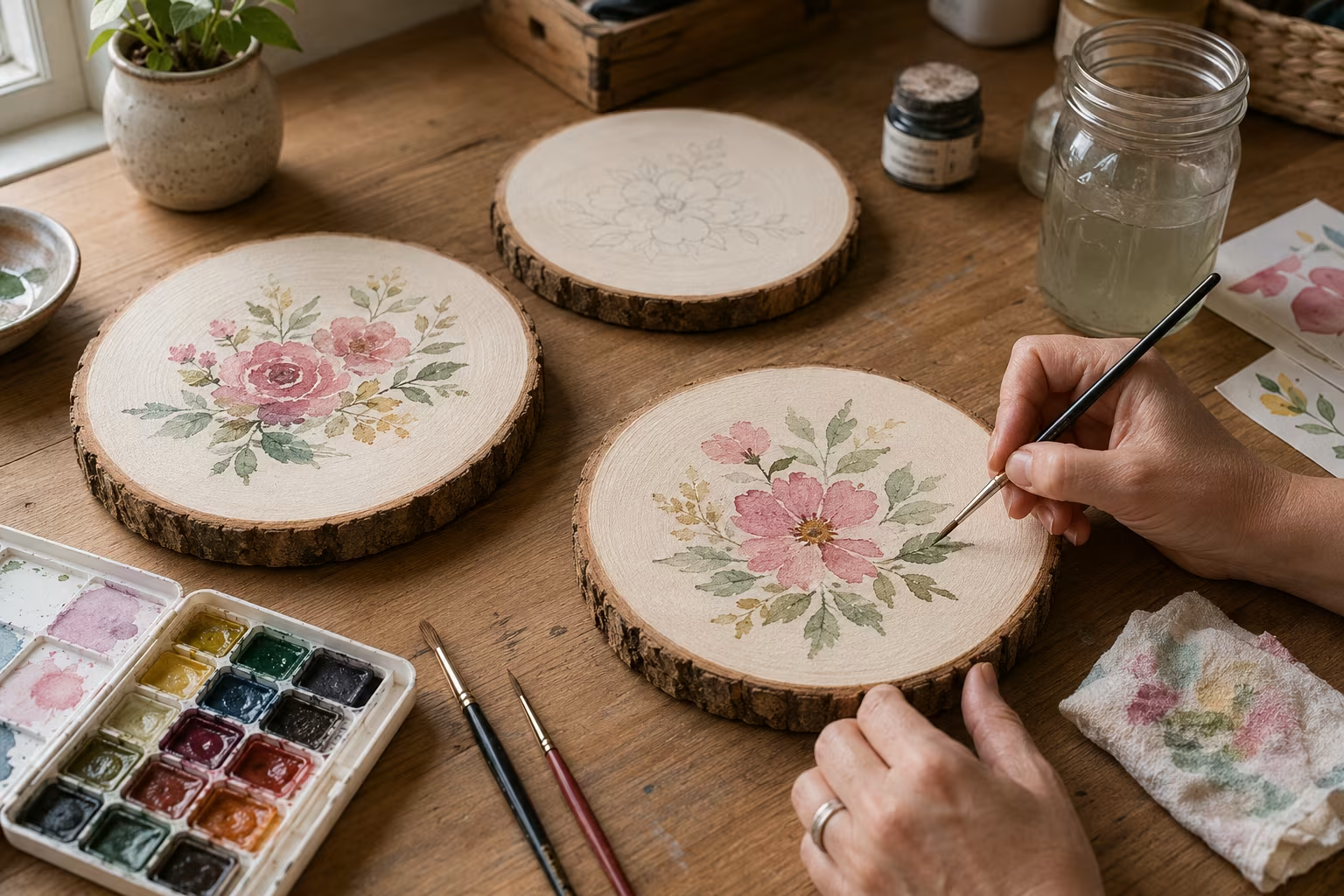
Once primed and dry, the slice accepts watercolor much like paper, with three adjustments. Use less water than on paper — the primer is less absorbent, so puddles sit longer and bleed further before setting, and a slightly drier brush gives cleaner edges. Lift carefully or not at all, since the primed surface is less forgiving than paper; plan to add colour rather than remove it. Layer thinly and let each layer dry, because thick wet washes blossom on wood in ways they do not on paper, so build depth in light glazes. Test on a scrap of the same prepared wood first, as each batch and each priming behaves a little differently. Work in a warm, dry room; cold or damp air slows drying and lets pigment keep creeping after a wash appears to have set, which is where soft edges sneak back in even on a primed surface.
Sealing for indoor display
Once the watercolor is fully dry — overnight at minimum, longer for thick layers — apply the sealing coats. Use a clear, non-yellowing acrylic spray formulated for craft or fine art, such as Mod Podge Clear Acrylic Spray, Krylon Crystal Clear, or Liquitex acrylic spray varnish. Choose gloss, satin, or matte for the look you want: gloss deepens the colours, matte keeps a natural wood-and-paint appearance. Apply two or three light coats rather than one heavy one, spraying from about 12 inches away and sweeping across the piece rather than holding the can in one spot. Let each coat dry the time stated on the can — typically 10 to 15 minutes between coats and 24 hours for full cure — and avoid spraying in humid conditions, which can dry the sealer to a milky haze.
Spray matters because brush-applied sealers lift pigment from underneath and leave visible strokes on the cured surface; the fine mist of a spray dries before it can disturb the paint. If you truly cannot spray, use a soft synthetic brush in single passes without back-and-forth strokes and accept a slightly compromised finish. Watercolors are unusually prone to UV fading, so for pieces in bright rooms a UV-resistant sealer such as Krylon UV-Resistant Clear extends fade resistance considerably. Even then, watercolor on wood will not survive direct sun forever — display it in indirect light, on a north-facing wall or a curtained room rather than a south-facing window.
Common mistakes to avoid
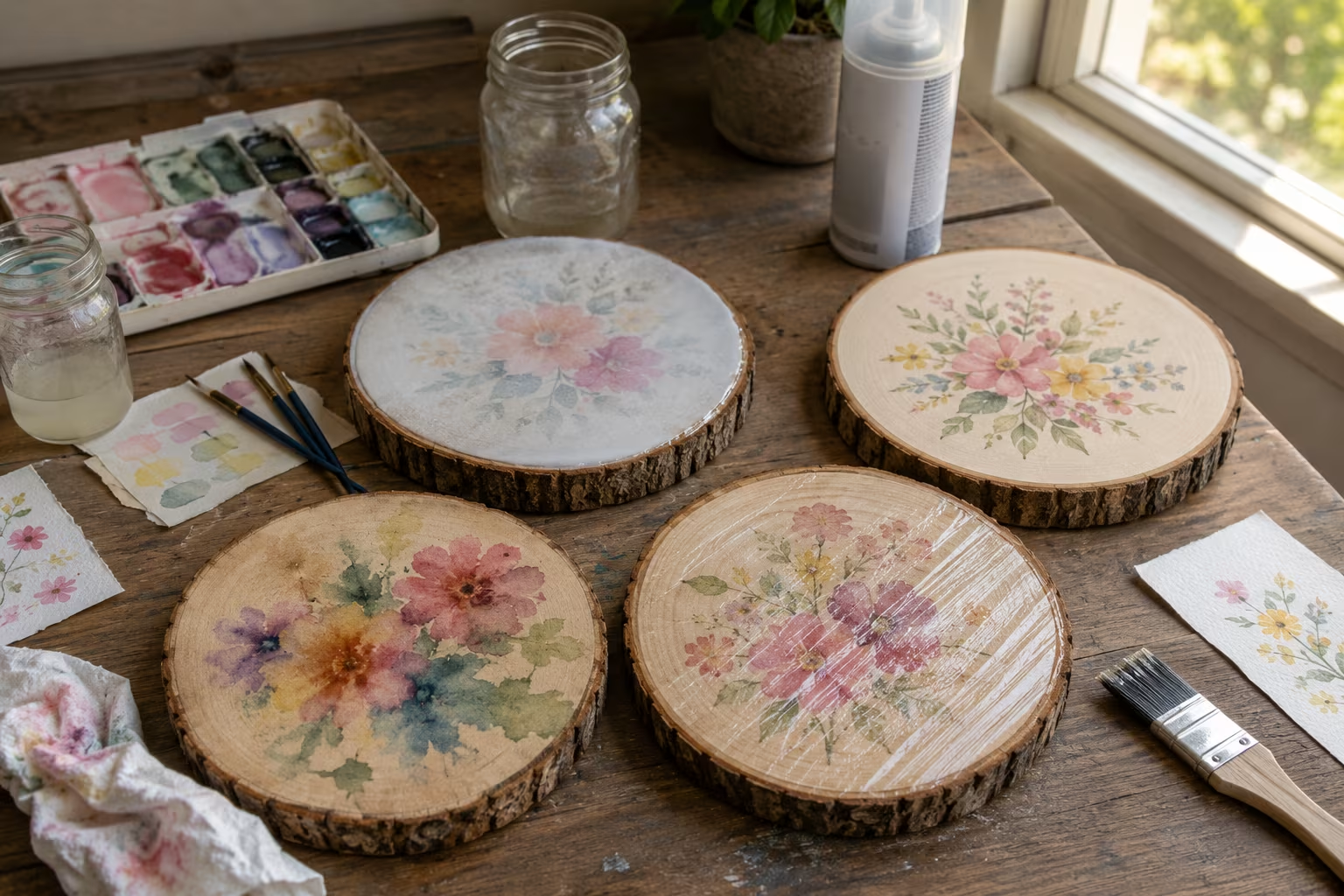
Four errors account for most disappointing results. Skipping the priming because the wood looks smooth — smoothness is texture, not absorbency control, and raw wood always drinks unevenly. Sealing before the paint has cured — wet paint trapped under sealer never fully dries and can turn soft and milky over months. Brushing on sealer to save the cost of a spray can — the visible strokes ruin the finish. And displaying the finished piece in direct sunlight, where even UV-resistant sealer only slows the fade rather than stopping it. For hanging, glue a small sawtooth hanger or a loop of jute twine to the back with wood glue; for a cleaner display, prop the slice on a shelf stand or mount it in a shallow shadow box.
Wood movement, cracks, and choosing slices
Wood slices crack over time, usually a radial split running from the centre toward the edge. This is not a fault in the painting; it is how wood dries, as a 1-inch slice of fresh-cut log loses moisture from all sides and contracts. The prevention is to start with stable, dried wood — buy kiln-dried or year-air-dried slices, or buy fresh slices and let them dry 6 to 12 months in a stable room before painting. A slice cut from reclaimed lumber or a fallen branch often has more character but needs the same care: brush off loose debris, check for insect holes and fine dust, and let it acclimate to indoor humidity for a few weeks first.
For a slice that develops a minor crack after painting, clear epoxy or a thick varnish fills the gap and stabilizes the piece; the crack stays visible as a darker line but the structure holds. Larger cracks are usually best accepted as rustic texture. Clean-edged slices prime and seal uniformly across the whole face, while bark-edged slices need the primer brushed carefully to the inside of the bark line so the natural texture stays visible — spray overspray onto the bark is generally fine and adds a little protection. Framing options trade protection against effort: a small sawtooth hanger is the simplest mount, a shelf stand lets you rotate pieces without wall holes, and a shallow shadow-box frame guards the painted face from knocks at higher cost. A coordinated set of three to five slices in a shared palette and varied 4-, 5-, and 6-inch diameters reads as deliberate design rather than a one-off craft, hung with the 2-to-3-inch spacing used for a gallery wall.
Related Posts

Beginner Pottery Wheel Speed for Centering
Centering clay needs high wheel speed and firm pressure. Most beginners use too low speed.


Calligraphy Ink Comparison for Cotton Paper
Modern dip pen calligraphy needs ink that doesn't bleed on absorbent cotton paper. India ink...
Knitting Needle Materials Compared: Wood vs Metal vs Plastic
Knitting needle material changes how stitches slide, how cold or warm the needle feels, and how...
Beginner Watercolor Paper Choice for Textured Washes
Watercolor paper is the single biggest gear decision a beginner makes. Weight, surface texture...
Comments
No comments yet. Be the first to share your thoughts!