Supplies

Hot Glue Sticks Compared: Low-Temp, High-Temp, Specialty
Hot Glue Sticks Compared: Low-Temp, High-Temp, Specialty

The short answer

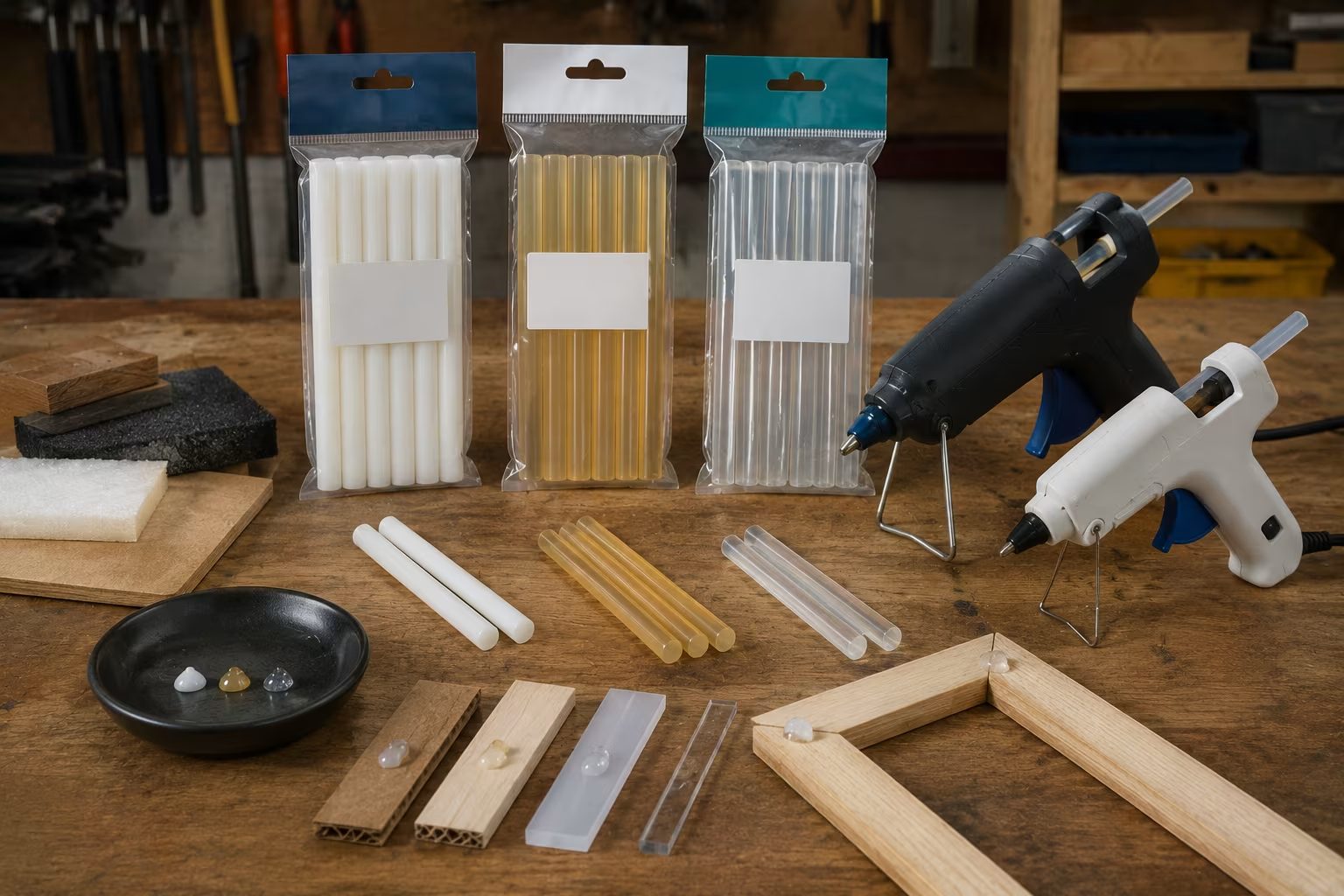
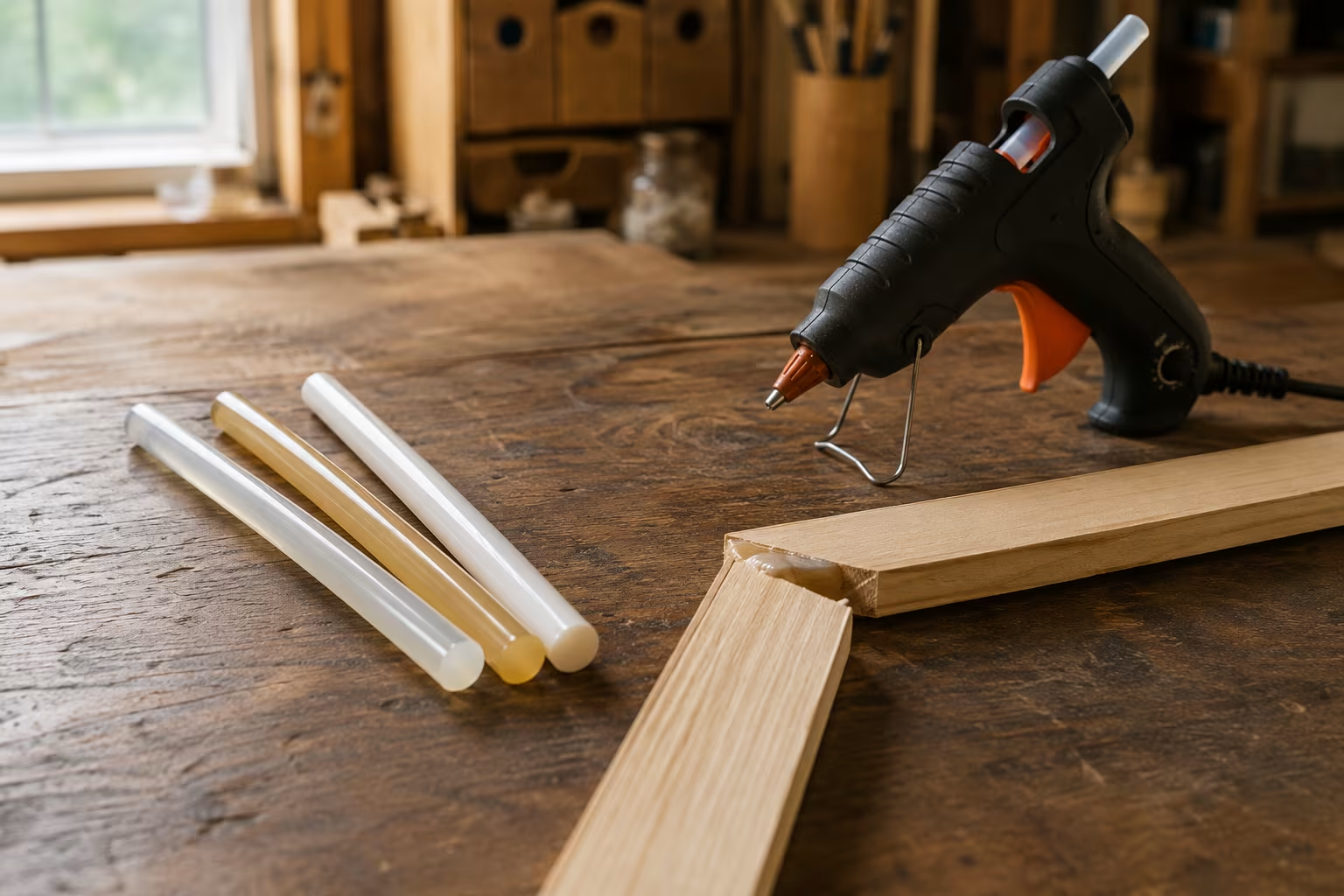
Low-temperature glue sticks melt at around 250°F and are designed for heat-sensitive materials (foam, light fabrics, delicate craft work). High-temperature sticks melt at around 380°F and bond stronger to most rigid materials (wood, metal, plastics, ceramics). Specialty sticks — high-strength wood-specific, fabric-specific, exterior-grade, fast-set, low-strand — exist for specific tasks where the standard formulas underperform.

Critically: the stick and the gun must match. A high-temp stick in a low-temp gun simply will not melt completely; a low-temp stick in a high-temp gun melts too fast, runs everywhere, and can damage the gun. The temperature is printed on both the stick package and the gun; check before mixing.

Most home crafters need one box of standard high-temp sticks for general use and one box of low-temp for delicate materials. The dual-temp ("all-temp") sticks that work in both gun types are a useful third option that bridges the categories at slight cost in performance.

Why temperature matters at all

Hot melt adhesive is a thermoplastic — it melts when heated, flows as a liquid, and sets back to solid as it cools. The temperature at which a specific formula melts determines how it can be applied and what it can bond.

A glue stick that melts at a low temperature comes out of the gun cooler and sets faster. This protects heat-sensitive substrates (foam blocks melt at glue-gun temperatures; thin synthetic fabrics scorch; some plastics deform) but produces a weaker bond on rigid materials because the cooler glue does not penetrate the substrate's surface as deeply.

A glue stick that melts at a high temperature comes out hotter, flows further before setting, and penetrates better — giving stronger bonds on wood, metal, ceramics, and rigid plastics. The trade-off is the risk of damaging heat-sensitive materials and the slightly higher burn risk during application.

Low-temperature glue sticks (≈250°F)

Low-temp sticks melt and flow at around 250°F (120°C). The actual gun temperature when running these sticks ranges from about 230-280°F depending on the gun.

These are designed for craft applications where:

  • The substrate is foam, light fabric, paper, or other heat-sensitive material
  • The user is a beginner who needs lower burn risk (a low-temp gun is markedly safer for children and inexperienced crafters)
  • The bonded materials are delicate enough that high-temp glue would warp, melt, or scorch them

Low-temp sticks tend to be clear or slightly translucent, with a thinner viscosity when melted. Bond strength on rigid materials is real but lower than high-temp equivalents — adequate for craft holding, inadequate for structural use.

Storage: low-temp sticks soften slightly at very high room temperatures (above 90°F / 32°C) and may deform in shipment in summer or in an attic. Store in a cool room.

High-temperature glue sticks (≈380°F)

High-temp sticks are the workhorses of general craft and quick-fix work. They melt at approximately 350-410°F (175-210°C); standard guns run around 380°F.

These bond strongly to:

  • Wood (joinery for craft projects, holding small assemblies during cure)
  • Metal (light decorative pieces, low-stress mounting)
  • Hard plastics (most ABS, polyethylene, PVC, polystyrene)
  • Glass (decorative use; not for structural or heated applications)
  • Ceramics
  • Most rigid materials in general

They flow further and faster than low-temp sticks before setting, which means a small amount of glue covers more area but also means precision placement requires faster work.

The bonds set in 30-60 seconds with high-temp glue, faster on dense materials and slower on porous ones. Bond strength reaches near-full within 2-3 minutes.

High-temp sticks burn skin readily. Burns from a glue gun heal but the moment is unpleasant; gloves are sensible during longer projects.

All-temp / dual-temp sticks

Hot Glue Sticks Compared: Low-Temp, High-Temp, Specialty - All-temp / dual-temp sticks section detail

Some manufacturers sell sticks that work in both low-temp and high-temp guns — these are formulated to melt at intermediate temperatures (typically 280-320°F) and run acceptably in either gun type.

The advantage: one box covers both gun types and avoids the matching problem. The trade-off: the bond strength on rigid substrates is slightly below pure high-temp performance, and the heat protection on delicate substrates is slightly below pure low-temp performance. They are the compromise option.

For users who own only one gun type and rarely cross between projects, dedicated sticks (low or high) outperform all-temp. For users who own both gun types or share supplies with someone who does, all-temp simplifies stocking.

Specialty formulas worth knowing

Beyond the temperature split, manufacturers sell formulas designed for specific tasks.

Wood-specific high-strength. Reformulated for better bond on wood substrates and faster set. Useful for joinery in small craft work where wood glue cure time would slow the project.

Fabric-specific. Formulated with a slight flex when cured, so the bond does not crack when the fabric flexes in use. Useful for costume work, soft furnishings, and reusable cloth crafts.

Exterior / wet-environment. Formulated to resist water and UV. Useful for outdoor decorations and craft items that may see weather. Standard hot glue softens in rain and yellows in sunlight; exterior-grade sticks last significantly longer.

Low-strand. Formulated to minimize the long stringing strands that standard hot glue leaves behind. Useful for projects where cleanup matters (jewelry, fine craft).

Fast-set / instant. Formulated to set in 5-10 seconds instead of 30-60. Useful when holding parts manually until the bond sets is the limiting factor.

Pressure-sensitive. Stays slightly tacky after cure, allowing repositioning. Useful for craft mockups, removable labels, and applications where the bond should be temporary.

Colour-matched. Available in white, brown, clear, and a few other colours so the visible glue line matches the substrate. Most craft applications use clear; matching colours are useful for visible joints.

Gun selection and what it changes

The glue gun's specifications determine which sticks you can use and how reliably.

A non-temperature-controlled gun runs at one fixed temperature; the stick rating tells you which gun to use. Low-temp guns and high-temp guns are different products.

A temperature-controlled gun allows the user to set the operating temperature within a range. These run dual-temp sticks well, accept low-temp and high-temp sticks alternately, and reduce the matching problem.

Cordless guns (battery powered) typically run high-temp and offer convenience at the cost of session length per charge. Useful for occasional work; less useful for long projects.

The most useful single-gun for a home craft kit is a corded temperature-controlled gun with adjustable settings.

How to fix common hot glue problems

Strings between glued items. Standard hot glue leaves long strings as the gun moves away. Cut them with sharp scissors after cooling; cleanup is easier than trying to prevent them. Low-strand specialty sticks help.

Glue blob too large. Apply a smaller dot, press the parts together briefly, and squeeze any excess out toward an invisible side. Hot glue is over-applied more often than under-applied; less is usually more.

Bond fails after a few days. Either the substrate is incompatible (some plastics — polyethylene, polypropylene, silicone — bond poorly to standard hot melt), the glue was applied to a dirty surface (clean with isopropyl alcohol first), or the load is beyond what hot glue handles (use a different adhesive).

Glue stick stuck in the gun. Most guns have a release mechanism (a small lever or button) that lets you extract a partial stick. If the stick has melted and re-solidified in the chamber, heat the gun fully to liquefy the stick, then pull the stick out with pliers while the gun is hot.

Materials worth keeping in stock for a craft kit

A modest stock list: one box of high-temp standard sticks (the workhorse), one box of low-temp sticks if you work with foam or thin fabric, a small box of all-temp sticks for guns shared between projects, and one specialty pack if you have a specific application (exterior-grade for outdoor work; fabric-specific for textile work).

Sticks store indefinitely if kept cool and dry. A single box typically lasts a year of regular crafting. Buying in larger quantities saves cost; very large quantities risk staleness if storage is poor.

Gun maintenance and lifespan

Hot Glue Sticks Compared: Low-Temp, High-Temp, Specialty - Gun maintenance and lifespan section detail

A glue gun is a small heated nozzle and a stick advancement mechanism. Both can fail with neglect.

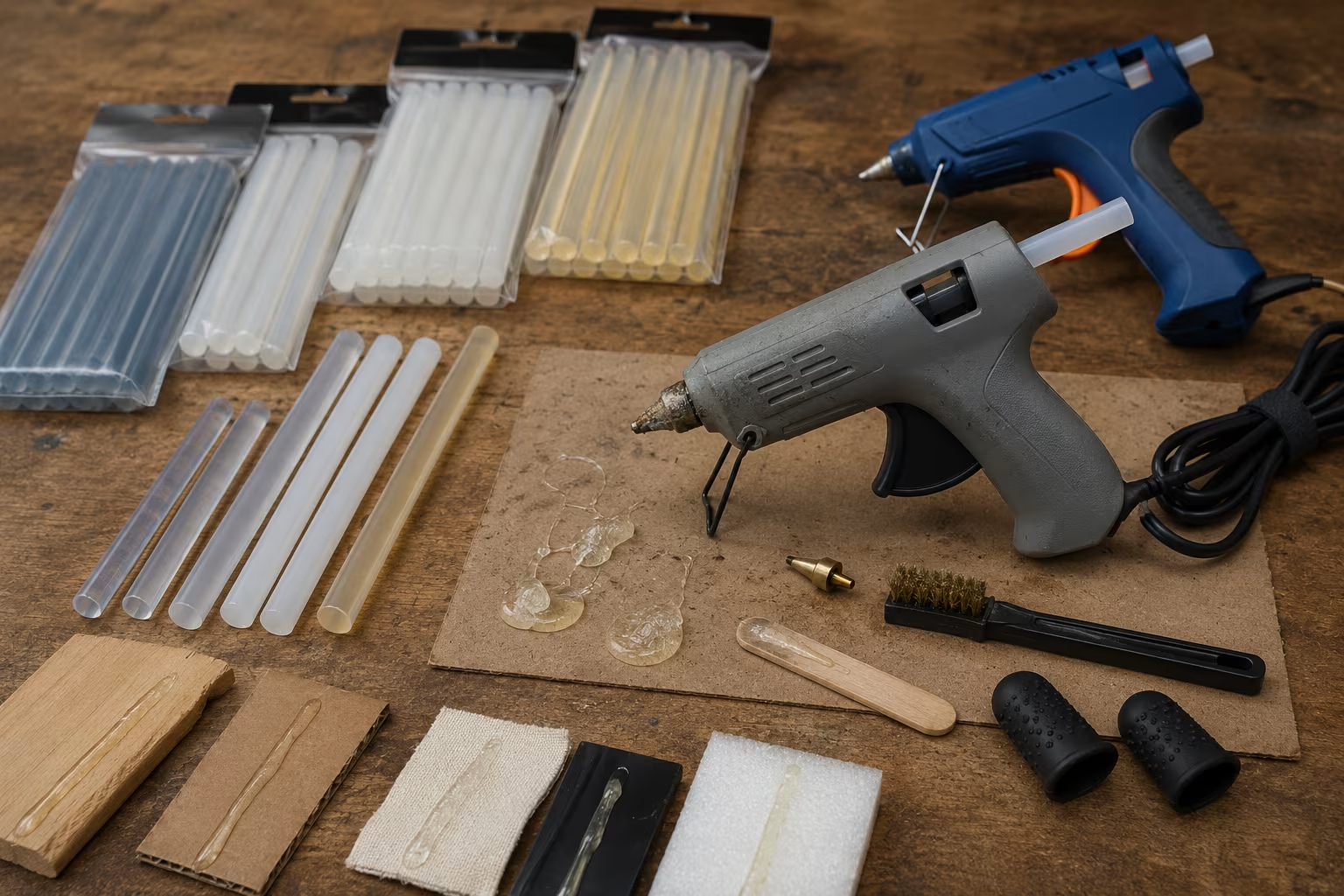
Heating element. The most common failure point. A gun that no longer heats either has a failed element or a broken switch. Replacement guns cost less than repair labor; budget guns are essentially disposable.

Nozzle clog. Solidified glue inside the nozzle blocks new glue flow. Heat the gun to full temperature, then push a piece of stiff wire through the nozzle while warm to clear the blockage. Severe clogs require nozzle replacement.

Stick advancement mechanism. The lever or trigger that pushes the stick forward can wear or jam. Some guns let you disassemble to clean; most consumer guns do not.

Cord and switch wear. Cheap guns have basic switches that fail before the heating element. Premium guns last longer overall, often by years.

For occasional crafters, a basic non-temperature-controlled gun lasts several years and replacement at failure is inexpensive. For frequent crafters, a temperature-controlled gun with a longer lifespan and finer control is worth the upgrade.

Health and safety considerations

Hot glue is non-toxic when set; the fumes during application contain various organic compounds depending on the formula but are not classified as hazardous at typical home use exposures. Adequate ventilation is sensible but not strictly required.

Burns are the primary injury risk. The molten glue is sticky and clings to skin while still hot — meaning contact transfers heat much more efficiently than a brief touch on a hot pan would. Burns from hot glue tend to be small but slow to heal.

Treatment for a hot glue burn: do NOT try to pull the glue off the skin while it is still warm and stuck. Run cool water over the area to set the glue and cool the skin, then peel the cooled glue away from the skin (the skin's surface oils usually let it release). Apply standard burn first aid.

Children should use low-temperature guns or be supervised closely with high-temperature guns. The burn risk is the difference between safe family craft and an emergency room visit.

Buying sticks: bulk vs small packs

Hot glue stick prices scale dramatically with quantity. A small craft-store pack of 25 sticks costs significantly more per stick than a bulk box of 100-500 sticks from a craft supply or industrial supplier.

For occasional crafters: small packs at the craft store are convenient and the per-stick cost is acceptable.

For frequent crafters or small businesses: bulk boxes pay back within a few months of use. The 5-10 pound (25-50 stick equivalent) boxes cost a fraction per stick of small packs.

Diameter matters too. Standard glue sticks are 7/16 inch diameter (most common); some guns use 5/8 inch industrial sticks; mini guns use 1/4 inch sticks. Stick diameter and gun diameter must match.

Cleanup of accidental glue

Hot glue on fabric, on a wood floor, or on a project where it does not belong is removable with patience.

On fabric, place the glued spot face-down on a piece of brown paper and iron with low heat. The glue softens and transfers to the paper. Multiple passes may be needed.

On hard surfaces, freeze the glue by holding an ice cube against it until brittle, then pop off with a thin scraper. Most hard surfaces release cleanly.

On skin, run cool water until the glue sets, then peel off. Do not pull at hot glue still on skin.

The most common hot glue mistake is using the wrong stick for the substrate — high-temp on foam, low-temp on heavy wood — and then blaming the bond. Match the temperature to the material, use enough glue but not too much, and clean the surfaces beforehand. Hot glue is one of the most reliable craft adhesives when the basics are respected.

Written by

Laura Hayes

Laura Hayes is a maker and DIY writer with over a decade of hands-on experience in woodworking, home decor, and small-batch crafts. At Hobby Rig she turns weekend projects into clear, step-by-step guides with honest budgets and real tool lists — including the mistakes she made so you don't have to.

View all posts →