
Painter's Tape for Crisp Lines on Textured Wall Surfaces
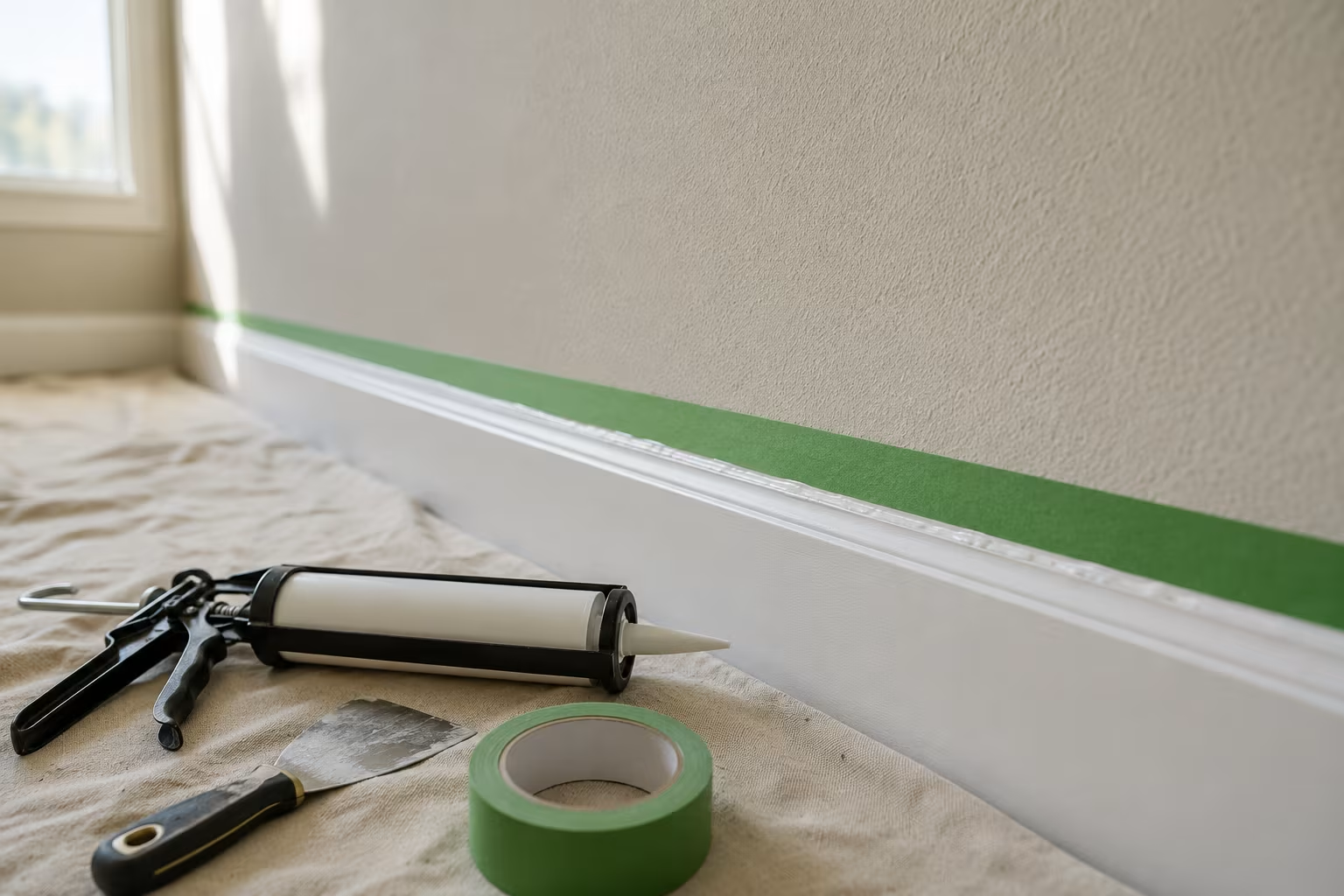
Standard blue painter's tape bleeds heavily on textured walls because the texture leaves tiny channels under the tape edge that paint flows through. On textured surfaces the tape that works is a specialty product — FrogTape Pro Grade, ScotchBlue Sharp Lines, or Scotch Rough Surface Painter's Tape — engineered with paint-blocking or stronger edge adhesives. Even the right tape needs a sealing step: apply the tape, press the edges firmly with a putty knife, then run a thin bead of paintable caulk along the tape edge to fill the texture's valleys. For heavy knockdown, brick, or stucco, no tape alone gives a perfect line, and the caulk seal is mandatory.
Why textured walls defeat standard tape
Painter's tape works by pressing flat against a smooth surface and forming a paint-impermeable barrier along its edge. On a smooth wall the tape edge sits flush and paint cannot get under it. A textured wall creates microscopic peaks and valleys; the tape lies across the peaks while the valleys stay open as small channels. Paint on the unmasked side flows into those channels and bleeds under the edge, leaving a fuzzy line.
The depth of the bleed tracks the depth of the texture. Light orange-peel texture bleeds a little; heavy knockdown or skip-trowel bleeds more; brick and stone bleed dramatically.
The tapes that actually work
FrogTape Pro Grade carries a polymer in its adhesive that swells with moisture from the paint and forms a seal at the tape edge, handling most light to medium textures. ScotchBlue Sharp Lines uses a different edge-lock chemistry to similar effect; the choice between the two is largely brand preference. Scotch Rough Surface Painter's Tape has the strongest adhesive in the consumer range and is designed for concrete, brick, stucco, and deeply textured walls. Basic blue tape is fine on very light textures and smooth walls but will bleed visibly on anything with real texture.
The price difference over basic tape is small per linear foot, and the time saved on touch-up more than justifies the upgrade. For a typical room — baseboards, crown molding, and a few corners — the total tape cost difference stays modest.
The caulk-edge-seal technique
Clean the wall along the line with a slightly damp cloth and let it dry fully; dust in the texture's valleys undermines both adhesion and the caulk seal. Apply the tape along the line and press its whole length firmly with a 2-inch putty knife, driving the adhesive into the valleys. Run a thin bead of paintable acrylic latex caulk along the tape edge on the side you will paint, using a caulking gun with the tip cut to a small opening. Smooth the bead immediately with a damp fingertip into a thin, uniform fillet rather than a thick ridge.
Let the caulk dry to touch — 5 to 15 minutes for most paintable caulks — then paint right up to and over the caulk bead. The caulk fills the valleys the tape cannot bridge, so paint has nowhere to creep. Remove the tape while the paint is still wet, and the line comes up crisp.
Removing the tape: angle and timing
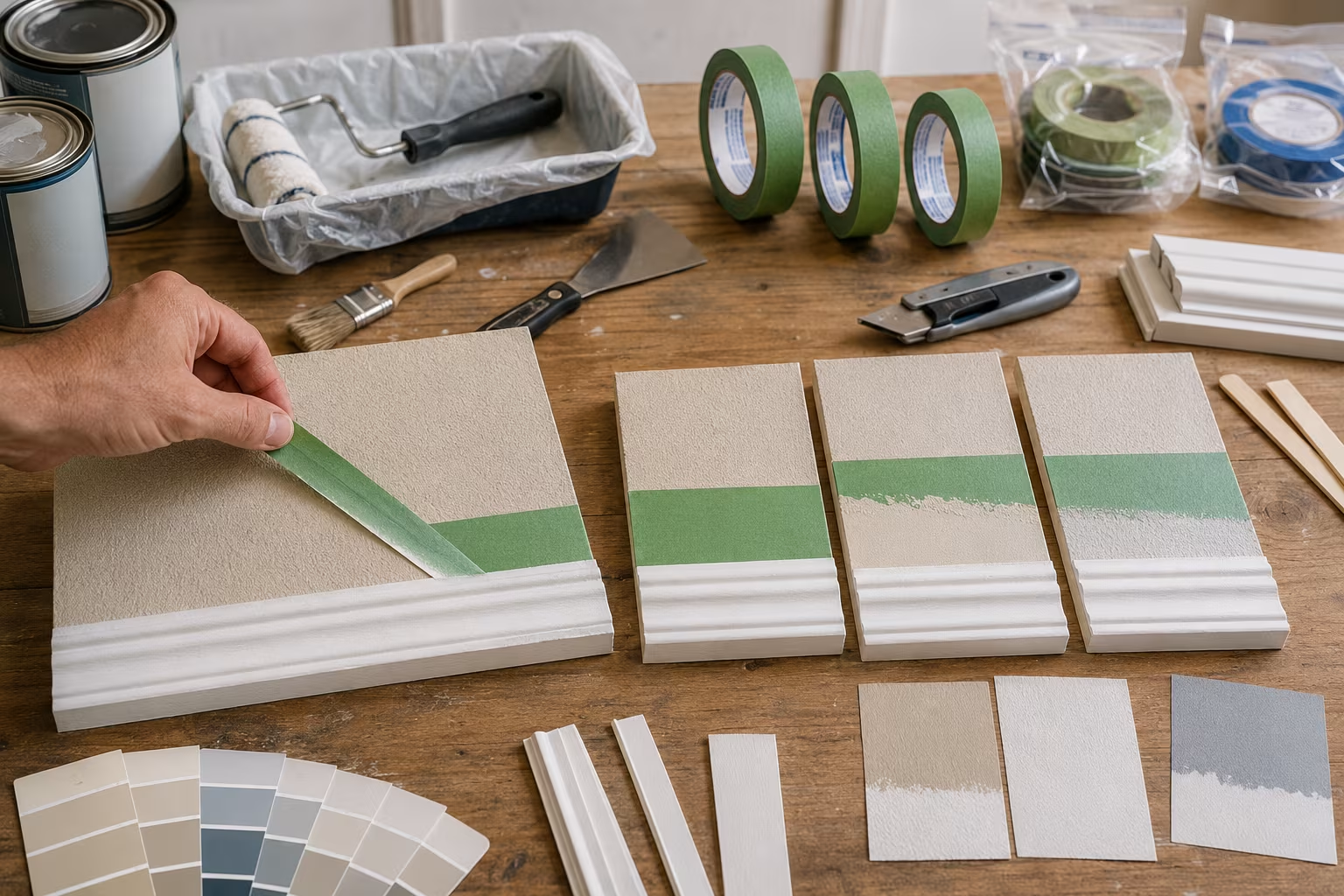
Pull the tape back over itself at roughly 45 degrees, away from the freshly painted side, slowly and continuously. Pulling straight up or toward the paint stresses the wet edge and can lift small chunks. Timing matters as much as angle:
- Within 1 hour (paint still wet): the cleanest release and the crispest line.
- 1 to 4 hours: acceptable for most water-based paints; the film is touch-dry but not cured.
- More than 4 hours: paint can bond to the adhesive, especially in humidity; score along the edge with a sharp utility knife before pulling.
- After 24 hours: the tape may take a chunk of paint with it; scoring first is almost always required.
The general rule: remove as soon as the paint is touch-dry, and do not leave tape on overnight unless the paint instructions say to. Heavy oil-based paint or very humid conditions extend the window, but pull within 4 to 6 hours regardless.
Brick, stone, and the toughest textures
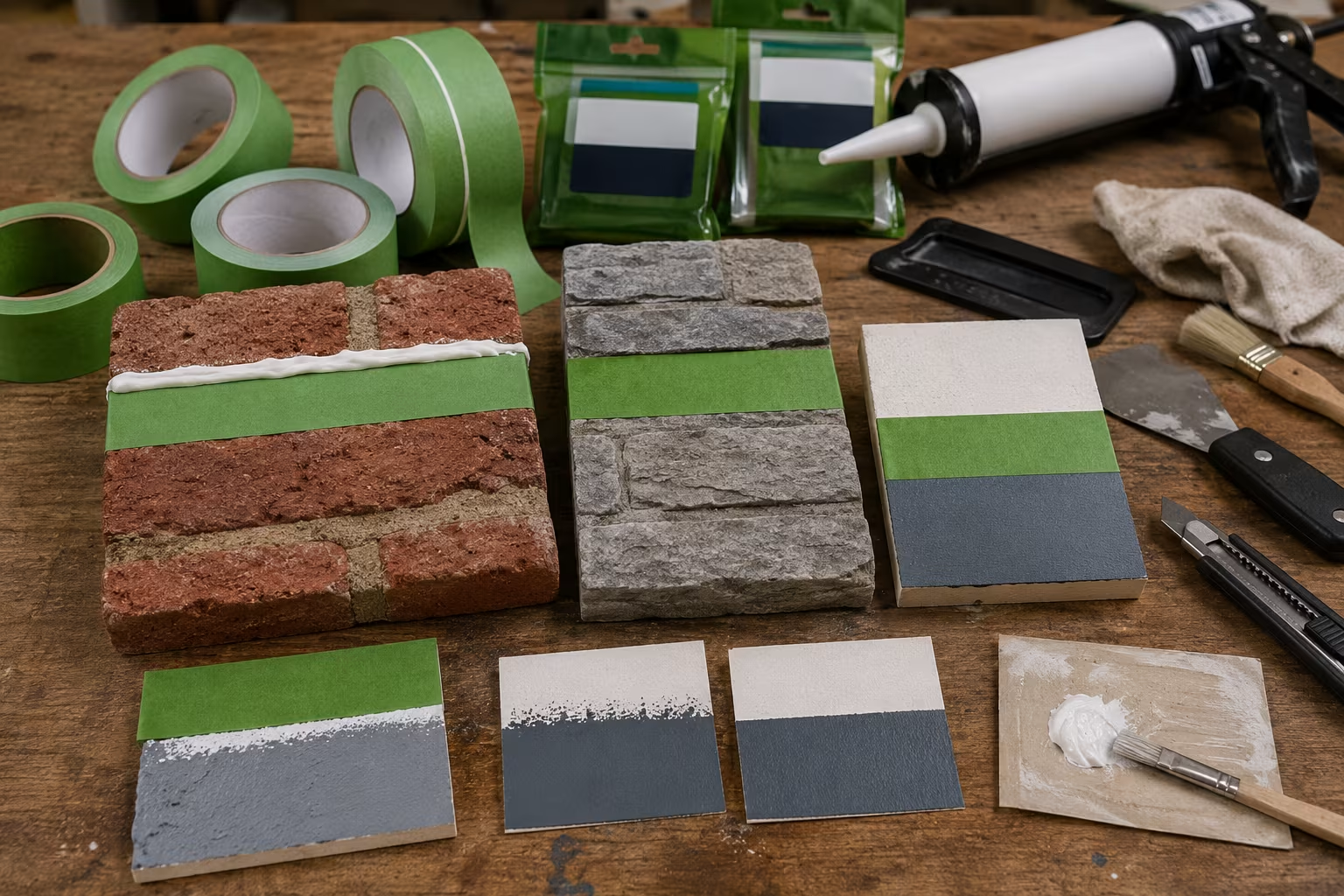
Brick, stone, and rough masonry are the hardest surfaces for any tape: the texture is deep, the surface abrades adhesives, and colour variation makes any bleed obvious. Use Scotch Rough Surface tape, burnish heavily, and apply the caulk-edge-seal step with a thicker bead than you would on a smooth wall. On deep mortar joints the tape cannot bridge the valleys at all, so the caulk does most of the work and the tape mainly holds it in place during painting. Often the smartest move is to paint into the masonry's natural lines rather than across them — a line that follows a mortar joint reads as crisp because the eye treats the joint as the edge.
When even the caulk seal still bleeds on hand-applied stucco or very deep knockdown, freehand cut in with a quality angled brush. With a steady hand a human-cut line looks as crisp as tape at first glance, and designing the room so a trim colour flows into the texture removes the need for a razor edge entirely.
Application tips that improve results
Run tape in straight lengths as long as practical; joining short pieces creates a weak point at every seam, while a single long run holds better. Press the whole edge with a putty knife or plastic burnishing tool before caulking — this one step is the difference between an acceptable seal and an excellent one, so spend the time on it. For curves and tight corners use the narrower 1-inch tape, since wide tape resists bending. Where two tape lines meet at a corner, overlap them by an inch and burnish the overlap; the double layer gives a sharper edge than a butt join. If a line crosses two textures, such as a smooth ceiling meeting a textured wall, prep for the rougher of the two — the coarser surface sets the standard the seal has to meet.
Paint type and spray effects
Water-based latex, the standard for modern walls, is the most forgiving: the film stays flexible enough to release cleanly. Oil-based trim paints form a harder, more brittle film that bonds aggressively to tape and needs scoring before removal. Chalk paints, milk paints, and matte specialty finishes vary widely, so test on a small area before trusting tape on the main job.
Application method changes tape behavior too. Brushed or rolled paint sits in a relatively thin film near the edge, where standard tape and the caulk seal perform well. Sprayed paint atomizes into fine droplets that travel further and push under tape edges more aggressively, so increase the caulk bead and add a paper or plastic masking layer over the tape to catch overspray. Against textured walls the tape's role becomes a paint stop as much as a clean edge, and the difference between a fuzzy bleed and designed crispness comes down to a few minutes of preparation on each of these steps.
Tape removal timing table:
| When you pull | Result |
|---|---|
| Within 1 hour (wet paint) | cleanest release, crispest line |
| 1–4 hours | acceptable for water-based paints |
| 4+ hours | score the edge first, especially in humidity |
| 24+ hours | scoring almost always required — or the tape takes paint |
| Always | pull back over itself at ~45°, away from fresh paint |
Related Posts
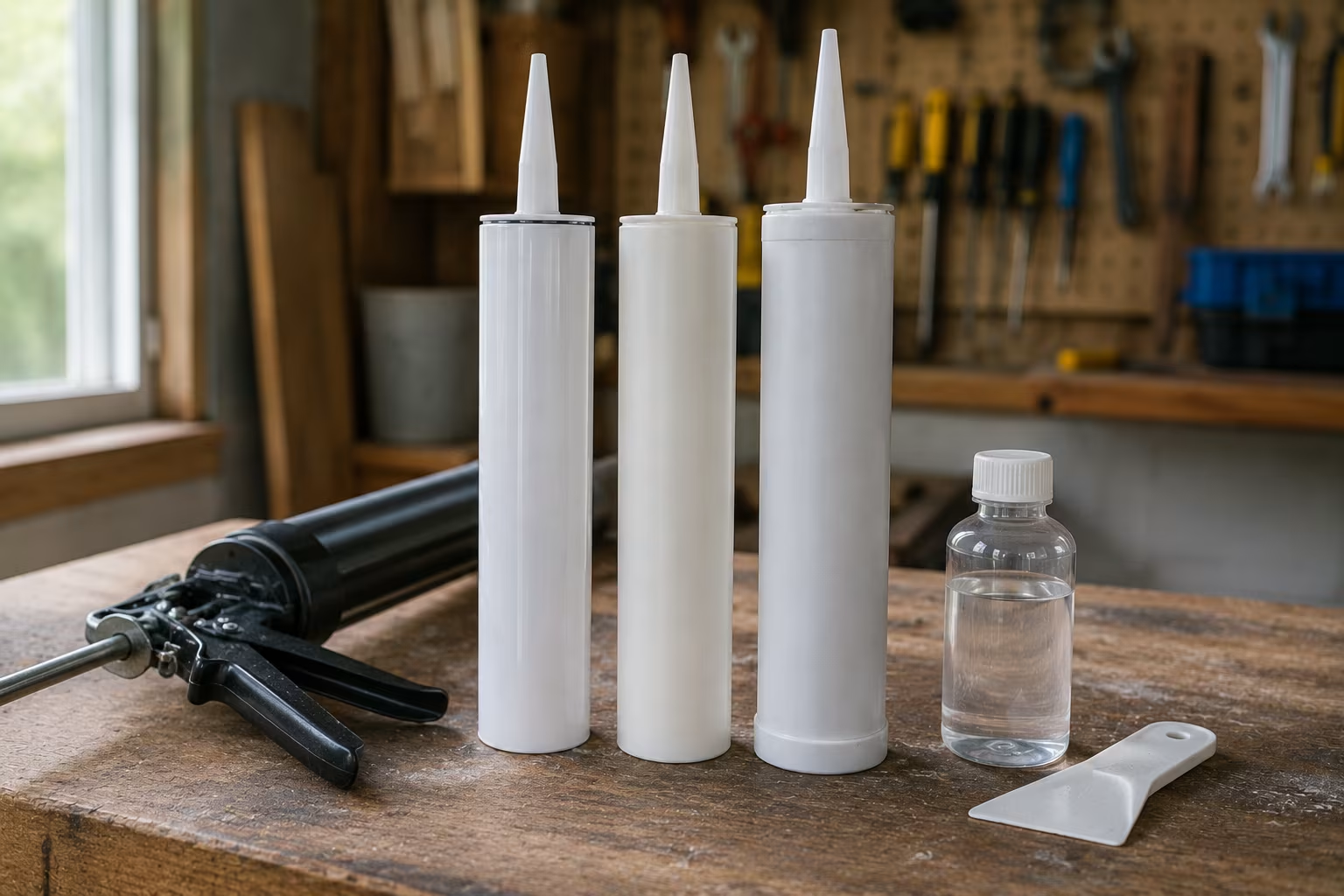
Caulk Types Compared: Silicone vs Latex vs Hybrid
Caulk choice depends on the joint's water exposure, movement, paintability, and life expectancy....


Cordless Battery Platform Lock-In: How to Pick a Brand
Every cordless brand wants you locked in. The lock-in is real and one-direction. The brand...
Drill Bit Sets: Twist, Brad-Point, and Forstner Real-Use Map
Most home shops own three drill bits they actually use and twenty they bought once and forgot....
Beginner Cricut Blade Set: What You Actually Use Daily
The Cricut starter blade list is longer than most beginners need. The two or three blades that...
Comments
No comments yet. Be the first to share your thoughts!