
Drill Bit Sets: Twist, Brad-Point, and Forstner Real-Use Map
The short answer
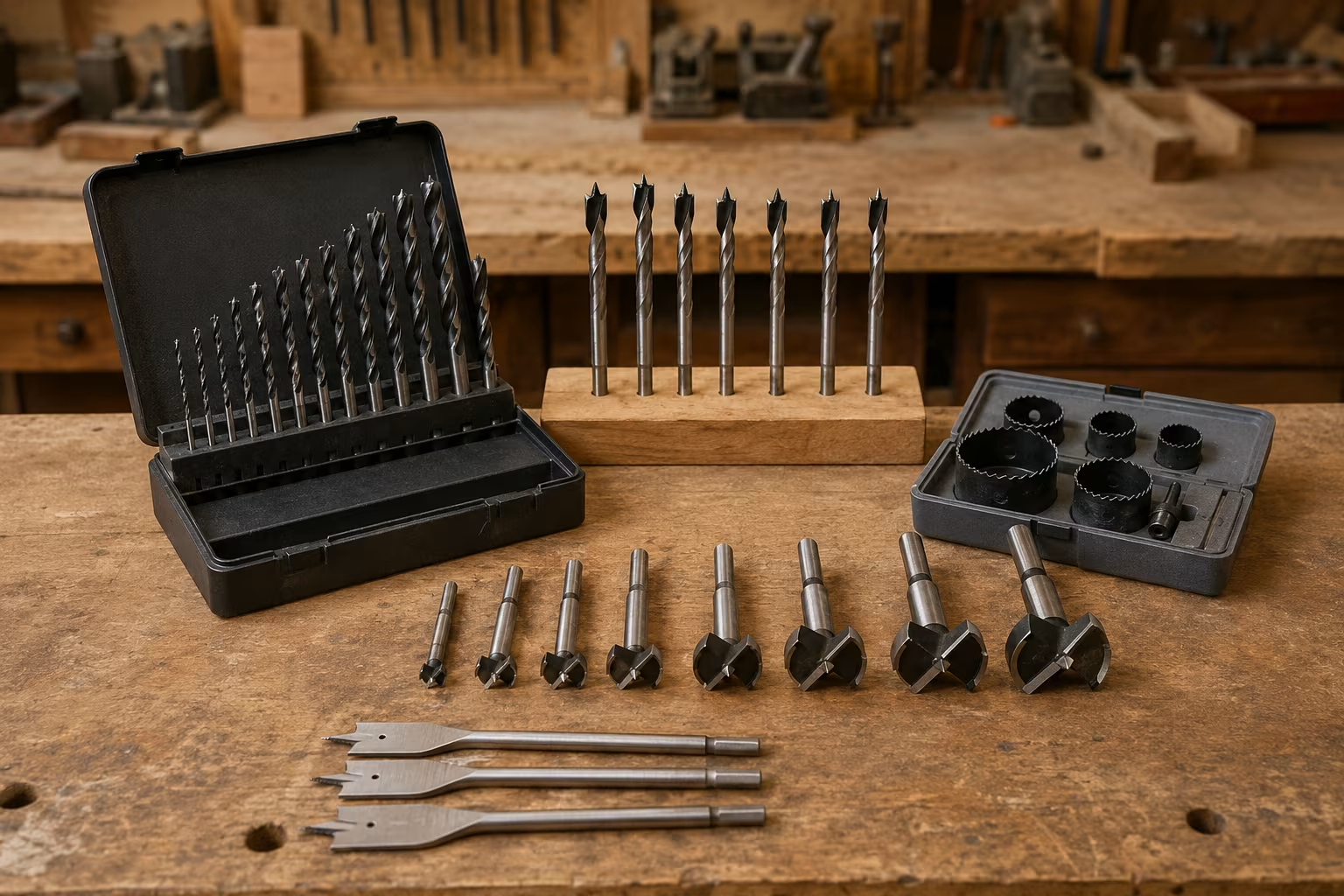
For 90% of home drilling, three bit types cover everything: a basic twist bit set for general drilling in wood, metal, and plastic; a brad-point set for clean precise holes in wood (dowel work, pilot holes, hinge boring); and a small assortment of Forstner bits for flat-bottomed holes (cabinet hinges, large dowel sockets, decorative holes). Add spade bits for fast rough wood holes (pulling wire through studs, rough plumbing) and a hole saw set for the occasional 1-3 inch hole.
Skip specialty bits until a specific project demands them. The exotic bit categories (auger bits, step drills, glass and tile bits, masonry rebar bits) earn their place when the project requires that exact tool, not as part of a general-purpose collection.
Quality matters more than quantity. A small set of high-speed steel (HSS) or cobalt-coated bits from a known brand outperforms a hundred-bit assortment of generic bits in every meaningful way: cleaner cuts, longer lifespan, less wandering off mark, less broken bits left in workpieces. Buy fewer bits of higher quality and replace the dull ones as they wear out.
Twist bits — the workhorse
Twist drill bits are the standard general-purpose bit. The body is a spiral with two cutting edges at the tip; the spirals carry chips out of the hole.
Use twist bits for:
- General drilling in wood (when precision is not critical)
- Drilling in mild steel, aluminum, and other soft metals
- Drilling in plastics
- Pilot holes for screws and nails
- Drilling small holes (under about 3/8 inch) where Forstner and brad-point are oversized
A basic 13- or 21-piece twist bit set covers most home use. Sizes from 1/16 inch to 3/8 inch in 1/64- or 1/32-inch increments handle almost every common drill diameter.
Material matters:
- Black oxide HSS: most common, affordable, works on wood and soft metals
- Titanium-coated HSS: slightly harder coating, lasts longer than uncoated
- Cobalt: alloy with cobalt content for harder metals (stainless steel)
For a typical home shop, black oxide HSS bits are the right starting point. Cobalt bits become useful when working with stainless steel or hardened steel hardware.
A common problem with twist bits in wood: they wander off the mark before the bit fully engages. The fix is to start the hole with a centre punch or with a smaller pilot bit, or to use a brad-point bit instead. For metal drilling, a centre punch makes the divot that prevents wandering.
Brad-point bits — precision in wood
Brad-point bits have a small sharp point at the centre (the "brad") plus two angled cutting edges that score the wood at the hole's perimeter before the main bit body removes material.
The result is a clean, precisely-located hole with smooth sides and minimal tear-out at the entry. The brad-point holds the bit exactly where you mark it; no wandering, no need for a centre punch.
Use brad-point bits for:
- Dowel holes (where precision matters for joint fit)
- Pilot holes for hinge installation
- Pocket holes (when using a brad-point with a doweling jig)
- Any visible hole in wood where appearance matters
- Repeated holes that need to land exactly where marked
A basic brad-point set covers sizes from 1/8 inch to 1/2 inch. For larger holes, Forstner bits are usually the right choice.
Brad-point bits work in wood almost exclusively. They cut metal poorly because the brad and angled cutting edges are not designed for the constant force of metal drilling. Keep brad-point in the wood drawer; reach for twist bits when metal is the target.
The cleaner cut from brad-point bits comes at slightly slower drilling speed and more required force compared to twist bits. The trade-off is worth it whenever the hole's appearance or precision matters.
Forstner bits — flat-bottomed holes
Forstner bits cut clean flat-bottomed holes in wood. The bit shape is unusual — a small centre point, surrounded by a cylindrical cutting rim with scoring teeth, with chip-removal flutes in the centre.
Use Forstner bits for:
- Cabinet hinge mortises (the typical 35mm Euro hinge cup is a Forstner-sized hole)
- Large dowel sockets
- Counterbores for screw heads
- Overlapping holes (for slot-cutting in wood)
- Any application where the hole bottom needs to be flat rather than V-pointed
- Pocket joinery
- Decorative through-holes where the entry needs to be clean
Forstner sizes from 1/4 inch to 2 inches cover most home use. The 35mm Euro-hinge-cup size is a common requirement; check for that specific size if you might install European cabinet hinges.
Forstner bits work slowly and require firm steady pressure. They produce relatively clean holes but generate a lot of heat and chips. For deep holes, lift the bit out periodically to clear chips and let the bit cool.
A drill press is the ideal tool for Forstner bits. Hand-held drilling with Forstners is possible but produces less clean holes and is harder to control. For repeated precise holes (e.g., a row of cabinet hinges), the drill press pays back in time and consistency.
Spade bits — fast rough holes
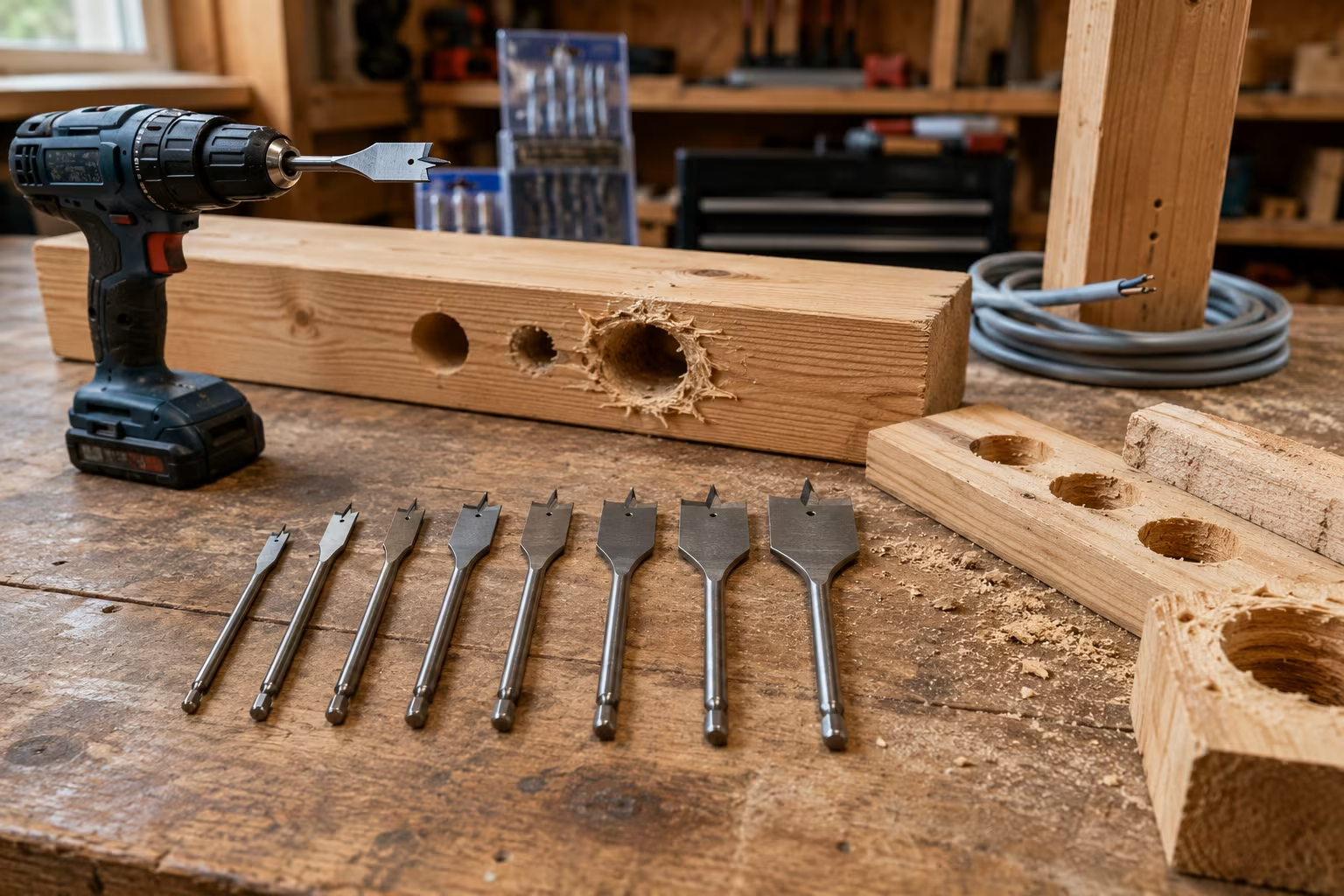
Spade bits (also called paddle bits) have a flat blade shape with a sharp central point. They cut fast and rough.
Use spade bits for:
- Drilling holes in studs to run electrical wire or plumbing
- Rough holes in framing where appearance does not matter
- Quick holes in scrap material
- Larger diameters (3/8 to 1-1/2 inches) when speed beats finish
Spade bit sizes from 3/8 inch to 1-1/2 inches cover most rough-drilling needs. Smaller diameters are not made as spade bits; larger diameters move to hole saws or Forstners.
The cut from a spade bit is fast but rough. Significant tear-out at both entry and exit. Visible scoring marks on the hole walls. Acceptable for hidden applications (inside walls, behind cabinets); unacceptable for visible work.
Spade bits in a drill kit are useful for the occasional rough hole. Most home shops use them once or twice a year, so a small assortment is enough.
Hole saws — the largest diameters
For holes larger than about 1-1/2 inches, hole saws are the right tool.
A hole saw is essentially a circular blade with a pilot drill bit in the centre. The pilot drills first; the rim then cuts a circular hole as the saw rotates.
Use hole saws for:
- Door locksets (typically 2-1/8 inch hole)
- Electrical box openings
- Pipe penetrations through walls
- Decorative round openings
- Plug cutting (cutting wooden plugs to fill screw holes)
A basic hole saw kit covers 3/4 inch to 6 inches, often in 5-10 specific sizes that match common requirements (1 inch, 1-1/4 inch, 2 inch, 2-1/8 inch for locksets, 2-1/2 inch, 3 inch, 4 inch).
Hole saws cut slower than Forstner bits but handle much larger diameters. They produce decent holes (smoother than spade bits, rougher than Forstner) and remove a plug of material (sometimes useful, sometimes wasteful depending on application).
Use lubrication on metal. Hole saws in wood are easy; hole saws in metal generate significant heat that dulls the saw quickly. Cutting oil or water cooling extends the saw's life.
Specialty bits worth knowing about
Several specialty bits earn their place in specific applications.
Masonry bits. Sharp tungsten carbide tip for drilling brick, concrete, and stone. Used with a hammer drill for fastest cutting. Essential for installing anchors in concrete walls.
Tile/glass bits. Diamond-coated or spear-point bits for ceramic tile and glass. Slow drilling with water cooling. Used when installing fixtures in tile bathrooms.
Step drill bits. A single conical bit with multiple step diameters. Drills thin sheet metal at multiple diameters from one bit. Common in HVAC and electrical sheet metal work.
Auger bits. Long bits with aggressive screw-feed for drilling deep holes in timber framing. Pulls itself through the wood as you drill. Used in heavy-timber construction.
Countersink bits. Bit with a tapered shoulder that enlarges the top of a hole to fit a flat-head screw flush with the surface. Some are combined with a pilot bit for one-step pilot-and-countersink.
Plug cutters. Cuts wooden plugs to fill counterbored holes. Used in cabinetry to hide screw heads.
Self-centering bits. A spring-loaded sleeve centres the bit in pre-drilled holes (like cabinet hinge holes). Used for matching new hinge holes to existing patterns.
Each specialty bit has its purpose. None belong in a starter kit; all earn their place when their specific application appears.
Drill bit care and storage
Bits last longer with basic care.
Storage. Bits stored loose in drawers dull through bit-on-bit contact. A bit index (the plastic case that comes with most bit sets, or a dedicated wooden bit holder) protects edges and keeps bits organized by size.
Cleaning. Wipe bits after use to remove pitch (sticky tree sap), wood dust, or metal swarf. A small amount of cutting oil on metal-drilling bits prevents rust.
Sharpening. Twist bits can be re-sharpened on a bench grinder or with a dedicated drill bit sharpener. The technique takes practice; many home users replace dull bits rather than sharpening. Brad-point and Forstner bits are harder to sharpen at home; replace when dull.
When to replace. Bits that wander off the mark even at slow speeds, bits that struggle through materials they previously cut easily, and bits with visible damage to the cutting edges all need replacement. Working with dull bits wastes time and produces poor holes.
Common drilling mistakes
A few habits separate clean drilling from frustrating drilling.
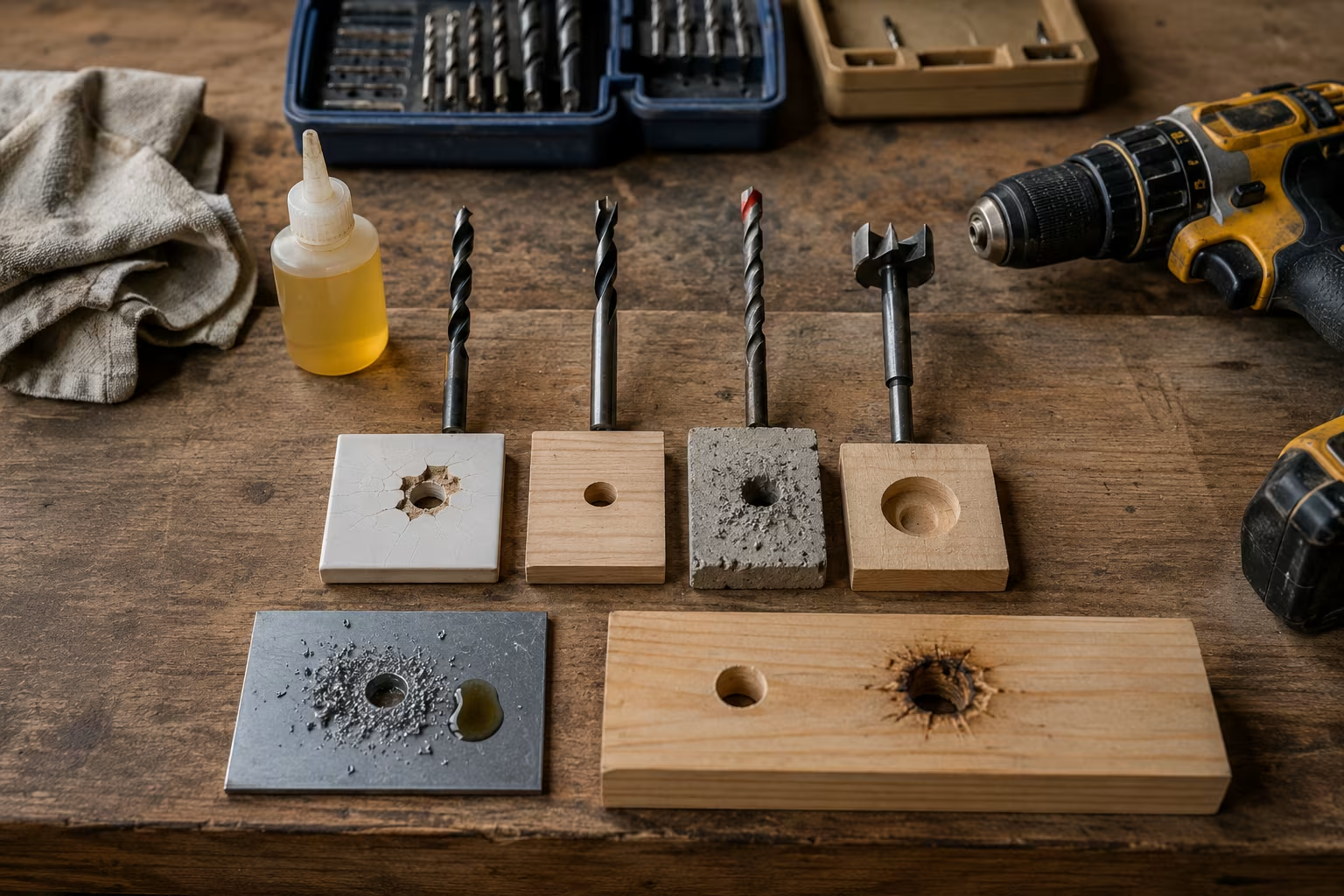
Wrong bit for the material. A twist bit in tile, a brad-point bit in metal, a masonry bit in wood — wrong bit choices produce poor results and damage the bit.
Too much speed in the wrong materials. Hard materials (steel, stainless) want slow drill speeds; soft materials (aluminum, brass) tolerate higher speeds. Cordless drills with variable speed are useful here.
No lubrication on metal. Cutting oil on metal drilling extends bit life dramatically. Even a few drops makes a difference.
Not clearing chips. Deep holes need periodic lift-and-clear to remove chips. Chips packed in the flutes generate heat and dull the bit.
Drilling into unknowns. Concealed pipes, electrical wires, ductwork. A stud finder with deep scanning helps; a slow approach with shallow first cuts catches obstacles before damage.
A practical starter kit
For someone building a drill bit collection from scratch:
- A 13- or 21-piece twist bit set in black oxide HSS
- A 7-piece brad-point bit set (1/8 to 1/2 inch)
- A 7-piece Forstner bit set including 35mm if cabinet work is planned
- A 6-piece spade bit set (3/8 to 1-1/2 inches)
- A basic hole saw kit including 2-1/8 inch for door locksets
- A small selection of masonry bits if any concrete or brick drilling is anticipated
This kit covers virtually all home drilling for a typical home and lasts years with care. The cost is moderate; the productivity gain over a single bargain-bin set is substantial.
When specialty bit purchases are worth it
Several specialty bits cross from optional to essential depending on the work you do.
If you ever install in concrete or brick (mounting heavy items to masonry walls), buy quality masonry bits matched to a hammer drill. Cheap masonry bits cut slowly and dull fast.
If you do any tile work (replacing tiles, hanging things on tile walls), buy a small set of tile/glass bits. The diamond-tipped bits cut tile without cracking it.
If you build cabinets or do furniture work, buy a pocket-hole jig with its specific stepped drill bit. Pocket joinery is one of the most useful joinery methods for cabinets.
If you do any sheet-metal work (HVAC, light fabrication), buy a step drill bit. The conical stepped bit drills multiple sizes in thin sheet from one bit.
If you install many cabinet hinges of the same type, the dedicated Forstner size (35mm Euro or whatever your hinges use) speeds the work dramatically over general-purpose bits.
The pattern: specialty bits earn their place when you do the specialty work. Avoid buying specialty bits as a kit assembly project; buy them as the projects appear.
Drill bit storage solutions
Good bit storage matters for both organization and bit longevity.
The plastic bit index that comes with most sets works as storage. Keep it; do not throw it out. The molded slots size each bit specifically and prevent bit-on-bit contact damage.
For custom bit collections (mixed sizes from different sets), a wooden bit holder with drilled holes for each bit organizes them by size. DIY or purchased.
Magnetic bit holders work for the most-used bits. A magnetic strip on the wall above the drill press or on the workshop pegboard holds bits in immediate reach.
Label each storage location with the bit size. Quickly grabbing the correct bit saves significant time over the course of a project.
A dedicated drill bit drawer in a tool cabinet works for shops with larger bit collections. Subdivide the drawer by bit type (twist, brad-point, Forstner, masonry) and within each type by size.
Bit-type real-use map:
| Bit | Use for | Note |
|---|---|---|
| Twist | general wood + mild steel/aluminum | 1/16–3/8 in set covers almost everything |
| Brad-point | dowel holes, hinge pilots | no wandering |
| Forstner | flat-bottom holes; 35mm Euro hinge cups | — |
| Spade | fast rough holes (wire through studs) | — |
| Hole saw | door hardware and big diameters | — |
Related Posts
Caulk Types Compared: Silicone vs Latex vs Hybrid
Caulk choice depends on the joint's water exposure, movement, paintability, and life expectancy....

Cordless Battery Platform Lock-In: How to Pick a Brand
Every cordless brand wants you locked in. The lock-in is real and one-direction. The brand...
Beginner Cricut Blade Set: What You Actually Use Daily
The Cricut starter blade list is longer than most beginners need. The two or three blades that...
Painter's Tape for Crisp Lines on Textured Wall Surfaces
Standard blue tape bleeds on textured walls. The specialty tapes, caulk-edge-seal step, and...
Comments
No comments yet. Be the first to share your thoughts!