Supplies

PVA vs Polyurethane Wood Glue for Indoor Furniture
PVA vs Polyurethane Wood Glue for Indoor Furniture

The short answer

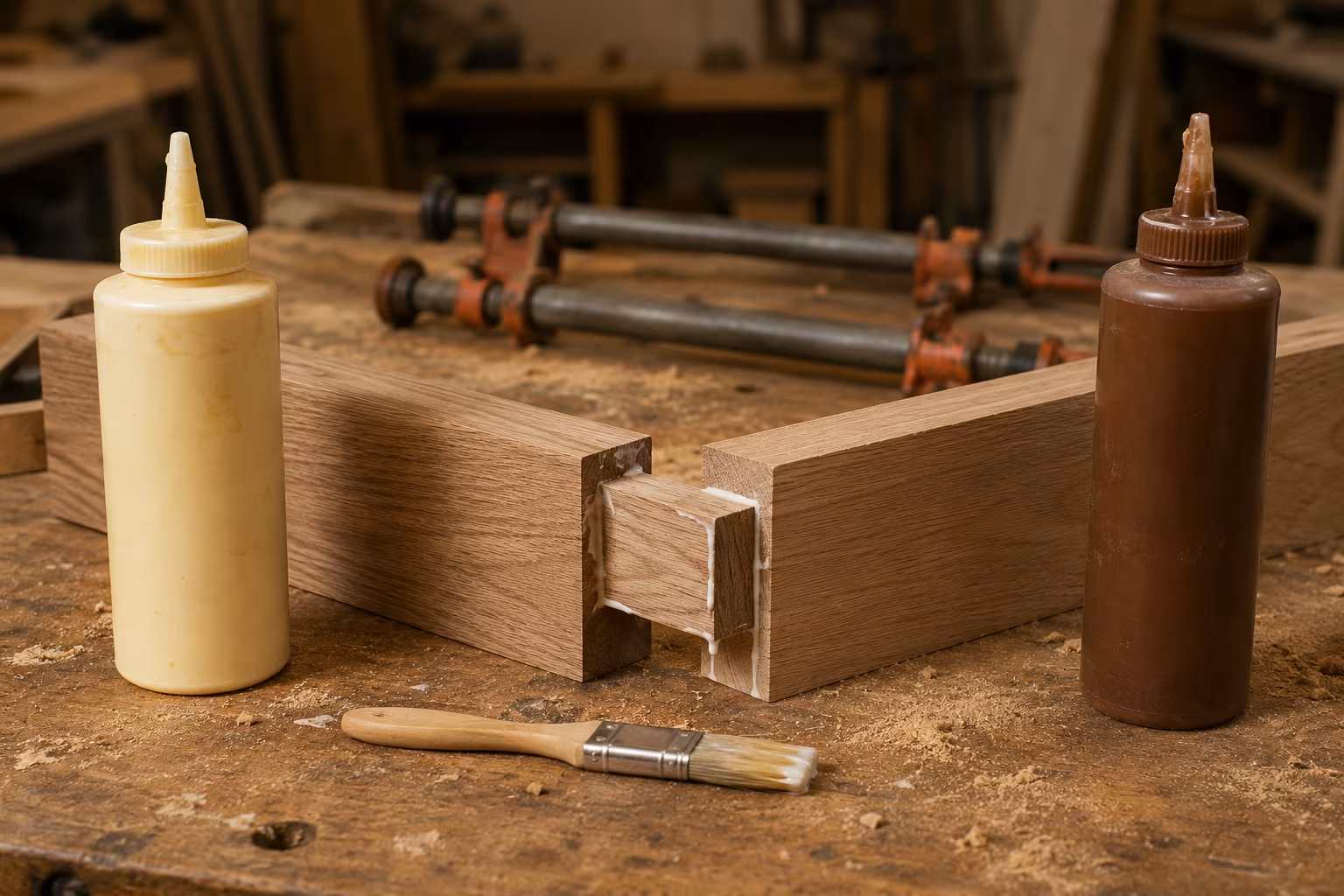
For indoor furniture, yellow PVA wood glue (Titebond Original, Titebond II, Gorilla Wood Glue, Elmer's Carpenter's Wood Glue) is the right default for almost every joint. It is easier to apply, has a longer open time than polyurethane, cleans up with water, gives joints that fail through the wood rather than at the glue line, and costs less per bottle.

Polyurethane wood glue (the original Gorilla Glue and similar products) has narrow but real use cases — joining oily tropical hardwoods, joining wood to non-wood materials like metal or stone, and a few outdoor applications — but on standard indoor furniture in standard wood species, it gives you more mess to clean up and no measurable performance advantage. The foaming reputation that gets it sold as a "gap-filler" is misleading; foam in a joint is air bubbles, not strength.

If you can only own one bottle and your projects are indoor furniture, repairs, picture frames, drawers, and small cabinets, buy a quart of Titebond II or its equivalent and stop second-guessing.

What each glue actually is

PVA wood glues are water-based polyvinyl acetate emulsions. When you spread them on wood, the water soaks into the wood fibres, the polyvinyl acetate molecules link as the water leaves, and the bond develops as the joint dries. The mechanism rewards good wood-to-wood contact and even pressure during the cure window.

Polyurethane glues are moisture-curing single-component polymers. They react with water (atmospheric humidity and the small amount of water in the wood itself) to cross-link into a hard resin. The reaction generates carbon dioxide as a byproduct, which is the source of the foaming behaviour. The bond develops as the polymer cures, not as anything dries.

These are mechanistically different glues, not variants of the same chemistry. That difference shows up in every practical comparison: open time, clamp time, cleanup, gap-filling claims, and even the way you prepare the wood before applying them.

Joint strength compared

For edge joints, mortise and tenon joints, dowel joints, and biscuit joints in standard wood species (pine, poplar, maple, oak, walnut, cherry, birch), independent tests consistently show that a well-prepared PVA joint fails in the wood, not at the glue line. The wood splinters apart before the glue lets go. This means the glue is stronger than the wood; adding a more expensive glue does not give you a stronger joint because the wood is the limit.

Polyurethane glue can produce equally strong joints on the same species, but it does not produce stronger joints. Both glue types pass the same test — the wood breaks first. For furniture-grade work in standard species, the strength comparison is a tie, and the tiebreaker is everything else.

The one case where polyurethane can win on strength is joining woods with high natural oil content — teak, ipe, cumaru, and some rosewoods. The oils interfere with PVA's water-based mechanism, and PVA joints can release prematurely under stress. Polyurethane's moisture-cure ignores the oils and bonds reliably. Wiping the joint surfaces with acetone or denatured alcohol immediately before applying PVA also solves this on most oily woods.

Open time and clamping

PVA vs Polyurethane Wood Glue for Indoor Furniture - Open time and clamping section detail

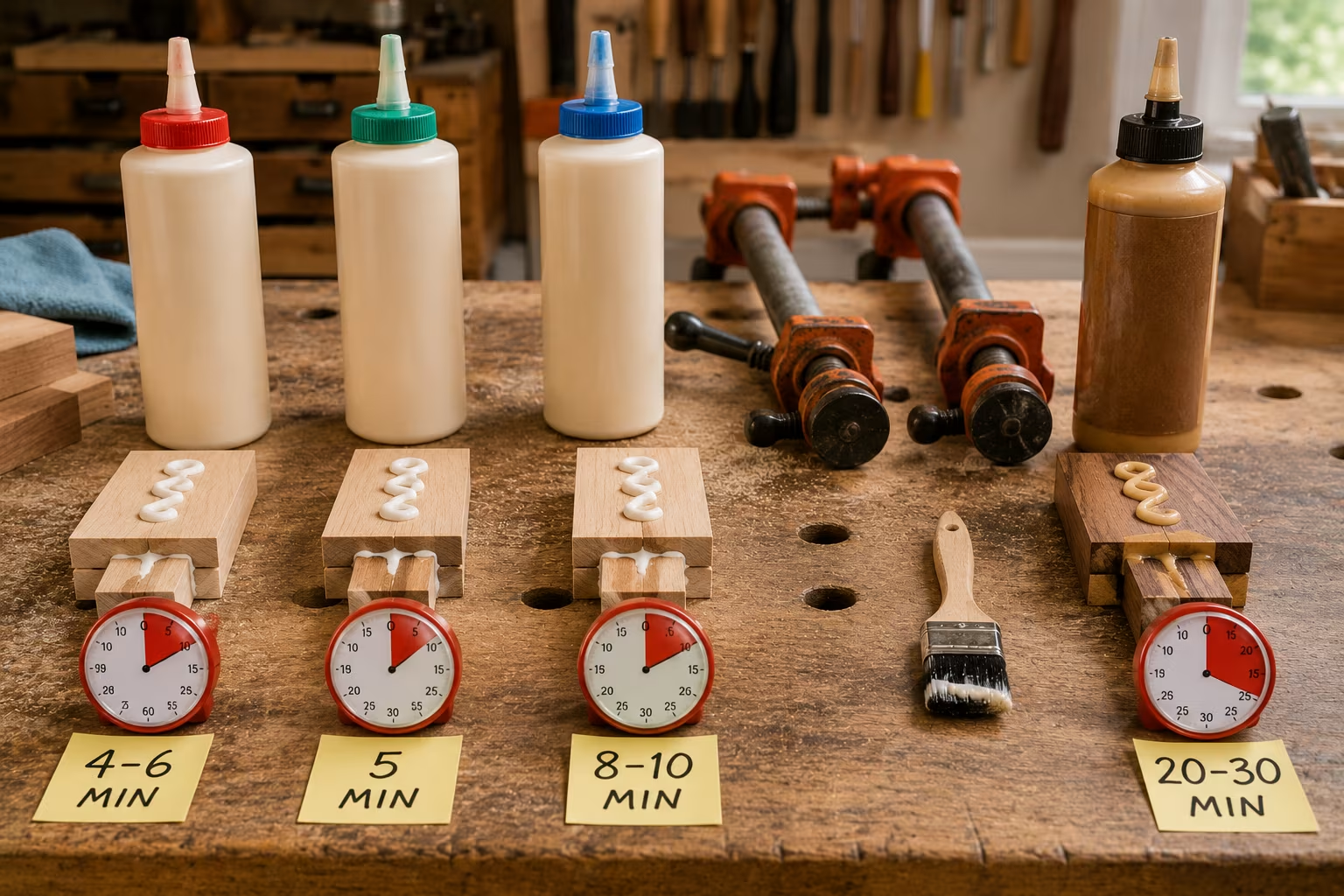
Open time is the working window from when you apply glue to when you must have the joint closed and clamped. After open time expires, the glue has skinned over and the joint will not develop full strength even if you clamp it.

Titebond Original gives roughly 4-6 minutes of open time. Titebond II gives 5 minutes. Titebond III gives roughly 8-10 minutes, the longest in the PVA family. Polyurethane gives roughly 20-30 minutes depending on humidity and brand.

For most furniture joints — a single mortise and tenon, a few biscuits in a panel, a chair leg into a rail — five minutes is enough. For complex glue-ups (a chair frame with eight joints assembled at once, a panel made of many narrow boards), the longer open time of Titebond III or polyurethane is the practical advantage.

Clamp time is different from open time. PVA wood glues need 30-60 minutes of clamping for the joint to handle careful movement and 18-24 hours for full strength. Polyurethane wants similar clamp time but is fully cured in roughly 24 hours.

Neither glue likes being clamped too tightly. Excess pressure squeezes most of the glue out of the joint, leaving a starved bond. Snug pressure that closes the joint without crushing the fibres is the goal.

Water resistance and where it matters indoors

Titebond Original is not water-resistant. Titebond II is water-resistant (ANSI Type II). Titebond III is waterproof (ANSI Type I). Polyurethane glues vary by brand but most are at least water-resistant; some are rated waterproof.

For indoor furniture, the question is what counts as water exposure. A kitchen table that occasionally has a wet glass set on it is not stressed by water. A bathroom vanity in a humid room sees real water exposure over years. A piece that will ever be cleaned with a damp cloth — almost anything indoors — does not require waterproof glue but benefits from at least water-resistant.

The practical answer: Titebond II or its equivalent covers almost every indoor scenario. Titebond III is for outdoor furniture, kitchen items that will be washed, or pieces that may eventually move outdoors. Titebond Original is fine for picture frames, small boxes, and any joint that will see only stable indoor humidity and no direct water.

Polyurethane offers no water-resistance advantage indoors that matters in practice. Both PVA and polyurethane outlive the wood in normal indoor use.

Gap-filling: the polyurethane myth

Polyurethane glue foams as it cures. The foam fills voids in the joint and the result looks like the gap has been filled.

The problem is that the foam is mostly air. A bubble has no structural strength; a joint that relies on foam to bridge a gap relies on a structurally weak material to carry load. Tests routinely show foam-filled gaps as the weak point of polyurethane joints.

The practical implication is that polyurethane does not solve loose joints. Properly fitted joints are still required for a strong bond, whether the glue is PVA or polyurethane. The marketing language around "gap-filling polyurethane" gives the impression that you can be sloppy with joinery and the glue will compensate. It will not.

For real gap problems — a tenon that fits too loose in its mortise, a chair leg that wobbles in its socket — the fix is mechanical: wood shims, epoxy with sawdust as a filler, or remaking the joint. PVA mixed thick with very fine sawdust makes a passable filler for cosmetic gaps; polyurethane foam does not.

Cleanup and squeeze-out

PVA squeeze-out wipes off with a damp cloth while it is still wet, and sands off easily after it cures. The cured residue is somewhat flexible and a sharp scraper removes it without tearing wood fibres.

Polyurethane squeeze-out is harder to deal with. The expanding foam pushes itself out of the joint as it cures, hardens into a dense brittle residue, and is difficult to remove cleanly. Acetone or mineral spirits soften it slightly when wet, but the foam is past wet-cleanup range within minutes. After cure, scraping and sanding are the only options, and the residue tends to chip wood fibres on softwoods.

Gloves are mandatory with polyurethane glue. It bonds aggressively to skin, takes days to wear off, and is unpleasant to remove. PVA is annoying on skin but washes off with soap and water.

This cleanup difference alone is enough reason to default to PVA for most indoor work. Saving five minutes of fussy scraping on every joint adds up over a project.

Which one to pick for which project

PVA vs Polyurethane Wood Glue for Indoor Furniture - Which one to pick for which project section detail

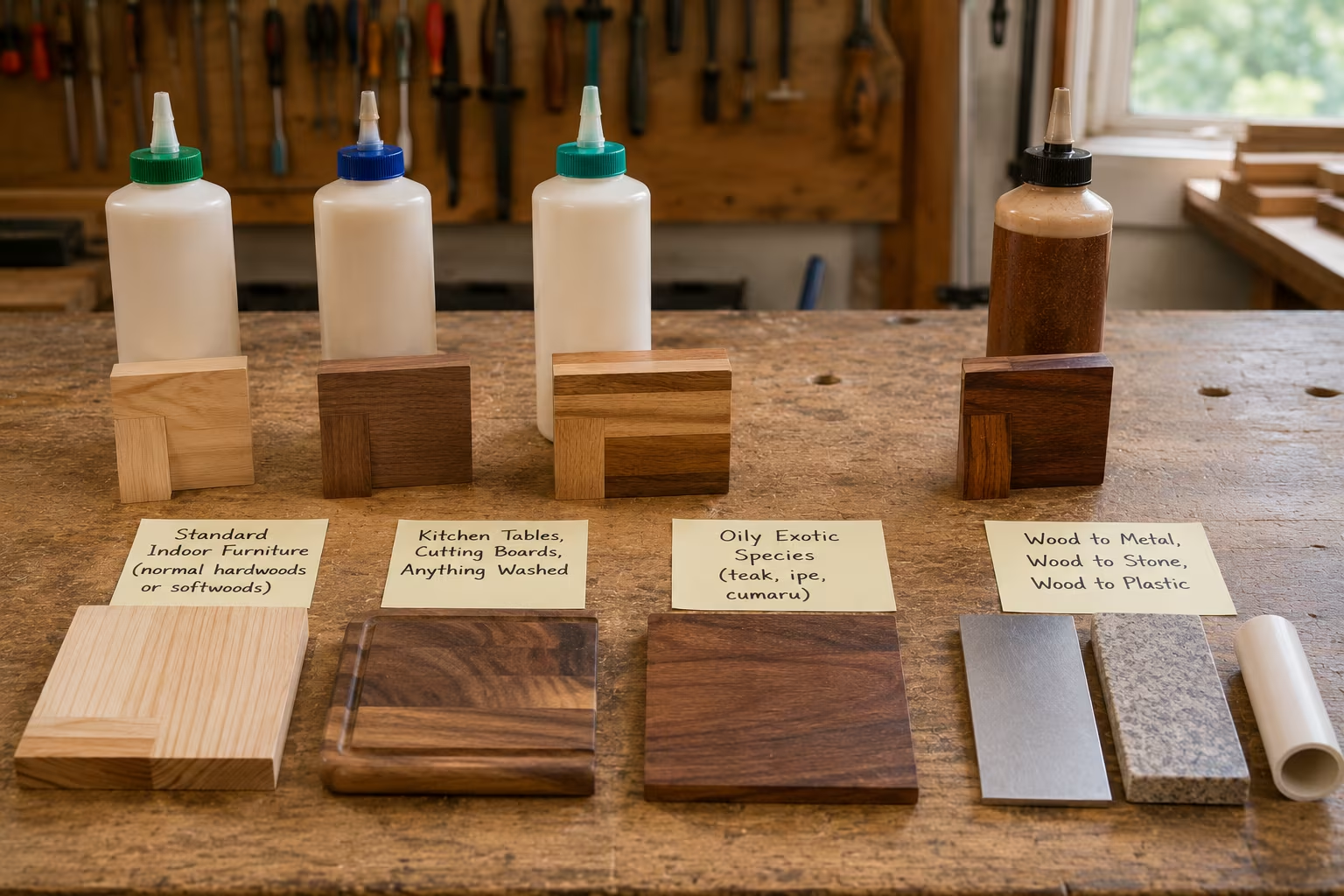
Standard indoor furniture in normal hardwoods or softwoods: Titebond II (or Gorilla Wood Glue, or Elmer's Carpenter's). This is 90 percent of indoor projects.

Kitchen tables, cutting boards, anything that will be washed: Titebond III for the waterproof rating, even though the joints will probably never see prolonged water.

Oily exotic species (teak, ipe, cumaru): polyurethane, or PVA after wiping the joint with acetone. Either approach works.

Wood to metal, wood to stone, wood to plastic: polyurethane is one of the few options that bonds across these material differences. For wood-to-metal in particular, a clean roughened metal surface is critical to letting polyurethane bite.

Quick repairs where you want maximum open time and do not mind the cleanup: polyurethane gives the longest window for fiddly assemblies. Titebond Extend (a long-open-time PVA) is the alternative if you want PVA cleanup with polyurethane open time.

Outdoor furniture, garden boxes, planters: Titebond III for ease and water resistance, or epoxy for joints that see structural stress under weather. Polyurethane works outdoors too, but the cleanup cost is real.

If the project is small enough to be glued and clamped in five minutes and lives indoors, PVA wins on every axis that matters in practice. Polyurethane earns its place on specific jobs and stays in the cupboard the rest of the time.

Shelf life and storage

PVA wood glues typically have a usable shelf life of 12-24 months from manufacture when stored in a cool dry place with the cap on tight. After that, the glue thickens, separates, or develops a sour smell — all signs that the bond strength has dropped below what the manufacturer guarantees. Glue with a date that has lapsed by a year is usually still usable for non-critical work but should not be trusted for furniture joints under load.

Keep PVA bottles upright with the caps clean. Glue that crusts in the cap nozzle creates a permanent partial blockage and leads to applying too little glue on every joint that follows. A small piece of plastic wrap pressed into the cap before reseating it keeps the cap clear; alternatively, the white residue on the nozzle can be picked off when dry.

Polyurethane glue has a shorter shelf life once opened — typically 6-12 months — because the moisture-cure chemistry continues slowly inside the bottle as it reacts with atmospheric humidity entering through the cap. A bottle that has been open for over a year may have a half-cured plug of solid glue inside that ruins the rest. Buy polyurethane in small bottles unless you use it frequently.

Freezing damages most PVA glues — the emulsion separates and does not recover. Store the glue above freezing year-round; in unheated garages and sheds in cold climates, this means bringing the bottle indoors for winter.

Clamping pressure and joint preparation

The glue cannot rescue a poorly fitted joint. Wood-to-wood contact across the joint surface is what creates strength; any gap is at best filled with cured glue (mediocre strength) and at worst filled with air or foam (no strength).

For edge joints, both edges should be flat enough that they touch along their full length under hand pressure before clamps go on. A straight edge held against the joint should show no daylight underneath. Clamps then close the joint snugly rather than forcing it together.

For mortise and tenon joints, the tenon should fit the mortise with a hand-press fit — sliding in with firm thumb pressure, not falling in loosely and not requiring a mallet. Too loose and the joint relies on glue for strength; too tight and the joint splits the mortise wall on assembly.

For dowel joints, the dowels should be sized so they swell into the holes when wet glue contacts them, which is most reliable with grooved or spiral-cut dowels rather than smooth ones. Smooth dowels in dry holes give weaker joints regardless of glue type.

Clamping pressure should close the joint cleanly without significant deformation of the wood beneath the clamp pads. Use clamp pads (small softwood blocks) between clamp jaws and finished work to prevent dents.

A note on storage and clamping cleanup

Good storage extends glue life and clean joints. Stand bottles upright, wipe the cap nozzles after each use, and keep PVA glues above freezing. Polyurethane glue is sensitive to opened-bottle humidity and should be used relatively soon after opening rather than stored long term. Clean off squeeze-out promptly while wet for PVA, and consider keeping a damp rag at hand during glue-ups specifically to wipe drips before they cure.

Written by

Laura Hayes

Laura Hayes is a maker and DIY writer with over a decade of hands-on experience in woodworking, home decor, and small-batch crafts. At Hobby Rig she turns weekend projects into clear, step-by-step guides with honest budgets and real tool lists — including the mistakes she made so you don't have to.

View all posts →