
How to Build a Raised Garden Bed Using Only Hand Tools
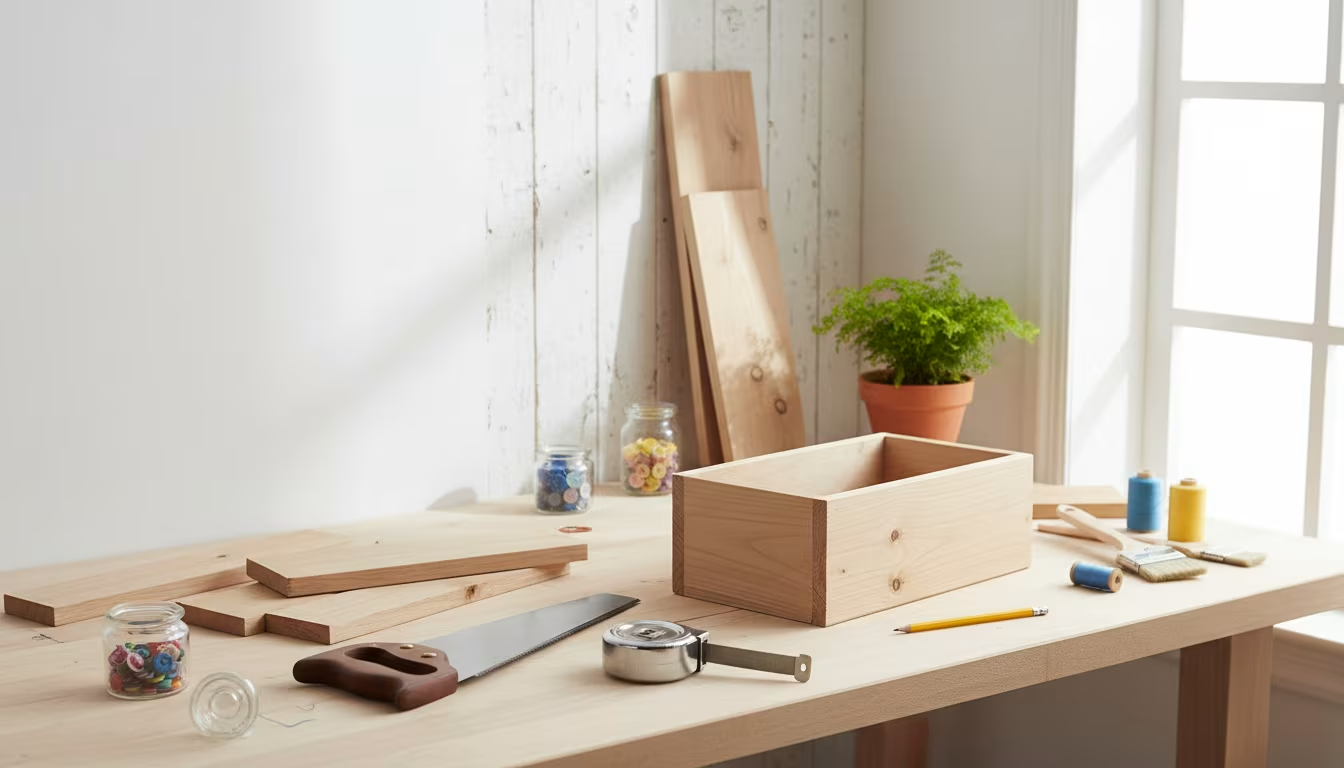
You do not need a workshop full of power tools to build a sturdy raised garden bed. A hand saw, a square, a drill, and a few clamps are enough to cut and assemble a bed that gives you control over your soil, better drainage, fewer weeds, and a comfortable working height. Hand tools cost less, make no noise, and are forgiving of a beginner's crooked first cut. This is a full weekend build that produces a bed you will plant in for years.
Why a hand-built bed is worth the effort
A raised bed solves the most common garden problem: bad native soil. Instead of fighting heavy clay or thin sandy ground, you fill the box with a mix you control, which means better drainage, warmer soil earlier in spring, and roots that are not fighting compaction. The raised height also spares your back during planting and weeding. Building it by hand adds one more benefit, which is that a cut you make and a screw you drive teaches you more about working with wood than any kit ever will. Beds like this are the practical entry point into raised-bed gardening, and the skills transfer directly to planters, compost bins, and cold frames.
Pick the right site
Location decides how well your plants grow, so choose before you cut. Most vegetables want at least 6 to 8 hours of direct sun a day, so watch the spot across a full day rather than guessing. Pick relatively level ground to keep the bed from bowing or leaning, and do any light grading or add a thin gravel layer if one corner sits low.
Water access is the detail people regret ignoring. Hauling a can across the yard gets old by midsummer, so place the bed within reach of a hose. University extension programs, such as the University of Minnesota Extension yard and garden resources, publish region-specific guidance on siting and soil that is worth a look before you commit the spot.
Choose rot-resistant, untreated wood
The wood you pick determines how long the bed lasts and whether it is safe for food. Skip pressure-treated lumber, which is fine for a deck but not for growing edibles. Look instead for naturally rot-resistant, untreated options.
Cedar is the standard choice because it resists rot and insects on its own, holds up outdoors for many years, and smells good while you work it. Untreated pine or fir cost noticeably less but break down faster; if the budget is tight and you accept replacing boards in roughly 5 to 7 years, pine works fine for a first bed. A single 2-inch-thick board of appropriate width makes a solid wall, and standard 8-foot lengths keep waste and cutting to a minimum.
Board width sets the height of a single course. A nominal 2x6 gives you about 5.5 inches of wall per layer, a 2x8 about 7.25 inches, and a 2x10 about 9.25 inches, so a two-course wall of 2x6 lands close to the 11-inch mark most vegetables want. Buy your lumber a day ahead if you can and let it sit flat, since a warped or badly bowed board fights you at every joint. When you sort through the stack at the store, sight down each board edge and reject any that twist, and check the ends for splits that will only spread once you drive a screw near them.
Assemble your hand-tool kit
You can build the whole bed with basic tools, many of which turn up cheaply at yard sales. The core kit is short:
- Cross-cut hand saw – your main cutting tool; a sharp one runs about $18 to $30.
- Measuring tape – a 16-foot tape is plenty.
- Pencil – a carpenter's pencil marks clearly on rough lumber.
- Speed square or combination square – for marking straight cut lines and checking square corners.
- Clamps (2 to 4) – bar or F-clamps act as extra hands while you cut and assemble.
- Drill – a cordless drill or a silent hand brace for pre-drilling and driving screws.
- Sandpaper – medium grit around 80 to 120 to knock off splinters.
- Exterior wood glue and exterior-rated screws – galvanized or stainless deck screws long enough to pass through one board and at least halfway into the next.
A wood chisel is only necessary if you cut lap joints; for the beginner-friendly butt joints used here, you can skip it.
Measure, mark, and cut the lumber
A 4-foot by 8-foot bed is a good first size because you can reach the center from either long side. Using 8-foot boards means the long sides need no cutting at all, and you only cut the two 4-foot end pieces per layer. Lay the boards on a flat surface such as a driveway, mark your lengths with the tape and pencil, and use the square to draw a crisp line straight across the board at each mark.
Support the board securely before cutting, on saw horses or clamped to a bench, so it cannot wiggle. Start the cut gently on the waste side of your line with short, light strokes to open a groove, then lengthen into smooth, full strokes and let the saw's weight do the work rather than forcing it. Keep your eye on the line and hold a consistent angle. The first cut may wander, and that is fine; a garden bed is not fine furniture, and a slightly rough edge disappears once the box is filled with soil.
Assemble the box with corner blocks
Reinforced butt joints keep the assembly simple and strong. Cut four corner blocks (eight for a two-layer bed) from scrap 2x4 to about 12 to 18 inches long; their only job is structural, so they need not be pretty. Lightly sand the cut ends of your side pieces so they seat cleanly and the glue grips.
Stand one long side on edge and butt an end piece against it to form a corner. Run a bead of exterior glue along the joint, set a corner block on the inside spanning both boards flush with the top edge, and clamp everything snug. Pre-drilling is the step you cannot skip: with a bit slightly smaller than the screw's smooth shank, drill two pilot holes through the face of each board into the end of its neighbor, then drive the screws. Pilot holes prevent the screw from acting as a wedge and splitting the wood, which matters most with softer pine and near board ends. Repeat at all four corners.
For a taller bed, which improves drainage and root depth, stack a second layer on the first. Offset the corners slightly from the layer below for strength, glue along the top edge of the lower layer, add corner blocks, clamp, pre-drill, and screw. Also drive 3 to 4 screws through the top board into the bottom board along each long side to lock the layers together.
Fill the bed and prepare the site
Move the finished box to its final, leveled spot and check it once more for rough edges, giving any splinters a quick pass with sandpaper. Clear grass and weeds from the footprint, then lay a layer of cardboard on the ground inside the bed and wet it thoroughly; it smothers weeds and breaks down into organic matter over the season.
Fill with a quality raised-bed mix rather than plain garden dirt. A reliable blend is roughly 60 percent topsoil or garden soil, 30 percent compost, and 10 percent perlite or vermiculite for drainage. Aim for a filled depth of 10 to 12 inches for most vegetables, or 18 to 24 inches if you plan to grow carrots, potatoes, or other deep-rooted crops. That soil quality is what carries plants through the season, so it is not the place to cut corners, and it pairs well with other budget growing methods like growing vegetables in five-gallon buckets if you want to expand later.
Common mistakes and how to avoid them
A handful of errors account for most beginner frustration. Not measuring twice leads to boards cut an inch short, so re-check every mark against the square before the saw touches wood. Rushing cuts produces jagged edges that are hard to join; keep a steady, even stroke and take breaks when your arm tires. Skipping pilot holes splits boards, especially near the ends. Using indoor screws means rust and a bed that loosens within a season, so buy galvanized or stainless hardware from the start. The last mistake is never starting at all: a first bed only needs to hold soil and grow plants, so accept the imperfections and build it.
Frequently asked questions
How deep should the bed be? Around 10 to 12 inches of soil suits most vegetables; go 18 to 24 inches for root crops like carrots and potatoes.
Can I use nails instead of screws? Yes, with exterior-rated galvanized or stainless nails, though screws hold more securely and are easier to remove if you make a mistake.
Do I need to line the bed? A cardboard base to suppress weeds helps, and landscape fabric on the sides keeps soil from washing out. Avoid solid plastic liners, which trap water and block drainage.
How long does the build take? Budget a full weekend, roughly 8 to 12 hours spread over two days, since hand cutting is slower than power tools. Once the soil is in and your first crop of low-maintenance full-sun plants or salad greens goes down, the effort pays off every season the bed stands.
Board math for hand-tool builders:
| Board | Wall height per layer | Note |
|---|---|---|
| 2×6 | ~5.5 inches | two layers ≈ 11 in |
| 2×8 | ~7.25 inches | — |
| 2×10 | ~9.25 inches | single-layer simplicity |
| Stock | 8-ft lengths | minimizes cuts and waste |
| Core kit | sharp cross-cut saw $18–$30, 16-ft tape, 2–4 clamps | sun check first: 6–8 h direct |
Related Posts

Toilet Seat Slow-Close Hinge Replacement
A broken slow-close hinge makes the toilet seat slam or fail to stay up. Replacement is a...

Drywall Corner Bead Replacement After Damage
Damaged drywall corners with dented or split corner bead show ugly visible damage. The...

Strip Painted Brass Hardware Without Eating the Patina
The slow-cooker method strips paint from brass cleanly while keeping the aged surface intact....
Bathtub Resealing: When Silicone Beats Caulk and Vice Versa
Reseal a bathtub right: 100% silicone at the flexing tub-to-tile joint, acrylic caulk only on...
Comments
No comments yet. Be the first to share your thoughts!