How to Choose the Right Indoor Trees for Low-Light Rooms
How to Choose the Right Indoor Trees for Low-light Rooms
You know that corner in your living room? The one that just feels… empty? Maybe it's nestled far from the windows, or maybe your only window faces north, casting a soft, perpetual twilight. You want a big, leafy friend there, something that adds life and a bit of a natural vibe, but every plant you bring home just slowly shrivels into a sad, brown whisper of its former self.
I’ve been there. My first apartment had precisely one decent window, and I swear every other corner of that place was designed for vampires. I spent years thinking I just couldn’t keep an indoor tree alive. It turns out, I was just picking the wrong trees for the wrong spots.
So, if you’re tired of plant disappointment and want to finally fill those dim spaces with some vibrant greenery, you’re in the right place. We're going to talk about what "low light" actually means for a plant, which tree-like plants are total champions in those dimmer spots, and how to keep them happy without turning your home into a high-tech greenhouse.
No fancy equipment or secret green thumb required, just a bit of know-how and some honest expectations. I’ll share some of my own clumsy plant parenting moments along the way, because learning usually involves a few oopsies, right?
Why This Actually Matters
It’s more than just filling an empty space, honestly. Bringing nature indoors, even in a low-light setting, can totally change the feel of a room. It adds texture, softens harsh lines, and just generally makes a space feel more alive and welcoming.
And let’s be real, a healthy, thriving plant, even a small one, gives you a little boost of pride every day. It’s a tiny triumph. You're nurturing something, even if that something is just sitting in a corner looking pretty and doing its quiet thing.
I live in Portland, and sometimes the sun just doesn't show up for weeks. Having a bit of green makes a huge difference in my mood, especially during those long, gray stretches. I used to think all plants needed direct, beaming sunlight, which basically limited me to zero plants in my living room. That was a sad time.
It was only after a friend gifted me a little ZZ plant that I realized there was a whole world of shade-loving beauties out there. Now, even my north-facing office corner has a vibrant tree-like plant that just keeps chugging along. It totally changed my perspective on indoor gardening.
Understanding Low Light for Indoor Trees
Let's clear something up right away: "low light" doesn't mean "no light." This is probably the biggest misconception out there, and it's where most people (including past-me) go wrong. Every plant needs some amount of light to photosynthesize and survive.
What we're talking about with low light is indirect, filtered, or ambient light. It's the kind of light you'd get several feet away from a bright window, or in a room with a north-facing window that never gets direct sunbeams. Think soft glow, not a dark cave.
What "low Light" Actually Means for Your Plants
It’s all about the intensity and duration of light hitting your plant. Some plants are just wired differently; they've evolved to thrive in the understory of forests where direct sun rarely penetrates.
- Indirect, Not Dark: A low-light spot should still be bright enough for you to comfortably read a book without needing a lamp during the day. If you have to squint, it's probably too dark for almost any plant.
- North vs. South-Facing Windows: North-facing windows offer consistent, gentle light all day – perfect for low-light lovers. South-facing windows are the opposite, offering intense direct light. If your only option is a south window, place your plant several feet away, or use a sheer curtain to diffuse the light.
- Your Light Meter (Your Eyes!): Forget fancy gadgets when you're starting out. Just sit in the spot where you want your plant. If it feels reasonably bright without direct sun hitting you, it's a good candidate. If it feels gloomy and you can barely see your hand, no plant is going to be happy there.
- Duration Matters: Even low light needs to be consistent. A few hours of dim light a day isn't enough; your plant needs that gentle brightness for most of the day. Think of it like a slow, steady drip of energy.
I once put a plant in what I thought was a low-light spot – it was just a dark corner behind a bookshelf. Unsurprisingly, that plant slowly gave up the ghost. It taught me that there's a big difference between a naturally dim, but still illuminated, space and just sticking a plant in the gloom.
How to Actually do It: Picking Your Perfect Low-light Tree
Alright, you’ve assessed your light situation. You know which corners get that gentle, indirect glow. Now for the really fun part: picking your plant! This is where I’ve made some mistakes, buying beautiful plants that just didn’t thrive, because I didn't actually know their specific needs. No more of that for us.
We’re looking for plants that naturally tolerate less intense light and can grow to a decent, tree-like size, or can be trained to do so. These are the plant superheroes of dim rooms.
Step 1: Get to Know the Top Contenders (and Their Quirks)
Don't just grab the prettiest plant you see. Do a little research on their typical habits. This really saves you heartache in the long run. Not all "low light" plants are created equal; some are just far more forgiving than others.
- ZZ Plant (Zamioculcas zamiifolia): My personal favorite, hands down. These guys are the champions of neglect. They have glossy, dark green leaves and thick, upright stems. I once forgot to water mine for a solid month while I was out of town, and it barely flinched. They grow slowly, but they get impressively tall and lush over time. You can find mature ones that look like small trees.
- Snake Plant (Sansevieria trifasciata): Seriously, truly hard to kill. Snake plants are known for their upright, sword-like leaves that come in all sorts of cool patterns and colors. They can easily reach several feet tall, giving you that 'tree' feel. My mom has one that’s older than me, and it's been moved to countless low-light spots without complaint. They barely need watering, which is a dream for forgetful plant parents.
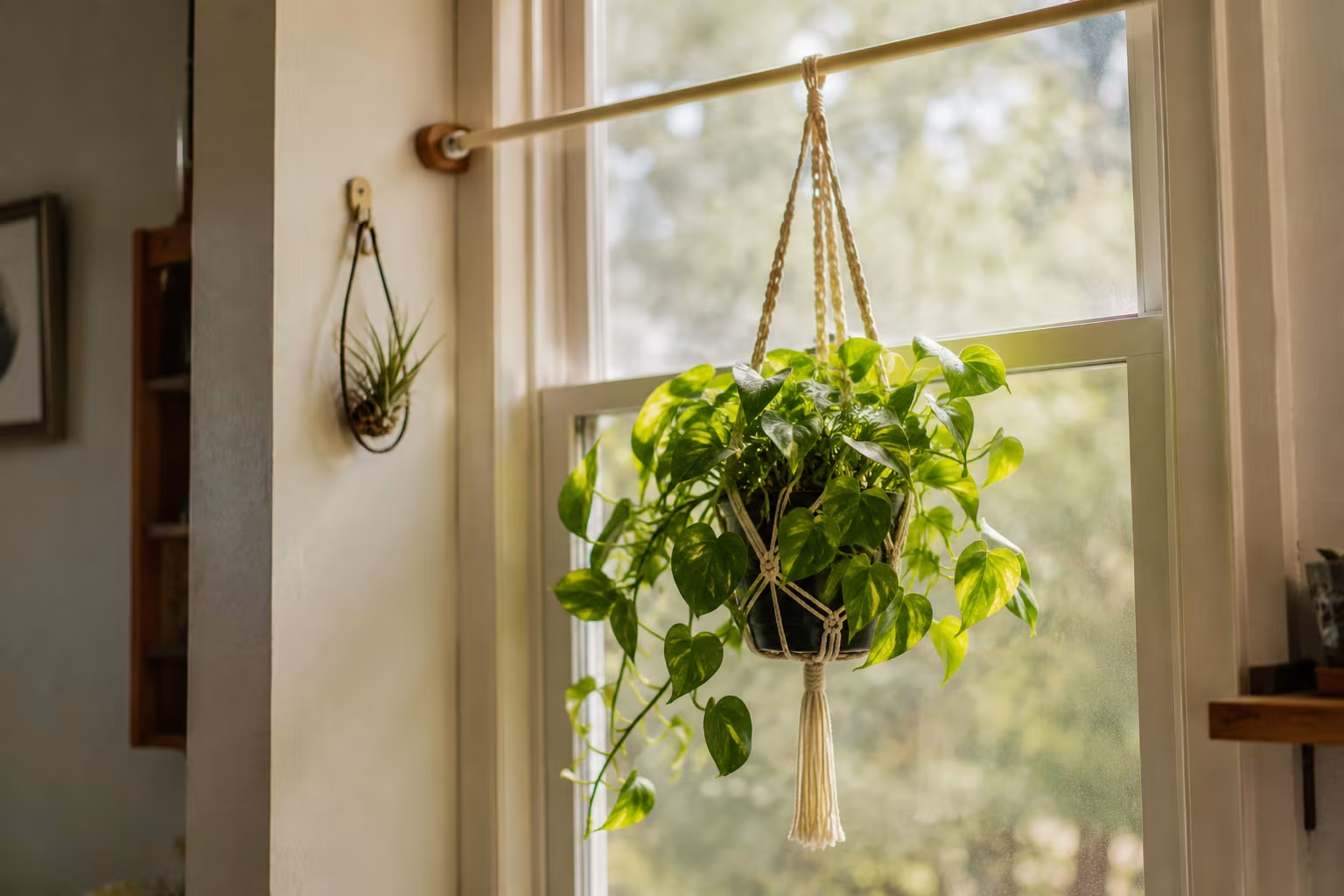
- Pothos (Epipremnum aureum) - can grow into tree-like forms with support: While often grown as a trailing vine, if you give a Pothos a moss pole to climb, it will absolutely grow upwards and create a beautiful, lush vertical accent. The leaves get much larger when they climb. I've got one draped over a bookshelf that I periodically train upwards. It's incredibly forgiving and comes in several variegated varieties that add a pop of brightness to a dim corner.
- Dragon Tree (Dracaena marginata): These have a really cool, architectural look with their thin, strap-like leaves at the top of slender woody stems. They give off a definite "mini tree" vibe. I found a small one at a local nursery for about $20. They're pretty tolerant of low light but do appreciate a little more brightness if you can give it. Just be careful not to overwater these guys.
- Chinese Evergreen (Aglaonema): These plants have beautiful, often variegated foliage in shades of green, silver, and even red. While they don't have a woody trunk like a traditional tree, some varieties grow quite large and bushy, filling a corner with dense, vibrant leaves. They're super tolerant of low light and humidity. Just be careful with cold drafts – they really don't like sudden temperature drops.
- Parlor Palm (Chamaedorea elegans): If you’re dreaming of a tropical vibe, the Parlor Palm is a fantastic choice. It grows upright with delicate, feathery fronds, creating a classic palm tree silhouette. They love humidity and tolerate low light remarkably well. They’re slow growers, so a smaller one will take a while to get tree-sized, but they’re very elegant. I've seen some absolutely massive ones in offices that look stunning.
- Cast Iron Plant (Aspidistra elatior): The name says it all. This plant is tough as nails. It has large, dark green, glossy leaves that emerge directly from the soil. While it doesn't form a trunk, its upright, structural leaves give a commanding presence in a low-light spot. You truly have to try hard to kill this one. It's incredibly tolerant of neglect, temperature fluctuations, and super low light.
A note on Fiddle-Leaf Figs (Ficus lyrata): Okay, these are trending, and you see them everywhere. They look amazing. But here’s the caveat: they are not true low-light plants. They tolerate lower light than some, but they really, truly prefer bright, indirect light to thrive. I tried one in a dimmer spot once, hoping it would adapt, and it dropped almost all its leaves within a month. Learn from my mistakes! If you're going for a Fiddle-Leaf, make sure it's in a genuinely bright spot away from direct sun, or you'll be constantly battling it.
Step 2: Assess Your Space Beyond Light
Light is crucial, but it's not the only factor. A happy plant thrives in a stable environment. What else is going on in that corner you're eyeing? Think about temperature, humidity, and even how much foot traffic the area gets.
- Temperature Stability: Sudden drops or fluctuations in temperature, like near an exterior door that opens a lot in winter, can really shock a plant. Most indoor plants prefer consistent room temperatures between 65-75°F (18-24°C). If your chosen spot is next to a drafty window or an AC vent, that's something to consider.
- Humidity: Many indoor plants, especially those that come from tropical environments, appreciate a bit of humidity. In winter, when heaters are blasting, indoor air can get incredibly dry. Misting your plant occasionally, placing it near a humidifier, or grouping plants together can help create a more humid microclimate. I sometimes mist my Parlor Palm or group it with a Pothos during the drier months.
- Traffic & Bumps: Is your plant going to be in a high-traffic hallway where it gets bumped into daily? Or is it in a quiet corner where it can relax? Delicate plants don't like constant jostling. If it's a high-traffic spot, choose a tougher variety like a Snake Plant or ZZ Plant that can take a little accidental abuse.
I once had a beautiful Chinese Evergreen struggling near my front door. I couldn't figure it out until I realized every time the door opened in winter, it was hit with a blast of icy air. Moving it just a few feet away, into a more sheltered spot, made all the difference.
Step 3: Check for Signs of a Healthy Plant at the Store
Okay, you’re at the nursery, or maybe even a big box store. Don't just grab the cheapest or biggest one. A little inspection can save you a lot of headache (and potential pest invasions) later on. I've been tempted by those "clearance" plants, only to realize they were battling a major pest problem. It's truly not worth it.
- Look at the leaves: They should be vibrant, firm, and free from widespread yellowing, browning, or suspicious spots. Minor imperfections are okay, but if half the leaves are yellow or mushy, that’s a red flag.
- Inspect for pests: This is crucial. Check under the leaves, in the leaf axils (where the leaf meets the stem), and the surface of the soil for tiny bugs, webbing, or sticky residue. Mealybugs, spider mites, and scale are common culprits. If you see them, walk away.
- Feel the soil: It should be slightly damp, not bone dry and hard as a rock, or soaking wet and squishy. If it’s too dry, the plant has been stressed from underwatering. If it’s waterlogged, the roots might be rotting.
- Check the roots (if possible): If you can gently lift the plant out of its nursery pot, check the roots. They should be firm and pale or white. If they are slimy, brown, or smell bad, the plant likely has root rot. If roots are circling the bottom of the pot, it's probably rootbound but still healthy, just ready for a slightly larger pot.
My rule of thumb is: if it looks sad in the store, it's probably going to be sadder at home. Invest in a healthy plant from the start. You'll thank yourself later.
Step 4: Potting It up Right
You’ve picked your healthy, low-light tree! Congrats! Now, let’s get it settled in its new home. This is where a lot of people go wrong, myself included, especially when I first started. The biggest mistake? Forgetting about drainage.
- Drainage holes are non-negotiable: Seriously, if your chosen pot doesn't have at least one good drainage hole, drill it yourself or choose another pot. Standing water in the bottom of a pot is the fastest way to kill almost any indoor plant because it leads to root rot. If you love a decorative pot without a hole, use it as a cachepot – put your plant in a slightly smaller nursery pot with drainage, then place that inside your pretty pot. Just remember to empty any collected water from the cachepot after watering!
- Good quality indoor potting mix: Don't just scoop dirt from your garden. Garden soil is too heavy and compacts too much for pots, restricting root growth and drainage. Use a good quality indoor potting mix that’s designed for houseplants. They usually contain perlite or vermiculite for drainage and aeration.
- Size matters: Don't go too big! A pot that's too large holds too much moisture, which can lead to overwatering issues. For most plants, moving up one pot size (usually 1-2 inches wider than the nursery pot) is ideal. For example, if your plant is in a 6-inch pot, move it to an 8-inch pot.
- Repotting process: Gently remove the plant from its nursery pot. Loosen any circling roots at the bottom. Add a layer of fresh potting mix to the bottom of the new pot, set your plant in, and fill around it with more mix, leaving about an inch of space from the rim. Water it in well to settle the soil.
I once put a tiny ZZ plant into a massive pot, thinking it would have "room to grow." It almost drowned. The soil stayed wet forever. It taught me a valuable lesson about matching the pot size to the plant's current root ball.
Step 5: Watering Wisdom for Low-light Plants
This is probably the single most important lesson for low-light plants. They do not need as much water as plants in brighter spots. Photosynthesis slows down in lower light, which means the plant uses less water. Overwatering is the number one killer of indoor plants, hands down.
- Feel the soil: This is your best guide. Don't just water on a schedule. Stick your finger 2-3 inches into the soil. If it feels dry to the touch, then it's time to water. If it's still damp, wait a few more days. For something like a Snake Plant or ZZ Plant, you might let the soil dry out even further, almost completely, before watering again.
- Less is more: When in doubt, wait another day. It's much easier to recover an underwatered plant (just give it a drink!) than an overwatered one (root rot is a nightmare). I've definitely learned this the hard way, thinking I was "helping" my plants by watering them too frequently.
- Water thoroughly, then drain: When you do water, soak the soil until water starts coming out of the drainage holes. This ensures all the roots get a drink. Let it sit for 15-20 minutes, then dump any excess water that has collected in the saucer or cachepot. You don't want your plant sitting in standing water.
- Consider the season: Plants use less water in the fall and winter when light levels are naturally lower and growth slows down. Adjust your watering frequency accordingly. My plants go from watering every 7-10 days in summer to every 2-3 weeks in winter.
My first attempt at a Dragon Tree suffered from my enthusiasm with the watering can. I thought, "It's big, it needs lots of water!" Nope. It sat in soggy soil for weeks and started getting yellow, squishy leaves. Once I learned to let the soil dry out, it completely turned around.
Step 6: Feeding and Cleaning
Low-light plants are pretty low-maintenance when it comes to nutrients, but a little care goes a long way. And keeping those leaves clean? Super important for maximum light absorption.
- Fertilizer: Low-light plants don't need much. Their growth is naturally slower, so they don't demand as many nutrients. Once a month during the active growing seasons (spring and summer) is plenty, or even less frequently for very slow growers like ZZ plants. Always dilute your fertilizer to half-strength or even quarter-strength for low-light plants to avoid burning their roots. Don't fertilize in fall or winter when they're dormant.
- Dusting leaves: This is often overlooked, but it's especially critical for low-light plants. Dust on leaves literally blocks light, making it harder for the plant to photosynthesize. Since they're already working with limited light, you want every bit to count. Wipe leaves gently with a damp cloth every few weeks to keep them shiny and clean. You’ll be surprised how much dust accumulates!
- Pruning for shape and health: Occasionally, you might need to prune off any yellowing or dead leaves. This isn't just for aesthetics; it helps the plant redirect energy to healthy growth. For plants like Dragon Trees or Pothos, a little selective pruning can help maintain a bushier, more tree-like shape.
I used to forget about fertilizer entirely, and my plants just kind of existed without really thriving. Once I started giving them a tiny boost in spring and summer, I saw a noticeable difference in their vibrancy. And the leaf dusting? It’s oddly satisfying, and my plants look so much happier after a good wipe-down.
Making It Stick / Common Mistakes
So, you’ve picked your tree, potted it, and you're getting the hang of watering. What trips people up from here? Usually, it's impatience, inconsistent care, or simply not paying attention to the subtle cues your plant is giving you.
The biggest mistake I see (and definitely made myself!) is treating a low-light plant like it's a high-light plant. More water, more fertilizer, more expectations. Remember, these plants are slow and steady. They're not going to explode with growth overnight, and that's okay.
Another common pitfall is ignoring the signs. Yellowing leaves can mean overwatering or underwatering, depending on how the leaves feel (mushy vs. crispy). Brown tips often mean low humidity. Don't just guess; take a moment to observe the plant and adjust one thing at a time.
"The secret to a thriving indoor tree isn't a green thumb; it's just paying attention."
Don't move your plant around constantly. Plants get used to their spot. If you keep shifting it from a low-light corner to a bright window and back, you're stressing it out. Pick a spot, give it a few weeks, and only move it if it's showing consistent signs of distress that can't be resolved with watering or cleaning.
And finally, accept that sometimes a plant just isn't happy where you put it, or it was never truly healthy to begin with. It's okay. Not every plant will thrive in every home, and that's part of the learning process. Don't beat yourself up; just learn and try again.
Frequently Asked Questions
Can I Put Any Tree in a Low-light Room if I Just Water It Less?
Definitely not. Plants are adapted to specific light levels, and trying to force a high-light plant (like a citrus tree or even a common fig) into a low-light space will just lead to a sad, struggling plant. You’ll see yellowing leaves, stunted growth, or leaf drop, and it's super frustrating for everyone involved. Stick to the proven low-light champions.
My Low-light Plant is Still Struggling. What's the First Thing I Should Check?
First, always check your watering. That’s usually the culprit. Stick your finger deep into the soil. Is it too wet, or completely dried out? Second, reassess the light – maybe your definition of "low light" is actually closer to "no light." Try moving it closer to a window, even if it’s north-facing, for a few weeks to see if it perks up. Also, check for pests – sometimes the symptoms of pests mimic other issues.
How Often Should I Repot My Indoor Tree?
Low-light plants tend to grow slower, so they generally need repotting less often than their sun-loving cousins. I usually check mine every 1-2 years, or sometimes even longer for very slow growers like ZZ plants. You'll know it's time if roots are circling the pot, growing out of the drainage holes, or if the plant just looks like it's completely stopped growing and nothing else seems to help.
Do Low-light Trees Help with Air Quality as Much as Others?
Yes, absolutely! While the lower light conditions might mean slower growth compared to a plant in a very bright spot, these plants still actively perform photosynthesis and filter air pollutants. Every bit helps, especially if you're like me and spend a lot of time indoors. It's a small, natural way to make your home feel a little fresher and more connected to nature.
What if I Don't have a "green Thumb" at All? is This Even Worth Trying?
Oh, I totally get that feeling! I used to kill cactuses, which are supposed to be easy, believe me. But yes, it's absolutely worth trying. Start with something super resilient like a ZZ plant or a Snake Plant. They can take a lot of neglect and still look amazing. You might surprise yourself with how rewarding it feels to keep something alive and thriving!
The Bottom Line
You absolutely can have beautiful, thriving tree-like plants in those dimmer spots in your home. It’s not about having a magical green thumb; it’s about choosing wisely and understanding the basic, non-negotiable needs of the plants you bring home. Pick the right plant, give it consistent (but not too much!) water, and watch it bring life to even the most overlooked corners.
Don't be afraid to experiment a little. Start with one, observe it, and learn as you go. You've got this! 👋